Link Copied!
Chester W. Nimitz Quotes (1885-1966)
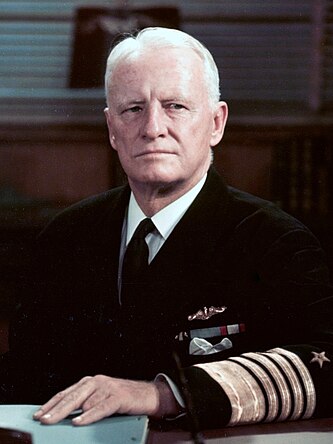
About Chester W. Nimitz
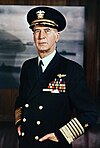
Fleet Admiral Chester William Nimitz (24 February 1885 – 20 February 1966) was a fleet admiral of the United States Navy. He played a major role in the naval history of World War II as Commander in Chief, United States Pacific Fleet (CinCPac), for U.S. naval forces and Commander in Chief, Pacific Ocean Areas (CinCPOA), for U.S. and Allied air, land, and sea forces during World War II.
Best Chester W. Nimitz Quotes
Shortest
Earliest
Explore our curated collection of the most famous and impactful Chester W. Nimitz quotes.
“Hindsight is notably cleverer than foresight.”
Unsourced — Primary work/page citation not yet verified in the QuotesCosmos archive. Per our Unnamed Sources & Verification Policy, quotes without confirmed primary editions are explicitly marked Unsourced while under editorial review.
“Well, you were only five miles, five degrees, and five minutes off.”
Unsourced — Primary work/page citation not yet verified in the QuotesCosmos archive. Per our Unnamed Sources & Verification Policy, quotes without confirmed primary editions are explicitly marked Unsourced while under editorial review.
“'''A ship is always referred to as "she" because it costs so much to keep her in paint and powder.”
Unsourced — Primary work/page citation not yet verified in the QuotesCosmos archive. Per our Unnamed Sources & Verification Policy, quotes without confirmed primary editions are explicitly marked Unsourced while under editorial review.
“Our present control of the sea is so absolute that it is sometimes taken for granted.”

Unsourced — Primary work/page citation not yet verified in the QuotesCosmos archive. Per our Unnamed Sources & Verification Policy, quotes without confirmed primary editions are explicitly marked Unsourced while under editorial review.
“God grant me the courage not to give up what I think is right even though I think it is hopeless.”

Unsourced — Primary work/page citation not yet verified in the QuotesCosmos archive. Per our Unnamed Sources & Verification Policy, quotes without confirmed primary editions are explicitly marked Unsourced while under editorial review.
“The U.S.'s major strength factor and weapon is its economy. If you cripple it, you cripple the military.”
Unsourced — Primary work/page citation not yet verified in the QuotesCosmos archive. Per our Unnamed Sources & Verification Policy, quotes without confirmed primary editions are explicitly marked Unsourced while under editorial review.
“'''We shall never forget that it was our submarines that held the lines against the enemy while our fleets replaced losses and repaired wounds.”
Unsourced — Primary work/page citation not yet verified in the QuotesCosmos archive. Per our Unnamed Sources & Verification Policy, quotes without confirmed primary editions are explicitly marked Unsourced while under editorial review.
“I felt that it was an unnecessary loss of civilian life... We had them beaten. They hadn't enough food, they couldn't do anything.”
Unsourced — Primary work/page citation not yet verified in the QuotesCosmos archive. Per our Unnamed Sources & Verification Policy, quotes without confirmed primary editions are explicitly marked Unsourced while under editorial review.
“Is the proposed operation likely to succeed?
What might be the consequences of failure?
Is it in the realm of practicability in terms of matériel and supplies?”
What might be the consequences of failure?
Is it in the realm of practicability in terms of matériel and supplies?”
Unsourced — Primary work/page citation not yet verified in the QuotesCosmos archive. Per our Unnamed Sources & Verification Policy, quotes without confirmed primary editions are explicitly marked Unsourced while under editorial review.
“The enemy of our games was always Japan, and the courses were so thorough that after the start of World War II, nothing that happened in the Pacific was strange or unexpected.”
Unsourced — Primary work/page citation not yet verified in the QuotesCosmos archive. Per our Unnamed Sources & Verification Policy, quotes without confirmed primary editions are explicitly marked Unsourced while under editorial review.
“That is not to say that we can relax our readiness to defend ourselves. Our armament must be adequate to the needs, but our faith is not primarily in these machines of defense but in ourselves.”
Unsourced — Primary work/page citation not yet verified in the QuotesCosmos archive. Per our Unnamed Sources & Verification Policy, quotes without confirmed primary editions are explicitly marked Unsourced while under editorial review.
“By their victory, the 3rd, 4th and 5th Marine Divisions and other units of the Fifth Amphibious Corps have made an accounting to their country which only history will be able to value fully. Among the Americans serving on Iwo island, uncommon valor was a common virtue.”
Unsourced — Primary work/page citation not yet verified in the QuotesCosmos archive. Per our Unnamed Sources & Verification Policy, quotes without confirmed primary editions are explicitly marked Unsourced while under editorial review.
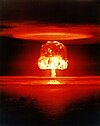
“The Japanese had, in fact, already sued for peace before the atomic age was announced to the world with the destruction of Hiroshima and before the Russian entry into war. ... The atomic bomb played no decisive part, from a purely military standpoint, in the defeat of Japan.”
Unsourced — Primary work/page citation not yet verified in the QuotesCosmos archive. Per our Unnamed Sources & Verification Policy, quotes without confirmed primary editions are explicitly marked Unsourced while under editorial review.
“The war with Japan had been enacted in the game rooms at the War College by so many people and in so many different ways that nothing that happened during the war was a surprise—absolutely nothing except the kamikaze tactics toward the end of the war. We had not visualized these.”

Unsourced — Primary work/page citation not yet verified in the QuotesCosmos archive. Per our Unnamed Sources & Verification Policy, quotes without confirmed primary editions are explicitly marked Unsourced while under editorial review.
“Sir Walter Raleigh declared in the early 17th century that "whoever commands the sea, commands the trade; whosoever commands the trade of the world commands the riches of the world, and consequently the world itself." This principle is as true today as when uttered, and its effect will continue as long as ships traverse the seas.”

Unsourced — Primary work/page citation not yet verified in the QuotesCosmos archive. Per our Unnamed Sources & Verification Policy, quotes without confirmed primary editions are explicitly marked Unsourced while under editorial review.
“The United States possesses today control of the sea more absolute than was possessed by the British. Our interest in this control is not riches and power as such. It is first the assurance of our national security, and, second, the creation and perpetuation of that balance and stability among nations which will insure to each the right of self-determination under the framework of the United Nations Organization.”

Unsourced — Primary work/page citation not yet verified in the QuotesCosmos archive. Per our Unnamed Sources & Verification Policy, quotes without confirmed primary editions are explicitly marked Unsourced while under editorial review.
“Naval fleets probably never again will fight in full force... No government today can afford to run the risk of staking its entire naval force on a single battle. Therefore, it is probable that in the future fighting will be done by special units. These will be organized according to the requirements of the tasks assigned to them. One mission might require only a few cruisers, a number of destroyers, an aircraft carrier and some submarines. Another might require a battleship or two.”

Unsourced — Primary work/page citation not yet verified in the QuotesCosmos archive. Per our Unnamed Sources & Verification Policy, quotes without confirmed primary editions are explicitly marked Unsourced while under editorial review.
“When I assumed command of the Pacific Fleet in 31 December, 1941; our submarines were already operating against the enemy, the only units of the Fleet that could come to grips with the Japanese for months to come.
It was to the Submarine Force that I looked to carry the load until our great industrial activity could produce the weapons we so sorely needed to carry the war to the enemy. It is to the everlasting honor and glory of our submarine personnel that they never failed us in our days of peril.”
It was to the Submarine Force that I looked to carry the load until our great industrial activity could produce the weapons we so sorely needed to carry the war to the enemy. It is to the everlasting honor and glory of our submarine personnel that they never failed us in our days of peril.”
Unsourced — Primary work/page citation not yet verified in the QuotesCosmos archive. Per our Unnamed Sources & Verification Policy, quotes without confirmed primary editions are explicitly marked Unsourced while under editorial review.
“I do believe we are going to have a major war, with Japan and Germany, and that the war is going to start by a very serious surprise attack and defeat of U.S. armed forces, and that there is going to be a major revulsion on the part of the political power in Washington against all those in command at sea, and they are going to be thrown out, though it won't be their fault necessarily. And I wish to be in a position of sufficient prominence so that I will then be considered as one to be sent to sea, because that appears to be the route.”
Unsourced — Primary work/page citation not yet verified in the QuotesCosmos archive. Per our Unnamed Sources & Verification Policy, quotes without confirmed primary editions are explicitly marked Unsourced while under editorial review.
“The basic objectives and principles of war do not change.
The final objective in war is the destruction of the enemy's capacity and will to fight, and thereby force him to accept the imposition of the victor's will. This submission has been accomplished in the past by pressure in and from each of the elements of land and sea, and during World War I and II, in and from the air as well. The optimum of pressure is exerted through that absolute control obtained by actual physical occupation. This optimum is obtainable only on land where physical occupation can be consolidated and maintained.”
The final objective in war is the destruction of the enemy's capacity and will to fight, and thereby force him to accept the imposition of the victor's will. This submission has been accomplished in the past by pressure in and from each of the elements of land and sea, and during World War I and II, in and from the air as well. The optimum of pressure is exerted through that absolute control obtained by actual physical occupation. This optimum is obtainable only on land where physical occupation can be consolidated and maintained.”
Unsourced — Primary work/page citation not yet verified in the QuotesCosmos archive. Per our Unnamed Sources & Verification Policy, quotes without confirmed primary editions are explicitly marked Unsourced while under editorial review.
“Our present undisputed control of the sea was achieved primarily through the employment of naval air-sea forces in the destruction of Japanese and German sea power. It was consolidated by the subsequent reduction of these nations to their present impotence, in which the employment of naval air-sea forces against land objectives played a vital role. It can be perpetuated only through the maintenance of balanced naval forces of all categories adequate to our strategic needs (which include those of the non-totalitarian world), and which can flexibly adjust to new modes of air-sea warfare and which are alert to develop and employ new weapons and techniques as needed.”
Unsourced — Primary work/page citation not yet verified in the QuotesCosmos archive. Per our Unnamed Sources & Verification Policy, quotes without confirmed primary editions are explicitly marked Unsourced while under editorial review.
“Naval forces are able, without resorting to diplomatic channels, to establish offshore anywhere in the world, air fields completely equipped with machine shops, ammunition dumps, tank farms, warehouses, together with quarters and all types of accommodations for personnel. Such task forces are virtually as complete as any air base ever established. They constitute the only air bases that can be made available near enemy territory without assault and conquest; and furthermore, they are mobile offensive bases, that can be employed with the unique attributes of secrecy and surprise — which attributes contribute equally to their defensive as well as offensive effectiveness.”

Unsourced — Primary work/page citation not yet verified in the QuotesCosmos archive. Per our Unnamed Sources & Verification Policy, quotes without confirmed primary editions are explicitly marked Unsourced while under editorial review.
“If we are to project our power against the vital areas of any enemy across the ocean before beachheads on enemy territory are captured, it must be by air-sea power; by aircraft launched from carriers; and by heavy surface ships and submarines projecting guided missiles and rockets. If present promise is developed by research, test and production, these three types of air-sea power operating in concert will be able within the next ten years critically to damage enemy vital areas many hundreds of miles inland.
Naval task forces including these types are capable of remaining at sea for months. This capability has raised to a high point the art of concentrating air power within effective range of enemy objectives.”
Naval task forces including these types are capable of remaining at sea for months. This capability has raised to a high point the art of concentrating air power within effective range of enemy objectives.”

Unsourced — Primary work/page citation not yet verified in the QuotesCosmos archive. Per our Unnamed Sources & Verification Policy, quotes without confirmed primary editions are explicitly marked Unsourced while under editorial review.
“Through the skill and devotion to duty of their armed forces of all branches in the Midway area our citizens can now rejoice that a momentous victory is in the making.
It was on a Sunday just six months ago that the Japanese made their peace‑time attack on our fleet and army activities on Oahu. At that time they created heavy damage, it is true, but their act aroused the grim determination of our citizenry to avenge such treachery, and it raised, not lowered, the morale of our fighting men.
Pearl Harbor has now been partially avenged. Vengeance will not be complete until Japanese sea power has been reduced to impotence. We have made substantial progress in that direction. Perhaps we will be forgiven if we claim we are about midway to our objective!”
Unsourced — Primary work/page citation not yet verified in the QuotesCosmos archive. Per our Unnamed Sources & Verification Policy, quotes without confirmed primary editions are explicitly marked Unsourced while under editorial review.
“Once A Marine should become required reading for the young men of our country. It is a success story which highlights the fact that there is still room at the top for young men of courage, determination and the average educational advantages available to all our young people. General Vandegrift, perhaps more than any other Marine, added luster and glory to our elite Corps that had already won enviable battle honors during its long history of military achievement. His long and successful struggle to hold Guadalcanal against seemingly overwhelming odds will live long in military history. Many veterans of the Marine Corps and of the sister services who participated or were associated in the Guadalcanal episode of World War II will relive their experience in reading Once A Marine. And this includes yours truly who, perforce, had to witness this struggle from afar.”
Unsourced — Primary work/page citation not yet verified in the QuotesCosmos archive. Per our Unnamed Sources & Verification Policy, quotes without confirmed primary editions are explicitly marked Unsourced while under editorial review.
“Today all freedom-loving peoples of the world rejoice in the victory and feel pride in the accomplishments of our combined forces. We also pay tribute to those who defended our freedom at the cost of their lives.
On Guam is a military cemetery in a green valley not far from my headquarters. The ordered rows of white crosses stand as reminders of the heavy cost we have paid for victory. On these crosses are the names of American soldiers, sailors and marines — Culpepper, Tomaino, Sweeney, Bromberg, Depew, Melloy, Ponziani — names that are a cross-section of democracy. They fought together as brothers in arms; they died together and now they sleep side by side. To them we have a solemn obligation — the obligation to insure that their sacrifice will help to make this a better and safer world in which to live. … Now we turn to the great tasks of reconstruction and restoration. I am confident that we will be able to apply the same skill, resourcefulness, and keen thinking to these problems as were applied to the problems of winning the victory.”
On Guam is a military cemetery in a green valley not far from my headquarters. The ordered rows of white crosses stand as reminders of the heavy cost we have paid for victory. On these crosses are the names of American soldiers, sailors and marines — Culpepper, Tomaino, Sweeney, Bromberg, Depew, Melloy, Ponziani — names that are a cross-section of democracy. They fought together as brothers in arms; they died together and now they sleep side by side. To them we have a solemn obligation — the obligation to insure that their sacrifice will help to make this a better and safer world in which to live. … Now we turn to the great tasks of reconstruction and restoration. I am confident that we will be able to apply the same skill, resourcefulness, and keen thinking to these problems as were applied to the problems of winning the victory.”

Unsourced — Primary work/page citation not yet verified in the QuotesCosmos archive. Per our Unnamed Sources & Verification Policy, quotes without confirmed primary editions are explicitly marked Unsourced while under editorial review.
“On board all vessels at sea and in port, and at our many island bases in the Pacific, there is rejoicing and thanksgiving. The long and bitter struggle, which Japan started so treacherously on the 7th of December 1941, is at an end.
I take great pride in the American forces which have helped to win this victory. America can be proud of them. The officers and men of the United States Army, Navy, Marine Corps, Coast Guard, and merchant marine who fought in the Pacific have written heroic new chapters in this Nation's military history. I have infinite respect for their courage, resourcefulness, and devotion to duty. We also acknowledge the great contribution to this victory made by our valiant Allies. United we fought and united we prevail.
The port of Tokyo, which was first opened by Commodore Perry in 1853, is now crowded with United States men-of-war. The process of bringing Japan into the family of civilized nations, which was interrupted when Japan launched her program of conquest, will soon begin again.”

Unsourced — Primary work/page citation not yet verified in the QuotesCosmos archive. Per our Unnamed Sources & Verification Policy, quotes without confirmed primary editions are explicitly marked Unsourced while under editorial review.
Chester W. Nimitz Quotes by Topic
Find exactly what you are looking for by browsing this categorized list of Chester W. Nimitz quotes by topic.
Chester W. Nimitz on Ships
“Because it costs so much to keep one in paint and powder.”

Unsourced — Primary work/page citation not yet verified in the QuotesCosmos archive. Per our Unnamed Sources & Verification Policy, quotes without confirmed primary editions are explicitly marked Unsourced while under editorial review.
Chester W. Nimitz on Success
“Is the proposed operation likely to succeed? What might be the consequences of failure? Is it in the realm of practicability in terms of matériel and supplies?”
Unsourced — Primary work/page citation not yet verified in the QuotesCosmos archive. Per our Unnamed Sources & Verification Policy, quotes without confirmed primary editions are explicitly marked Unsourced while under editorial review.
Chester W. Nimitz on World War II
“I know most of you here, and I have complete confidence in your ability and judgment. We've taken a whale of a wallop, but I have no doubt of the ultimate outcome.”

Unsourced — Primary work/page citation not yet verified in the QuotesCosmos archive. Per our Unnamed Sources & Verification Policy, quotes without confirmed primary editions are explicitly marked Unsourced while under editorial review.
Chester W. Nimitz on National security
“That is not to say that we can relax our readiness to defend ourselves. Our armament must be adequate to the needs, but our faith is not primarily in these machines of defense but in ourselves.”

Unsourced — Primary work/page citation not yet verified in the QuotesCosmos archive. Per our Unnamed Sources & Verification Policy, quotes without confirmed primary editions are explicitly marked Unsourced while under editorial review.
What Chester W. Nimitz Said About Others
Discover personal opinions Chester W. Nimitz shared regarding contemporaries.
Chester W. Nimitz on Alexander Vandegrift
“Once a Marine should become required reading for the young men of our country. It is a success story which highlights the fact that there is still room at the top for men of courage, determination and the average educational advantages available to all our young people. General Vandegrift, perhaps more than any other Marine, added luster and glory to our elite Corps that had already won enviable battle honors during its long history of military achievement. His long and successful struggle to hold Guadalcanal against seemingly overwhelming odds will live long in military history. Many veterans of the Marine Corps and of the sister services who participated or were associated in the Guadalcanal episode of World War II will relive their experiences in reading Once a Marine. And this includes yours truly who, perforce, had to witness this struggle from afar.”

Unsourced — Primary work/page citation not yet verified in the QuotesCosmos archive. Per our Unnamed Sources & Verification Policy, quotes without confirmed primary editions are explicitly marked Unsourced while under editorial review.
Quotes About Chester W. Nimitz
Gain deeper perspective through quotes about Chester W. Nimitz from others.
Biographical Notes on Nimitz on Chester W. Nimitz
“FLEET ADMIRAL CHESTER WILLIAM NIMITZ, USN. Born Texas 1885. Annapolis Class of 1905. First Command, USS Panay, 1907. Commanded Atlantic Submarine Flotilla, 1912-1913; USS Chicago, 1920-3. Promoted to Capt., 1927. Commanded USS's Rigel, 1931; Augusta, 1933. Attained flag rank, 1938. As Admiral, commanded Pacific Fleet, 1941; awarded DSM, and DSM by Congress, for services. In 1943, designated Commander-in-Chief, Pacific Fleet and Pacific Ocean Areas. On Dec. 19, 1944, achieved highest rank, Fleet Admiral. Signed for U.S. when Japan formally surrendered aboard USS Missouri, Sept. 2, 1945. Awarded third DSM on Nimitz Day in Wash'n, Oct. 5, 1945. Designated Chief of Naval Operations, Nov. 1945.”
Unsourced — Primary work/page citation not yet verified in the QuotesCosmos archive. Per our Unnamed Sources & Verification Policy, quotes without confirmed primary editions are explicitly marked Unsourced while under editorial review.
Clay Blair on Chester W. Nimitz 2 quotes
“In the wake of the Pearl Harbor disaster, President Roosevelt made sweeping changes in the navy high command. When word of these changes reached the submarine force, there were cheers. The key people, it seemed, were all submariners. First, and most important, Roosevelt named Admiral Ernest Joseph King, Jr., to the post of Commander in Chief, United States Fleet, and Chief of Naval Operations, replacing Admiral Stark. King had commanded the Submarine Base at New London and a division of S-boats and had played a key role in salvaging two sunken submarines in the 1920s, the S-51 and the S-4. Although King had never commanded a submarine, he wore the dolphin insignia plus his aviator's wings. Second, King appointed former submariner Chester Nimitz to replace Kimmel (and Pye) as Commander in Chief, Pacific Fleet. After his submarine service before and during World War I, Nimitz had established the Submarine Base at Pearl Harbor and then commanded a division of early fleet boats, including Barracuda, Bass, and Bonita.”
Unsourced — Primary work/page citation not yet verified in the QuotesCosmos archive. Per our Unnamed Sources & Verification Policy, quotes without confirmed primary editions are explicitly marked Unsourced while under editorial review.
Thomas B. Buell on Chester W. Nimitz 3 quotes
“Spruance received his written orders in the evening of 27 May, the night before he got underway. They comprised ten succinct pages. All operation orders in the early stages of the war were terse, reflecting the command philosophy of King, Nimitz, and the better admirals. That philosophy was to tell the subordinate commander what you wanted done, give him the necessary resources, provide as much information as you could about the enemy, and then let him alone so he could accomplish his mission. King would upbraid any commander for the sin of oversupervising his subordinates with complex, overly detailed directives. The intent was to encourage the on-scene commander to use his initiative and not to inhibit his freedom of action. Spruance's personal belief was that the commander responsible for accomplishing the mission should develop the necessary plans; the proper role of the next highest command echelon was to establish the objective and to suggest how the objective might be achieved.”
Unsourced — Primary work/page citation not yet verified in the QuotesCosmos archive. Per our Unnamed Sources & Verification Policy, quotes without confirmed primary editions are explicitly marked Unsourced while under editorial review.
Niall Ferguson on Chester W. Nimitz
“In the Pacific, too, the tide had turned - and even more swiftly than in Eastern Europe. At the battles of the Coral Sea and Midway (May and June 1942), Admiral Chester W. Nimitz's carriers first checked and then inflicted heavy casualties on the numerically superior Japanese fleet. As at Kursk, both sides suffered substantial losses, but the relative cost of the battle to the already over-stretched Axis power was far higher; the Japanese would never replace their four sunk carriers, whereas the Americans were still far from the peak of their shipbuilding capacity. The series of battles fought on and around the island of Guadalcanal in the Solomons between August 1942 and February 1943 exposed the vulnerability of Japanese ground forces once the Americans had established naval and air superiority. In May 1943 US forces destroyed the Japanese forces on the Aleutian island of Attu and forced them to abandon Kiska; by September Japanese strategy had degenerated into holding an 8,000-mile last line of defence which they were already losing the means of supplying.”

Unsourced — Primary work/page citation not yet verified in the QuotesCosmos archive. Per our Unnamed Sources & Verification Policy, quotes without confirmed primary editions are explicitly marked Unsourced while under editorial review.
Richard B. Frank on Chester W. Nimitz 2 quotes
“On October 15 he read a message from Ghormley containing a cry of resignation: "My forces [are] totally inadequate to meet [the] situation. Nimitz had already exhausted the material assistance he could give Ghormley's command, but there was one other way he could influence events, and he discussed this subject with his staff on the night of October 15. Some of them noted Nimitz's normally sunny blue eyes now flashed an icy gray as he prepared to talk about what Hanson Baldwin identified as the single greatest obstacle to American success: leadership. Ghormley, said Nimitz, was an intelligent and capable officer, but he was he tough enough to face the coming crisis, and more important, could he inspire men to feats beyond their known capabilities? The staff answered unanimously: no.”
Unsourced — Primary work/page citation not yet verified in the QuotesCosmos archive. Per our Unnamed Sources & Verification Policy, quotes without confirmed primary editions are explicitly marked Unsourced while under editorial review.


About Chester W. Nimitz
Fleet Admiral Chester William Nimitz (24 February 1885 – 20 February 1966) was a fleet admiral of the United States Navy. He played a major role in the naval history of World War II as Commander in Chief, United States Pacific Fleet (CinCPac), for U.S. naval forces and Commander in Chief, Pacific Ocean Areas (CinCPOA), for U.S. and Allied air, land, and sea forces during World War II.