Link Copied!
Charles I of England Quotes (1600-1649)
King


About Charles I of England
Charles I (November 19, 1600 – January 30, 1649) was King of England, King of Scotland, and King of Ireland from 27 March 1625 until his execution in 1649. After his succession in 1625, Charles quarrelled with the Parliament of England, which sought to curb his royal prerogative. Charles believed in the divine right of kings, and was determined to govern according to his own conscience.
Best Charles I of England Quotes
Shortest
Earliest
Explore our curated collection of the most famous and impactful Charles I of England quotes.
“I go from a corruptible to an incorruptible Crown, where no disturbance can be, no disturbance in the World.”
“I am no less confident, that no learned lawyer will affirm that an impeachment can lie against the King, they all going in his name: and one of their maxims is, that the King can do no wrong.”
“Since I see all the birds are flown, I do expect from you that you will send them unto me as soon as they return hither. But, I assure you on the word of a king, I never did intend any force, but shall proceed against them in a legal and fair way, for I never meant any other.”

“The respect and obedience that Christ and his Apostles showed to the rulers of the states they lived in is clearly shown in the Gospel. However, the idea that Christ or his Apostles ever commanded the establishment of an equal-ranking group of presbyters, in the way the Scots are trying to do, doesn't seem very debatable to me.”
“Disobedience to this our Proclamation Wee had little reason to expect, because this Service-book was no new thing unto them: For it not differing from the English Service-book in any materiall point, and We supposing that the English Liturgie neither Was nor could bee displeasing to them, did likewise conceive that this Book should be as little disliked by them.”
“You desire a preservation of the liberties; it is good, but for God's sake do not spend so much time that a foreign enemy may hazard both liberties and prerogative... Therefore go on without distrust. I must tell you so, and it is for you to believe me that sit at the helm.”
“And though it should perhaps cast all loose, (as you express;) yet We take God to witness, We have permitted them to doe many things in this Assembly, for establishing of Peace, contrary to Our Own Judgment. And if on this point a Rupture happen, We cannot help it; the fault is on their own part, which one day they may smart for. So you have in this Point Our full Resolution.”
“That the Articles of the Church of England (which have been allowed and authorised heretofore, and which our clergy generally have subscribed unto) do contain the true doctrine of the Church of England agreeable to God's Word: which we do therefore ratify and confirm, requiring all our loving subjects to continue in the uniform profession thereof, and prohibiting the least difference from the said Articles.”

“If you find, that what We have commanded you to doe is likely to cause a Rupture, their impertinent Motions give you a fair occasion to make it appear to the World, that We have condescended to all matters which can be pretended to concern Conscience and Religion; and that now they aim at nothing but the Overthrow of Royal Authority, contrary to all their Professions, which We can neither with Honour nor Safety suffer.”
“Next to religion, the power of the sword is the truest judge and greatest support of sovereignty which is unknown to none (as it may be that of religion is to some). Wherefore, concerning this, I will only say that whosoever will persuade you to part with it, does but in a civil way desire you to be no king; reward and punishment (which are the inseparable effects of regal power) necessarily depending upon it, and without which a king can neither be loved nor feared of his subjects.”

“I confess that, speaking as a mere soldier or statesman, there is no probability of my ruin; yet, as a Christian, I must tell you that God will not suffer rebels and traitors to prosper, nor this cause be overthrown, and whatever personal punishment it shall please hi to inflict on me, must not make me repine, much less give over this quarrel... Indeed, I cannot flatter myself with the expectation of good success more than this, to end my days with honour and a good conscience.”

“If Presbyterianism, in such a supreme form, is truly an institution of Christ, it certainly stands apart from all others. It would be the first and only part of Christianity that needed to be established and spread with so much Christian bloodshed—a bloodshed that flows in a direction completely opposite to the early founders of Christianity and Episcopacy, who patiently sacrificed their own lives instead of violently taking others'. There seems to be too much human ambition in it to truly reflect Christ's teachings.”

“Be your holiness persuaded that I am, and ever shall be, of such moderation as to keep aloof, as far as possible, from every undertaking which may testify any hatred towards the Roman Catholic religion. Nay, rather I will seize all opportunities, by a gentle and generous mode of conduct, to remove all sinister suspicions entirely; so that, as we all confess one undivided Trinity and one Christ crucified, we may be banded together unanimously into one faith.”

“Now, doth this Petition deserve the name of an explication of their Covenant? much lesse of such an explication as should give either Us or Our Commissioner any satisfaction? No, for it containeth neither more nor lesse then this, that they doe not meane to shake off their obedience, if We will give way to all their courses, which by this Petition they justifie; so that their meaning is, that they will continue obedient subjects, if We will part from Our Soveraigntie; which is in effect, that they will obey if Wee will suffer them to command.”
“Our Father of blessed memorie immediately after his comming into England, comparing the decencie and uniformitie of Gods worship here, especially in the Liturgie of the Church, with that diversitie, nay deformitie which was used in Scotland, where no set or publike forme of prayer was used, but Preachers or Readers and ignorant Schoolmasters prayed in the Church, sometimes so ignorantly as it was a shame to all Religion to have the Majestie of God so barbarously spoken unto, sometimes so seditiously that their prayers were plaine Libels, girding at Soveraigntie and Authoritie; or Lyes, being stuffed with all the false reports in the Kingdome.”

“There be two things in your Letter that require Answer, to wit, the Answer to their Petition, and concerning the Explanation of their damnable Covenant; for the first, the telling you that I have not changed my mind in this particular, is Answer sufficient, since it was both foreseen by me, and fully debated betwixt us two before your down-going; and for the other, I will onely say, that so long as this Covenant is in force, (whether it be with or without Explanation) I have no more Power in Scotland than as a Duke of Venice; which I will rather die than suffer.”
“Being by God's ordinance, according to our just title, Defender of the Faith, and Supreme Governor of the Church, within these our dominions, we hold it most agreeable to this our kingly office, and our own religious zeal, to conserve and maintain the Church committed to our charge, in the unity of true religion, and in the bond of peace; and not to suffer unnecessary disputations, altercations, or questions to be raised, which may nourish faction both in the Church and Commonwealth.”
“And whereas, for several ill ends, the calling againe of a Parliament is divulged, howsoever Wee have shewed, by Our frequent meeting with Our People, Our Love to the use of Parliaments; Yet the late abuse, having for the present driven Us unwillingly out of that course, Wee shall account it presumption, for any to prescribe any time unto Us for Parliaments, the Calling, Continuing, and Dissolving of which is alwayes in Our owne power; and Wee shall bee more inclinable to meete in Parliament againe, when Our People shall see more clearly into Our Intents and Actions, when such as have bred this interruption shall have received their condigne punishment, and those who are misled by them, and by such ill reports, as are raised upon this occasion, shall come to a better understanding of Us and themselves.”
“For the people. And truly I desire their Liberty and Freedom as much as any Body whomsoever. But I must tell you, That their Liberty and Freedom, consists in having of Government; those Laws, by which their Life and their goods may be most their own. It is not for having a share in government (Sir) that is nothing pertaining to them. A subject and a sovereign are clean different things, and therefore until they do that, I mean, that you do put the people in that liberty as I say, certainly they will never enjoy themselves.
Sirs, It was for this that now I Have come here. If I would have given way to an Arbitrary way, for to have all Laws changed according to the power of the Sword, I needed not to have come here; and therefore, I tell you, (and I pray God it be not laid to your charge) That I Am the Martyr of the People.”
Sirs, It was for this that now I Have come here. If I would have given way to an Arbitrary way, for to have all Laws changed according to the power of the Sword, I needed not to have come here; and therefore, I tell you, (and I pray God it be not laid to your charge) That I Am the Martyr of the People.”

“For We supposing that they might have taken some offence, if We should have tendered them the English Service Booke totidem verbis, and that some factious spirits would have endevoured to have misconstrued it as a badge of dependance of that Church upon this of England, which Wee had put upon them to the prejudice of their Lawes and Liberties; We held it fitter that a new Booke should be composed by their own Bishops, in substance not differing from this of England, that so the Roman party might not upbraid Us with any weightie or materiall differences in Our Liturgies, and yet in some few insensible alterations differing from it, that it might truely and justly be reputed a Book of that Churches owne composing, and established by Our Royall Authority, as King of Scotland.”
“As I know that you are not now to learn that chiefest particular duty of a king is to maintain the true religion (without which he can never expect to have God's blessing), so I assure you that this duty can never be right performed without the Church is rightly governed, not only in relation to conscience, but likewise for the necessary subsistence of the Crown. For, take it as an infallible maxim from me, that, as the Church can never flourish without the protection of the Crown, so the dependency of the Church upon the Crown is the chiefest support of regal authority. This is that which is so well understood by the English and Scots rebels, that no concessions will content them without the change of Church government, by which that necessary and ancient relation which the Church hath had to the Crown is taken away. Wherefore, my first direction to you is, to be constant in the maintenance of the episcopacy, not only for the reasons abovesaid, but likewise to hinder the growth of Presbyterian doctrine, which cannot but bring anarchy into any country, wherever it shall come for any time.”
Charles I of England Quotes by Topic
Find exactly what you are looking for by browsing this categorized list of Charles I of England quotes by topic.


Quotes About Charles I of England
Gain deeper perspective through quotes about Charles I of England from others.
Robert Ashton on Charles I of England
“That, whatever his faults, Charles died a martyr for his Church and his religious convictions is beyond dispute... The image of Charles I as a Christ-figure was soon to become familiar through the illicit circulation of the Eikon Basilike. This image, more powerful than all the intellectual arguments of James I in defence of royal absolutism, is among the main reasons why the age of absolute monarchy par excellence in England came after 1660 rather than before 1640.”
Richard Bucholz on Charles I of England 5 quotes
“Unlike James, Charles looked every inch a Divine Right monarch, despite his short stature. That is, he bore himself with regal dignity and maintained proper courtly etiquette at all times. He was also monogamous and kept a much more respectable court than his father. Highly cultured, he was probably the greatest connoisseur ever to sit on the English throne. Charles sent his diplomats scouring the studios of Europe to fill Whitehall Palace with the most distinguished collection of artwork of any early modern ruler. At his insistence both Rubens and van Dyck came to England and painted for the Stuarts. Van Dyck's portraits of the royal family are one of the great achievements of Western art and kingly propaganda, projecting an image of monarchy so serenely confident in its exercise of divinely inspired royal power.”
John Bruce on Charles I of England 5 quotes
“Cromwell's charge at Naseby determined the Civil War. When the grim Ironsides rode down the more splendid cavalry that mustered under the royal standard, they destroyed Charles's last chance of keeping the open field. Thenceforth, all he could do was to move about amongst his strongholds, the reduction of which was the only work that remained to be accomplished by the victorious army of the parliament. One after another, some by storm and some by famine, garrisoned cities, towns, and fortified mansions fell into the hands of Fairfax and Cromwell, and as the year 1645 approached its termination, the parliamentary forces began to hem in the king's last place of retreat, the loyal and beautiful Oxford, the capital of the Cavaliers. The Roundheads were first discerned from the old tower of Oxford Castle, crowning the heights at a distance from the city. They soon approached nearer, commanding every road, and seizing every defensible point; but it was not until Fairfax had cleared the West, and driven the Prince of Wales to Scilly, that he returned northward with the main body of his troops, and prepared to invest Oxford in due form.”
Lord Chesterfield on Charles I of England
“He had learned from his father to fancy that he had a right to be absolute; and had the courage that his father wanted to try for it. This made him quarrel with parliaments, and attempt to rise money without them, which no king has a right to do: but there was then spirit and virtue enough in the nation to oppose it. He would likewise, by the advice of a hot-headed parson (Archbishop Laud), establish the Common Prayer through the whole kingdom by force, to which the Presbyterians would not submit. These, and many other violences, raised a civil war in the nation, in which he was beaten and taken prisoner. A high court of justice was erected on purpose for his trial, where he was tried and condemned for high treason against the constitution; and was beheaded publicly, about one hundred years ago, at Whitehall, on the 30th of January. This action is much blamed; but, however, if it had not happened, we had had no liberties left.”
Winston Churchill on Charles I of England 5 quotes
“Thus goaded, Charles, accompanied by three or four hundred swordsmen- "Cavaliers" we may now call them- went down to the House of Commons. It was January 4, 1642. Never before had a king set foot in the Chamber. When his officers knocked at the door and it was known that he had come in person members of all parties looked upon each other in amazement. His followers beset the doors. All rose at his entry. The Speaker, William Lenthall, quitted his chair and knelt before him. The King, seating himself in the chair, after professing his goodwill to the House, demanded the surrender of indicted Members- Pym, Hampden, Holles, Hazelrigg, and Strode. But a treacherous message from a lady of the Queen's Bedchamber had given Pym a timely warning. The accused Members had already embarked at Westminster steps and were safe amid the train bands and magistrates of the City. Speaker Lenthall could give no information. "I have only eyes to see and ears to hear as the House may direct," he pleaded. The King, already conscious of his mistake, cast his eyes around the quivering assembly. "I see that the birds are flown," he said lamely, and after some civil reassurances he departed at the head of his disappointed, growling adherents. But as he left the Chamber a low, long murmur of "Privilege" pursued him. To this day the Members for the City take their places on the Treasury bench at the opening of a session, in perpetual acknowledgement of the services rendered by the City in protecting the Five.”

Oliver Cromwell on Charles I of England 2 quotes
View all 2 quotes on Oliver Cromwell →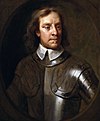
Princess Elizabeth on Charles I of England
“What the King said to me the 29th January 1648. being the last time I had the happinesse to see Him. He told me, He was glad I was come, and although He had not time to say much, yet somewhat He had to say to me, which he had not to another, or leave in writing, because He feared their Crueltie was such, as that they would not have permitted Him to write to me. He wished me not to grieve and torment myself for Him, for that would be a glorious death that He should die, it being for the Laws and Liberties of this Land, and for maintaining the true Protestant Religion. He bid me read Bishop Andrews's Sermons, Hooker's Ecclesiastical Politie, and Bishop Laud's Book against Fisher, which would ground me against Poperie. He told me, He had forgiven all His Enemies, and hoped God would forgive them also; and commanded Us, and all the rest of my Brothers & Sisters, to forgive them... Further, He commanded Us all to forgive those people, but never to trust them; for they had been most false to Him, and to those that gave them power, and He feared also to their own souls; And desired me not to grieve for Him, for He should die a Martyr; And that He doubted not but the Lord would settle His Throne upon his Son, and that We should be all happier, then We could have expected to have been, if He had lived: With many other things, which at present I cannot remember.”
John Richard Green on Charles I of England 3 quotes
“Amidst the wreck of his fortunes Charles seized on the growing discord among his opponents as a means of retrieving all. He trusted that the dread of revolution would at last rally the whole body of conservative Englishmen round the royal standard; and it is likely enough that had he frankly flung himself on the side of the Parliament at this juncture he might have regained much of his older power. But, beaten and hunted as he was from place to place, he was determined to regain not much but all. The terms which the Houses offered were still severe; and Charles believed that a little kingcraft would free him from the need of accepting any terms whatever. He therefore intrigued busily with both parties, and promised liberty of worship to Vane and the Independents at the moment when he was negotiating with the Parliament and with the Scots. His negotiations were quickened by the march of Fairfax upon Oxford. Driven from his last refuge at the close of April 1646, the King had to choose between a flight from the realm or a surrender to one of the armies about him. Charles had no mind to forsake England when all seemed working for his success; and after some aimless wanderings he made his appearance in May in the camp of the Scots.”

James King Hewison on Charles I of England
“Charles was put to death at the time when his influence, long on the wane, was at its lowest point. He had outlived his usefulness, alienated every party, political and religious, betrayed and deserted his most intimate accomplices, and deceived his subjects generally. Charles had talents above the average. With much of the culture and refinement of his epoch, he lacked that breadth of view, consistency of purpose, and firmness of will which distinguish a good ruler and a powerful statesman. His manliness was not of the highest order, and his courage was spasmodic, which is not to be wondered at, since in courting success Charles acted on the vicious principle that the end justifies the means. The oft-repeated assertion that Charles died a martyr to religion and to Episcopacy cannot be maintained by any one cognizant of the unscrupulous stratagems which he used in order to restore himself to absolute power, such as the temporary countenancing of Presbyterianism in Scotland in 1641, and his offer to re-establish popery in Ireland in 1645.”
Simon Jenkins on Charles I of England
“After Charles tried to rule as an autocrat for eleven years, the outcome was civil war and his defeat and execution in 1649. To us, that execution ranks as the truly revolutionary event of English history. But to see revolutions as incidents rather than processes is misleading. Charles’ execution was not seen at the time as a revolutionary triumph, whether for democracy or for Parliament. It was rather, as its instigator Oliver Cromwell put it, a cruel necessity’ to secure the sanctity of the Petition of Right. If that required violence, so be it.”
About Charles I of England
Charles I (November 19, 1600 – January 30, 1649) was King of England, King of Scotland, and King of Ireland from 27 March 1625 until his execution in 1649. After his succession in 1625, Charles quarrelled with the Parliament of England, which sought to curb his royal prerogative. Charles believed in the divine right of kings, and was determined to govern according to his own conscience.