In a letter to Heinrich Wilhelm Matthias Olbers (14 May 1826), defending Chevalier d'Angos against presumption of guilt (by Johann Franz Encke and others), of having falsely claimed to have discovered a comet in 1784; as quoted in Calculus Gems (1992) by George F. Simmons
“
I mean the word proof not in the sense of the lawyers, who set two half proofs equal to a whole one, but in the sense of a mathematician, where ½ proof = 0, and it is demanded for proof that every doubt becomes impossible.
— Carl Friedrich Gauss
What It Means
This is a placeholder explanation generated by the low-overhead model. It interprets "I mean the word proof not in the sense of the lawyers, who set two half proofs equal to a whole one, but in the sense of a mathematician, where ½ proof = 0, and it is demanded for proof that every doubt becomes impossible." in the context of "In a letter to Heinrich Wilhelm Matthias Olbers (14 May 1826), defending Chevalier d'Angos against presumption of guilt (by Johann Franz Encke and others), of having falsely claimed to have discovered a comet in 1784; as quoted in Calculus Gems (1992) by George F. Simmons" to mean that wisdom is timeless.
Source: Wikiquote: "Carl Friedrich Gauss" (Quotes)
The 'What it means' explanation text was generated by Google Gemini Flash (accessed January 18, 2026). https://gemini.google.com/app
Tags
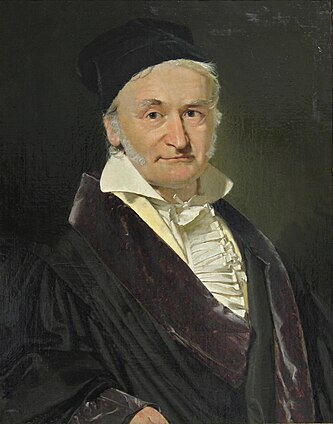
About Carl Friedrich Gauss
Johann Carl Friedrich Gauss (30 April 1777 – 23 February 1855) was a German mathematician, astronomer and physicist.
About Carl Friedrich Gauss
Johann Carl Friedrich Gauss (30 April 1777 – 23 February 1855) was a German mathematician, astronomer and physicist.
View all quotes →