Brian O'Leary Quotes (1940-2011)
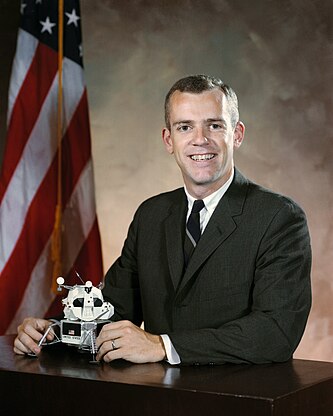
About Brian O'Leary
Best Brian O'Leary Quotes
Explore our curated collection of the most famous and impactful Brian O'Leary quotes.


How about changing the Manned Spacecraft Center in Houston into the National Energy Research Center?”


O’Leary: Whew. A two-year trip to Mars. I must admit that I haven’t given it much thought. Are you serious?
Interviewer: Sure we’re serious. You’re twenty-seven years old, you could be an astronaut for twenty years and within twenty years we could be sending men to Mars. And Mars is your field of specialty, isn’t it, Dr. O’Leary?”

Which one(s) of these will solve our climate crisis and give us a large and lasting contribution to energy sustainability? The sobering answer to any truthful inquiry, I am sorry to say, is none of the above.”

On the positive side, I believe that an unmanned space program emphasizing applications satellites and the exploration of the planets would be both economical and fundamental in our quest for knowledge. Such a program could be funded annually for between one and two billion dollars and thus free money and resources for more urgent priorities. Cooperating with the Soviet Union may reduce the costs further.”

Add to this fact that I am building relationships with these individuals based on growing mutual respect and trust among colleagues. I would be surprised that all of these people, for the years of work they have put into these experiments, are either deliberately or naïvely fraudulent. On the contrary, these are the explorers of a new reality, often cut off from the mainstream, because the mainstream will more often than not debunk this reality, with a denial based on the most superficial and ad hoc reasoning.”
[…] I believe that the world needs to come together in a blend from the four cultures of the Phoenix, but only the “Spiritualists” of consciousness scientists can provide lasting solutions. All other groups [Truth-Seekers, Deep Ecologists, and Pragmatists] simply do not have the awareness to get there, but they have an important role to play in presenting the depth of our problems.”
Meanwhile, as the dust settles from Challenger, NASA continues to search its soul. In the wake of the accident, it becomes all the more evident that the U.S. civilian space program has been suffering from conflicting interests and goals, intercenter rivalries, uneconomical operations, and an apparent inability to make the sweeping changes that are required. Management of the space station program suffers from this confusion. The space agency’s technical achievements have been, and continue to be, extraordinary. Nowhere can more intelligent and competent engineers and scientists be found. But there appears to be a bureaucratic inertia that inhibits the innovative thinking and risk taking required to blaze new trails.”
An image came up. I saw myself seeing a man, dark-haired and in his forties, walking along a beach on the west coast of Maui in Hawaii. He was without a woman and somewhat sad about it, as he walked into an idyllic make-believe house that I had made for him. I showed him globes and maps. He asked questions and we had a strong rapport. We looked up at billowing clouds, wafting above palm trees which were blowing in the wind. In this imaginative mock-up we shared, he was teaching me about the climate and physical geography of the Hawaiian Islands. I knew I wasn’t guessing. I was either “channeling” some truth or imagining something vivid. My female partner broke into my reverie to inform me that the man had lost his wife by death, was a meteorologist and journalist by profession, and had spent much time on Maui. She said my description fit him to a T.”

You have asked the public to address the important question, “How can we reverse global climate change?” I agree that taking on that task is critical for our collective survival. You have also stated that we must freeze and drastically reduce our carbon emissions. I agree.
The most promising answer to your question is surprisingly simple and can be summed up in two words: new energy. My experience finds that serious discussion of new energy is still politically incorrect in mainstream circles, which is appalling. Delays in implementing life-saving innovation will be at our collective risk and peril. The urgency for action in these times is unprecedented in the human journey. Quantum leaps in energy innovation, which some of us in the scientific community are aware of, can provide the needed solution, hopefully in time to avert global disaster.”
It seems utterly incredible that so many well-respected scientists could resign at a time one would suppose to be their finest hour - the return of the first rocks and detailed pictures from the lunar surface. Eugene Shoemaker, now the chairman of Caltech's Division of Geological Sciences, quit his Apollo work “out of deep concern for the direction of the nation's space goal.” He described Apollo as a “poor system for exploring the moon… The same job could have been done with unmanned systems at one-fifth the cost three or four years ago.”
[…] In these times of conflicting, uncertain goals both inside and outside NASA, I think the unmanned planetary program provides a good example of what can be done. The Mariner 6 and 7 flyby missions gave us remarkable pictures and valuable scientific information, yet each cost less than 15 percent of the price of sending two test pilots to the moon.
In the future, probes will be sent to the Martian surface and to the other planets; these relatively inexpensive projects should go far in satisfying our most fundamental reason for going into space: to understand nature and ourselves better by exploring the universe.”

In all, I have met several dozen free energy researchers. What all of these individuals have in common is the underfunding of their work such that it proceeds to proof-of-concept but no further. Developing useful prototypes requires a much larger effort as would come from bringing the researchers together in a research and development effort analogous to the Apollo or Manhattan projects. But there has been no public and little private support for free energy inventors – particularly in the United States – even though this country is where most of the ideas come from. We seem to be so active in repressing this technology we have driven most of our brightest inventors away or underground.
The remarkable fact is, we seem to have had this technology for one century! Nikola Tesla was among the first of such energy mavericks, who through the decades, have repeatedly demonstrated free energy, only to be suppressed later. For a whole century we probably didn’t have to pollute the Earth to meet our energy needs!”