Link Copied!
Booker T. Washington Quotes (1856-1915)
President, Author, Leader

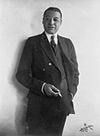

About Booker T. Washington
Booker Taliaferro Washington (April 5, 1856 – November 14, 1915) was an American political leader, educator and author of African ancestry, most famous for his tenure as President of Tuskegee University (1880–1915).
Best Booker T. Washington Quotes
Shortest
Earliest
Explore our curated collection of the most famous and impactful Booker T. Washington quotes.

“There is no power on earth, that can neutralize the influence of a high, pure, simple and useful life.”
“We have cleared the forests, reclaimed the land, and are building cities, railroads, and great institutions.”


“Few things can help an individual more than to place responsibility on him, and to let him know that you trust him.”

“No man who continues to add something to the material, intellectual, and moral well-being of the place in which he lives is long left without proper reward.”

“The unprecedented leap the Negro made when freed from the oppressing withes of bondage is more than deserving of a high place in history. It can never be chronicled. The world needs to know of what mettle these people are built.”
“Character, not circumstances, makes the man. It is more important that we be prepared for voting than that we vote, more important that we be prepared to hold office than that we hold office, more important that we be prepared for the highest recognition than that we be recognized.”
“In any country, regardless of what its laws say, wherever people act upon the idea that the disadvantage of one man is the good of another, there slavery exists. Wherever, in any country the whole people feel that the happiness of all is dependent upon the happiness of the weakest, there freedom exists.”

“My whole life has largely been one of surprises. I believe that any man's life will be filled with constant, unexpected encouragements of this kind if he makes up his mind to do his level best each day of his life — that is, tries to make each day reach as nearly as possible the high-water mark of pure, unselfish, useful living.”

“There is another class of coloured people who make a business of keeping the troubles, the wrongs, and the hardships of the Negro race before the public. Having learned that they are able to make a living out of their troubles, they have grown into the settled habit of advertising their wrongs — partly because they want sympathy and partly because it pays. Some of these people do not want the Negro to lose his grievances, because they do not want to lose their jobs.”
“In working out our destiny, while the main burden and center of activity must be with us, we shall need in a large measure the help, the encouragement, the guidance that the strong can give the weak. Thus helped, we of both races in the South shall soon throw off the shackles of racial and sectional prejudice and rise above the clouds of ignorance, narrowness, and selfishness into that atmosphere, that pure sunshine, where it will be our highest ambition to serve man, our brother, regardless of race or past conditions.”

“Men may make laws to hinder and fetter the ballot, but men cannot make laws that will bind or retard the growth of manhood.
We went into slavery a piece of property; we came out American citizens. We went into slavery pagans; we came out Christians. We went into slavery without a language; we came out speaking the proud Anglo-Saxon tongue. We went into slavery with slave chains clanking about our wrists; we came out with the American ballot in our hands.
Progress, progress is the law of nature; under God it shall be our eternal guiding star.”

Booker T. Washington Quotes by Topic
Find exactly what you are looking for by browsing this categorized list of Booker T. Washington quotes by topic.
Booker T. Washington on Slavery 2 quotes
“Of all forms of slavery there is none that is so harmful and degrading as that form of slavery which tempts one human being to hate another by reason of his race or color. One man cannot hold another man down in the ditch without remaining down in the ditch with him.”
Booker T. Washington on Theft
Booker T. Washington on Hatred
Booker T. Washington on Minimax
Booker T. Washington on Reward
“No man, who continues to add something to the material, intellectual and moral well-being of the place in which he lives, is left long without proper reward.”

Booker T. Washington on Opportunity
“Opportunity is like a bald-headed man with only a patch of hair right in front. You have to grab that hair, grasp the opportunity while it's confronting you, else you'll be grasping a slick bald head.”
Booker T. Washington on Beauty
“That beautiful flower in that vase has not spoken a word tonight; it will never speak a word, but, nevertheless, through its beauty and magnificent silence it is lifting up, and making more Christlike every human being in this room.”

Booker T. Washington on Love
Booker T. Washington on Intellectual
“My experience is that people who call themselves “The Intellectuals” understand theories, but they do not understand things. .. The truth is, I suspect, as I have already suggested, that “The Intellectuals” live too much in the past. They know books but they do not know men.”
Booker T. Washington on Freedom
“In any country, regardless of what its laws say, wherever people act upon the idea that the disadvantage of one man is the good of another, there slavery exists. Wherever, in any country the whole people feel that the happiness of all is dependent upon the happiness of the weakest, there freedom exists.”

Booker T. Washington on Emancipation Proclamation
“As the great day drew nearer, there was more singing in the slave quarters than usual. It was bolder, had more ring, and lasted later into the night. Most of the verses of the plantation songs had some reference to freedom. ... Some man who seemed to be a stranger (a United States officer, I presume) made a little speech and then read a rather long paper—the Emancipation Proclamation, I think. After the reading we were told that we were all free, and could go when and where we pleased. My mother, who was standing by my side, leaned over and kissed her children, while tears of joy ran down her cheeks. She explained to us what it all meant, that this was the day for which she had been so long praying, but fearing that she would never live to see.”

Booker T. Washington on Strike action
“At the end of my second year at Hampton, by the help of some money sent me by my mother and brother John, supplemented by a small gift from one of the teachers at Hampton, I was enabled to return to my home in Malden, West Virginia, to spend my vacation. When I reached home I found that the salt-furnaces were not running, and that the coal-mine was not being operated on account of the miners being out on a “strike.” This was something which, it seemed, usually occurred whenever the men got two or three months ahead in their savings. During the strike, of course, they spent all that they had saved, and would often return to work in debt at the same wages, or would move to another mine at considerable expense. In either case, my observations convinced me that the miners were worse off at the end of a strike. Before the days of strikes in that section of the country, I knew miners who had considerable money in the bank, but as soon as the professional labor agitators got control, the savings of even the more thrifty ones began disappearing.”

What Booker T. Washington Said About Others
Discover personal opinions Booker T. Washington shared regarding contemporaries.
Booker T. Washington on Frederick Douglass 5 quotes
“It required time and the cumulation of events to bring about a state of feeling that would tolerate the suggestion of using colored men in the Union army. Mr. Douglass more than any other one man, helped to bring about this change. It finally became evident that if the Negroes were good enough to be employed in the Confederate ranks, as laborers, they ought to be good enough for like service in the Union lines.”

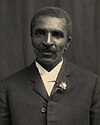
Booker T. Washington on George Washington Carver 2 quotes
“Although Professor Carver impresses every one who meets him with the extent of his knowledge in the matter of plant life, he is quite the most modest man I have ever met.”
Booker T. Washington on Bert Williams
Booker T. Washington on English people
“The home life of the English seems to me to be about as perfect as anything can be. Everything moves like clockwork. I was impressed, too, with the deference that the servants show to their "masters" and "mistresses" ... The English servant expects, as a rule, to be nothing but a servant, and so he perfects himself in the art...”

Quotes About Booker T. Washington
Gain deeper perspective through quotes about Booker T. Washington from others.
Anonymous on Booker T. Washington
“There is trouble in the White House More than you can tell; Yelling like wild men, Niggers raising hell.I see a way to settle it Just as clear as water, Let Mr. Booker Washington Marry Teddy's daughter.”
John Spencer Bassett on Booker T. Washington
“Now Washington is a great and good man, a Christian statesman, and take him all in all the greatest man, save General Lee, born in the South in a hundred years; but he is not a typical negro.”
Lerone Bennett Jr. on Booker T. Washington
“Almost everything Washington said or did was shot through with a certain irony. He bowed before the prejudices of the meanest Southerner, but he moved in circles in the North which were closed to all but a few white men. He told Negroes that Jim Crow was irrelevant, but he himself violated the law by riding first class in Pullman cars with Southern white men and women. And irony of ironies: he who advised Negroes to forget about politics wielded more political power than any other Negro in American history.”
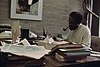
Michael Scott Bieze on Booker T. Washington 4 quotes
“Booker T. Washington advised, networked, cut deals, made threats, pressured, punished enemies, rewarded friends, greased palms, manipulated the media, signed autographs, read minds with the skill of a master psychologist, strategized, raised money, always knew where the camera was pointing, traveled with an entourage, waved the flag with patriotic speeches, and claimed to have no interest in partisan politics. In other words, he was an artful politician. He was not a lawyer, scholar, college-bred man, or a military hero. But he knew how to use the power of symbolism through the lens of a storyteller.”
Andrew Carnegie on Booker T. Washington
“Booker Washington is the combined Moses and Joshua of his people. Not only has he led them to the promised land, but still lives to teach them by example and precept how properly to enjoy it.”
Archbishop of Canterbury on Booker T. Washington
“I have for some years had the pleasure of Mr. Booker Washington's acquaintance, and I share with all those who know the facts the appreciation of the services he has rendered and is rendering to the solution of one of the gravest and most perplexing problems of our time. He is a man who, in every sense, deserves well of his contemporaries, and I believe that, when hereafter the story is written of Christian people's endeavour in our day to atone for and to amend the racial wrongdoings of the past, Mr. Booker Washington's name will stand in the very forefront of those for whom the world will give thanks.”
W. E. B. Du Bois on Booker T. Washington
“So thoroughly did he learn the speech and thought of triumphal commercialism, and the ideals of material prosperity, that the picture of a lone black boy poring over a French grammar amid the weeds and dirt of a neglected home soon seemed to him the acme of absurdities. One wonders what Socrates and St. Francis of Assisi would say to this.”

Dwight D. Eisenhower on Booker T. Washington
“We are a people born of many peoples. Our culture, our skills, our very aspirations have been shaped by immigrants—and their sons and daughters—from all the earth. Sam Gompers from England, Andrew Carnegie from Scotland, Albert Einstein from Germany—and Booker T. Washington and Al Smith—Marconi and Caruso—men of all nations and races and estates—they have made us what we are.”

Misattributed Quotes
Quotes mistakenly credited to Booker T. Washington
“Opportunity is like a bald-headed man with only a patch of hair right in front. You have to grab that hair, grasp the opportunity while it's confronting you, else you'll be grasping a slick bald head.”
About Booker T. Washington
Booker Taliaferro Washington (April 5, 1856 – November 14, 1915) was an American political leader, educator and author of African ancestry, most famous for his tenure as President of Tuskegee University (1880–1915).