Link Copied!
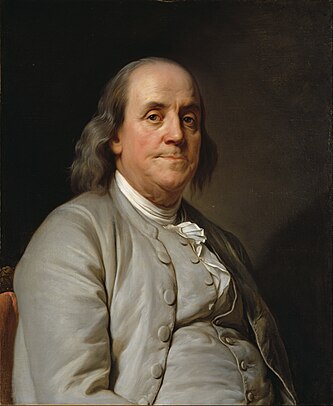
Benjamin Franklin Quotes (1706-1790)
Philosopher, Author, Activist




-100px.png)
































-100px.jpg)







-100px.jpg)

















-100px.png)
About Benjamin Franklin
Benjamin Franklin (17 January 1706 – 17 April 1790) was one of the Founding Fathers of the United States. A renowned polymath, Franklin was a leading author, printer, political theorist, politician, postmaster, scientist, inventor, civic activist, statesman, and a diplomatic scientific and novice electrician; he was a major figure in the U.S. Enlightenment and the history of physics for his discoveries and theories regarding electricity. As an inventor, he is known for the lightning rod, for keeping bifocals fog-free, and the Franklin stove, among other inventions. He facilitated many civic organizations, including Philadelphia's fire department and the University of Pennsylvania.
Best Benjamin Franklin Quotes
Shortest
Earliest
Explore our curated collection of the most famous and impactful Benjamin Franklin quotes.
“Man [is a] tool-making animal.”



“Lighthouses are more useful than churches.”



“Ambition has its disappointments to sour us, but never the good fortune to satisfy us.”

“Justice will not be served until those who are unaffected are as outraged as those who are.”

“[A] great Empire, like a great Cake, is most easily diminished at the Edges.”

“We must, indeed, all hang together, or assuredly we shall all hang separately.”
“The definition of insanity is doing the same thing over and over and expecting different results.”

“When the people find that they can vote themselves money, that will herald the end of the republic.”

“Do not anticipate trouble, or worry about what may never happen. Keep in the sunlight.”
“From a persuasion that equal liberty was originally the Portion, It is still the Birthright of all men.”

“Let all Men know thee, but no man know thee thoroughly: Men freely ford that see the shallows.”

“Democracy is two wolves and a lamb voting on what to have for lunch. Liberty is a well-armed lamb contesting the vote.”

“The good particular men may do separately, in relieving the sick, is small, compared with what they may do collectively.”

“It would be thought a hard Government that should tax its People one-tenth Part of their Time, to be employed in its Service.”

“Here you would know and enjoy what posterity will say of Washington. For a thousand leagues have nearly the same effect with a thousand years.”
“Our limited perspective, our hopes and fears become our measure of life, and when circumstances don't fit our ideas, they become our difficulties.”
“If all printers were determined not to print anything till they were sure it would offend nobody, there would be very little printed.”
“Idleness and Pride Tax with a heavier Hand than Kings and Parliaments; If we can get rid of the former we may easily bear the Latter.”
“Every Body cries, a Union is absolutely necessary, but when they come to the Manner and Form of the Union, their weak Noddles are perfectly distracted.”

“Our new Constitution is now established, and has an appearance that promises permanency; but in this world nothing can be said to be certain, except death and taxes!”

“The first man put at the helm will be a good one. No body knows what sort may come afterwards. The Executive will be always increasing here, as elsewhere, till it ends in a Monarchy.”
“That it is better 100 guilty Persons should escape than that one innocent Person should suffer, is a maxim that has been long and generally approved; never, that I know of, controverted.”
“But I must own that I am much in the Dark about Light. I am not satisfy'd with the doctrine that supposes particles of matter call'd light continually driven off from the Sun's Surface, with a Swiftness so prodigious!”

“God grant, that not only the Love of Liberty, but a thorough Knowledge of the Rights of Man, may pervade all the Nations of the Earth, so that a Philosopher may set his Foot anywhere on its Surface, and say, 'This is my Country.'”

“How much more than is necessary do we spend in Sleep! forgetting that The sleeping Fox catches no Poultry,[Sept. 1743] and that there will be sleeping enough in the Grave,[Sept. 1741] as Poor Richard says.”



“I think opinions should be judged of by their influences and effects; and if a man holds none that tend to make him less virtuous or more vicious, it may be concluded that he holds none that are dangerous, which I hope is the case with me.”
“I fully agreed with Gen. Washington that we must safeguard this young nation, as yet in its swaddling clothes, from the insidious influence and impenetration of the Roman Catholic Church which pauperizes and degrades all countries and people over whom it holds sway.”
“Libraries ... will be the best security for maintaining our liberties. A nation of well-informed men, who have been taught to know and prize the rights which God has given them, cannot be enslaved. It is in the regions of ignorance that tyranny reigns.”

“All Wars are Follies, very expensive & very mischievous ones. When will Mankind be convinc’d of this, and agree to settle their Differences by Arbitration? Were they to do it even by the Cast of a Dye, it would be better than by Fighting & destroying each other.”
“[B]lessings ought rightfully to be administered, without distinction of Colour, to all descriptions of People, so they indulge themselves in the pleasing expectation, that nothing, which can be done for the relive of the unhappy objects of their care, will be either omitted or delayed.”
“But our great security lies, I think, in our growing strength, both in numbers and wealth; ... unless, by a neglect of military discipline, we should lose all martial spirit ...; for there is much truth in the Italian saying, Make yourselves sheep, and the wolves will eat you.”
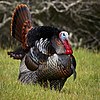
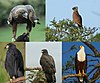
“I wish the Bald Eagle had not been chosen as the representative of our country; he is a bird of bad moral character; like those among men who live by sharping and robbing, he is generally poor, and often very lousy. The turkey is a much more respectable bird.”
“Much less is it adviseable for a Person to go thither [to America], who has no other Quality to recommend him but his Birth. In Europe it has indeed its Value; but it is a Commodity that cannot be carried to a worse Market than that of America, where people do not inquire concerning a Stranger, What is he? but, What can he do?”
“I confess that there are several parts of this Constitution which I do not at present approve, but I am not sure I shall never approve them. For having lived long, I have experienced many instances of being obliged by better information, or fuller consideration, to change opinions even on important subjects, which I once thought right, but found to be otherwise.”

“Freedom of speech is a principal pillar of a free government; when this support is taken away, the constitution of a free society is dissolved, and tyranny is erected on its ruins. Republics and limited monarchies derive their strength and vigor from a popular examination into the action of the magistrates.”
“In the Colonies we issue our own money. It is called Colonial Scrip. We issue it in proper proportion to the demands of trade and industry to make the products pass easily from the producers to the consumers. In this manner, creating for ourselves our own paper money, we control its purchasing power, and we have no interest to pay no one.”

“Has not the famous political Fable of the Snake, with two Heads and one Body, some useful Instruction contained in it? She was going to a Brook to drink, and in her Way was to pass thro' a Hedge, a Twig of which opposed her direct Course; one Head chose to go on the right side of the Twig, the other on the left, so that time was spent in the Contest, and, before the Decision was completed, the poor Snake died with thirst.”
“That Being, who gave me existence, and through almost threescore years has been continually showering his favors upon me, whose very chastisements have been blessings to me ; can I doubt that he loves me? And, if he loves me, can I doubt that he will go on to take care of me, not only here but hereafter? This to some may seem presumption ; to me it appears the best grounded hope ; hope of the future built on experience of the past.”

“The more the people are discontented with the oppression of taxes; the greater need the prince has of money to distribute among his partisans and pay the troops that are to suppress all resistance, and enable him to plunder at pleasure. There is scarce a king in a hundred who would not, if he could, follow the example of Pharaoh, get first all the peoples money, then all their lands, and then make them and their children servants for ever. . .”
“The art of concluding from experience and observation consists in evaluating probabilities, in estimating if they are high or numerous enough to constitute proof. This type of calculation is more complicated and more difficult than one might think. It demands a great sagacity generally above the power of common people. The success of charlatans, sorcerors, and alchemists — and all those who abuse public credulity — is founded on errors in this type of calculation.”
“The Face first grows lank and wrinkled; then the Neck; then the Breast and Arms; the lower Parts continuing to the last as plump as ever: So that covering all above with a Basket, and regarding only what is below the Girdle, it is impossible of two Women to know an old from a young one. And as in the dark all Cats are grey, the Pleasure of corporal Enjoyment with an old Woman is at least equal, and frequently superior, every Knack being by Practice capable of Improvement.”

“[Referring to private hospital funding alone:] That won't work, it will never be enough, good health care costs a lot of money, remembering 'the distant parts of this province' in which 'assistance cannot be procured, but at an expense that neither [the sick-poor] nor their townships can afford.' ... '[This] seems essential to the true spirit of Christianity, and should be extended to all in general, whether deserving or undeserving, as far as our power reaches.'”

“Today a man owns a jackass worth fifty dollars and he is entitled to vote; but before the next election the jackass dies. The man in the mean time has become more experienced, his knowledge of the principles of government, and his acquaintance with mankind, are more extensive, and he is therefore better qualified to make a proper selection of rulers -- but the jackass is dead and the man cannot vote. Now gentlemen, pray inform me, in whom is the right of suffrage? In the man or in the jackass?”
“In these sentiments, Sir, I agree to this Constitution, with all its faults, — if they are such; because I think a general Government necessary for us, and there is no form of government but what may be a blessing to the people, if well administered; and I believe, farther, that this is likely to be well administered for a course of years, and can only end in despotism, as other forms have done before it, when the people shall become so corrupted as to need despotic government, being incapable of any other.”
“But your Squabbles about a Bishop I wish to see speedily ended. ... Each Party abuses the other, the Profane and the Infidel believe both sides, and enjoy the Fray; the Reputation of Religion in general suffers, and its enemies are ready to say, not what was said in the primitive Times, Behold how these Christians love one another, but, Mark how these Christians hate one another! Indeed when religious People quarrel about Religion, or hungry People about their Victuals, it looks as if they had not much of either among them.”

“[T]he waters moved away from the North American Coast towards the coasts of Spain and Africa, whence they get again into the Power of the Trade Winds, and continue the Circulation. ...so long and so strong a Current as that of the Gulph Stream, thro' all the Latitudes of variable Winds, can only be accounted for, by its having a considerable Descent, and moving from Parts where the Water is higher, to Parts where it is lower.”
“We hear of the conversion of water into wine at the marriage in Cana as of a miracle. But this conversion is, through the goodness of God, made every day before our eyes. Behold the rain which descends from heaven upon our vineyards; there it enters the roots of the vines, to be changed into wine; a constant proof that God loves us, and loves to see us happy. The miracle in question was only performed to hasten the operation, under circumstances of present necessity, which required it.”
“Mankind naturally and generally love to be flatter'd: Whatever sooths our Pride, and tends to exalt our Species above the rest of the Creation, we are pleas'd with and easily believe, when ungrateful Truths shall be with the utmost Indignation rejected. "What! bring ourselves down to an Equality with the Beasts of the Field! with the meanest part of the Creation! 'Tis insufferable!" But, (to use a Piece of common Sense) our Geese are but Geese tho' we may think 'em Swans; and Truth will be Truth tho' it sometimes prove mortifying and distasteful.”

“Whilst the last members were signing it Doctor Franklin looking towards the President's Chair, at the back of which a rising sun happened to be painted, observed to a few members near him, that Painters had found it difficult to distinguish in their art a rising from a setting sun. "I have," said he, "often and often in the course of the Session, and the vicissitudes of my hopes and fears as to its issue, looked at that behind the President without being able to tell whether it was rising or setting: But now at length I have the happiness to know that it is a rising and not a setting Sun."”

“The colonies would gladly have borne the little tax on tea and other matters had it not been that England took away from the colonies their money, which created unemployment and dissatisfaction. The inability of colonists to get power to issue their own money permanently out of the hands of George the III and the international bankers was the PRIME reason for the Revolutionary War.
• Variant: The colonies would gladly have borne the little tax on tea and other matters had it not been that England and the Rothschild's Bank took away from the colonies their money which created unemployment, dissatisfaction and debt.”
• Variant: The colonies would gladly have borne the little tax on tea and other matters had it not been that England and the Rothschild's Bank took away from the colonies their money which created unemployment, dissatisfaction and debt.”
“I am much obliged by the kind present you have made us of your edition of Vattel. It came to us in good season, when the circumstances of a rising state make it necessary frequently to consult The Law of Nations. Accordingly, that copy which I kept, (after depositing one in our own public library here, and sending the other to the college of Massachusetts Bay, as you directed3) has been continually in the hands of the members of our congress, now sitting, who are much pleased with your notes and preface, and have entertained a high and just esteem for their author.”
“Remember me affectionately to good Dr. Price and to the honest heretic Dr. Priestly. I do not call him honest by way of distinction; for I think all the heretics I have known have been virtuous men. They have the virtue of fortitude or they would not venture to own their heresy; and they cannot afford to be deficient in any of the other virtues, as that would give advantage to their many enemies; and they have not like orthodox sinners, such a number of friends to excuse or justify them. Do not, however, mistake me. It is not to my good friend's heresy that I impute his honesty. On the contrary, 'tis his honesty that has brought upon him the character of heretic.”
“I've lived, Sir, a long time, and the longer I live, the more convincing Proofs I see of this Truth — That God governs in the Affairs of Men. And if a sparrow cannot fall to the ground without his Notice, is it probable that an Empire can rise without his Aid? We have been assured, Sir, in the Sacred Writings, that except the Lord build the House they labor in vain who build it. I firmly believe this, — and I also believe that without his concurring Aid, we shall succeed in this political Building no better than the Builders of Babel: We shall be divided by our little partial local interests; our Projects will be confounded, and we ourselves shall become a Reproach and Bye word down to future Ages.”
“For my own Part, when I am employed in serving others, I do not look upon myself as conferring Favours, but as paying Debts. In my Travels, and since my Settlement, I have received much Kindness from Men, to whom I shall never have any Opportunity of making the least direct Return. And numberless Mercies from God, who is infinitely above being benefited by our Services. Those Kindnesses from Men, I can therefore only Return on their Fellow Men; and I can only shew my Gratitude for these mercies from God, by a readiness to help his other Children and my Brethren. For I do not think that Thanks and Compliments, tho' repeated weekly, can discharge our real Obligations to each other, and much less those to our Creator.”
“These Thoughts, my dear Friend, are many of them crude and hasty, and if I were merely ambitious of acquiring some Reputation in Philosophy, I ought to keep them by me, ’till corrected and improved by Time and farther Experience. But since even short Hints, and imperfect Experiments in any new Branch of Science, being communicated, have oftentimes a good Effect, in exciting the attention of the Ingenious to the Subject, and so becoming the Occasion of more exact disquisitions (as I before observed) and more compleat Discoveries, you are at Liberty to communicate this Paper to whom you please; it being of more Importance that Knowledge should increase, than that your Friend should be thought an accurate Philosopher.”

“They appeared all to have made considerable progress in reading for the time they had respectively been in the school, and most of them answered readily and well the questions of the catechism. They behaved very orderly, and showed a proper respect and ready obedience to the mistress, and seemed very attentive to, and a good deal affected by, a serious exhoration with which Mister Sturgeon concluded our visit. I was on the whole much pleased, and from what I then saw, have conceived a higher opinion of the natural capacities of the black race, than I had ever before entertained. Their apprehension seems as quick, their memory as strong, and their docility in every respect equal to that of white children.”
“Can sweetening our tea, &c. with sugar, be a circumstance of such absolute necessity? Can the petty pleasure thence arising to the taste, compensate for so much misery produced among our fellow creatures, and such a constant butchery of the human species by this pestilential detestable traffic in the bodies and souls of men?—Pharisaical Britain! to pride thyself in setting free a single Slave that happens to land on thy coasts, while thy Merchants in all thy ports are encouraged by thy laws to continue a commerce whereby so many hundreds of thousands are dragged into a slavery that can scarce be said to end with their lives, since it is entailed on their posterity!”
“Slavery is such an atrocious debasement of human nature, that its very extirpation, if not performed with solicitious care, may sometimes open a source of serious evils. The unhappy man who has been treated as a brute animal, too frequently sinks beneath the common standard of the human species. The galling chains, that bind his body, do also fetter his intellectual faculties, and impair the social affections of his heart... To instruct, to advise, to qualify those, who have been restored to freedom, for the exercise and enjoyment of civil liberty... and to procure for their children an education calculated for their future situation in life; these are the great outlines of the annexed plan, which we have adopted.”

“The Faith you mention has doubtless its use in the World. I do not desire to see it diminished, nor would I endeavour to lessen it in any Man. But I wish it were more productive of good Works, than I have generally seen it: I mean real good Works, Works of Kindness, Charity, Mercy, and Publick Spirit; not Holiday-keeping, Sermon-Reading or Hearing; performing Church Ceremonies, or making long Prayers, filled with Flatteries and Compliments, despis'd even by wise Men, and much less capable of pleasing the Deity. The worship of God is a Duty; the hearing and reading of Sermons may be useful; but, if Men rest in Hearing and Praying, as too many do, it is as if a Tree should Value itself on being water'd and putting forth Leaves, tho' it never produc'd any Fruit.”
“When an Indian Child has been brought up among us, taught our language and habituated to our Customs, yet if he goes to see his relations and makes one Indian Ramble with them, there is no perswading him ever to return, and that this is not natural to them merely as Indians, but as men, is plain from this, that when white persons of either sex have been taken prisoners young by the Indians, and lived a while among them, tho' ransomed by their Friends, and treated with all imaginable tenderness to prevail with them to stay among the English, yet in a Short time they become disgusted with our manner of life, and the care and pains that are necessary to support it, and take the first good Opportunity of escaping again into the Woods, from whence there is no reclaiming them.”
“The Game of Chess is not merely an idle amusement; several very valuable qualities of the mind, useful in the course of human life, are to be acquired and strengthened by it, so as to become habits ready on all occasions; for life is a kind of Chess, in which we have often points to gain, and competitors or adversaries to contend with, and in which there is a vast variety of good and ill events, that are, in some degree, the effect of prudence, or the want of it. By playing at Chess then, we may learn: 1st, Foresight, which looks a little into futurity, and considers the consequences that may attend an action ... 2nd, Circumspection, which surveys the whole Chess-board, or scene of action: — the relation of the several Pieces, and their situations; ... 3rd, Caution, not to make our moves too hastily...”

“All Property indeed, except the Savage's temporary Cabin, his Bow, his Matchcoat, and other little Acquisitions absolutely necessary for his Subsistence, seems to me to be the Creature of publick Convention. Hence the Public has the Right of Regulating Descents & all other Conveyances of Property, and even of limiting the Quantity & the Uses of it. All the Property that is necessary to a Man for the Conservation of the Individual & the Propagation of the Species, is his natural Right which none can justly deprive him of: But all Property of the Publick, who by their Laws have created it, and who may therefore by other Laws dispose of it, whenever the Welfare of the Publick shall demand such Disposition. He that does not like civil Society on these Terms, let him retire & live among Savages. — He can have no right to the Benefits of Society who will not pay his Club towards the Support of it.”

“As to Jesus of Nazareth, my Opinion of whom you particularly desire, I think the System of Morals and his Religion, as he left them to us, the best the world ever saw or is likely to see; but I apprehend it has received various corrupt changes, and I have, with most of the present Dissenters in England, some Doubts as to his divinity; tho' it is a question I do not dogmatize upon, having never studied it, and I think it needless to busy myself with it now, when I expect soon an Opportunity of knowing the Truth with less Trouble.
• Variation: "The moral and religious system which Jesus Christ transmitted to us is the best the world has ever seen, or can see.", as quoted in John Wallis (1856), The British Millennial Harbinger, p. 428”
• Variation: "The moral and religious system which Jesus Christ transmitted to us is the best the world has ever seen, or can see.", as quoted in John Wallis (1856), The British Millennial Harbinger, p. 428”

“'''''Every man of the commonalty (excepting infants, insane persons, and criminals) is, of common right, and by the laws of God, a freeman, and entitled to the free enjoyment of liberty''. ...liberty or freedom consists in having an actual share in the appointment of those who are to frame the laws and who are to be the guardians of every man's life, property, and peace. For the all of one man is as dear to him as the all of another; and the poor man has an equal right, but more need to have representatives in the Legislature than the rich one. ...they who have no voice or vote in the electing of representatives, do not enjoy liberty, but are absolutely enslaved to those who have votes and their representatives'''; for to be enslaved is to have governors whom other men have set over us, and to be subject to laws made by the representatives of others, without having had representatives of our own to give consent in our behalf.”

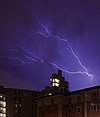
“There is something however in the experiments of points, sending off, or drawing on, the electrical fire, which has not been fully explained, and which I intend to supply... For the doctrine of points is very curious, and the effects of them truly wonderfull; and, from what I have observed on experiments, I am of opinion, that houses, ships, and even towns and churches may be effectually secured from the stroke of lightening by their means; for if, instead of the round balls of wood or metal, which are commonly placed on the tops of the weathercocks, vanes or spindles of churches, spires or masts, there should be put a rod of iron 8 or 10 feet in length, sharpen'd gradually to a point like a needle, and gilt to prevent rusting, or divided into a number of points, which would be better—the electrical fire would, I think, be drawn out of a cloud silently, before it could come near enough to strike...”
“That the vegetable creation should restore the air which is spoiled by the animal part of it, looks like a rational system, and seems to be of a piece with the rest. Thus fire purifies water all the world over. It purifies it by distillation, when it raises it in vapours, and lets it fall in rain; and farther still by filtration, when keeping it fluid, it suffers that rain to percolate the earth. We knew before that putrid animal substances were converted into sweet vegetables when mixed with the earth and applied as manure; and now, it seems, that the same putrid substances, mixed with the air, have a similar effect. The strong, thriving state of your mint, in putrid air, seems to show that the air is mended by taking something from it, and not by adding to it. I hope this will give some check to the rage of destroying trees that grow near houses, which has accompanied our late improvements in gardening, from an opinion of their being unwholesome. I am certain, from long observation, that there is nothing unhealthy in the air of woods; for we Americans have everywhere our country habitations in the midst of woods, and no people on earth enjoy better health or are more prolific.”

“History will also afford frequent Opportunities of showing the Necessity of a Publick Religion, from its Usefulness to the Publick; the Advantage of a Religious Character among private Persons; the Mischiefs of Superstition, &c. and the Excellency of the Christian Religion above all others antient or modern.
History will also give Occasion to expatiate on the advantage of Civil Orders and Constitutions, how men and their properties are protected by joining in Societies and establishing Government; their Industry encouraged and rewarded, Arts invented, and Life made more comfortable: the Advantages of Liberty, Mischiefs of Licentiousness, Benefits arising from good Laws and a due Execution of Justice &c. Thus may the first Principles of sound Politics be fixed in the minds of youth.
On Historical occasions, Questions of Right and Wrong, Justice and Injustice, will naturally arise, and may be put to Youth, which they may debate in Conversation and in Writing. When they ardently desire of Victory, for the Sake of the Praise attending it, they will begin to feel the want, and be sensible of the use of the Use of Logic, or the Art of Reasoning to discover Truth, and of Arguing to defend it, and convince adversaries.”
History will also give Occasion to expatiate on the advantage of Civil Orders and Constitutions, how men and their properties are protected by joining in Societies and establishing Government; their Industry encouraged and rewarded, Arts invented, and Life made more comfortable: the Advantages of Liberty, Mischiefs of Licentiousness, Benefits arising from good Laws and a due Execution of Justice &c. Thus may the first Principles of sound Politics be fixed in the minds of youth.
On Historical occasions, Questions of Right and Wrong, Justice and Injustice, will naturally arise, and may be put to Youth, which they may debate in Conversation and in Writing. When they ardently desire of Victory, for the Sake of the Praise attending it, they will begin to feel the want, and be sensible of the use of the Use of Logic, or the Art of Reasoning to discover Truth, and of Arguing to defend it, and convince adversaries.”
“why should the Palatine Boors be suffered to swarm into our Settlements, and by herding together establish their Language and Manners to the Exclusion of ours? Why should Pennsylvania, founded by the English, become a Colony of Aliens, who will shortly be so numerous as to Germanize us instead of our Anglifying them, and will never adopt our Language or Customs, any more than they can acquire our Complexion. 24. Which leads me to add one Remark: That the Number of purely white People in the World is proportionably very small. All Africa is black or tawny. Asia chiefly tawny. America (exclusive of the new Comers) wholly so. And in Europe, the Spaniards, Italians, French, Russians and Swedes, are generally of what we call a swarthy Complexion; as are the Germans also, the Saxons only excepted, who with the English, make the principal Body of White People on the Face of the Earth. I could wish their Numbers were increased. And while we are, as I may call it, Scouring our Planet, by clearing America of Woods, and so making this Side of our Globe reflect a brighter Light to the Eyes of Inhabitants in Mars or Venus, why should we in the Sight of Superior Beings, darken its People? why increase the Sons of Africa, by Planting them in America, where we have so fair an Opportunity, by excluding all Blacks and Tawneys, of increasing the lovely White and Red? But perhaps I am partial to the Complexion of my Country, for such Kind of Partiality is natural to Mankind.”
“I am for doing good to the poor, but I differ in opinion of the means. I think the best way of doing good to the poor, is not making them easy in poverty, but leading or driving them out of it. In my youth I travelled much, and I observed in different countries, that the more public provisions were made for the poor, the less they provided for themselves, and of course became poorer. And, on the contrary, the less was done for them, the more they did for themselves, and became richer. There is no country in the world where so many provisions are established for them; so many hospitals to receive them when they are sick or lame, founded and maintained by voluntary charities; so many alms-houses for the aged of both sexes, together with a solemn general law made by the rich to subject their estates to a heavy tax for the support of the poor. Under all these obligations, are our poor modest, humble, and thankful; and do they use their best endeavours to maintain themselves, and lighten our shoulders of this burthen? On the contrary, I affirm that there is no country in the world in which the poor are more idle, dissolute, drunken, and insolent. The day you passed that act, you took away from before their eyes the greatest of all inducements to industry, frugality, and sobriety, by giving them a dependence on somewhat else than a careful accumulation during youth and health, for support in age or sickness. In short, you offered a premium for the encouragement of idleness, and you should not now wonder that it has had its effect in the increase of poverty.”
“Make a small Cross of two light Strips of Cedar, the Arms so long as to reach to the four Corners of a large thin Silk Handkerchief when extended; tie the Corners of the Handkerchief to the Extremities of the Cross, so you have the Body of a Kite; which being properly accommodated with a Tail, Loop and String, will rise in the Air, like those made of Paper; but this being of Silk is fitter to bear the Wet and Wind of a Thunder Gust without tearing. To the Top of the upright Stick of the Cross is to be fixed a very sharp pointed Wire, rising a Foot or more above the Wood. To the End of the Twine, next the Hand, is to be tied a silk Ribbon, and where the Twine and the silk join, a Key may be fastened. This Kite is to be raised when a Thunder Gust appears to be coming on, and the Person who holds the String must stand within a Door, or Window, or under some Cover, so that the Silk Ribbon may not be wet; and Care must be taken that the Twine does not touch the Frame of the Door or Window. As soon as any of the Thunder Clouds come over the Kite, the pointed Wire will draw the Electric Fire from them, and the Kite, with all the Twine, will be electrified, and the loose Filaments of the Twine will stand out every Way, and be attracted by an approaching Finger. And when the Rain has wet the Kite and Twine, so that it can conduct the Electric Fire freely, you will find it stream out plentifully from the Key on the Approach of your Knuckle. At this Key the Phial may be charg'd; and from Electric Fire thus obtain'd, Spirits may be kindled, and all the other Electric Experiments be perform'd, which are usually done by the Help of a rubbed Glass Globe or Tube; and thereby the Sameness of the Electric Matter with that of Lightning compleatly demonstrated.”
“I have read your Manuscript with some Attention. By the Arguments it contains against the Doctrine of a particular Providence, tho' you allow a general Providence, you strike at the Foundation of all Religion: For without the Belief of a Providence that takes Cognizance of, guards and guides and may favour particular Persons, there is no Motive to Worship a Deity, to fear its Displeasure, or to pray for its Protection. I will not enter into any Discussion of your Principles, tho' you seem to desire it; At present I shall only give you my Opinion that tho' your Reasonings are subtle, and may prevail with some Readers, you will not succeed so as to change the general Sentiments of Mankind on that Subject, and the Consequence of printing this Piece will be a great deal of Odium drawn upon your self, Mischief to you and no Benefit to others. He that spits against the Wind, spits in his own Face. But were you to succeed, do you imagine any Good would be done by it? You yourself may find it easy to live a virtuous Life without the Assistance afforded by Religion; you having a clear Perception of the Advantages of Virtue and the Disadvantages of Vice, and possessing a Strength of Resolution sufficient to enable you to resist common Temptations. But think how great a Proportion of Mankind consists of weak and ignorant Men and Women, and of inexperienc'd and inconsiderate Youth of both Sexes, who have need of the Motives of Religion to restrain them from Vice, to support their Virtue, and retain them in the Practice of it till it becomes ''habitual''''', which is the great Point for its Security; And perhaps you are indebted to her originally that is to your Religious Education, for the Habits of Virtue upon which you now justly value yourself. You might easily display your excellent Talents of reasoning on a less hazardous Subject, and thereby obtain Rank with our most distinguish'd Authors. For among us, it is not necessary, as among the Hottentots that a Youth to be receiv'd into the Company of Men, should prove his Manhood by beating his Mother. I would advise you therefore not to attempt unchaining the Tyger, but to burn this Piece before it is seen by any other Person, whereby you will save yourself a great deal of Mortification from the Enemies it may raise against you, and perhaps a good deal of Regret and Repentance. If Men are so wicked as we now see them with Religion what would they be if without it?'''”
“Remember that time is money. He that can earn ten shillings a day by his labor, and goes abroad, or sits idle, one half of that day, though he spends but sixpence during his diversion or idleness, ought not to reckon that the only expense; he has really spent, rather thrown away, five shillings, besides.
“Remember, that credit is money. If a man lets his money lie in my hands after it is due, he gives me interest, or so much as I can make of it during that time. This amounts to a considerable sum where a man has good and large credit, and makes good use of it.
“Remember, that money is of the prolific, generating nature. Money can beget money, and its offspring can beget more, and so on. Five shillings turned is six, turned again it is seven and three pence, and so on, till it becomes a hundred pounds. The more there is of it, the more it produces every turning, so that the profits rise quicker and quicker. He that kills a breeding sow, destroys all her offspring to the thousandth generation. He that murders a crown, destroys all that it might have produced, even scores of pounds.”
“Remember this saying, The good paymaster is lord of another man’s purse . He that is known to pay punctually and exactly to the time he promises, may at any time, and on any occasion, raise all the money his friends can spare. This is sometimes of great use. After industry and frugality, nothing contributes more to the raising of a young man in the world than punctuality and justice in all his dealings; therefore never keep borrowed money an hour beyond the time you promised, lest a disappointment shut up your friend’s purse for ever.
“The most trifling actions that affect a man’s credit are to be regarded. The sound of your hammer at five in the morning, or eight at night, heard by a creditor, makes him easy six months longer; but if he sees you at a billiard table, or hears your voice at a tavern, when you should be at work, he sends for his money the next day; demands it, before he can receive it, in a lump. ‘It shows, besides, that you are mindful of what you owe; it makes you appear a careful as well as an honest man, and that still increases your credit.’
“Beware of thinking all your own that you possess, and of living accordingly. It is a mistake that many people who have credit fall into. To prevent this, keep an exact account for some time both of your expenses and your income. If you take the pains at first to mention particulars, it will have this good effect: you will discover how wonderfully small, trifling expenses mount up to large sums, and will discern what might have been, and may for the future be saved, without occasioning any great inconvenience.
“For six pounds a year you may have the use of one hundred pounds, provided you are a man of known prudence and honesty.
“He that spends a groat a day idly, spends idly above six pounds a year, which is the price for the use of one hundred pounds.
“He that wastes idly a groat’s worth of his time per day, one day with another, wastes the privilege of using one hundred pounds each day.
“He that idly loses five shillings’ worth of time, loses five shillings, and might as prudently throw five shillings into the sea.
“He that loses five shillings, not only loses that sum, but all the advantage that might be made by turning it in dealing, which by the time that a young man becomes old, will amount to a considerable sum of money.””
“Remember, that credit is money. If a man lets his money lie in my hands after it is due, he gives me interest, or so much as I can make of it during that time. This amounts to a considerable sum where a man has good and large credit, and makes good use of it.
“Remember, that money is of the prolific, generating nature. Money can beget money, and its offspring can beget more, and so on. Five shillings turned is six, turned again it is seven and three pence, and so on, till it becomes a hundred pounds. The more there is of it, the more it produces every turning, so that the profits rise quicker and quicker. He that kills a breeding sow, destroys all her offspring to the thousandth generation. He that murders a crown, destroys all that it might have produced, even scores of pounds.”
“Remember this saying, The good paymaster is lord of another man’s purse . He that is known to pay punctually and exactly to the time he promises, may at any time, and on any occasion, raise all the money his friends can spare. This is sometimes of great use. After industry and frugality, nothing contributes more to the raising of a young man in the world than punctuality and justice in all his dealings; therefore never keep borrowed money an hour beyond the time you promised, lest a disappointment shut up your friend’s purse for ever.
“The most trifling actions that affect a man’s credit are to be regarded. The sound of your hammer at five in the morning, or eight at night, heard by a creditor, makes him easy six months longer; but if he sees you at a billiard table, or hears your voice at a tavern, when you should be at work, he sends for his money the next day; demands it, before he can receive it, in a lump. ‘It shows, besides, that you are mindful of what you owe; it makes you appear a careful as well as an honest man, and that still increases your credit.’
“Beware of thinking all your own that you possess, and of living accordingly. It is a mistake that many people who have credit fall into. To prevent this, keep an exact account for some time both of your expenses and your income. If you take the pains at first to mention particulars, it will have this good effect: you will discover how wonderfully small, trifling expenses mount up to large sums, and will discern what might have been, and may for the future be saved, without occasioning any great inconvenience.
“For six pounds a year you may have the use of one hundred pounds, provided you are a man of known prudence and honesty.
“He that spends a groat a day idly, spends idly above six pounds a year, which is the price for the use of one hundred pounds.
“He that wastes idly a groat’s worth of his time per day, one day with another, wastes the privilege of using one hundred pounds each day.
“He that idly loses five shillings’ worth of time, loses five shillings, and might as prudently throw five shillings into the sea.
“He that loses five shillings, not only loses that sum, but all the advantage that might be made by turning it in dealing, which by the time that a young man becomes old, will amount to a considerable sum of money.””
Benjamin Franklin Quotes by Topic
Find exactly what you are looking for by browsing this categorized list of Benjamin Franklin quotes by topic.
Benjamin Franklin on Advice 5 quotes
View all 5 quotes on Advice →Benjamin Franklin on Money 5 quotes
“If you'd lose a troublesome visitor, lend him money.”
Benjamin Franklin on Enemies 4 quotes
View all 4 quotes on Enemies →Benjamin Franklin on Life 4 quotes
“Dost thou love life? then do not squander time; for that is the stuff life is made of.”

Benjamin Franklin on United States Constitution 4 quotes
“Our new Constitution is now established, and has an appearance that promises permanency; but in this world nothing can be said to be certain, except death and taxes.”

What Benjamin Franklin Said About Others
Discover personal opinions Benjamin Franklin shared regarding contemporaries.
Benjamin Franklin on Wives 2 quotes
“An undutiful Daughter will prove an unmanageable Wife.”

Benjamin Franklin on Women 2 quotes
“Are women books? says Hodge, then would mine were An Almanack, to change her every year.”

Benjamin Franklin on George Washington 2 quotes
“Here you would know, and enjoy, what posterity will say of Washington. For a thousand leagues have nearly the same effect with a thousand years.”

Benjamin Franklin on Thaddeus Stevens
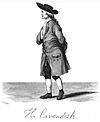
Benjamin Franklin on Henry Cavendish
“It were to be wished, that this noble philosopher would communicate more of his experiments to the world, as he makes many, and with great accuracy.”
Quotes About Benjamin Franklin
Gain deeper perspective through quotes about Benjamin Franklin from others.
Edmund Burke on Benjamin Franklin
“I congratulate you, as the friend of America, I trust, as not the enemy of England, I am sure, as the friend of mankind.”

Frances Burney on Benjamin Franklin
“Mr. Burke then, to Miss Shipley's great delight, burst forth into an eulogy of the abilities and character of Dr. Franklin, which he mingled with a history the most striking, yet simple, of his life; and a veneration the most profound for his eminence in science, and his liberal sentiments and skill in politics.”

Molly Farrell on Benjamin Franklin
“The year was 1748, the place was Philadelphia, and the book was The Instructor, a popular British manual for everything from arithmetic to letter-writing to caring for horses’ hooves. Benjamin Franklin had set himself to adapting it for the American colonies. Though Franklin already had a long and successful career by this point, he needed to find a way to convince colonial book-buyers—who for the most part didn’t even formally study arithmetic—that his version of George Fisher’s textbook was worth the investment. Franklin made all sorts of changes throughout the book, from place names to inserting colonial histories, but he made one really big change: adding John Tennent’s The Poor Planter’s Physician to the end. Tennent was a Virginia doctor whose medical pamphlet had first appeared in 1734. By appending it to The Instructor (replacing a treatise on farriery) Franklin hoped to distinguish the book from its London ancestor. Franklin advertised that his edition was “the whole better adapted to these American Colonies, than any other book of the like kind.” In the preface he goes on to specifically mention his swapping out of sections, insisting that “in the British Edition of this Book, there were many Things of little or no Use in these Parts of the World: In this Edition those Things are omitted, and in their Room many other Matters inserted, more immediately useful to us Americans.” One of those useful “Matters” was a how-to on at-home abortion, made available to anyone who wanted a book that could teach the ABCs and 123s.”
John Kenneth Galbraith on Benjamin Franklin 2 quotes
“The monetary experiments of Pennsylvania and its neighbors were by no means an unconsidered reaction to circumstance. They were extensively debated and had the energetic support of Benjamin Franklin, the most intelligent political man in the colonies and an ardent exponent of paper money. In 1729 he published his A Modest Enquiry into the Nature and Necessity of Paper Currency, a brief on behalf of paper currency... In 1736, Franklin's Pennsylvania Gazette printed an apology for its irregular appearance because its printer was "with the Press, labouring for the publick Good, to make Money more plentiful." The press was busy printing money.”

David Hume on Benjamin Franklin
“America has sent us many good things, gold, silver, sugar, tobacco; but you are the first philosopher for whom we are beholden to her. It is our own fault that we have not kept him; whence it appears that we do not agree with Solomon, that wisdom is above gold; for we take good care never to send back an ounce of the latter, which we once lay our fingers upon.”





About Benjamin Franklin
Benjamin Franklin (17 January 1706 – 17 April 1790) was one of the Founding Fathers of the United States. A renowned polymath, Franklin was a leading author, printer, political theorist, politician, postmaster, scientist, inventor, civic activist, statesman, and a diplomatic scientific and novice electrician; he was a major figure in the U.S. Enlightenment and the history of physics for his discoveries and theories regarding electricity. As an inventor, he is known for the lightning rod, for keeping bifocals fog-free, and the Franklin stove, among other inventions. He facilitated many civic organizations, including Philadelphia's fire department and the University of Pennsylvania.