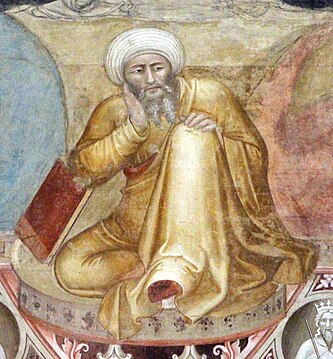
This was declared without citation to have been attributed to Avicenna in A Rationalist Encyclopaedia : A Book of Reference on Religion, Philosophy, Ethics, and Science (1950), by Joseph McCabe, p. 43; it was also later wrongly attributed to Averroes in The Atheist World (1991) by Madalyn Murray O'Hair, p. 46. It actually originates as a statement by Al-Maʿarri, earlier translated into English in A Short History of Freethought Ancient and Modern (1906) by John Mackinnon Robertson, Vol. I, Ch. VIII : Freethought under Islam, p. 269, in the form: "The world holds two classes of men ; intelligent men without religion, and religious men without intelligence."
“
The world is divided into men who have wit and no religion and men who have religion and no wit.
— Averroes
What It Means
This is a placeholder explanation generated by the low-overhead model. It interprets "The world is divided into men who have wit and no religion and men who have religion and no wit." in the context of "This was declared without citation to have been attributed to Avicenna in A Rationalist Encyclopaedia : A Book of Reference on Religion, Philosophy, Ethics, and Science (1950), by Joseph McCabe, p. 43; it was also later wrongly attributed to Averroes in The Atheist World (1991) by Madalyn Murray O'Hair, p. 46. It actually originates as a statement by Al-Maʿarri, earlier translated into English in A Short History of Freethought Ancient and Modern (1906) by John Mackinnon Robertson, Vol. I, Ch. VIII : Freethought under Islam, p. 269, in the form: "The world holds two classes of men ; intelligent men without religion, and religious men without intelligence."" to mean that wisdom is timeless.
ʾAbū l-Walīd Muḥammad bin ʾAḥmad bin Rušd (14 April 1126 – 10 December 1198), known as Ibn Rushd, Latinized Averroës, was an Andalusian Muslim polymath, a great master of Aristotelian philosophy, Islamic philosophy, Islamic theology, Maliki law and jurisprudence, logic, psychology, politics and Arabic music theory, and the sciences of medicine, astronomy, geography, mathematics, physics and celestial mechanics.
About Averroes
ʾAbū l-Walīd Muḥammad bin ʾAḥmad bin Rušd (14 April 1126 – 10 December 1198), known as Ibn Rushd, Latinized Averroës, was an Andalusian Muslim polymath, a great master of Aristotelian philosophy, Islamic philosophy, Islamic theology, Maliki law and jurisprudence, logic, psychology, politics and Arabic music theory, and the sciences of medicine, astronomy, geography, mathematics, physics and celestial mechanics.