Link Copied!
Audre Lorde Quotes (1934-1992)
Writer, Activist














































About Audre Lorde
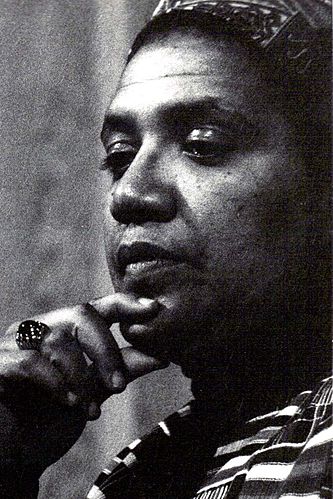
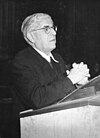
Audre Geraldine Lorde (18 February 1934 – 17 November 1992) was a black writer, feminist, womanist, lesbian, and civil rights activist. Her poems and prose largely deal with issues related to civil rights, feminism, and the exploration of black female identity.
Best Audre Lorde Quotes
Shortest
Earliest
Explore our curated collection of the most famous and impactful Audre Lorde quotes.

“The erotic cannot be felt secondhand.”
“One oppression does not justify another.”

“Difference does not have to be threatening.”
“Anger is loaded with information and energy.”

“Guilt is only another form of objectification.”
“Rape is not aggressive sexuality, it is sexualized aggression.”

“Pain is very visceral, particularly to the people who are hurting.”
“Perceptions precede analysis just as visions precede action or accomplishments.”

“Difference is that raw and powerful connection from which our personal power is forged.”

“Sexism: The belief in the inherent superiority of one sex and thereby the right to dominance.”
Audre Lorde Quotes by Topic
Find exactly what you are looking for by browsing this categorized list of Audre Lorde quotes by topic.
Audre Lorde on Anger 14 quotes
“Anger is loaded with information and energy.”

Audre Lorde on Eroticism 10 quotes
“The erotic cannot be felt secondhand.”

Audre Lorde on Poetry 6 quotes
“Our poems formulate the implications of ourselves, what we feel within and dare make real (or bring action into accordance with), our fears, our hopes, our most cherished terrors.”

Audre Lorde on Different 5 quotes
“Difference does not have to be threatening.”

Audre Lorde on Hatred 4 quotes
“Hatred is a deathwish for the hated, not a lifewish for anything else.”

Audre Lorde on 1960s 4 quotes
“The 60s for me was a time of promise and excitement, but the 60s was also a time of isolation and frustration from within. [...] It was a time of great hope and great expectation; it was also a time of great waste. That is history. We do not need to repeat these mistakes in the 80s.”

Audre Lorde on United States invasion of Grenada 4 quotes
“With the constant manipulation of the media, many Black americans are honestly confused, defending “our” invasion of Black Grenada under a mistaken mirage of patriotism. Nineteen eighty-four is upon us, and doublethink has come home to scramble our brains and blanket our protest.”

Audre Lorde on Silence 3 quotes
View all 3 quotes on Silence →Audre Lorde on Oppression 3 quotes
“One oppression does not justify another.”
Audre Lorde on Feelings 3 quotes
View all 3 quotes on Feelings →Audre Lorde on Guilt 3 quotes
“Guilt and defensiveness are bricks in a wall against which we all flounder; they serve none of our futures.”
Audre Lorde on Survival 2 quotes
View all 2 quotes on Survival →What Audre Lorde Said About Others
Discover personal opinions Audre Lorde shared regarding contemporaries.
Audre Lorde on Black women 7 quotes
“When patriarchy dismisses us, it encourages our murderers. When radical lesbian feminist theory dismisses us, it encourages its own demise.”

Audre Lorde on Malcolm X 3 quotes
“Malcolm X is a distinct shape in a very pivotal period of my life. I stand here now — Black, Lesbian, Feminist — an inheritor of Malcolm and in his tradition, doing my work, and the ghost of his voice through my mouth asks each one of you here tonight: Are you doing yours?”
Audre Lorde on Women
Audre Lorde on Lesbian
“There is, for me, no difference between writing a good poem and moving into sunlight against the body of a woman I love.”

Audre Lorde on Simone de Beauvoir
“Simone de Beauvoir once said: "It is in the knowledge of the genuine conditions of our lives that we must draw our strength to live and our reasons for acting."”
Audre Lorde on Cherríe Moraga
Audre Lorde on Barbara Smith
Audre Lorde on Crystal Eastman
“Crystal Eastman's immediacy to the emotional, social, economic, and political problems of contemporary women forms a bridge of feminist theory and support between her day and ours.”

Audre Lorde on Ntozake Shange
“Robert Staples sees in Ntozake Shange's play For Colored Girls "a collective appetite for black male blood." Yet it is my female children and my Black sisters who lie bleeding all around me, victims of the appetites of our brothers.”

Audre Lorde on Maurice Bishop
“Weeks after the invasion, Grenadians were still smelling out and burying bodies which lay all over the island. The true casualty figures will never be known. No civilian body count is available. Even the bodies of Maurice Bishop and his slain ministers are never positively identified, no doubt to forestall any possible enshrinement by the people who loved him, no doubt to make the task of smearing his popular memory more easily accomplished. It has already begun.”

Audre Lorde on Mary Church Terrell
“I have no creative use for guilt, yours or my own. Guilt is only another way of avoiding informed action, of buying time out of the pressing need to make clear choices, out of the approaching storm that can feed the earth as well as bend the trees. If I speak to you in anger, at least I have spoken to you: I have not put a gun to your head and shot you down in the street; I have not looked at your bleeding sister’s body and asked, “What did she do to deserve it?” This was the reaction of two white women to Mary Church Terrell’s telling of the lynching of a pregnant Black woman whose baby was then torn from her body. That was in 1921, and Alice Paul had just refused to publicly endorse the enforcement of the Nineteenth Amendment for all women — by refusing to endorse the inclusion of women of Color, although we had worked to help bring about that amendment.”
Audre Lorde on Alice Paul
“I have no creative use for guilt, yours or my own. Guilt is only another way of avoiding informed action, of buying time out of the pressing need to make clear choices, out of the approaching storm that can feed the earth as well as bend the trees. If I speak to you in anger, at least I have spoken to you: I have not put a gun to your head and shot you down in the street; I have not looked at your bleeding sister’s body and asked, “What did she do to deserve it?” This was the reaction of two white women to Mary Church Terrell’s telling of the lynching of a pregnant Black woman whose baby was then torn from her body. That was in 1921, and Alice Paul had just refused to publicly endorse the enforcement of the Nineteenth Amendment for all women — by refusing to endorse the inclusion of women of Color, although we had worked to help bring about that amendment.”

Audre Lorde on Adrienne Rich
“Why weren't other women of Color found to participate in this conference? Why were two phone calls to me considered a consultation? Am I the only possible source of names of Black feminists? And although the Black panelist's paper ends on an important and powerful connection of love between women, what about interracial cooperation between feminists who don't love each other? In academic feminist circles, the answer to these questions is often, "We did not know who to ask." But that is the same evasion of responsibility, the same cop-out, that keeps Black women's art out of women's exhibitions, Black women's work out of most feminist publications except for the occasional "Special Third World Women's Issue," and Black women's texts off your reading lists. But as Adrienne Rich pointed out in a recent talk, white feminists have educated themselves about such an enormous amount over the past ten years, how come you haven't also educated yourselves about Black women and the differences between us-white and Black-when it is key to our survival as a movement?”

Quotes About Audre Lorde
Gain deeper perspective through quotes about Audre Lorde from others.
Kathleen Alcalá "The Madonna on Audre Lorde
“No matter what the venue, we can be witnesses to our own existence. "If we do not define ourselves for ourselves," said Audre Lorde, "we will be defined by others- for their use and our detriment." Each generation must look around with a critical eye and ask, "Is this who I am? How will we be portrayed to future generations?"”
Paula Gunn Allen Interview on Audre Lorde
Gloria E. Anzaldúa interview on Audre Lorde
“I'm using the word nos/otras. Otras means other and nos means us, we. We don't have to keep using the oppositional language of the fathers. We were taught to write and think like these theorists. It's complicitous for somebody who is an "other" to be using "their" terms and "their" styles all the time. It's like fighting them with their own language. Audre Lorde said it very succinctly: "You cannot use the master's tools to dismantle the master's house.”
Bettina Aptheker on Audre Lorde 2 quotes
“Poetry is not a luxury for women, explained Audre Lorde. It is the distillation of our experience, the moment of interpretation, the intuitive leap transcending the boundaries of the conventional coordinates on the official map designating our place in the world”

Evelyn Torton Beck Introduction on Audre Lorde
Thema Bryant on Audre Lorde
“Audre Lorde taught us, “Caring for myself is not self-indulgence, it is self-preservation, and that is an act of political warfare.””
Lorna Dee Cervantes Interview on Audre Lorde
“At the library I would go the shelves alphabetically. I was drawn to anyone with a female name, with a Latino or Spanish name. There were very, very few. But as a teenager I discovered African American poetry. Gwendolyn Brooks was the first. Then Phillis Wheatley. I really identified with this slave woman writing poetry to assert and affirm her humanity. Suddenly my eyes were open to history. There was a whole explosion of African-American women poets-Audre Lorde, Nikki Giovanni, June Jordan. I have a poem in my head that's going to take me years to write down. Its working title is "On Thanking Black Muses." I owe them, because poetry really changed my life, saved it.”
Marilyn Chin on Audre Lorde
“I learned a lot from the black arts movement. I loved reading black feminist thinkers on my own (outside of academia)—Audre Lorde, Barbara Smith, Angela Davis, June Jordan, bell hooks, etc.”

Cheryl Clarke on Audre Lorde
“With its paradoxical title, Sister Outsider, Audre Lorde's most influential book of prose, is ever more trenchant twenty-three years after its first printing-surpassing even the reputation of her poetry, which is no minor feat...On the shelf with or at the bottom of that stack of other well-mined tomes-The Black Woman: An Anthology; Conditions: Five, The Black Women's Issue; Lesbian Fiction; Top Ranking-Sister is never far from me. I retain several dog-eared, underlined, coffee-splotched copies of her-at home, at work, on my nightstand-as necessary as my eyeglasses, my second sight... In one paragraph, Lorde can simultaneously blow away the entire Enlightenment project and use its tools, too. In 1990 I quoted myself in "Knowing the Danger and Going There Anyway," an article I wrote on Lorde for the Boston feminist newspaper, Sojourner; I'll change the sister trope and quote myself again: "I said that Audre Lorde's work is 'a neighbor I've grown up with, who can always be counted on for honest talk, to rescue me when I've forgotten the key to my own house, to go with me to a tenants' or town meeting, a community festival'."4 In 1990, Lorde was still walking among us. Sister Outsider has taken its creator's place as that good neighbor. And with this new edition, we will have our good neighbor and sister for another generation. May those of us who are Sister Outsider's old neighbors continue to be inspired by her luminous writing and may those new neighbors be newly inspired.”
Angela Davis on Audre Lorde
“This is not the first period during which we have confronted the difficult problem of using difference as a way of bringing people together, rather than as incontrovertible evidence of separation. There are more options than sameness, opposition, or hierarchical relations. One of the basic challenges confronting women of color today, as Audre Lorde has pointed out, is to think about and act upon notions of equality across difference. There are so many ways in which we can conceptualize coalitions, alliances, and networks that we would be doing ourselves a disservice to argue that there is only one way to construct relations across racial and ethnic boundaries. We cannot assume that if it does not unfold in one particular way, then it is not an authentic coalition.”

Grace Dillon on Audre Lorde
“Aymar Jean Christian of Northwestern University historically contextualizes and updates the notion of intersectional storytelling in his recent book Race and Media: Critical Approaches. “Most creators are ‘intersectional,’ meaning they identify with multiple communities marginalized by their race, class, gender, sexuality, ethnicity, religion, disability, or citizenship status,” he writes. He argues that the framework of intersectionality was developed throughout the 20th century by women writers of color like Sojourner Truth, Audre Lorde, and Kimberlé Crenshaw. Those early intersectional writers sought to describe “the interlocking nature of oppression and the specificity of being both Black and woman (and often queer).””
Joy Harjo on Audre Lorde
“She was a mover of large groups of people. She had a particular charge that transformed cultures. When we lose someone such as her (although we never really ever lose anything or anyone), we have to shift to accommodate the change. The poem addressed our collective change.”

About Audre Lorde
Audre Geraldine Lorde (18 February 1934 – 17 November 1992) was a black writer, feminist, womanist, lesbian, and civil rights activist. Her poems and prose largely deal with issues related to civil rights, feminism, and the exploration of black female identity.