Aristotle, Posterior Analytics (71a 1), tr. by Jonathan Barnes (1984/95)
• Other translations of this quote:
• All doctrine, and all intellectual discipline, arise from pre-existent knowledge, O.F. Owen (1853)
• All communications of knowledge from teacher to pupil by way of reasoning pre-suppose some pre-existing knowledge., E.S. Bouchier (1901)
• All instruction given or received by way of argument proceeds from pre-existent knowledge, G.R.G. Mure (1928).
“
All teaching and all intellectual learning come about from already existing knowledge.
— Aristotle on Knowledge
What It Means
This is a placeholder explanation generated by the low-overhead model. It interprets "All teaching and all intellectual learning come about from already existing knowledge." in the context of "Aristotle, Posterior Analytics (71a 1), tr. by Jonathan Barnes (1984/95)
• Other translations of this quote:
• All doctrine, and all intellectual discipline, arise from pre-existent knowledge, O.F. Owen (1853)
• All communications of knowledge from teacher to pupil by way of reasoning pre-suppose some pre-existing knowledge., E.S. Bouchier (1901)
• All instruction given or received by way of argument proceeds from pre-existent knowledge, G.R.G. Mure (1928)." to mean that wisdom is timeless.
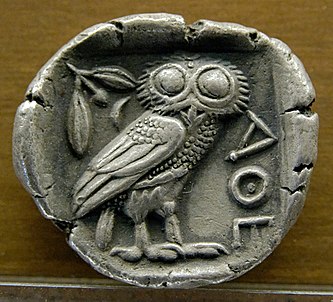
Source: Wikiquote: "Knowledge" (Quotes, ancient history, Greek)
The 'What it means' explanation text was generated by Google Gemini Flash (accessed January 24, 2026). https://gemini.google.com/app
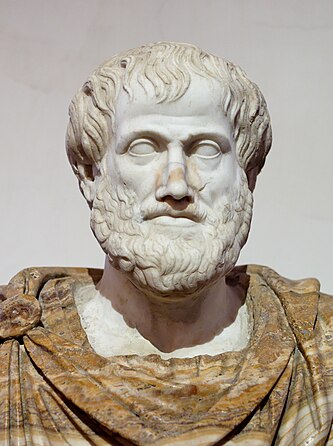
About Aristotle
Aristotle, a student of Plato, revolutionized Western thought through his systematic approach to logic, ethics, and natural sciences. His emphasis on empirical observation and deductive reasoning laid the foundation for scientific inquiry and profoundly shaped philosophy for centuries to come.
View all quotes →