Link Copied!
Aristophanes Quotes (-446--386)
Poet, Playwright
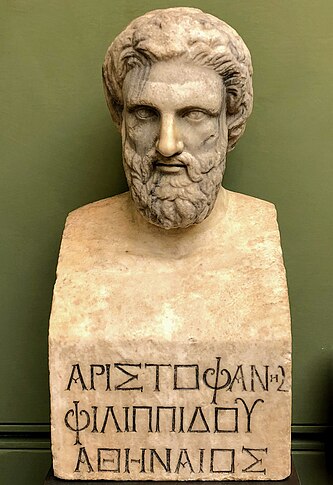







About Aristophanes
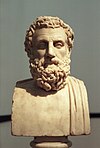
Aristophanes (Greek: Ἀριστοφάνης; c. 446 – c. 386 BC) was a Greek poet and playwright of the Old Comedy, also known as the Father of Comedy and the Prince of Ancient Comedy. Of his forty plays, eleven are extant, plus a thousand fragments of the others.
Best Aristophanes Quotes
Shortest
Earliest
Explore our curated collection of the most famous and impactful Aristophanes quotes.
“Old age is second childhood.”
Unsourced — Primary work/page citation not yet verified in the QuotesCosmos archive. Per our Unnamed Sources & Verification Policy, quotes without confirmed primary editions are explicitly marked Unsourced while under editorial review.
Unsourced — Primary work/page citation not yet verified in the QuotesCosmos archive. Per our Unnamed Sources & Verification Policy, quotes without confirmed primary editions are explicitly marked Unsourced while under editorial review.
Unsourced — Primary work/page citation not yet verified in the QuotesCosmos archive. Per our Unnamed Sources & Verification Policy, quotes without confirmed primary editions are explicitly marked Unsourced while under editorial review.
Unsourced — Primary work/page citation not yet verified in the QuotesCosmos archive. Per our Unnamed Sources & Verification Policy, quotes without confirmed primary editions are explicitly marked Unsourced while under editorial review.
Unsourced — Primary work/page citation not yet verified in the QuotesCosmos archive. Per our Unnamed Sources & Verification Policy, quotes without confirmed primary editions are explicitly marked Unsourced while under editorial review.
“Chorus [of Birds]: Man is naturally deceitful ever, in every way!
(tr. Hickie 1853, vol. 1, p. 326)”
(tr. Hickie 1853, vol. 1, p. 326)”
Unsourced — Primary work/page citation not yet verified in the QuotesCosmos archive. Per our Unnamed Sources & Verification Policy, quotes without confirmed primary editions are explicitly marked Unsourced while under editorial review.
Unsourced — Primary work/page citation not yet verified in the QuotesCosmos archive. Per our Unnamed Sources & Verification Policy, quotes without confirmed primary editions are explicitly marked Unsourced while under editorial review.
Unsourced — Primary work/page citation not yet verified in the QuotesCosmos archive. Per our Unnamed Sources & Verification Policy, quotes without confirmed primary editions are explicitly marked Unsourced while under editorial review.
“Chorus [of Birds]: Man naturally is deceitful, ever indeed, and always, in every one thing.
(tr. Warter 1830, p. 199)”
(tr. Warter 1830, p. 199)”
Unsourced — Primary work/page citation not yet verified in the QuotesCosmos archive. Per our Unnamed Sources & Verification Policy, quotes without confirmed primary editions are explicitly marked Unsourced while under editorial review.
“Lamachus: Ah! the Generals! they are numerous, but not good for much!
(tr. Athen. 1912, vol. 1, Perseus)”
(tr. Athen. 1912, vol. 1, Perseus)”
Unsourced — Primary work/page citation not yet verified in the QuotesCosmos archive. Per our Unnamed Sources & Verification Policy, quotes without confirmed primary editions are explicitly marked Unsourced while under editorial review.

Unsourced — Primary work/page citation not yet verified in the QuotesCosmos archive. Per our Unnamed Sources & Verification Policy, quotes without confirmed primary editions are explicitly marked Unsourced while under editorial review.
“Blepsidemus: There is no honest man! not one, that can resist the attraction of gold!
(tr. O'Neill 1938, Perseus)”
(tr. O'Neill 1938, Perseus)”
Unsourced — Primary work/page citation not yet verified in the QuotesCosmos archive. Per our Unnamed Sources & Verification Policy, quotes without confirmed primary editions are explicitly marked Unsourced while under editorial review.
“Chorus: [We] must look beneath every stone, lest it conceal some orator ready to sting us.
(tr. O'Neill 1938, Perseus)”
(tr. O'Neill 1938, Perseus)”
Unsourced — Primary work/page citation not yet verified in the QuotesCosmos archive. Per our Unnamed Sources & Verification Policy, quotes without confirmed primary editions are explicitly marked Unsourced while under editorial review.
“Æschylus: High thoughts must have high language.
(rewritten and embellished tr. Fitts 1955, p. 108)”
(rewritten and embellished tr. Fitts 1955, p. 108)”
Unsourced — Primary work/page citation not yet verified in the QuotesCosmos archive. Per our Unnamed Sources & Verification Policy, quotes without confirmed primary editions are explicitly marked Unsourced while under editorial review.
“Aeschylus: It is the compelling power of great thoughts and ideas to engender phrases of equal size.
(tr. Dillon 1995, Perseus)”
(tr. Dillon 1995, Perseus)”
Unsourced — Primary work/page citation not yet verified in the QuotesCosmos archive. Per our Unnamed Sources & Verification Policy, quotes without confirmed primary editions are explicitly marked Unsourced while under editorial review.
“Dicaepolis: Comedy too can sometimes discern what is right. I shall not please, but I shall say what is true.
(tr. Athen. 1912, Perseus)”
(tr. Athen. 1912, Perseus)”
Unsourced — Primary work/page citation not yet verified in the QuotesCosmos archive. Per our Unnamed Sources & Verification Policy, quotes without confirmed primary editions are explicitly marked Unsourced while under editorial review.
“Demosthenes: A demagogue must be neither an educated nor an honest man; he has to be an ignoramus and a rogue.
(tr. O'Neill 1938, Perseus)”
(tr. O'Neill 1938, Perseus)”

Unsourced — Primary work/page citation not yet verified in the QuotesCosmos archive. Per our Unnamed Sources & Verification Policy, quotes without confirmed primary editions are explicitly marked Unsourced while under editorial review.

Unsourced — Primary work/page citation not yet verified in the QuotesCosmos archive. Per our Unnamed Sources & Verification Policy, quotes without confirmed primary editions are explicitly marked Unsourced while under editorial review.
Unsourced — Primary work/page citation not yet verified in the QuotesCosmos archive. Per our Unnamed Sources & Verification Policy, quotes without confirmed primary editions are explicitly marked Unsourced while under editorial review.
“Strepsiades: ‘Tis the Whirlwind, that has driven out Zeus and is King now.
(tr. Athen. 1912, vol. 1, p. 350)”
(tr. Athen. 1912, vol. 1, p. 350)”
Unsourced — Primary work/page citation not yet verified in the QuotesCosmos archive. Per our Unnamed Sources & Verification Policy, quotes without confirmed primary editions are explicitly marked Unsourced while under editorial review.
“[Choir of] Men: O botheration take you all! How you cajole and flatter.
A hell it is to live with you; to live without, a hell:
(tr. Lindsay 1925, Perseus)”
A hell it is to live with you; to live without, a hell:
(tr. Lindsay 1925, Perseus)”
Unsourced — Primary work/page citation not yet verified in the QuotesCosmos archive. Per our Unnamed Sources & Verification Policy, quotes without confirmed primary editions are explicitly marked Unsourced while under editorial review.
“Praxagora: Woman is adept at getting money for herself and will not easily let herself be deceived; she understands deceit too well herself.
(tr. O'Neill 1938, Perseus)”
(tr. O'Neill 1938, Perseus)”
Unsourced — Primary work/page citation not yet verified in the QuotesCosmos archive. Per our Unnamed Sources & Verification Policy, quotes without confirmed primary editions are explicitly marked Unsourced while under editorial review.
“Unjust Cause: This art is worth more than ten thousand staters, that one should choose the worse cause, and nevertheless be victorious.
(tr. Hickie 1853, vol. 1, Perseus)”
(tr. Hickie 1853, vol. 1, Perseus)”

Unsourced — Primary work/page citation not yet verified in the QuotesCosmos archive. Per our Unnamed Sources & Verification Policy, quotes without confirmed primary editions are explicitly marked Unsourced while under editorial review.
“Leader of the Chorus: An insult directed at the wicked is not to be censured; on the contrary, the honest man, if he has sense, can only applaud.
(tr. O'Neill 1938, Perseus)”
(tr. O'Neill 1938, Perseus)”
Unsourced — Primary work/page citation not yet verified in the QuotesCosmos archive. Per our Unnamed Sources & Verification Policy, quotes without confirmed primary editions are explicitly marked Unsourced while under editorial review.
“Strepsiades: But come, by the Earth, is not Zeus, the Olympian, a god?
Socrates: What Zeus? Do not trifle. There is no Zeus.
(tr. Hickie 1853, vol. 1, Perseus)”
Socrates: What Zeus? Do not trifle. There is no Zeus.
(tr. Hickie 1853, vol. 1, Perseus)”

Unsourced — Primary work/page citation not yet verified in the QuotesCosmos archive. Per our Unnamed Sources & Verification Policy, quotes without confirmed primary editions are explicitly marked Unsourced while under editorial review.
“Just Cause: [Learn] not to contradict your father in anything; nor by calling him Iapetus, to reproach him with the ills of age, by which you were reared in your infancy.
(tr. Hickie 1853, vol. 1, Perseus)”
(tr. Hickie 1853, vol. 1, Perseus)”
Unsourced — Primary work/page citation not yet verified in the QuotesCosmos archive. Per our Unnamed Sources & Verification Policy, quotes without confirmed primary editions are explicitly marked Unsourced while under editorial review.
“Pisthetaerus: By words the mind is winged. (tr. unknown, seen in Airpower Journal 1990, and in Macmillan Dictionary of Political Quotations 1993, Google Books Search)”

Unsourced — Primary work/page citation not yet verified in the QuotesCosmos archive. Per our Unnamed Sources & Verification Policy, quotes without confirmed primary editions are explicitly marked Unsourced while under editorial review.
“Chorus [leader]: Come now, ye men, in nature darkling, like to the race of leaves, of little might, figures of clay, shadowy feeble tribes, wingless creatures of a day, miserable mortals, dream-like men.
(tr. Hickie 1853, vol. 1, p. 338)”
(tr. Hickie 1853, vol. 1, p. 338)”
Unsourced — Primary work/page citation not yet verified in the QuotesCosmos archive. Per our Unnamed Sources & Verification Policy, quotes without confirmed primary editions are explicitly marked Unsourced while under editorial review.
“[Choir of] Women: It should not prejudice my voice that I'm not born a man, if I say something advantageous to the present situation. For I'm taxed too, and as a toll provide men for the nation.
(tr. Lindsay 1925, Perseus)”
(tr. Lindsay 1925, Perseus)”

Unsourced — Primary work/page citation not yet verified in the QuotesCosmos archive. Per our Unnamed Sources & Verification Policy, quotes without confirmed primary editions are explicitly marked Unsourced while under editorial review.
“Leader of the Chorus: Weak mortals, chained to the earth, creatures of clay as frail as the foliage of the woods, you unfortunate race, whose life is but darkness, as unreal as a shadow, the illusion of a dream.
(tr. O'Neill 1938, Perseus)”
(tr. O'Neill 1938, Perseus)”
Unsourced — Primary work/page citation not yet verified in the QuotesCosmos archive. Per our Unnamed Sources & Verification Policy, quotes without confirmed primary editions are explicitly marked Unsourced while under editorial review.
“Chorus [leader]: Ye Children of Man! whose life is a span, / Protracted with sorrow from day to day, / Naked and featherless, feeble and querulous, / Sickly, calamitous creatures of clay!
(heavily rewritten tr. Frere 1839, p. 38)”
(heavily rewritten tr. Frere 1839, p. 38)”
Unsourced — Primary work/page citation not yet verified in the QuotesCosmos archive. Per our Unnamed Sources & Verification Policy, quotes without confirmed primary editions are explicitly marked Unsourced while under editorial review.
“Unjust Discourse: To invoke solely the weaker arguments and yet triumph is a talent worth more than a hundred thousand drachmae.
(tr. Athen. 1912, vol. 1, p. 361)”
(tr. Athen. 1912, vol. 1, p. 361)”

Unsourced — Primary work/page citation not yet verified in the QuotesCosmos archive. Per our Unnamed Sources & Verification Policy, quotes without confirmed primary editions are explicitly marked Unsourced while under editorial review.
“Sausage-Seller: You [demagogues] are like the fishers for eels; in still waters they catch nothing, but if they thoroughly stir up the slime, their fishing is good; in the same way it's only in troublous times that you line your pockets.
(tr. O'Neill 1938, Perseus)”
(tr. O'Neill 1938, Perseus)”
Unsourced — Primary work/page citation not yet verified in the QuotesCosmos archive. Per our Unnamed Sources & Verification Policy, quotes without confirmed primary editions are explicitly marked Unsourced while under editorial review.
Unsourced — Primary work/page citation not yet verified in the QuotesCosmos archive. Per our Unnamed Sources & Verification Policy, quotes without confirmed primary editions are explicitly marked Unsourced while under editorial review.
“Epops: Come let me see, what shall the name be for our city? [...]
Euelpides: Hence, from the clouds, and these meteoric regions, some all-swelling name.
Pisthetaerus: Would you “Cloud-cuckoo-land?”
(tr. Warter 1830, p. 215)”
Euelpides: Hence, from the clouds, and these meteoric regions, some all-swelling name.
Pisthetaerus: Would you “Cloud-cuckoo-land?”
(tr. Warter 1830, p. 215)”
Unsourced — Primary work/page citation not yet verified in the QuotesCosmos archive. Per our Unnamed Sources & Verification Policy, quotes without confirmed primary editions are explicitly marked Unsourced while under editorial review.
“Lysistrata: O women, if we would compel the men to bow to Peace, [...] We must refrain from every depth of love.... Why do you turn your backs? Where are you going? Why do you bite your lips and shake your heads? Why are your faces blanched? Why do you weep?
(tr. Lindsay 1925, Perseus)”
(tr. Lindsay 1925, Perseus)”
Unsourced — Primary work/page citation not yet verified in the QuotesCosmos archive. Per our Unnamed Sources & Verification Policy, quotes without confirmed primary editions are explicitly marked Unsourced while under editorial review.
“Just Discourse: Do not bandy words with your father, nor treat him as a dotard, nor reproach the old man, who has cherished you, with his age.
(tr. Athen. 1912, vol. 1, p. 359)”
(tr. Athen. 1912, vol. 1, p. 359)”
Unsourced — Primary work/page citation not yet verified in the QuotesCosmos archive. Per our Unnamed Sources & Verification Policy, quotes without confirmed primary editions are explicitly marked Unsourced while under editorial review.

Unsourced — Primary work/page citation not yet verified in the QuotesCosmos archive. Per our Unnamed Sources & Verification Policy, quotes without confirmed primary editions are explicitly marked Unsourced while under editorial review.
“[Choir of] Men: There is no beast, no rush of fire, like woman so untamed. She calmly goes her way where even panthers would be shamed.
[Choir of] Women: And yet you are fool enough, it seems, to dare to war with me, when for your faithful ally you might win me easily.
(tr. Lindsay 1925, Perseus)”
[Choir of] Women: And yet you are fool enough, it seems, to dare to war with me, when for your faithful ally you might win me easily.
(tr. Lindsay 1925, Perseus)”

Unsourced — Primary work/page citation not yet verified in the QuotesCosmos archive. Per our Unnamed Sources & Verification Policy, quotes without confirmed primary editions are explicitly marked Unsourced while under editorial review.
“Leader of the Chorus: Let's see. What shall our city be called? [...]
Euelpides: Some name borrowed from the clouds, from these lofty regions in which we dwell — in short, some well-known name.
Pisthetaerus: Do you like Nephelococcygia?
(tr. O'Neill 1938, Perseus)”
Euelpides: Some name borrowed from the clouds, from these lofty regions in which we dwell — in short, some well-known name.
Pisthetaerus: Do you like Nephelococcygia?
(tr. O'Neill 1938, Perseus)”
Unsourced — Primary work/page citation not yet verified in the QuotesCosmos archive. Per our Unnamed Sources & Verification Policy, quotes without confirmed primary editions are explicitly marked Unsourced while under editorial review.
“Praxagora: I want all to have a share of everything and all property to be in common; there will no longer be either rich or poor; [...] I shall begin by making land, money, everything that is private property, common to all. [...]
Blepyrus: But who will till the soil?
Praxagora: The slaves.
(tr. O'Neill 1938, Perseus)”
Blepyrus: But who will till the soil?
Praxagora: The slaves.
(tr. O'Neill 1938, Perseus)”

Unsourced — Primary work/page citation not yet verified in the QuotesCosmos archive. Per our Unnamed Sources & Verification Policy, quotes without confirmed primary editions are explicitly marked Unsourced while under editorial review.
“Poet: “Straton wanders among the Scythian nomads, but has no linen garment. He is sad at only wearing an animal's pelt and no tunic.” Do you get what I mean?
Pisthetaerus: I understand that you want me to offer you a tunic. Hi! you (To the acolyte.) take off yours; we must help the poet.
(tr. O'Neill 1938, Perseus)”
Pisthetaerus: I understand that you want me to offer you a tunic. Hi! you (To the acolyte.) take off yours; we must help the poet.
(tr. O'Neill 1938, Perseus)”
Unsourced — Primary work/page citation not yet verified in the QuotesCosmos archive. Per our Unnamed Sources & Verification Policy, quotes without confirmed primary editions are explicitly marked Unsourced while under editorial review.
“Chorus [of Birds]: Full of wiles, full of guile, at all times, in all ways, are the children of Men.
(tr. in Bartlett 1968, p. 91 or Archive.org)”
(tr. in Bartlett 1968, p. 91 or Archive.org)”

Unsourced — Primary work/page citation not yet verified in the QuotesCosmos archive. Per our Unnamed Sources & Verification Policy, quotes without confirmed primary editions are explicitly marked Unsourced while under editorial review.
“Demosthenes: Do you dare to accuse wine of clouding the reason? Quote me more marvellous effects than those of wine. Look! when a man drinks, he is rich, everything he touches succeeds, he gains lawsuits, is happy and helps his friends. Come, bring hither quick a flagon of wine, that I may soak my brain and get an ingenious idea.
(tr. O'Neill 1938, Perseus)”
(tr. O'Neill 1938, Perseus)”

Unsourced — Primary work/page citation not yet verified in the QuotesCosmos archive. Per our Unnamed Sources & Verification Policy, quotes without confirmed primary editions are explicitly marked Unsourced while under editorial review.
“Demosthenes [to the Sausage-Seller]: Mix and knead together all the state business as you do for your sausages. To win the people, always cook them some savoury that pleases them. Besides, you possess all the attributes of a demagogue; a screeching, horrible voice, a perverse, crossgrained nature and the language of the market-place. In you all is united which is needful for governing.
(tr. O'Neill 1938, Perseus)”
(tr. O'Neill 1938, Perseus)”
Unsourced — Primary work/page citation not yet verified in the QuotesCosmos archive. Per our Unnamed Sources & Verification Policy, quotes without confirmed primary editions are explicitly marked Unsourced while under editorial review.
“Informer: My friend, I am asking you for wings, not for words.
Pisthetaerus: It's just my words that gives you wings.
Informer: And how can you give a man wings with your words?
Pisthetaerus: They all start this way. [...]
Informer: So that words give wings?
Pisthetaerus: Undoubtedly; words give wings to the mind and make a man soar to heaven. Thus I hope that my wise words will give you wings to fly to some less degrading trade.
(tr. O'Neill 1938, Perseus)”

Unsourced — Primary work/page citation not yet verified in the QuotesCosmos archive. Per our Unnamed Sources & Verification Policy, quotes without confirmed primary editions are explicitly marked Unsourced while under editorial review.
“Epops: The wise can often profit by the lessons of a foe, for caution is the mother of safety. It is just such a thing as one will not learn from a friend and which an enemy compels you to know. To begin with, it's the foe and not the friend that taught cities to build high walls, to equip long vessels of war; and it's this knowledge that protects our children, our slaves and our wealth.
Leader of the Chorus [leader]: Well then, I agree, let us first hear them, for that is best; one can even learn something in an enemy's school.
(tr. O'Neill 1938, Perseus)”
Leader of the Chorus [leader]: Well then, I agree, let us first hear them, for that is best; one can even learn something in an enemy's school.
(tr. O'Neill 1938, Perseus)”
Unsourced — Primary work/page citation not yet verified in the QuotesCosmos archive. Per our Unnamed Sources & Verification Policy, quotes without confirmed primary editions are explicitly marked Unsourced while under editorial review.
“Chorus [speaking for Aristophanes]: Yet I have not been seen frequenting the wrestling school intoxicated with success and trying to seduce young boys; but I took all my theatrical gear and returned straight home. I pained folk but little and caused them much amusement; my conscience rebuked me for nothing. Hence both grown men and youths should be on my side and I likewise invite the bald to give me their votes; for, if I triumph, everyone will say, both at table and at festivals, “Carry this to the bald man, give these cakes to the bald one, do not grudge the poet whose talent shines as bright as his own bare skull the share he deserves.”
(tr. O'Neill 1938, Perseus)”
(tr. O'Neill 1938, Perseus)”

Unsourced — Primary work/page citation not yet verified in the QuotesCosmos archive. Per our Unnamed Sources & Verification Policy, quotes without confirmed primary editions are explicitly marked Unsourced while under editorial review.
“Dicaeopolis: Well, how are things at Megara?
Megarian: We are crying with hunger at our firesides.
Dicaeopolis: The fireside is jolly enough with a piper. But what else is doing at Megara, eh?
Megarian: What else? When I left for the market, the authorities were taking steps to let us die in the quickest manner.
Dicaeopolis: That is the best way to get you out of all your troubles.
Megarian: True.
Dicaeopolis: What other news of Megara? What is wheat selling at?
Megarian: With us it is valued as highly as the very gods in heaven!
(tr. Athen. 1912, vol. 1, Perseus)”
Unsourced — Primary work/page citation not yet verified in the QuotesCosmos archive. Per our Unnamed Sources & Verification Policy, quotes without confirmed primary editions are explicitly marked Unsourced while under editorial review.
“Epops: Yet, certainly, the wise learn many things from their enemies; for caution preserves all things. From a friend you could not learn this, but your foe immediately obliges you to learn it. For example, the states have learned from enemies, and not from friends, to build lofty walls, and to possess ships of war. And this lesson preserves children, house, and possessions.
Chorus [leader]: It is useful, as it appears to me, to hear their arguments first; for one might learn some wisdom even from one's foes.
(tr. Hickie 1853, vol. 1, p. 322; l. 375 identical in SEA 1838, p. 236, and in Bartlett 1968, p. 91 or Archive.org)”
Chorus [leader]: It is useful, as it appears to me, to hear their arguments first; for one might learn some wisdom even from one's foes.
(tr. Hickie 1853, vol. 1, p. 322; l. 375 identical in SEA 1838, p. 236, and in Bartlett 1968, p. 91 or Archive.org)”

Unsourced — Primary work/page citation not yet verified in the QuotesCosmos archive. Per our Unnamed Sources & Verification Policy, quotes without confirmed primary editions are explicitly marked Unsourced while under editorial review.
“Epops: You're mistaken: men of sense often learn from their enemies. Prudence is the best safeguard. This principle cannot be learned from a friend, but an enemy extorts it immediately. It is from their foes, not their friends, that cities learn the lesson of building high walls and ships of war. And this lesson saves their children, their homes, and their properties.
Chorus [leader]: It appears then that it will be better for us to hear what they have to say first; for one may learn something at times even from one's enemies.
(tr. Anon. 1812 rev. in Ramage 1864, p. 45)The original Anon. 1812 translation was: "You're mistaken; men of sense often learn much from their enemies. Prudence is the best safeguard. This principle cannot be learnt from a friend: but an enemy extorts it immediately. It is from their foes and not their friends, that cities learn the lesson of building high walls and ships of war. And this lesson saves their children, their homes, and their properties." — It received five minor changes in Ramage 1864, chiefly: "often learn from" (was "often learn MUCH from "), "learned" (was "LEARNT"), "from their foes, not" (was "from their foes AND not").”
Unsourced — Primary work/page citation not yet verified in the QuotesCosmos archive. Per our Unnamed Sources & Verification Policy, quotes without confirmed primary editions are explicitly marked Unsourced while under editorial review.
“Chremylus: And what good thing can [Poverty] give us, unless it be burns in the bath, and swarms of brats and old women who cry with hunger, and clouds uncountable of lice, gnats and flies, which hover about the wretch's head, trouble him, awake him and say, “You will be hungry, but get up!” [...]
Poverty: It's not my life that you describe; you are attacking the existence beggars lead. [...] The beggar, whom you have depicted to us, never possesses anything. The poor man lives thriftily and attentive to his work; he has not got too much, but he does not lack what he really needs. [...] But what you don't know is this, that men with me are worth more, both in mind and body, than with [Wealth]. With him they are gouty, big-bellied, heavy of limb and scandalously stout; with me they are thin, wasp-waisted, and terrible to the foe. [...] As for behavior, I will prove to you that modesty dwells with me and insolence with [Wealth]. [...] Look at the orators in our republics; as long as they are poor, both state and people can only praise their uprightness; but once they are fattened on the public funds, they conceive a hatred for justice, plan intrigues against the people and attack the democracy. [...]
Chremylus: Then tell me this, why does all mankind flee from you?
Poverty: Because I make them better. Children do the very same; they flee from the wise counsels of their fathers. So difficult is it to see one's true interest.
(tr. O'Neill 1938, Perseus)”

Unsourced — Primary work/page citation not yet verified in the QuotesCosmos archive. Per our Unnamed Sources & Verification Policy, quotes without confirmed primary editions are explicitly marked Unsourced while under editorial review.
Aristophanes Quotes by Topic
Find exactly what you are looking for by browsing this categorized list of Aristophanes quotes by topic.
Aristophanes on Dildo 2 quotes
“As Pherecrates said, skin the skinned dog.”

Unsourced — Primary work/page citation not yet verified in the QuotesCosmos archive. Per our Unnamed Sources & Verification Policy, quotes without confirmed primary editions are explicitly marked Unsourced while under editorial review.
Aristophanes on Persuasion 2 quotes
“Even if you persuade me, you won’t persuade me.”

Unsourced — Primary work/page citation not yet verified in the QuotesCosmos archive. Per our Unnamed Sources & Verification Policy, quotes without confirmed primary editions are explicitly marked Unsourced while under editorial review.
Aristophanes on Evil
“Evil events from evil causes spring.”

Unsourced — Primary work/page citation not yet verified in the QuotesCosmos archive. Per our Unnamed Sources & Verification Policy, quotes without confirmed primary editions are explicitly marked Unsourced while under editorial review.
Aristophanes on Stone
“Under every stone lurks a politician.”
Unsourced — Primary work/page citation not yet verified in the QuotesCosmos archive. Per our Unnamed Sources & Verification Policy, quotes without confirmed primary editions are explicitly marked Unsourced while under editorial review.
Aristophanes on Impossibility
“You cannot make a crab walk straight.”

Unsourced — Primary work/page citation not yet verified in the QuotesCosmos archive. Per our Unnamed Sources & Verification Policy, quotes without confirmed primary editions are explicitly marked Unsourced while under editorial review.
What Aristophanes Said About Others
Discover personal opinions Aristophanes shared regarding contemporaries.
Aristophanes on Women 3 quotes
“These impossible women! How they do get around us! The poet was right: Can’t live with them, or without them!”

Unsourced — Primary work/page citation not yet verified in the QuotesCosmos archive. Per our Unnamed Sources & Verification Policy, quotes without confirmed primary editions are explicitly marked Unsourced while under editorial review.
Quotes About Aristophanes
Gain deeper perspective through quotes about Aristophanes from others.
Socrates on Aristophanes
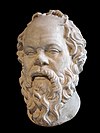
“What did they say when they slandered me? I must, as if they were my actual prosecutors, read the affidavit they would have sworn. It goes something like this: Socrates is guilty of wrongdoing in that he busies himself studying things in the sky and below the earth; he makes the worse into the stronger argument, and he teaches these same things to others. You have seen this yourself in the comedy of Aristophanes, a Socrates swinging about there, saying he was walking on air and talking a lot of other nonsense about things of which I know nothing at all. I do not speak in contempt of such knowledge, if someone is wise in these things—lest Meletus bring more cases against me—but, gentlemen, I have no part in it, and on this point I call upon the majority of you as witnesses. I think it right that all those of you who have heard me conversing, and many of you have, should tell each other if anyone of you has ever heard me discussing such subjects to any extent at all. From this you will learn that the other things said about me by the majority are of the same kind. Not one of them is true. And if you have heard from anyone that I undertake to teach people and charge a fee for it, that is not true either.”
Unsourced — Primary work/page citation not yet verified in the QuotesCosmos archive. Per our Unnamed Sources & Verification Policy, quotes without confirmed primary editions are explicitly marked Unsourced while under editorial review.
Misattributed Quotes
Quotes mistakenly credited to Aristophanes
“Youth ages, immaturity is outgrown, ignorance can be educated, drunkenness sobered, but stupid lasts forever.”
Unsourced — Primary work/page citation not yet verified in the QuotesCosmos archive. Per our Unnamed Sources & Verification Policy, quotes without confirmed primary editions are explicitly marked Unsourced while under editorial review.
“[909] Just Cause: You are debauched and shameless.
[910] Unjust Cause: You have spoken roses of me.
[910] Just Cause: And a dirty lickspittle.
[911] Unjust Cause: You crown me with lilies.
[911] Just Cause: And a parricide.
[912] Unjust Cause: You don't know that you are sprinkling me with gold.
[913] Just Cause: Certainly not so formerly, but with lead.
[914] Unjust Cause: But now this is an ornament to me.
(tr. Hickie 1853, vol. 1, Perseus — for comparison with tr. below)”
Unsourced — Primary work/page citation not yet verified in the QuotesCosmos archive. Per our Unnamed Sources & Verification Policy, quotes without confirmed primary editions are explicitly marked Unsourced while under editorial review.
“[909] Philosophy: Why, you Precocious Pederast! You Palpable Pervert!
[910] Sophistry: Pelt me with roses!
[910] Philosophy: You Toadstool! O Cesspool!
[911] Sophistry: Wreath my hairs with lilies!
[911] Philosophy: Why, you Parricide!
[912] Sophistry: Shower me with gold! Look, don't you see I welcome your abuse?
[913] Philosophy: Welcome it, monster? In my day we would have cringed with shame.
[914] Sophistry: Whereas now we're flattered. Times change. The vices of your age are stylish today.
(heavily rewritten and embellished tr. Arrowsmith 1962, p. 70)”
Unsourced — Primary work/page citation not yet verified in the QuotesCosmos archive. Per our Unnamed Sources & Verification Policy, quotes without confirmed primary editions are explicitly marked Unsourced while under editorial review.
Unsourced — Primary work/page citation not yet verified in the QuotesCosmos archive. Per our Unnamed Sources & Verification Policy, quotes without confirmed primary editions are explicitly marked Unsourced while under editorial review.
About Aristophanes
Aristophanes (Greek: Ἀριστοφάνης; c. 446 – c. 386 BC) was a Greek poet and playwright of the Old Comedy, also known as the Father of Comedy and the Prince of Ancient Comedy. Of his forty plays, eleven are extant, plus a thousand fragments of the others.