Link Copied!
Annie Besant Quotes (1847-1933)
Writer, Activist
















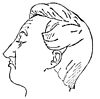















About Annie Besant
Annie Besant (1 October 1847 – 20 September 1933) was a British socialist, theosophist, women's rights activist, writer, orator, educationist, and philanthropist. She was an ardent supporter of both Irish and Indian self-rule. Besant met the co-founder of the Theosophical Society, Helena Blavatsky in 1890 and became a prominent member of the group.
Best Annie Besant Quotes
Shortest
Earliest
Explore our curated collection of the most famous and impactful Annie Besant quotes.

“It is not monogamy when there is one legal wife, and mistresses out of sight.”
“The destruction of India's village system was the greatest of England's blunders.”

“Evil is only imperfection, that which is not complete, which is becoming, but has not yet found its end.”
“A prophet is always much wider than his followers, much more liberal than those who label themselves with his name.”
“The true Mystic, realising God, has no need of any Scriptures, for he has touched the source whence all Scriptures flow.”
“The world-Bibles, then, are fragments—fragments of Revelation, and therefore are rightly described as Revelation. p. 375”

“That is the true definition of sin; when knowing right you do the lower, ah, then you sin. Where there is no knowledge, sin is not present.”
“Sun-worship and pure forms of nature worship were, in their day, noble religions, highly allegorical but full of profound truth and knowledge.”
“Let a soul radiate in every direction love and compassion, and thoughts of hatred can find nothing to which they can attach themselves. p. 273”

“Refusal to believe until proof is given is a rational position; denial of all outside of our own limited experience is absurd.”


“In concentration, the consciousness is held to a single image; the whole attention of the Knower is fixed on a single point, without wavering or swerving.”

“Empty-brained triflers who have never tried to think, who take their creed as they take their fashions, speak of atheism as the outcome of foul life and vicious desires.”
“The doctrines of the Resurrection and Ascension of Christ also form part of the Lesser Mysteries, being integral portions of "The Solar Myth," and of the life-story of the Christ in man.”

“Nature gives to each in Devachan the satisfaction of all pure desires, and Manas there exercises that faculty of his innate divinity, that he “never wills in vain”. Will not this suffice?”
“Yet that is the most splendid privilege of man, that the true birthright of the human Spirit, to know his own Divinity, and then to realise it, to know his own Divinity and then to manifest it.”
“The occult records partly endorse the story told in the Gospels, and partly do not endorse it; they show us the life, and thus enable us to disentangle it from the myths which are intertwined therewith.”
Annie Besant Quotes by Topic
Find exactly what you are looking for by browsing this categorized list of Annie Besant quotes by topic.
Annie Besant on Karma 9 quotes
“Karma brings us ever back to rebirth, binds us to the wheel of births and deaths. Good Karma drags us back as relentlessly as bad, and the chain which is wrought out of our virtues holds as firmly and as closely as that forged from our vices. p. 65”

Annie Besant on Science and mysticism 8 quotes
“Were all souls on earth at the same stage of evolution, much might be said for the contention that further worlds are needed for the evolution of souls beyond the infant stage. But we have around us souls that are far advanced, and that were born with noble mental and moral qualities. p. 108”

Annie Besant on Death 7 quotes
“Cremation is preferable to burial as a way of disposing of corpses.”

Annie Besant on Law 7 quotes
“That law should be as invariable in the mental and moral worlds as in the physical is to be expected, since the universe is the emanation of the One, and what we call Law is but the expression of the Divine Nature. As there is one Lite emanating all, so there is one Law sustaining all ; the worlds rest on this rock of the Divine Nature as on a secure, immutable foundation. p.7”

Annie Besant on God 5 quotes
“The true Mystic, realising God, has no need of any Scriptures, for he has touched the source whence all Scriptures flow.”

Annie Besant on Religion 5 quotes
“The Divine Wisdom, the true Theosophy... is not, as some think, a diluted version of Hinduism, or Buddhism, or Taoism, or of any special religion. It is Esoteric Christianity as truly as it is Esoteric Buddhism, and belongs equally to all religions, exclusively to none. Foreword”

Annie Besant on Theosophical mysticism 5 quotes
“The habit of quiet, sustained, and sequential thought, directed to non-worldly subjects, of meditation, of study, develops the mind-body and renders it a better instrument; the effort to cultivate abstract thinking is also useful, as this raises the lower mind towards the higher, and draws into it the subtlest materials of the lower mental plane.”
Annie Besant on Atonement 5 quotes
“I wish at the outset, for the sake of justice and candour, to acknowledge frankly the good which has been drawn forth by the preaching of the Cross. This good has been, however, the indirect rather than the direct result of a belief in the Atonement. The doctrine, in itself, has nothing elevating about it, but the teaching closely connected with the doctrine has its ennobling and purifying side.”
Annie Besant on Christ 5 quotes
“The historical Christ, then, is a glorious Being belonging to the great spiritual hierarchy that guides the spiritual evolution of humanity, who used for some three years the human body of the disciple Jesus; who spent the last of these three years in public teaching... who was a healer of diseases and performed other remarkable occult works; who gathered round Him a small band of disciples whom He instructed in the deeper truths of the spiritual life; who drew men to Him by the singular love and tenderness and the rich wisdom that breathed from His Person; and who was finally put to death for blasphemy, for teaching the inherent Divinity of Himself and of all men. p.141”
Annie Besant on Mind 4 quotes
“Meditation quiets the lower mind, ever engaged in thinking about external objects, and when the lower mind is tranquil then only can it be illuminated by the Spirit.”

Annie Besant on Justice 4 quotes
“That law should be as invariable in the mental and moral worlds as in the physical is to be expected, since the universe is the emanation of the One, and what we call Law is but the expression of the Divine Nature. As there is one Lite emanating all, so there is one Law sustaining all ; the worlds rest on this rock of the Divine Nature as on a secure, immutable foundation. p.7”
Annie Besant on Materialism 4 quotes
“Study in one school of psychology came to what seemed a terrible conclusion. It was the school of Lombroso in Italy. He declared, and many others followed him, that the visions of the prophets, of the saints, of the seers, all their testimony to the existence of superphysical worlds, were the products of disordered brains, of diseased or over-strained nervous apparatus. He went further, and he declared that the manifestation known as genius was closely allied to insanity, that the brain of the genius and the brain of the madman were akin, until the phrase "genius is allied to madness," became the stock axiom of that school.”

What Annie Besant Said About Others
Discover personal opinions Annie Besant shared regarding contemporaries.
Annie Besant on Masters of Wisdom (Theosophy) 15 quotes
“In August, 1851... on a moonlight night, as her diary tells us, beside the Serpentine, " I met the Master of my dreams." He then told her that he had chosen her to work in a society, and some time afterwards, with her father's permission, she went into training for her future mission, passing through seven and ten years of probation, trial and hard work....”
Annie Besant on Jesus 5 quotes
“The historical Christ, then, is a glorious Being belonging to the great spiritual hierarchy that guides the spiritual evolution of humanity, who used for some three years the human body of the disciple Jesus; who spent the last of these three years in public teaching... who was a healer of diseases and performed other remarkable occult works; who gathered round Him a small band of disciples whom He instructed in the deeper truths of the spiritual life; who drew men to Him by the singular love and tenderness and the rich wisdom that breathed from His Person; and who was finally put to death for blasphemy, for teaching the inherent Divinity of Himself and of all men. p.141”

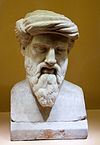
Annie Besant on Pythagoras 3 quotes
“It is further interesting to remark that the finest characters among women with which ancient Greece presents us were formed in the school of Pythagoras, and the same is true of the men.”
Annie Besant on Helena Blavatsky 2 quotes
“And we, who lived around her, who in closest intimacy watched her day after day, we bear witness to the unselfish beauty of her life, the nobility of her character, and we lay at her feet our most reverent gratitude for knowledge gained, lives purified, strength developed.”

Annie Besant on Women
Annie Besant on Women in Islam
“I often think that woman is more free in Islam than in Christianity. Woman is more protected by Islam than by the faith which preaches Monogamy. In Al-Quran the law about woman is more just and liberal. It is only in the last twenty years that Christian England, has recognized the right of woman to property, while Islam has allowed this right from all times.”

Annie Besant on Women in Christianity
“The subjection of women in Western lands is wholly due to Christianity. Among the Teutons women were honoured, and held a noble and dignified place in the tribe; Christianity brought with it the evil Eastern habit of regarding women as intended for the toys and drudges of man, and intensified it with a special spite against them, as the daughters of Eve, who was first "deceived." Strangely different to the *general Eastern feeling and showing a truer and nobler view of life, is the precept of Manu: Where women are honoured, there the deities are pleased; but where they are dishonoured, there all religious acts become fruitless.”

Annie Besant on Charles Webster Leadbeater
“The rapid changes in the world of thought, arising from the nearness of the Coming of the World-Teacher, render useful some information as to a part of the world in which he lives, information which may, perhaps, to some extent prepare the public mind for his teachings.Be that as it may, I desire to associate myself with the statements made in this book, for the accuracy of nearly all of which I can personally vouch; and also to say on behalf of my colleague as well of myself, that the book is issued as a record of observations carefully made and carefully recorded, but not claiming any authority, nor making any demand for acceptance. It makes no claim to inspiration, but is only an honest account of things seen by the writer.”

Annie Besant on Muhammad
“But do you mean to tell me that the man who in the full flush of youthful vigour, a young man of four and twenty, married a woman much his senior, and remained faithful to her for six and twenty years, at fifty years of age when the passions are dying married for lust and sexual passion? Not thus are men's lives to be judged. And you look at the women whom he married, you will find that by every one of them an alliance was made for his people, or something was gained for his followers, or the woman was in sore need of protection... It is impossible for anyone who studies the life and character of the great Prophet of Arabia, who knew how he taught and how he lived, to feel anything but reverence for that mighty Prophet, one of the great messengers of the Supreme. And although in what I put to you I shall say many things which may be familiar to many, yet I myself feel, whenever I reread them, a new way of admiration, a new sense of reverence for that mighty Arabian teacher.”

Annie Besant on Ahilyabai Holkar
“This great ruler in Indore encouraged all within her realm to do their best, merchants produced their finest clothes, trade flourished, the farmers were at peace and oppression ceased, for each case that came to the queen’s notice was dealt with severely. She loved to see her people prosper, and to watch the fine cities grow, and to watch that her subjects were not afraid to display their wealth, lest the ruler should snatch it from them. Far and wide the roads were planted with shady trees, and wells were made, and rest-houses for travellers. The poor, the homeless, the orphaned were all helped according to their needs. The Bhils who had long been the torment of all caravans were routed from their mountain fastnesses and persuaded to settle down as honest farmers. Hindu and Musalman alike revered the famous Queen and prayed for her long life. Her last great sorrow was when her daughter became a Sati upon the death of Yashwantrao Phanse. Ahalya Bai was seventy years old when her long and splendid life closed. Indore long mourned its noble Queen, happy had been her reign, and her memory is cherished with deep reverence unto this day.”

Annie Besant on Henry Steel Olcott
“Many difficulties have confronted this lion-hearted man, during these thirty-one years. He stood unflinchingly through the discreditable attack on Madame Blavatsky by the Society for Psychical Research, and has lived to see Dr. Hodson accept more marvels than he then denounced. He steered the Society through the crisis which rent from it for a time nearly the whole American Section, to see that Section welcome him to his native land with pride and exultation. He saw his colleague pass away from his side, and bore the burden alone, steadfastly and bravely for another sixteen years, knitting hands with... her favorite pupil, as loyally and firmly as with herself. Through good report and evil report he has worked unwaveringly, until his Master’s voice has called him home... He endured his last prolonged sufferings bravely and patiently, facing death as steadfastly as he had faced life, and cheered in the last weeks of his illness by the visits of the great Indian Sages, to whom he had given the strength of his manhood, the devotion of his life. He has passed away from earth, and left behind him a splendid monument of noble work, and on the other side he still will work, till the time comes for his return. India has had no more faithful helper in the revival of her religions than this noble American, and she may well send her blessing to the man who loved and served her.”

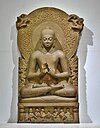
Annie Besant on Buddha
“There is, in the Buddhist philosophy, a wonderful sentence of the Lord Gautama Buddha, where he is striving to indicate in human language something that would be intelligible about the condition of Nirvana. You find it in the Chinese translation of the Dhammapada, and the Chinese edition has been translation into English in Trübner's Oriental Series. He puts it there that, unless there were Nirvana, there could be nothing; and he uses various phrases in order to indicate what he means, taking the uncreated and then connecting with it the created; taking the Real and then connecting with it the unreal. He sums it up by saying that Nirvana is; and that if it were not, naught else could be. That is an attempt (if one may call it so with all reverence) to say what cannot be said. It implies that unless there existed the Uncreate, the invisible and the Real, we could not have a universe at all. You have there, then, the indication that Nirvana is a plenum, not a void. That idea should be fundamentally fixed in your mind, in your study of every great system of Philosophy. So often the expressions used may seem to indicate a void. Hence the western idea of annihilation. If you think of it as fullness, you will realize that the consciousness expands more and more, without losing utterly the sense of identity; if you could think of a centre of a circle without a circumference, you would glimpse the truth.”
Quotes About Annie Besant
Gain deeper perspective through quotes about Annie Besant from others.
V.N. Datta on Annie Besant
“The significance of Annie Besant’s political activities lay in building up step a heightened sense of public resentment against the iniquitous and oppressive British rule in India, which other political leaders were to seize on to launch a full-scale anti-imperial agitation in the country in 1919. Thus it was from Annie Besant’s intellectual and moral capital that Mahatma Gandhi was to derive immense resources to sharpen his weapons of satyagraha to fight the British and to free the country from the fetters of foreign rule.”
Alan Moore De Abaitua interview on Annie Besant
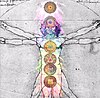
“Annie Besant’s book where she put forward the idea that theosophical mystical energies could be portrayed as colours or abstract shapes was practically the invention of abstract art. A lot of artists rushed out and read it and suddenly thought, ‘oh God you could, you could portray love as a colour, or depression as a colour” All of a sudden abstract art happens, a flowering out of occultism.”
Henry Olcott on Annie Besant 2 quotes
“As the World's Parliament of Religions 1893 was to meet at Chicago in the following September, and as it had been arranged that our Society should participate in it, I deputed the Vice-President, Mr. Judge, to represent me officially, and appointed Mrs. Besant special delegate to speak there on behalf of the whole Society. How great a success it was for us and how powerfully it stimulated public interest in our views will be recollected by all our older members. Theosophy was presented most thoroughly both before the whole Parliament, an audience of 3,000 people, and at meetings of our own for the holding of which special halls were kindly given us. A profound impression was created by the discourses of Professor G. N. Chakravarti and Mrs. Besant, who is said to have risen to unusual heights of eloquence, so exhilarating were the influences of the gathering. Besides these who represented our Society especially, Messrs. Vivekananda, V. R. Gandhi, Dharmapala]], representatives of the Hind Vedanta, Jainism, and Buddhism respectively, captivated the public, who had only heard of the Indian people through the malicious reports of interested missionaries, and were now astounded to see before them and hear men who represented the ideal of spirituality and human perfectibility as taught in their respective sacred writings.”
Sri Prakasa on Annie Besant
“She loved India with a fervor and devotion all her own. Our country’s philosophy, our history or legends, our spiritual heritage, our achievements in the past, our sorrows in the present, our aspirations for the future were part and parcel of Mrs Annie Besant’s own life.”
Paul Tice on Annie Besant
“Besant was an amazing teacher who wrote many books and played a key role in the early years of the Theosophical Society]].”
Chloe Wilson, Annie Besant: ‘A Stormy, Public, Much Attacked and Slandered Life' on Annie Besant 2 quotes
“The Obscenity Trial. On 24 March 1877 Annie worked with Bradlaugh to republish Dr Charles Knowlton’s Fruits of Philosophy [1832] (a pamphlet that advocated the use of contraceptive practice); an act that led to the arrest of Besant and Bradlaugh on 6 April 1877 for transgressing the Obscene Publications Act 1857. The following ‘Obscenity trial’ was held on 18 June... both were proclaimed guilty. However, the sentence was overturned on a technicality so Besant and Bradlaugh were able to walk free. The arrest and trial were widely publicised across the country and while Annie lost her ‘good name’ in the process, the associated press coverage succeeded in propelling the pamphlet’s informative advice far beyond their initial reach... Annie acknowledged in 1886 that ‘I had long since given up my social reputation’ and spent the remainder of the decade openly professing socialism and dedicating her efforts to the unemployed and downtrodden. This endeavour led her to the plight of the Bryant and May ‘match girls’ working in the Bow factory in 1888 for whom she commanded a strike, successfully leading to the establishment of the Matchmakers Union and better wages – the event for which she has become most famous...”
About Annie Besant
Annie Besant (1 October 1847 – 20 September 1933) was a British socialist, theosophist, women's rights activist, writer, orator, educationist, and philanthropist. She was an ardent supporter of both Irish and Indian self-rule. Besant met the co-founder of the Theosophical Society, Helena Blavatsky in 1890 and became a prominent member of the group.