Edward Gibbon, The Decline and Fall of the Roman Empire, Ed. H.H. Milman. Vol. III. Philadelphia: Porter & Coates, 1845. p. 405.
“
While Boethius, oppressed with fetters, expected each moment the sentence or the stroke of death, he composed, in the tower of Pavia, the Consolation Of Philosophy; a golden volume not unworthy of the leisure of Plato or Tully, but which claims incomparable merit from the barbarism of the times and the situation of the author.
— Edward Gibbon
What It Means
This is a placeholder explanation generated by the low-overhead model. It interprets "While Boethius, oppressed with fetters, expected each moment the sentence or the stroke of death, he composed, in the tower of Pavia, the Consolation Of Philosophy; a golden volume not unworthy of the leisure of Plato or Tully, but which claims incomparable merit from the barbarism of the times and the situation of the author." in the context of "Edward Gibbon, The Decline and Fall of the Roman Empire, Ed. H.H. Milman. Vol. III. Philadelphia: Porter & Coates, 1845. p. 405." to mean that wisdom is timeless.

Source: Wikiquote: "Anicius Manlius Severinus Boethius" (Quotes about Boethius)
The 'What it means' explanation text was generated by Google Gemini Flash (accessed January 18, 2026). https://gemini.google.com/app
Tags
About Anicius Manlius Severinus Boethius
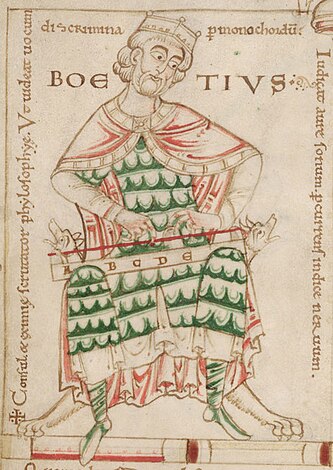
Ancius Manlius Severinus Boethius (c. 480–524 CE) was a Roman Christian philosopher, poet, and politician.
About Anicius Manlius Severinus Boethius
Ancius Manlius Severinus Boethius (c. 480–524 CE) was a Roman Christian philosopher, poet, and politician.
View all quotes →