• Prose IV; line 42; translation by H. R. James
Nam si uti corporum languor ita vitiositas quidam est quasi morbus animorum, cum aegros corpore minime dignos odio sed potius miseratione iudicemus, multo magis non insequendi sed miserandi sunt quorum mentes omni languore atrocior urguet improbitas.
• Alternate translation:
For as faintness is a disease of the body, so is vice a sickness of the mind. Wherefore, since we judge those that have corporal infirmities to be rather worthy of compassion than of hatred, much more are they to be pitied, and not abhorred, whose minds are oppressed with wickedness, the greatest malady that may be.
What It Means
This is a placeholder explanation generated by the low-overhead model. It interprets "Nam si uti corporum languor ita vitiositas quidam est quasi morbus animorum, cum aegros corpore minime dignos odio sed potius miseratione iudicemus, multo magis non insequendi sed miserandi sunt quorum mentes omni languore atrocior urguet improbitas.
• Alternate translation:
For as faintness is a disease of the body, so is vice a sickness of the mind. Wherefore, since we judge those that have corporal infirmities to be rather worthy of compassion than of hatred, much more are they to be pitied, and not abhorred, whose minds are oppressed with wickedness, the greatest malady that may be." in the context of "For if vicious propensity is, as it were, a disease of the soul like bodily sickness, even as we account the sick in body by no means deserving of hate, but rather of pity, so, and much more, should they be pitied whose minds are assailed by wickedness, which is more frightful than any sickness.
• Prose IV; line 42; translation by H. R. James" to mean that wisdom is timeless.
Tags
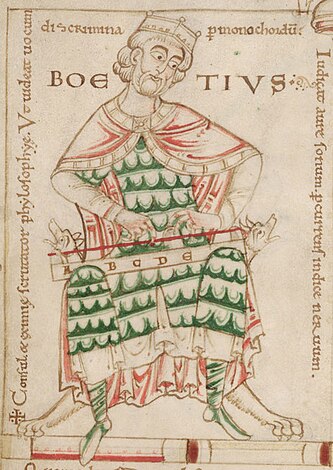
About Anicius Manlius Severinus Boethius