Nothing is miserable but what is thought so, and contrariwise, every estate is happy if he that bears it be content.
• Prose IV, line 18
• Prose IV, line 18
“
Adeo nihil est miserum nisi cum putes, contraque beata sors omnis est aequanimitate tolerantis.
— Anicius Manlius Severinus Boethius
What It Means
This is a placeholder explanation generated by the low-overhead model. It interprets "Adeo nihil est miserum nisi cum putes, contraque beata sors omnis est aequanimitate tolerantis." in the context of "Nothing is miserable but what is thought so, and contrariwise, every estate is happy if he that bears it be content.
• Prose IV, line 18" to mean that wisdom is timeless.
Source: Wikiquote: "Anicius Manlius Severinus Boethius" (Quotes, The Consolation of Philosophy · De Consolatione Philosophiae, Book II)
The 'What it means' explanation text was generated by Google Gemini Flash (accessed January 18, 2026). https://gemini.google.com/app
Tags
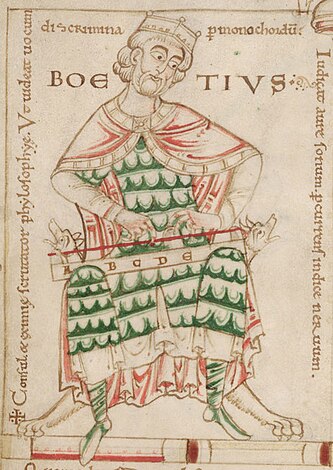
About Anicius Manlius Severinus Boethius
Ancius Manlius Severinus Boethius (c. 480–524 CE) was a Roman Christian philosopher, poet, and politician.
About Anicius Manlius Severinus Boethius
Ancius Manlius Severinus Boethius (c. 480–524 CE) was a Roman Christian philosopher, poet, and politician.
View all quotes →