Link Copied!
Anaxagoras Quotes (-500--428)
Philosopher




About Anaxagoras
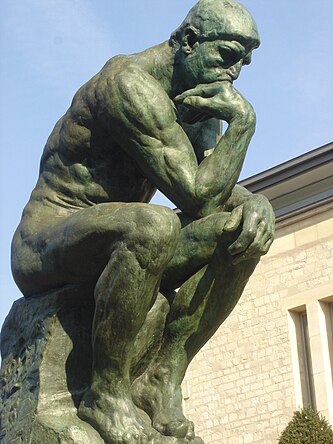
Anaxagoras (c. 500 BC – 428 BC) was a Pre-Socratic Greek philosopher from Clazomenae in Asia Minor. He introduced the concept of Nous (Mind), as an ordering force in the cosmos. He regarded material substance as an infinite multitude of imperishable primary elements, referring all generation and disappearance to mixture and separation respectively.
Best Anaxagoras Quotes
Shortest
Earliest
Explore our curated collection of the most famous and impactful Anaxagoras quotes.
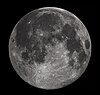
“The sun provides the moon with its brightness.”
Unsourced — Primary work/page citation not yet verified in the QuotesCosmos archive. Per our Unnamed Sources & Verification Policy, quotes without confirmed primary editions are explicitly marked Unsourced while under editorial review.
“Mind is infinite and self-ruled, and is mixed with nothing, but is alone itself by itself.”
Unsourced — Primary work/page citation not yet verified in the QuotesCosmos archive. Per our Unnamed Sources & Verification Policy, quotes without confirmed primary editions are explicitly marked Unsourced while under editorial review.
“All things were together, infinite both in number and in smallness; for the small too was infinite.”
Unsourced — Primary work/page citation not yet verified in the QuotesCosmos archive. Per our Unnamed Sources & Verification Policy, quotes without confirmed primary editions are explicitly marked Unsourced while under editorial review.
“And since these things are so, we must suppose that there are contained many things and of all sorts in the things that are uniting, seeds of all things, with all sorts of shapes and colours and savours”
Unsourced — Primary work/page citation not yet verified in the QuotesCosmos archive. Per our Unnamed Sources & Verification Policy, quotes without confirmed primary editions are explicitly marked Unsourced while under editorial review.
“The Greeks follow a wrong usage in speaking of coming into being and passing away; for nothing comes into being or passes away, but there is mingling and separation of things that are. So they would be right to call coming into being mixture, and passing away separation.”
Unsourced — Primary work/page citation not yet verified in the QuotesCosmos archive. Per our Unnamed Sources & Verification Policy, quotes without confirmed primary editions are explicitly marked Unsourced while under editorial review.
“Thought is something limitless and independent, and has been mixed with no thing but is alone by itself. ... What was mingled with it would have prevented it from having power over anything in the way in which it does. ... For it is the finest of all things and the purest.”
Unsourced — Primary work/page citation not yet verified in the QuotesCosmos archive. Per our Unnamed Sources & Verification Policy, quotes without confirmed primary editions are explicitly marked Unsourced while under editorial review.
“Wrongly do the Greeks suppose that aught begins or ceases to be; for nothing comes into being or is destroyed; but all is an aggregation or secretion of pre-existent things: so that all-becoming might more correctly be called becoming-mixed, and all corruption, becoming-separate.”
Unsourced — Primary work/page citation not yet verified in the QuotesCosmos archive. Per our Unnamed Sources & Verification Policy, quotes without confirmed primary editions are explicitly marked Unsourced while under editorial review.
Anaxagoras Quotes by Topic
Find exactly what you are looking for by browsing this categorized list of Anaxagoras quotes by topic.
Anaxagoras on Mind
“Mind is infinite and self-ruled, and is mixed with nothing, but is alone itself by itself.”

Unsourced — Primary work/page citation not yet verified in the QuotesCosmos archive. Per our Unnamed Sources & Verification Policy, quotes without confirmed primary editions are explicitly marked Unsourced while under editorial review.
Anaxagoras on Infinity
“All things were together, infinite both in number and in smallness; for the small too was infinite.”
Unsourced — Primary work/page citation not yet verified in the QuotesCosmos archive. Per our Unnamed Sources & Verification Policy, quotes without confirmed primary editions are explicitly marked Unsourced while under editorial review.
Anaxagoras on Small
“All things were together, infinite both in number and in smallness; for the small too was infinite.”

Unsourced — Primary work/page citation not yet verified in the QuotesCosmos archive. Per our Unnamed Sources & Verification Policy, quotes without confirmed primary editions are explicitly marked Unsourced while under editorial review.
Anaxagoras on Thought
“Thought is something limitless and independent, and has been mixed with no thing but is alone by itself. ... What was mingled with it would have prevented it from having power over anything in the way in which it does. ... For it is the finest of all things and the purest.”
Unsourced — Primary work/page citation not yet verified in the QuotesCosmos archive. Per our Unnamed Sources & Verification Policy, quotes without confirmed primary editions are explicitly marked Unsourced while under editorial review.
Quotes About Anaxagoras
Gain deeper perspective through quotes about Anaxagoras from others.
Agni Yoga on Anaxagoras
“If one examines the reasons for the persecution of the best minds of different nations, and compares the reasons for the persecution and banishment of Pythagoras, Anaxagoras, Socrates, Plato, and others, one can observe that in each case the accusations and reasons for banishment were almost identical and unfounded. But in the following centuries full exoneration came, as if there had never been any defamation. It would be correct to conclude that such workers were too exalted for the consciousness of their contemporaries, and the sword of the executioner was ever ready to cut off a head held high.... A book should be written about the causes of the persecution of great individuals. By comparing the causes is it possible to trace the evil will.”

Unsourced — Primary work/page citation not yet verified in the QuotesCosmos archive. Per our Unnamed Sources & Verification Policy, quotes without confirmed primary editions are explicitly marked Unsourced while under editorial review.
Carl B. Boyer on Anaxagoras
“In mathematics... the Greek attitude differed sharply from that of the earlier potamic cultures. The contrast was clear in... Thales and Pythagoras, and it continues to show... in Athens during the Heroic Age. ...while Anaxagoras was in prison he occupied himself with an attempt to square the circle... the first mention of a problem that was to fascinate mathematicians for more than 2000 years. ...Here we see a type of mathematics that is quite unlike that of the Egyptians and Babylonians. It is not the practical application of a science of number... but a theoretical question involving a... distinction between accuracy in approximation and exactitude in thought. ...no more the concern of the technologist than those he raised... concerning the ultimate structure of matter.”
Unsourced — Primary work/page citation not yet verified in the QuotesCosmos archive. Per our Unnamed Sources & Verification Policy, quotes without confirmed primary editions are explicitly marked Unsourced while under editorial review.
David H. Clark on Anaxagoras
“The big bang and the steady state debate in some ways echoed that between the ideas of Anaximander and Anaxagoras from two and a half millennia earlier. Anaxagoras had envisaged that at one time "all things were together" and that the motive force for the universe originated at a single point... Anaximander on the other hand wanted a universe determined by "the infinite" and needed an "eternal motion" to explain the balancing process of things coming into being and passing away in an eternal universe... ancient philosophy was debating the alternatives of a creation event starting the universe from a single point versus a continuous creation in an eternal universe.”
Unsourced — Primary work/page citation not yet verified in the QuotesCosmos archive. Per our Unnamed Sources & Verification Policy, quotes without confirmed primary editions are explicitly marked Unsourced while under editorial review.
John Freely on Anaxagoras
“Anaxagoras of Clazomenae postulated another element called the aether, which was in constant rotation and carried with it the celestial bodies. He also believed that there was a directing intelligence in nature that he called Nous which gives order to what otherwise would be a chaotic universe. By Nous he meant literally "the Mind of the Cosmos"… Anaxagoras was the last of the Ionian physicists.”

Unsourced — Primary work/page citation not yet verified in the QuotesCosmos archive. Per our Unnamed Sources & Verification Policy, quotes without confirmed primary editions are explicitly marked Unsourced while under editorial review.
Catherine Osborne on Anaxagoras
“The endless sequence of explanation is explicit in Anaxagoras. Even the ingredients that go to make up something and account for its behaviour are themselves composed of ingredients which are themselves again composed of ingredients. [...] In every case, behaviour is a consequence of both the predominant features (which make it seem to be such and such) and also the hidden features (which can make it do otherwise inexplicable things). And this dual explanation will apply as much to the hidden ingredients as to the macroscopic items we encounter in daily life.But still it remains true for Anaxagoras that in principle the material composition (if we could know it in detail) would account for the current behaviour of each item in the world. Unless the thing is alive, that is. For living things, it looks as though the explanation must be supplemented by appeal to another principle, what Anaxagoras called ‘Mind’.”
Unsourced — Primary work/page citation not yet verified in the QuotesCosmos archive. Per our Unnamed Sources & Verification Policy, quotes without confirmed primary editions are explicitly marked Unsourced while under editorial review.


About Anaxagoras
Anaxagoras (c. 500 BC – 428 BC) was a Pre-Socratic Greek philosopher from Clazomenae in Asia Minor. He introduced the concept of Nous (Mind), as an ordering force in the cosmos. He regarded material substance as an infinite multitude of imperishable primary elements, referring all generation and disappearance to mixture and separation respectively.