Link Copied!
Amy Tan Quotes (1952-)
Author



About Amy Tan
Amy Ruth Tan (譚恩美 Tán Ēnměi) (born February 19, 1952) is an American author best known for her novel The Joy Luck Club (1989), which was adapted into a 1993 film. She is also known for other novels, short story collections, children's books, and a memoir.
Best Amy Tan Quotes
Shortest
Earliest
Explore our curated collection of the most famous and impactful Amy Tan quotes.



“Now that I'm angry at Harold, it's hard to remember what was so remarkable about him.”
“I discovered that maybe it was fate all along, that faith was just an illusion that somehow you're in control.”


“For woman is yin, the darkness within, where untempered passions lie. And man is yang, bright truth lighting our minds.”
“I wanted my children to have the best combination: American circumstances and Chinese character. How could I know these things do not mix?”
“People look at me as this very, I don't know, Confucius-like wise person — which I'm not. They don't see all the shit that I've been through.”
“Over the years, she told me the same story, except for the ending, which grew darker, casting long shadows into her life, and eventually into mine.”

“After the gold was removed from my body I felt lighter, more free. They say this is what happens if you lack metal. You begin to think as an independent person.”
“When I want something to happen — or not happen — I begin to look at all events and all things as relevant, an opportunity to take or avoid.
I found the opportunity.”
I found the opportunity.”
“I would never require anyone to read any book. That seems antithetical to why we read — which is to choose a book for our personal reasons. I always shudder when I’m told my books are on required reading lists.”
“On the third day after someone dies, the soul comes back to settle scores. In my mother's case, this would be the first day of the lunar new year. And because it is the new year, all debts must be paid, or disaster and misfortune will follow.”

“My sister Kwan believes she has yin eyes. She sees those who have died and now dwell in the World of Yin, ghosts who leave the mists just to visit her kitchen on Balboa Street in San Francisco.
"Libby-ah," she'll say to me. "Guess who I see yesterday, you guess." And I don't have to guess that she's talking about someone dead.”
"Libby-ah," she'll say to me. "Guess who I see yesterday, you guess." And I don't have to guess that she's talking about someone dead.”
“External success has to do with people who may see me as a model, or an example, or a representative. As much as I may dislike or want to reject that responsibility, this is something that comes with public success. It's important to give others a sense of hope that it is possible and you can come from really different places in the world and find your own place in the world that's unique for yourself.”
“I don't feel the need to be a role model, it's just something that's been thrust upon me. Teachers and a lot of Asian-American organizations, for example, say to me, "We need you to come and speak to us because you're a role model." ... Placing on writers the responsibility to represent a culture is an onerous burden. Someone who writes fiction is not necessarily writing a depiction of any generalized group, they're writing a very specific story.”
“One relative felt that the story of my grandmother should not have been revealed. My grandmother was the woman (in The Kitchen God's Wife) who had been raped, forced to be a concubine, and finally killed herself. My mother, though, got equally angry at the relative and said, "For so many years, I carried this shame on my back, and my mother suffered, because she couldn't say anything to anybody." And she said, "It's not too late; tell the world, tell the world what happened to her." And I take her mandate to be the one that is in my heart, the one that I should follow.”
“Other Asian-American writers just shudder when they are compared to me; it really denigrates the uniqueness of their own work. I find it happening less here partly because people are more aware now of the flaws of political correctness — that literature has to do something to educate people. I don't see myself, for example, writing about cultural dichotomies, but about human connections. All of us go through angst and identity crises. And even when you write in a specific context, you still tap into that subtext of emotions that we all feel about love and hope, and mothers and obligations and responsibilities.”
“I was writing for businesses. I think my mother was a little skeptical in the beginning, but fortunately, as a free-lance writer I was successful almost immediately. And so she was very proud, because she measured success in terms of money, which is what I started to do as well. My goal then, became to increase the amount of money that I made each month. Not simply each year, but each month — I mean, talk about pressure — to have more billable hours each month. So that by the end of my third year of being a free-lance writer, I was billing 90 hours a week. I had no time to sleep. I had no life. People said I was crazy, that I was a workaholic. And I couldn't understand how it was that I had these wonderful clients, and I was making all this money, and I wasn't happy and I didn't feel successful. That's when I started to write fiction.”

“Reading for me was a refuge. I could escape from everything that was miserable in my life and I could be anyone I wanted to be in a story, through a character. It was almost sinful how much I liked it. That's how I felt about it. If my parents knew how much I loved it, I thought they would take it away from me. I think I was also blessed with a very wild imagination because I can remember, when I was at an age before I could read, that I could imagine things that weren't real and whatever my imagination saw is what I actually saw. Some people would say that was psychosis but I prefer to say it was the beginning of a writer's imagination. If I believed that insects had eyes and mouths and noses and could talk, that's what they did. If I thought I could see devils dancing out of the ground, that's what I saw. If I thought lightning had eyes and would follow me and strike me down, that's what would happen. And I think I needed an outlet for all that imagination, so I found it in books.”

“I've long thought about how life is influenced by death, how it influences what you believe in and what you look for. Yes, I think I was pushed in a way to write this book by certain spirits — the yin people — in my life. They've always been there, I wouldn't say to help, but to kick me in the ass to write. ...Yin people is the term Kwan uses, because "ghosts" is politically incorrect. People have such terrible assumptions about ghosts — you know, phantoms that haunt you, that make you scared, that turn the house upside down. Yin people are not in our living presence but are around, and kind of guide you to insights. Like in Las Vegas when the bells go off, telling you you've hit the jackpot. Yin people ring the bells, saying, "Pay attention." And you say, "Oh, I see now." Yet I'm a fairly skeptical person. I'm educated, I'm reasonably sane, and I know that this subject is fodder for ridicule. ... To write the book, I had to put that aside. As with any book. I go through the anxiety, "What will people think of me for writing something like this?" But ultimately, I have to write what I have to write about, including the question of life continuing beyond our ordinary senses.”
Amy Tan Quotes by Topic
Find exactly what you are looking for by browsing this categorized list of Amy Tan quotes by topic.
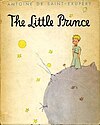
Amy Tan on The Little Prince
Amy Tan on Relevance
“I began to look at all events and all things as relevant, an opportunity to take or avoid.”
Amy Tan on Muses
“Who knows where inspiration comes from. Perhaps it arises from desperation. Perhaps it comes from the flukes of the universe, the kindness of the muses.”
Amy Tan on Inspiration
“Who knows where inspiration comes from. Perhaps it arises from desperation. Perhaps it comes from the flukes of the universe, the kindness of the muses.”
Amy Tan on The Catcher in the Rye
“I made it a point to read banned books, like “The Catcher in the Rye,” which led to counseling sessions with a youth minister, who told me such books would give me sinful feelings. That incident solidified feelings I have about the power of books and one’s helplessness without them.”

What Amy Tan Said About Others
Discover personal opinions Amy Tan shared regarding contemporaries.
Amy Tan on Harper Lee
“I crossed a threshold of reader pride after finishing “To Kill a Mockingbird.””
Amy Tan on Alice Hoffman
“Alice Hoffman takes seemingly ordinary lives and lets us see and feel extraordinary things.”

Amy Tan on Louise Erdrich
Amy Tan on Yiyun Li
“Among Chinese-American writers, two immediately come to mind: Yiyun Li and Ha Jin, with their particular mix of displaced characters, circumstances and past. Their stories often have tragedy, but rise above that. They elicit discomfort and compassion — good and necessary conditions that change me, as any writing is capable of doing by putting me in unfamiliar situations and magnifying the details I would have overlooked.”

Amy Tan on Sonia Sotomayor
“I’m grateful for her wisdom and compassion on the Supreme Court. In June, Justice Sotomayor invited my husband and me to have a private lunch with her in her chambers. This was right when the justices began deliberations over the major cases. We talked about our mothers’ fears, about publishing, translations, snorkeling, adopted kids and cultural self-identification — all sorts of things, except the cases. I’ve read the first 10 pages of her memoir and know already that it’s like a continuation of the conversation we had.”

Quotes About Amy Tan
Gain deeper perspective through quotes about Amy Tan from others.
Ellen DuBois on Amy Tan
“A further measure of the importance of the feminism of women of color was the tremendous efflorescence in their fiction. The writings of Toni Morrison, Sandra Cisneros, Amy Tan, and Louise Erdrich, among others, played a major role in bringing the feminist message and perspective to the masses of American women.”
About Amy Tan
Amy Ruth Tan (譚恩美 Tán Ēnměi) (born February 19, 1952) is an American author best known for her novel The Joy Luck Club (1989), which was adapted into a 1993 film. She is also known for other novels, short story collections, children's books, and a memoir.