Link Copied!
American Civil War Quotes (1861-1865)
President, King

About American Civil War
The American Civil War (ACW), also known as the War of the Rebellion, the Great Rebellion, and several other names, was a civil war that was fought in the United States of America from 1861 to 1865. Fearing that the future of slavery was in jeopardy after the election of an anti-slavery U.S. president, eleven slave-holding U.S. states located in the southern United States declared their secession from the country and formed the Confederate States, also known as "the Confederacy", sparking war. Led by Democrat Jefferson Davis, they fought against the United States, also known as "the Union", led by Republican Abraham Lincoln, which consisted of every free U.S. state as well as five slave-holding states, known as "border states". In 1865, after four years of warfare, the Confederacy surrendered, and slavery was abolished in the United States with the ratification of the Thirteenth Amendment to the United States Constitution by three-fourths of the states.
Best American Civil War Quotes
Shortest
Earliest
Explore our curated collection of the most famous and impactful American Civil War quotes.
At the close of the Civil War, Ely S. Parker, a Seneca Native American and Grant's secretary, offered a unifying vision of national identity to Robert E. Lee: "We are all Americans."
“We are all Americans.”
- American Civil War, R.E. Lee surrenders to U.S. Grant at Appomattox Court House

English Translation: "Liberty! Equality! Fraternity!"
Original (French): "Liberty! Equality! Fraternity!"
“Liberty! Equality! Fraternity!”
Original (French): "Liberty! Equality! Fraternity!"
- American Civil War, War aims, Union war aims, Contemporaries)


Confederate President Jefferson Davis lamented dwindling public enthusiasm for the Civil War, as noted in James Loewen's critique of historical inaccuracies in American textbooks.
“The zeal of the people is failing.”
- American Civil War, The war on the home front, The home front, Contemporaries)

At Appomattox, Robert E. Lee's alleged remark to Ely S. Parker, a Seneca military secretary to Grant, highlights racial tensions amid the Confederacy's surrender.
“I am glad to see one real American here.”
- American Civil War, R.E. Lee surrenders to U.S. Grant at Appomattox Court House
“No Distinction of Race! No Distinction of Color!”
- American Civil War, War aims, Union war aims, Contemporaries)
“This will do much toward conciliating our people.”
- American Civil War, R.E. Lee surrenders to U.S. Grant at Appomattox Court House
“Confederate victory would destroy the United States.”
- American Civil War, War aims, Confederate war aims, Historians)

In 1864, General Sherman's boastful telegram to Grant, "I can make this march, and I will make Georgia howl!", foreshadowed the devastating "March to the Sea" and its impact on the Confederacy.
“I can make this march, and I will make Georgia howl!”
- American Civil War, The Eastern Theater
“We do not overstate the dangers to our Institution...”
- American Civil War, Conflict Brewing

“The Confederacy stands for slavery and the Union for freedom.”
- American Civil War, War aims, Union war aims, Contemporaries)
“Confederates were terrified of what was happening to slavery.”
- American Civil War, The Thirteenth Amendment passed
Facing immense losses during the grueling Virginia campaign, General Grant's resolute declaration epitomized his unwavering commitment to relentless offensive action, a stark departure from previous Union strategies.
“I propose to fight it out on this line if it takes all summer.”
- American Civil War, The Eastern Theater


Quotes About American Civil War
Gain deeper perspective through quotes about American Civil War from others.
Anonymous variant lyrics of on American Civil War
“In eighteen hundred and sixty-one, ... That was when the war begun, ... In eighteen hundred and sixty-two, Both sides were falling to, ... In eighteen hundred and sixty-three, ... Abe Lincoln set the darkies free, ... In eighteen hundred and sixty-four, ... Abe called for five hundred thousand more, ... In eighteen hundred and sixty-five, They talked rebellion—strife; And we'll all drink stone wine When Johnny comes marching home.”
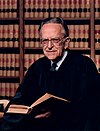
Harry Blackmun on American Civil War
Kevin McCarthy on American Civil War
“There's a staircase on the first floor of the Capitol that I walk every day. It's made of marble, and as you walk those steps, you think of those who've walked before you. You think of the challenges that the country's faced. The dome on that building is the second dome. It was put on during the Civil War at a time when they didn't know if this country would stay together.”

Nikki Haley on American Civil War
In 2010, Nikki Haley, then a South Carolina gubernatorial candidate, characterized the Civil War as a conflict between tradition and change regarding individual rights and liberty.
““I mean, again, I think that as we look in government, as we watch government, you have different sides, and I think that you see passions on different sides, and I don’t think anyone does anything out of hate,” Haley said. “I think what they do is, they do things out of tradition and out of beliefs of what they believe is right.” “I think you have one side of the Civil War that was fighting for tradition, and I think you have another side of the Civil War that was fighting for change,” she added. “You know, at the end of the day, what I think we need to remember is that you know, everyone is supposed to have their rights, everyone is supposed to be free, everyone is supposed to have the same freedoms as anyone else. So, you know I think it was tradition versus change is the way I see it. “Tradition versus change on what,” asked the interviewer. “On individual rights and liberty of people,” she responded.”

About American Civil War
The American Civil War (ACW), also known as the War of the Rebellion, the Great Rebellion, and several other names, was a civil war that was fought in the United States of America from 1861 to 1865. Fearing that the future of slavery was in jeopardy after the election of an anti-slavery U.S. president, eleven slave-holding U.S. states located in the southern United States declared their secession from the country and formed the Confederate States, also known as "the Confederacy", sparking war. Led by Democrat Jefferson Davis, they fought against the United States, also known as "the Union", led by Republican Abraham Lincoln, which consisted of every free U.S. state as well as five slave-holding states, known as "border states". In 1865, after four years of warfare, the Confederacy surrendered, and slavery was abolished in the United States with the ratification of the Thirteenth Amendment to the United States Constitution by three-fourths of the states.