Link Copied!
Alice Walker Quotes (1944-)
Author
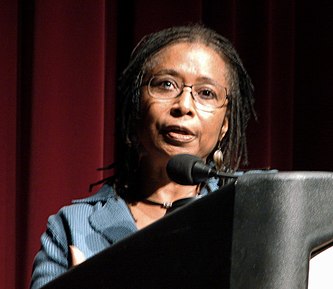






About Alice Walker
Alice Malsenior Walker (born 9 February 1944) is an American author whose novel, The Color Purple, won both the Pulitzer Prize and the American Book Award.
Best Alice Walker Quotes
Shortest
Earliest
Explore our curated collection of the most famous and impactful Alice Walker quotes.
“Niggers going to Africa, he said to his wife. Now I have seen everything.”



“Us sing and dance, make faces and give flower bouquets, trying to be loved. You ever notice that trees do everything to get attention we do, except walk?”
“I think Africans are very much like white people back home, in that they think they are the center of the universe and that everything that is done is done for them.”
“But please remember, especially in these times of group-think and the right-on chorus, that no person is your friend (or kin) who demands your silence, or denies your right to grow and be perceived as fully blossomed as you were intended.”

“I think us here to wonder, myself. To wonder. To ast. And that in wondering bout the big things and asting bout the big things, you learn about the little ones, almost by accident. But you never know nothing more about the big things than you start out with. The more I wonder, he say, the more I love.”
“He has told me he likes men as well as he likes women, which seems only natural, he says, since he is the offspring of two sexes as well as two races. No one is surprised he is biracial; why should they be surprised he is bisexual? This is an explanation I have never heard and cannot entirely grasp; it seems too logical for my brain.”
“The harm that you do to others is the harm that you do to yourself and you cannot think then that you can cause wars in other parts of the world and destroy people and drone them without this having a terrible impact on your own soul and your own consciousness.”
“I felt in Georgia and on the east coast generally very squeezed. People have so many hang-ups about how other people live their lives. People always want to keep you in a little box or they need to label you and fix you in time and location. I feel a greater fluidity here. People are much more willing to accept that nothing is permanent, everything is changeable so there is freedom and I do need to live where I can be free.”
“I want a grown-up attitude to Cuba, for instance, a country and people I love. I want an end to the war immediately, and I want the soldiers to be encouraged to destroy their weapons and drive themselves out of Iraq. I want the Israeli government to be made accountable for its behaviour to the Palestinians, and I want the people of the US to cease acting as if they don't understand what is going on. But most of all I want someone with the confidence to talk to anyone, "enemy" or "friend", and this Obama has shown he can do.”

Alice Walker Quotes by Topic
Find exactly what you are looking for by browsing this categorized list of Alice Walker quotes by topic.
Alice Walker on Peace
Alice Walker on Activism
Alice Walker on Question
Alice Walker on Purple
Alice Walker on Colors
Alice Walker on Animals
Alice Walker on Animal rights
Alice Walker on Plants
“Us sing and dance, make faces and give flower bouquets, trying to be loved. You ever notice that trees do everything to git attention we do, except walk?”
Alice Walker on Cuba
“I want a grown-up attitude to Cuba, for instance, a country and people I love. I want an end to the war immediately, and I want the soldiers to be encouraged to destroy their weapons and drive themselves out of Iraq. I want the Israeli government to be made accountable for its behaviour to the Palestinians, and I want the people of the US to cease acting as if they don't understand what is going on. But most of all I want someone with the confidence to talk to anyone, "enemy" or "friend", and this Obama has shown he can do.”

What Alice Walker Said About Others
Discover personal opinions Alice Walker shared regarding contemporaries.
Alice Walker on Tillie Olsen 2 quotes
“two exceedingly important creative and political lives.”

Alice Walker on Meridel Le Sueur
“Two exceedingly important creative and political lives.”

Alice Walker on Muriel Rukeyser
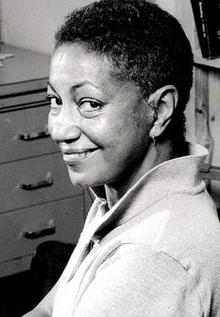
Alice Walker on June Jordan
Alice Walker on Flannery O'Connor
“She was for me the first great modern writer from the South, and was, in any case, the only one I had read who wrote such sly, demythifying sentences about white women as: "The woman would be more or less pretty-yellow hair, fat ankles, muddy-colored eyes.”
Alice Walker on Angela Davis
“Here is someone worthy of the Ancestors who delivered her, Angela Davis has stood her ground on every issue important to the health of our people and the planet. It is impossible to read her words or hear her voice and not be moved to comprehension and gratitude for our incredible luck in having her with us.”

Alice Walker on Adrienne Rich
“my sense of her, the thing that I most loved, was her integrity. She lived exactly what she said. And this was so rare and so beautiful...I think her legacy for all of us is to continue to believe in the power of art, especially in the power of poetry, and to keep moving and not to be dissuaded, not to be discouraged, but to take heart from a woman who lived for 82 years giving her very best, growing out of every shell that society attempted to force her into to become this really amazing figure of inspiration and hope and love.”

Quotes About Alice Walker
Gain deeper perspective through quotes about Alice Walker from others.
Nylah Burton on Alice Walker
“I loathe the misogynist assumption that a woman’s faults must be the direct result of a man’s actions, but I find myself incapable of separating Walker’s fraught marriage from her hatred of Judaism. She doesn’t separate the two either. In her 2014 book, The Cushion in the Road, Walker writes about meeting an elderly Palestinian woman in the Occupied Territories. The woman accepted a gift from Walker, and then bestowed a blessing upon her, “May God protect you from the Jews,” to which Walker responded, “It’s too late, I already married one”...I wonder how Walker could put the burden of her trauma onto us — black Jewish women. What is her responsibility to her daughter, and what is my responsibility to Alice Walker? Many of my black and Jewish friends refuse to even judge her. Perhaps it is I who know nothing, nothing at all. I know that I will not cancel Alice Walker. I can’t erase the incredible work she created. I will continue to read The Color Purple and her other works. But I will never be able to rid myself of the ghost of this poem. It would be irresponsible and self-hating of me to do so. I will read and teach Walker’s work with love, but this poem will always be there, fluttering in the wind like a torn-out page of the Talmud.”
Edwidge Danticat chapter on Alice Walker
“Perhaps, just as Alice Walker writes of her own forebears in her essay "In Search of Our Mother's Gardens," my blood ancestors-unlike my literary ancestors-were so weather-beaten, terror-stricken, and maimed that they were stifled. As a result, those who somehow managed to create became, in my view, martyrs and saints. "Instead of being perceived as whole persons," wrote Walker, "their bodies became shrines: what was thought to be their minds became temples suitable for worship. These crazy 'Saints' stared out at the world, wildly, like lunatics-or quietly, like suicides; and the 'God' that was in their gaze was as mute as a great stone."”
Buchi Emecheta In Interviews with Writers of the Post-Colonial World edited by Feroza Jussawalla on Alice Walker
“To me, the great writers who come from ethnic minorities writing in English come from America. I think the deep, the real deep thinkers now writing in the English language are the black women, such as Toni Morrison, Gloria Naylor, Alice Walker, etc. (F.J.: Where they are using black English in a certain kind of way to signify their difference?) Emecheta: Exactly.”
Roxane Gay interview quoted on Alice Walker
“My ambition has long been sharpened by Alice Walker, willing to tell the stories of black women without apology, willing to write politically without apology—Possessing the Secret of Joy, a haunting, gorgeous novel about female genital mutilation that keeps me transfixed and heartbroken and helpless each time I read it, because sometimes the only way to tell the truth is to tell a story.”
Kaitlyn Greenidge on Alice Walker
“one of the things that guided how I was thinking about the ending was this Alice Walker quote, where she’s talking about writing The Color Purple and about what a radical act it is to give certain characters a happier, peaceful ending.”

Joy Harjo on Alice Walker

Linda Hogan on Alice Walker
Joan Riley on Alice Walker
“I think she is a very nice person and a good writer, I have lots of quarrels with things that she writes. I accept that it comes out of an American-centric, if you like, view of life, but it is very neocolonialist. We can see what she said and say that it is good, and I really feel I've got a sense of what it is; but then, on the other hand, we are seeing that she is calling us savages. (Q: You mean in The Color Purple?) Yes. Now this isn't going to be taken up in America because of the guilt. But it's Alice; it's not just her characters. I feel about some black American writers that they don't understand us. And because they don't understand who we are, we are savage, exotic, and different. So, yes, we take exception to that.”
Yair Rosenberg on Alice Walker
“Why has [Alice] Walker escaped accountability for so long? Perhaps it is due to her Israel politics, which have been used to confuse the issue. Walker is a prominent supporter of the Boycott, Divestment, and Sanctions (BDS) movement against Israel, famously forbidding The Color Purple from being translated into the language of Hebrew. Because Walker—like [David] Icke—is a strident critic of Israel, her defenders—like Icke's—have dismissed allegations of anti-Semitism by claiming they are merely an attempt to quash her criticism of the Jewish state.”

Alix Kates Shulman https on Alice Walker
“Throughout the 1970s, feminist journals like Women: A Journal of Liberation and Ms. ran regular features on forgotten women who have since become mainstays of our culture. In a 1975 article in Ms., Alice Walker reintroduced Zora Neale Hurston to eager readers like me, who sought out second-hand copies of Her Eyes Were Watching God.”
Jesmyn Ward on Alice Walker
“I think that the first book that made me think that I could try to be a writer – or that made me aware that a young black woman from the South could write about the South — was Alice Walker’s The Color Purple, which I read for the first time when I was in junior high. Because I saw something of – not myself – but the experience of the people around me reflected in that book, because it’s set in the rural South and these people are poor, and just seeing that she could do that made me think, ‘Maybe I could do that.’ It just made me realize that it might be possible.”

Howard Zinn on Alice Walker
“I was teaching a course in Russian history, and I thought I would jazz it up a little. It was art, literature, it had students read Russian literature, and Alice didn't say anything in class. And then the first papers came in, and she wrote this paper on Tolstoy and Dostoyevsky, and I read the paper-well, I showed it to a colleague of mine. This is sort of an inside thing about the academic world, I have a lot of inside things of the academic world, and this colleague of mine-as you can see, I'm not letting Alice say anything-I showed it to a colleague of mine, and with that professorial arrogance, he said, "She couldn't have written it."...He said, "Somebody else must have written this." I said, "No, you're wrong. There's nobody around that can write like this." That was our introduction.”

About Alice Walker
Alice Malsenior Walker (born 9 February 1944) is an American author whose novel, The Color Purple, won both the Pulitzer Prize and the American Book Award.