Weil's new mathematical language, algebraic geometry, had enabled him to articulate subtleties about solutions to equations that hitherto had been impossible. But if there was any hope of extending Weil's ideas to prove the Riemann Hypothesis, it was clear they would need to be developed beyond the foundations he had laid in his prison cell in Rouen. It would be another mathematician from Paris who would bring the bones of Weil's new language to life. The master architect who performed this task was one of the strangest and most revolutionary mathematicians of the twentieth century - Alexandre Grothendieck.
What It Means
This is a placeholder explanation generated by the low-overhead model. It interprets "Weil's new mathematical language, algebraic geometry, had enabled him to articulate subtleties about solutions to equations that hitherto had been impossible. But if there was any hope of extending Weil's ideas to prove the Riemann Hypothesis, it was clear they would need to be developed beyond the foundations he had laid in his prison cell in Rouen. It would be another mathematician from Paris who would bring the bones of Weil's new language to life. The master architect who performed this task was one of the strangest and most revolutionary mathematicians of the twentieth century - Alexandre Grothendieck." in the context of "Marcus du Sautoy (31 May 2012), The Music of the Primes: Why an unsolved problem in mathematics matters, page: 178, publisher: HarperCollins Publishers, ISBN: 978-0-00-737587-5" to mean that wisdom is timeless.
Tags
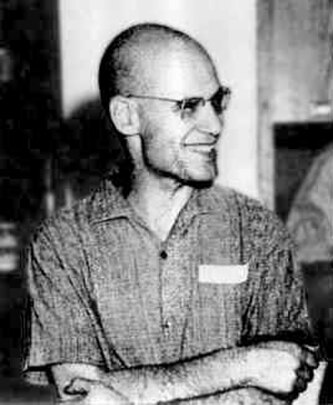
About Alexander Grothendieck