






































































“The proper study of mankind is books.”
— Aldous Huxley, Crome Yellow

Explore our curated collection of the most famous and impactful Aldous Huxley quotes.
“Experience teaches only the teachable...”

“The indispensible is not necessarily the desirable.”
“Several excuses are always less convincing than one.”
“The soul of wit may become the very body of untruth.”

“It is a political axiom that power follows property.”

“Facts do not cease to exist because they are ignored.”
“Never have so many been manipulated so much by so few.”
“An unexciting truth may be eclipsed by a thrilling falsehood.”
“Speed, it seems to me, provides the one genuinely modern pleasure.”

“And suddenly I had an inkling of what it must feel like to be mad.”
“There are many kinds of gods. Therefore there are many kinds of men.”
“A totally unmystical world would be a world totally blind and insane.”

“Death is the only thing we haven't succeeded in completely vulgarizing.”
“To his dog, every man is Napoleon; hence the constant popularity of dogs.”

“Music is an ocean, but the repertory is hardly even a lake; it is a pond.”

“In any race between human numbers and natural resources, time is against us.”
“To talk about religion except in terms of human psychology is an irrelevance.”
“Stupidity or reason? Oh, there was no choice now. It was imbecility every time.”
“After silence that which comes nearest to expressing the inexpressible is music.”

Find exactly what you are looking for by browsing this categorized list of Aldous Huxley quotes by topic.
“In the mescaline experience the implied questions to which the eye responds are of another order. Place and distance cease to be of much interest. The mind does its perceiving in terms of intensity of existence, profundity of significance, relationships within a pattern.”

“In recent years, many men of science have come to realize that the scientific picture of the world is a partial one — the product of their special competence in mathematics and their special incompetence to deal systematically with aesthetic and moral values, religious experiences and intuitions of significance.”
“Now experience is not a matter of having actually swum the Hellespont, or danced with the dervishes, or slept in a doss-house. It is a matter of sensibility and intuition, of seeing and hearing the significant things, of paying attention at the right moments, of understanding and co-ordinating. Experience is not what happens to a man; it is what a man does with what happens to him.”
“The Perennial Philosophy is expressed most succinctly in the Sanskrit formula, ‘tat tvam asi’ (that art thou); the Atman, or immanent eternal Self, is one with Brahman, the Absolute Principle of all existence; and the last end of every human being, is to discover the fact for himself, to find out who he really is.”

“So far, then, as a fully adequate expression of the Perennial Philosophy is concerned, there exists a problem in semantics that is finally insoluble. The fact is one which must be steadily borne in mind by all who read its formulations. Only in this way shall we be able to understand even remotely what is being talked about. Ch 3”
“... the metaphysic that recognizes a divine Reality substantial to the world of things and lives and minds; the psychology that finds in the soul something similar to, or even identical to, divine Reality; the ethic that places man's final end in the knowledge of the immanent and transcendent Ground of all being; the thing is immemorial and universal. Rudiments of the perennial philosophy may be found among the traditional lore of primitive peoples in every region of the world, and in its fully developed forms it has a place in every one of the higher religions.”
“An intellectual is a person who has discovered something more interesting than sex.”

“Unlike the masses, intellectuals have a taste for rationality and an interest in facts.”
“The course of every intellectual, if he pursues his journey long and unflinchingly enough, ends in the obvious, from which the non-intellectuals have never stirred.”
“I'd rather be unhappy than have the sort of false, lying happiness you were having here.”

“Happiness is not achieved by the conscious pursuit of happiness; it is generally the by-product of other activities.”
“The Indians admit the right of individuals with different dharmas to worship different aspects or conceptions of the divine. Hence the almost total absence, among Hindus and Buddhists, of bloody persecutions, religious wars and proselytizing imperialism.”

“The religions whose theology is least preoccupied with events in time and most concerned with eternity, have been consistently less violent and more humane in political practice. Unlike early Judaism, Christianity and Mohammedanism (all obsessed with time) Hinduism and Buddhism have never been persecuting faiths, have preached almost no holy wars and have refrained from that proselytizing religious imperialism which has gone hand in hand with political and economic oppression of colored people.”
“It is an extremely significant fact that, before the coming of the Mohammedans, there was virtually no persecution in India. The Chinese pilgrim Hiuen Tsang, who visited India in the first half of the seventh century and has left a circumstantial account of his fourteen-years stay in the country, makes it clear that Hindus and Buddhists lived side by side without any show of violence. Each party attempted the conversion of the other; but the methods used were those of persuasion and argument, not those of force. Neither Hinduism nor Buddhism is disgraced by anything corresponding to the Inquisition; neither was ever guilty of such iniquities as the Albigensian crusade or such criminal lunacies as the religious wars of the sixteenth and seventeenth centuries.”
Discover personal opinions Aldous Huxley shared regarding contemporaries.
“Isn’t it remarkable how everyone who knew Lawrence has felt compelled to write about him? Why, he’s had more books written about him than any writer since Byron!”

“Lawrence’s special and characteristic gift was an extraordinary sensitiveness to what Wordsworth called “unknown modes of being.” He was always intensely aware of the mystery of the world, and the mystery was always for him a numen, divine. Lawrence could never forget, as most of us almost continuously forget, the dark presence of the otherness that lies beyond the boundaries of man’s conscious mind. This special sensibility was accompanied by a prodigious power of rendering the immediately experienced otherness in terms of literary art.”
“There are things known and there are things unknown, and in between are the doors of perception.”

“We should welcome his appearance among us here, for we have sore need of critics who hate humbug.”

“Brought up in an epoch when ladies apparently rolled along on wheels, Mr. Quarles was peculiarly susceptible to calves.”

Gain deeper perspective through quotes about Aldous Huxley from others.
“We cannot deny its brilliance, its learning, its honest attempt to answer the big human question.”

“Aldous Huxley was uncannily prophetic, a more astute guide to the future than any other 20th- century novelist. Even his casual asides have a surprising relevance to our own times. During the first world war, after America's entry, he warned: "I dread the inevitable acceleration of American world domination which will be the result of it all...Europe will no longer be Europe." His sentiment is widely echoed today, though too late for us to do anything about it. The worst fate for a prophet is for his predictions to come true, when everyone resents him for being so clear-eyed.”

“I must comment briefly on Aldous Huxley's Island... Well I picked it up last night and just began rapidly leafing through it. What [her friend] sees in either of the Huxleys is quite beyond me...Running through what appears to be a completely confused and sort of nightmarish narrative, are stories of two women who were victims of breast cancer, including the deathbed scene of one of them!! Instead of being depressed, it made me so mad, I threw the book on the floor!”

“Alice in Wonderland fiend.”
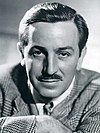
“Maria Huxley, Aldous Huxley's first wife, was a major influence on him and pushed Aldous to more deeply explore parapsychology and Indigenous rituals, largely through her own network of women.”
Quotes mistakenly credited to Aldous Huxley.
“Medical science has made such tremendous progress that there is hardly a healthy human left.”
“The only good that I can see in the demonstration of the truth of "Spiritualism" is to furnish an additional argument against suicide. Better live a crossing-sweeper than die and be made to talk twaddle by a "medium" hired at a guinea a séance.”


