Link Copied!
Ahmad Sirhindi Quotes (1564-1624)
Emperor
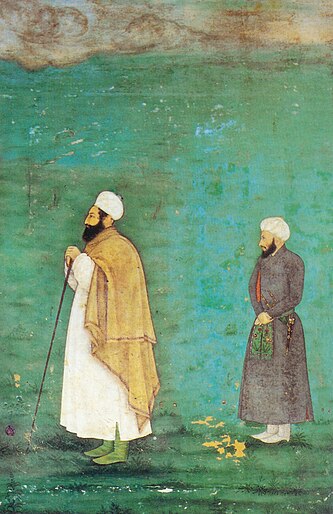



About Ahmad Sirhindi
Ahmad al-Fārūqī al-Sirhindī (26 June 1564 — 10 December 1624) was an Indian Islamic scholar, a Hanafi jurist, and a member of the Naqshbandī Sufi order. He has been described by some followers as a Mujaddid, meaning a “reviver", for his work in rejuvenating Islam and opposing the newly made religion of Din-i Ilahi and other problematic opinions of Mughal emperor Akbar. While early South Asian scholarship credited him for contributing to conservative trends in Indian Islam, more recent works, notably by ter Haar, Friedman, and Buehler, have pointed to Sirhindi's significant contributions to Sufi epistemology and practices.
Best Ahmad Sirhindi Quotes
Shortest
Earliest
Explore our curated collection of the most famous and impactful Ahmad Sirhindi quotes.
“Whenever a Jew is killed, it is for the benefit of Islam.”
Unsourced — Primary work/page citation not yet verified in the QuotesCosmos archive. Per our Unnamed Sources & Verification Policy, quotes without confirmed primary editions are explicitly marked Unsourced while under editorial review.
“Whenever a Jew is killed it is to the benefit of Islam.””
Unsourced — Primary work/page citation not yet verified in the QuotesCosmos archive. Per our Unnamed Sources & Verification Policy, quotes without confirmed primary editions are explicitly marked Unsourced while under editorial review.
“Shariat can be fostered through the sword.”
Unsourced — Primary work/page citation not yet verified in the QuotesCosmos archive. Per our Unnamed Sources & Verification Policy, quotes without confirmed primary editions are explicitly marked Unsourced while under editorial review.
““The honor of Islam is in the degradation of unbelief and the people of unbelief.””

Unsourced — Primary work/page citation not yet verified in the QuotesCosmos archive. Per our Unnamed Sources & Verification Policy, quotes without confirmed primary editions are explicitly marked Unsourced while under editorial review.
“It is therefore enjoined upon every Muslim to wage a regular crusade against all innovations.”
Unsourced — Primary work/page citation not yet verified in the QuotesCosmos archive. Per our Unnamed Sources & Verification Policy, quotes without confirmed primary editions are explicitly marked Unsourced while under editorial review.
““Fighting the unbelievers and treating them harshly is one of the requirements of religion.””

Unsourced — Primary work/page citation not yet verified in the QuotesCosmos archive. Per our Unnamed Sources & Verification Policy, quotes without confirmed primary editions are explicitly marked Unsourced while under editorial review.
“It is said that the Shariat prospers under the shadow of the sword (al-Shara‘ tahat al-saif). And the glory of the holy Shariat depends on the kings of Islam…”
Unsourced — Primary work/page citation not yet verified in the QuotesCosmos archive. Per our Unnamed Sources & Verification Policy, quotes without confirmed primary editions are explicitly marked Unsourced while under editorial review.
“[To Lala Beg he wrote] Cow-sacrifice in India is the noblest of Islamic practices. The kafirs may probably agree to pay jizva but they shall never concede to cow-sacrifice.”
Unsourced — Primary work/page citation not yet verified in the QuotesCosmos archive. Per our Unnamed Sources & Verification Policy, quotes without confirmed primary editions are explicitly marked Unsourced while under editorial review.
“Kufr and Islam are opposed to each other. The progress of one is possible only at the expense of the other and co-existence between these two contradictory faiths is unthinkable.”
Unsourced — Primary work/page citation not yet verified in the QuotesCosmos archive. Per our Unnamed Sources & Verification Policy, quotes without confirmed primary editions are explicitly marked Unsourced while under editorial review.
““The original aim of taking the jizya from [unbelievers] is for their degradation and this degradation [ought to be] to the extent that they cannot wear nice clothing for fear of the jizya ... and that they are always fearful and trembling ....””

Unsourced — Primary work/page citation not yet verified in the QuotesCosmos archive. Per our Unnamed Sources & Verification Policy, quotes without confirmed primary editions are explicitly marked Unsourced while under editorial review.
“The real purpose in levying jizya on them (the non-Muslims) is to humiliate then to such an extent that, on account of fear of jizva, they may not be able to dress well and to live in grandeur. They should constantly remain terrified and trembling. It in intended to hold them under contempt and to uphold the honour and might of Islam.”
Unsourced — Primary work/page citation not yet verified in the QuotesCosmos archive. Per our Unnamed Sources & Verification Policy, quotes without confirmed primary editions are explicitly marked Unsourced while under editorial review.
“The spread of the illustrious Sharia depends according to 'the shar is under the sword' upon the assistance and care of the great Sultans. ... The Indian infidels fearlessly destroy temples and erect temples in their place. In Tanesar, in the pool of Kurkhet, there was a mosque and a tomb of a saint. .They destroyed these and erected a big idol temple in their stead. The infidels publicly observe the customs of infedility...”
Unsourced — Primary work/page citation not yet verified in the QuotesCosmos archive. Per our Unnamed Sources & Verification Policy, quotes without confirmed primary editions are explicitly marked Unsourced while under editorial review.
“The execution of the accursed kafir of Gobindwal [Sikh leader] is an important achievement and is the cause of great defeat of the accursed Hindus.' Whatever might have been the motive behind the execution, the dishonour of the kafirs is an act of highest grace for the Muslims. Before the execution of the kafirs I had seen in a vision that the Emperor had destroyed the crown of the head of Shirk. Verily he was the chief of the Mushriks and the leader of the kafirs.”
Unsourced — Primary work/page citation not yet verified in the QuotesCosmos archive. Per our Unnamed Sources & Verification Policy, quotes without confirmed primary editions are explicitly marked Unsourced while under editorial review.
“Cow-sacrifice in India is the noblest of Islamic practices. The kafirs [Hindus] may probably agree to pay jizya but they shall never concede to cow-sacrifice…. The real purpose in levying jizya on them [Hindus] is to humiliate then to such an extent that, on account of fear of jizya, they may not be able to dress well and to live in grandeur. They should constantly remain terrified and trembling. It intended to hold them under contempt and to uphold the honor and might of Islam.”
Unsourced — Primary work/page citation not yet verified in the QuotesCosmos archive. Per our Unnamed Sources & Verification Policy, quotes without confirmed primary editions are explicitly marked Unsourced while under editorial review.
“[The observance of certain Hindu customs by Muslim women filled Sirhindi with grief. He observed,] “There would hardly be any women who does not perform one or the other ceremony of Shirk (polytheism) ... Showing respect to the sacred days of Hindus and performing the ceremonies prevalent amongst them are nothing but kufr. For instance, during the Dewali of the kafirs, the ignorant ones amongst Muslims, particularly women, perform the ceremonies of kufr. They celebrate it like their own Jd and send presents to their daughters and sisters like the hafirs and Mushriks ... They attach much importance and weight to this season. All this is Shirk and kufr’.”

Unsourced — Primary work/page citation not yet verified in the QuotesCosmos archive. Per our Unnamed Sources & Verification Policy, quotes without confirmed primary editions are explicitly marked Unsourced while under editorial review.
“The honour of Islam lies in insulting kufr and kafirs. One who respects kafirs, dishonours the Muslims. To respect them does not merely mean honouring them and assigning them a seat of honour in any assembly, but it also implies keeping company with them or showing considerations to them. They should be kept at an arm's length like dogs.... If some worldly business cannot be performed without them, in that case only a minimum of contact should be established with them but without taking them into confidence. The highest Islamic sentiment asserts that it is better to forego that worldly business and that no relationship should be established with the kafirs.”

Unsourced — Primary work/page citation not yet verified in the QuotesCosmos archive. Per our Unnamed Sources & Verification Policy, quotes without confirmed primary editions are explicitly marked Unsourced while under editorial review.
“These days the accursed infidel of Gobindwal was very fortunately killed. It is a cause of great defeat for the reprobate Hindus. With whatever intention and purpose they are killed – the humiliation of infidels is for Muslims, life itself. Before this Kafir (Infidel) was killed, I had seen in a dream that the Emperor of the day had destroyed the crown of the head of Shirk or infidelity. It is true that this infidel [Guru Arjun] was the chief of the infidels and a leader of the Kafirs. The object of levying Jizya (tax on non-Muslims) on them is to humiliate and insult the Kafirs, and Jihad against them and hostility towards them are the necessities of the Mohammedan faith.”
Unsourced — Primary work/page citation not yet verified in the QuotesCosmos archive. Per our Unnamed Sources & Verification Policy, quotes without confirmed primary editions are explicitly marked Unsourced while under editorial review.
“A few specimens should suffice to show the quality of this man’s mind. In letter No. 163 he wrote: “The honour of Islam lies in insulting kufr and kafirs. One who respects the kafirs dishonours the Muslims… The real purpose of levying jiziya on them is to humiliate them to such an extent that they may not be able to dress well and to live in grandeur. They should constantly remain terrified and trembling. It is intended to hold them under contempt and to uphold the honour and might of Islam.” In Letter No. 81 he said: “Cow-sacrifice in India is the noblest of Islamic practices. The kafirs may probably agree to pay jiziya but they shall never concede to cow-sacrifice.” After Guru Arjun Deva had been tortured and done to death by Jahangir, he wrote in letter No. 193 that “the execution of the accursed kafir of Gobindwal is an important achievement and is the cause of the great defeat of the Hindus.””
Unsourced — Primary work/page citation not yet verified in the QuotesCosmos archive. Per our Unnamed Sources & Verification Policy, quotes without confirmed primary editions are explicitly marked Unsourced while under editorial review.
“Ram and Kirshan whom Hindus worship are insignificant creatures, and have been begotten by their parents… Ram could not protect his wife whom Ravan took away by force. How can he (Ram) help others?… It is thousands of times shameful that some people should think of Ram and Kirshan as rulers of all the worlds… To think that Ram and Rahman are the same, is extremely foolish. The creator and the creature can never be one… The controller of the Cosmos was never called Ram and Kirshan before the latter were born. What has happened after their birth that they have come to be equated with Allah, and the worship of Ram and Kirshan is described as the worship of Allah? May Allah save us!
Our prophets who number one lakh and twenty-four thousand have encouraged the created ones to worship the Creator… The gods of the Hindus (on the other hand) have encouraged the people to worship them (the gods) instead… They are themselves misguided, and are leading others astray… See, how the (two) ways are different!”
Our prophets who number one lakh and twenty-four thousand have encouraged the created ones to worship the Creator… The gods of the Hindus (on the other hand) have encouraged the people to worship them (the gods) instead… They are themselves misguided, and are leading others astray… See, how the (two) ways are different!”

Unsourced — Primary work/page citation not yet verified in the QuotesCosmos archive. Per our Unnamed Sources & Verification Policy, quotes without confirmed primary editions are explicitly marked Unsourced while under editorial review.
“Before that kafir [Guru Arjun Deva] was executed this recluse [meaning himself] had seen in a dream that the reigning king had smashed the skull of idolatry. Indeed, he was a great idolater, and the leader of the idolaters, and the chief of unbelievers. May Allah blast him! The Holy Prophet who is the ruler of religion as well as the world, has cursed the idolaters as follows in some of his prayers – “O Allah, demean their society, create divisions in their ranks, destroy their homes, and get at them like the mighty one.”
It is required by religion [Islam] that jihad should be waged against the unbelievers, and that they should be dealt with harshly… It is obligatory on Muslims to acquaint the king of Islam with the evil customs of false religions… Maybe the king has no knowledge of these evil customs… Some Ulama of Islam should come forward, and proclaim the evils present in their (unbelievers’) ways… It will be no excuse on the Day of Judgment that they did not proclaim the tenets of the Shariat because they were not called upon (to do so)…”
It is required by religion [Islam] that jihad should be waged against the unbelievers, and that they should be dealt with harshly… It is obligatory on Muslims to acquaint the king of Islam with the evil customs of false religions… Maybe the king has no knowledge of these evil customs… Some Ulama of Islam should come forward, and proclaim the evils present in their (unbelievers’) ways… It will be no excuse on the Day of Judgment that they did not proclaim the tenets of the Shariat because they were not called upon (to do so)…”

Unsourced — Primary work/page citation not yet verified in the QuotesCosmos archive. Per our Unnamed Sources & Verification Policy, quotes without confirmed primary editions are explicitly marked Unsourced while under editorial review.
“Every person cherishes some longing in his heart. The only longing which this recluse (meaning himself) cherishes is that the enemies of Allah and his Prophet should be roughed up. The accursed ones should be humiliated, and their false gods disgraced and defiled. I know that Allah likes and loves no other act more than this. That is why I have been encouraging you again and again to act in this way. Now that you have yourself arrived at that place, and have been appointed to defile and insult that dirty spot and its inhabitants, I feel grateful for this grace (from Allah). There are many who go to this place for pilgrimage. Allah in his kindness has not inflicted this punishment on us. After giving thanks to Allah, you should do your best to ruin that place and their false gods… whether the idols are carved or uncarved. Let us hope that you will not act slow. Physical weakness and severity of the cold weather, comes in my way. Otherwise, I would have presented myself, and helped you in doing the job. I would have liked to participate in the ceremony and mutilate the stones…”

Unsourced — Primary work/page citation not yet verified in the QuotesCosmos archive. Per our Unnamed Sources & Verification Policy, quotes without confirmed primary editions are explicitly marked Unsourced while under editorial review.
“Therefore, it is necessary that infidelity should be cursed in order to serve the faith (Islam). Cursing unbelief in the heart is the lesser way. The greater way is to curse it in the heart as well as with the body. In short, cursing means to nourish enmity towards enemies of the true faith, whether that enmity is harboured in the heart when there is fear of injury from them (infidels), or it is harboured in the heart as well as served with the body when there is no fear of injury from them.
In the opinion of this recluse, there is no greater way to obtain the blessings of Allah than to curse the enemies of the faith (be impatient with them). For Allah himself harbours enmity towards the infidels and infidelity…
Once I went to visit a sick man who was close to death. When I meditated on him, I saw that his heart was layered with darknesses. I intended to remove those darknesses. But he was not yet ready for it… When I meditated more deeply, I discovered that those darknesses had gathered due to his friendship with the infidels. They could not be dispersed easily. He had to suffer torments of hell before he could get purged of them…”

Unsourced — Primary work/page citation not yet verified in the QuotesCosmos archive. Per our Unnamed Sources & Verification Policy, quotes without confirmed primary editions are explicitly marked Unsourced while under editorial review.
“The Shariat prevails under the shadow of the sword (al Shara‘ tahat al-saif) - according to this (saying), the Shariat can triumph only with the help of mighty kings and their good administration. But for some time past this saying has been languishing, which means inevitably that Islam has become weak. The unbelievers (Hindus) of Hindustan are demolishing mosques, and erecting their own places of worship on the same sites. There was a mosque in the tank of Kurukhet (Kurukshetra) at Thanesar, as also the tomb of some (Muslim) saint. These have been demolished, and a huge gurudwara has been constructed on the same sites. Besides, the kafirs are holding many celebrations of kufr…
It is a thousand pities that the reigning king is a Mussalman, and we recluses find ourselves helpless. There was a time when Islam stood glorified due to the might and prestige of its kings, and the Ulama and the Sufis were honoured and held in high regard. It was with their help that the kings made the Shariat prevail. I have heard that one day Amir Taimur was passing through the bazar at Bukhara when, by chance, the inmates of Khwaja Naqshbandi’s khanqah were beating the dust out of the mats used in that place. Because Islam was intact in Amir Taimur, he stopped at that spot and regarded the dust of the khanqah as musk and sandal. He met a good end.”
It is a thousand pities that the reigning king is a Mussalman, and we recluses find ourselves helpless. There was a time when Islam stood glorified due to the might and prestige of its kings, and the Ulama and the Sufis were honoured and held in high regard. It was with their help that the kings made the Shariat prevail. I have heard that one day Amir Taimur was passing through the bazar at Bukhara when, by chance, the inmates of Khwaja Naqshbandi’s khanqah were beating the dust out of the mats used in that place. Because Islam was intact in Amir Taimur, he stopped at that spot and regarded the dust of the khanqah as musk and sandal. He met a good end.”
Unsourced — Primary work/page citation not yet verified in the QuotesCosmos archive. Per our Unnamed Sources & Verification Policy, quotes without confirmed primary editions are explicitly marked Unsourced while under editorial review.
“Islam and infidelity (kufr) contradict one another. To establish the one means eradicating the other, the coming together of these contradictories being impossible. Therefore, Allah has commanded his Prophet to wage war (jihad) against the infidels, and be harsh with them. The glory is Islam consists in the humiliation and degradation of infidels and infidelity. He who honours the infidels, insults Islam. Honouring (the infidels) does not mean that they are accorded dignity, and made to sit in high places. It means allowing them to be in our company, to sit with them, and talk to them. They should be kept away like dogs. If there is some worldly purpose or work which depends upon them, and cannot be served without their help, they may be contacted while keeping in mind all the time that they are not worthy of respect. The best course according to Islam is that they should not be contacted even for worldly purposes. Allah has proclaimed in his Holy Word (Quran) that they are his and his Prophet’s enemies. And mixing with these enemies of Allah and his Prophet or showing affection for them, is one of the greatest crimes…
…The abolition of jizyah in Hindustan is a result of friendship which (Hindus) have acquired with the rulers of this land… What right have the rulers to stop exacting jizyah? Allah himself has commanded imposition of jizyah for their (infidels’) humiliation and degradation. What is required is their disgrace, and the prestige and power of Muslims. The slaughter of non-Muslims means gain for Islam… To consult them (the kafirs) and then act according to their advice means honouring the enemies (of Islam), which is strictly forbidden…
The prayer (=goodwill) of these enemies of Islam is false and fruitless. It should never be called for because it can only add to their numbers. If the infidels pray, they will surely seek the intercession of their idols, which is taking things too far… A wise man has said that unless you become a maniac (diwanah) you cannot attain Islam. The state of this mania means going beyond considerations of profit and loss. Whatever one gains in the service of Islam should suffice…”
Unsourced — Primary work/page citation not yet verified in the QuotesCosmos archive. Per our Unnamed Sources & Verification Policy, quotes without confirmed primary editions are explicitly marked Unsourced while under editorial review.
Ahmad Sirhindi Quotes by Topic
Find exactly what you are looking for by browsing this categorized list of Ahmad Sirhindi quotes by topic.
Ahmad Sirhindi on Jizya 2 quotes
“The real purpose of levying jiziya on them is to humiliate them to such an extent that they may not be able to dress well and to live in grandeur. They should constantly remain terrified and trembling. It is intended to hold them under contempt and to uphold the honour and might of Islam.”
Unsourced — Primary work/page citation not yet verified in the QuotesCosmos archive. Per our Unnamed Sources & Verification Policy, quotes without confirmed primary editions are explicitly marked Unsourced while under editorial review.
Ahmad Sirhindi on Taxation in India 2 quotes
“The real purpose of levying jiziya on them is to humiliate them to such an extent that they may not be able to dress well and to live in grandeur. They should constantly remain terrified and trembling. It is intended to hold them under contempt and to uphold the honour and might of Islam.”

Unsourced — Primary work/page citation not yet verified in the QuotesCosmos archive. Per our Unnamed Sources & Verification Policy, quotes without confirmed primary editions are explicitly marked Unsourced while under editorial review.
Ahmad Sirhindi on Hindu–Islamic relations 2 quotes
“Ram and Kirshan whom Hindus worship are insignificant creatures, and have been begotten by their parents… Ram could not protect his wife whom Ravan took away by force. How can he (Ram) help others?… It is thousands of times shameful that some people should think of Ram and Kirshan as rulers of all the worlds… To think that Ram and Rahman are the same, is extremely foolish. The creator and the creature can never be one… The controller of the Cosmos was never called Ram and Kirshan before the latter were born. What has happened after their birth that they have come to be equated with Allah, and the worship of Ram and Kirshan is described as the worship of Allah? May Allah save us! Our prophets who number one lakh and twenty-four thousand have encouraged the created ones to worship the Creator… The gods of the Hindus (on the other hand) have encouraged the people to worship them (the gods) instead… They are themselves misguided, and are leading others astray… See, how the (two) ways are different!”

Unsourced — Primary work/page citation not yet verified in the QuotesCosmos archive. Per our Unnamed Sources & Verification Policy, quotes without confirmed primary editions are explicitly marked Unsourced while under editorial review.
Ahmad Sirhindi on Antisemitism
“Whenever a Jew is killed, it is for the benefit of Islam.”

Unsourced — Primary work/page citation not yet verified in the QuotesCosmos archive. Per our Unnamed Sources & Verification Policy, quotes without confirmed primary editions are explicitly marked Unsourced while under editorial review.
Ahmad Sirhindi on Islamic–Jewish relations
“Whenever a Jew is killed, it is for the benefit of Islam.”

Unsourced — Primary work/page citation not yet verified in the QuotesCosmos archive. Per our Unnamed Sources & Verification Policy, quotes without confirmed primary editions are explicitly marked Unsourced while under editorial review.
Quotes About Ahmad Sirhindi
Gain deeper perspective through quotes about Ahmad Sirhindi from others.
Javed Ansari on Ahmad Sirhindi
““It was the sufi saints who initiated the struggle for the establishment of an Islamic state in India. Khwaja Muinuddin Chisti, Khwaja Nizamuddin Aulia and Bakhtiyar Kaki opposed the secularist policies of the kings of the slave dynasty of medieval India. Mujadid al-Thani Ahmed Sirhindi organized a resistance movement against the Mughal Emperor Akbar and his attempts to establish a secular Indian polity. The Mujidid’s disciples and devotees included Akbar’s great-grandson, the dervish Prince Aurangzeb Alamgeer.””
Unsourced — Primary work/page citation not yet verified in the QuotesCosmos archive. Per our Unnamed Sources & Verification Policy, quotes without confirmed primary editions are explicitly marked Unsourced while under editorial review.
Ayesha Jalal on Ahmad Sirhindi
“As Ayesha Jalal points out, he was “a firm believer in the need to use state power to enforce Islam”.”

Unsourced — Primary work/page citation not yet verified in the QuotesCosmos archive. Per our Unnamed Sources & Verification Policy, quotes without confirmed primary editions are explicitly marked Unsourced while under editorial review.
Source on Ahmad Sirhindi
“Although Sirhindi wrote a number of treatises on Sufi themes, he is best known for his letters ( maktubat ) to various Sufi shaykhs and Mughal dignitaries, which have been regarded as a turning point in the development of Indo-Muslim religious thought. Sirhindi’s insistence on strict adherence to the sharia was at least partially responsible for inspiring the Mughal emperor, Awrangzib, to carry out orthodox reforms that reversed the heretical developments of his prede- cessor, Akbar’s rule. ... Sirhindi also wrote a number of letters concern- ing the martial jihad and relations with non-Muslims under Muslim rule. In these letters, Sirhindi consistently advocates a harsh and uncompromis- ing stance toward the Hindus under Mughal rule.”
Unsourced — Primary work/page citation not yet verified in the QuotesCosmos archive. Per our Unnamed Sources & Verification Policy, quotes without confirmed primary editions are explicitly marked Unsourced while under editorial review.
Neale on Ahmad Sirhindi
“Sirhindi’s harsh stance with regard to the martial jihad and the subjugation of those who refuse to embrace Islam is no less uncompromising than that of his Sufi spiritual predecessors al-Jilani, al-Ghazali, and Ibn ‘Arabi. Like the other Sufi s whose writings we have examined thus far, Sirhindi exemplifi es the Sufi synthesis of the spiritual path with outward doctrinal concerns in that in his writings he addresses esoteric spiritual topics (e.g. the aforementioned prophetic and saintly ways) as well as practical matters concerning the Muslim conduct of state with regard to non-Muslims.”
Unsourced — Primary work/page citation not yet verified in the QuotesCosmos archive. Per our Unnamed Sources & Verification Policy, quotes without confirmed primary editions are explicitly marked Unsourced while under editorial review.
Aziz Ahmad - Studies on Ahmad Sirhindi
“His is perhaps the most distinct contribution of Indian Islam to the religio-mystical thought of Islam in general. But, on the other hand his easy victory, especially the one against the rationalists, gave to Indian Islam the rigid and conservative stamp it bears today. In a way he was the pioneer ot what modern Islam is today in the Indo-Pakistan sub-continent—isolationist, self-confident, conservative, deeply conscious of the need of a reformation but distrustful of innovations, accepting speculation in theory but dreading it in practice, and insular in its contact with other civilizations. This is not surprising because at one time or other the intellectual leaders of modern Muslim India, Sayyid Ahmad Khan, Iqbal and Abu’l Kalam Azad, widely different though their religious and political solutions have been, had come under the influence of Shaykh Ahmad Sirhindi.”
Unsourced — Primary work/page citation not yet verified in the QuotesCosmos archive. Per our Unnamed Sources & Verification Policy, quotes without confirmed primary editions are explicitly marked Unsourced while under editorial review.
About Ahmad Sirhindi
Ahmad al-Fārūqī al-Sirhindī (26 June 1564 — 10 December 1624) was an Indian Islamic scholar, a Hanafi jurist, and a member of the Naqshbandī Sufi order. He has been described by some followers as a Mujaddid, meaning a “reviver", for his work in rejuvenating Islam and opposing the newly made religion of Din-i Ilahi and other problematic opinions of Mughal emperor Akbar. While early South Asian scholarship credited him for contributing to conservative trends in Indian Islam, more recent works, notably by ter Haar, Friedman, and Buehler, have pointed to Sirhindi's significant contributions to Sufi epistemology and practices.