Adam Smith, The Wealth of Nations (1776), Book V, Chapter II, Part II, Article IV, pg.951.
“
If a workman can conveniently spare those three halfpence, he buys a pot of porter. If he cannot, he contents himself with a pint, and, as a penny saved is a penny got, he thus gains a farthing by his temperance.
— Adam Smith on Temperance
What It Means
This is a placeholder explanation generated by the low-overhead model. It interprets "If a workman can conveniently spare those three halfpence, he buys a pot of porter. If he cannot, he contents himself with a pint, and, as a penny saved is a penny got, he thus gains a farthing by his temperance." in the context of "Adam Smith, The Wealth of Nations (1776), Book V, Chapter II, Part II, Article IV, pg.951." to mean that wisdom is timeless.

Source: Wikiquote: "Temperance" (Quotes)
The 'What it means' explanation text was generated by Google Gemini Flash (accessed January 18, 2026). https://gemini.google.com/app
Tags
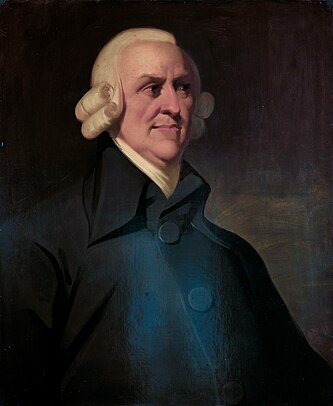
About Adam Smith
Adam Smith (16 June 1723 – 17 July 1790) was a Scottish-born economist and philosopher, widely considered the "father of modern economics".
About Adam Smith
Adam Smith (16 June 1723 – 17 July 1790) was a Scottish-born economist and philosopher, widely considered the "father of modern economics".
View all quotes →