“Perhaps no economist will ever again so utterly encompass his age as Adam Smith. Certainly none was ever so serene, so devoid of contumacy, so penetratingly critical without rancor, and so optimistic without being utopian.”
— Adam Smith
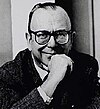
“Perhaps no economist will ever again so utterly encompass his age as Adam Smith. Certainly none was ever so serene, so devoid of contumacy, so penetratingly critical without rancor, and so optimistic without being utopian.”
“Even today — in blithe disregard of his actual philosophy — Smith is generally regarded as a conservative economist, whereas in fact, he was more avowedly hostile to the motives of businessmen than most New Deal economists.”
“The Wealth of Nations is in no sense a textbook. Adam smith is writing to his age, not to his classroom; he is expounding a doctrine that is meant to be of importance in running an empire, not an abstract treatise for academic distribution. The dragons that he slays (such as the Mercantilist philosophy, which takes over two hundred pages to die) were alive and panting, if a little tired, in his day. And finally, the book is a revolutionary one. To be sure, Smith would hardly have countenanced an upheaval that disordered the gentlemanly classes and enthroned the common poor. But the import of The Wealth of Nations is revolutionary, nonetheless.”
“It has been called “the outpouring not only of a great mind, but of a whole epoch.” Yet it is not, in the strict sense of the word, an “original” book. There is a long line of observers before Smith who have approached his understanding of the world: Locke, Steuart, Mandeville, Petty, Cantillon, Turgot, not to mention Quesnay and Hume again. Smith took from all of them: there are over a hundred authors mentioned by name in his treatise. But where others had fished here and there, Smith spread his net wide; where others had clarified this and that issue, Smith illuminated the entire landscape. The Wealth of Nations is not a wholly original book, but it is unquestionably a masterpiece.”
“All this may seem somewhat elementary. But consider what Adam Smith has done, with his impetus of self-interest and his regulator of competition. First, he has explained how prices are kept from ranging arbitrarily away from the actual cost of producing a good. Second, he has explained how society can induce its producers of commodities to provide it with what it wants. Third, he has pointed out why high prices are a self-curing disease, for they cause production in those lines to increase. And finally, he has accounted for a basic similarity of incomes at each level of the great producing strata of the nation. In a word, he has found in the mechanism of the market a self-regulating system for society’s orderly provisioning.”
“For Smith’s encyclopedic scope and knowledge there can be only admiration. It was only in the eighteenth century that so huge, all-embracing, secure, caustic, and profound a book could have been written. Indeed, The Wealth of Nations and The Theory of Moral Sentiments, together with his few other essays, reveal that Smith was much more than just an economist. He was a philosopher-psychologist-historian-sociologist who conceived a vision that included human motives and historic “stages” and economic mechanisms, all of which expressed the plan of the Great Architect of Nature (as Smith called him). From this viewpoint, The Wealth of Nations is more than a masterwork of political economy. It is part of a huge conception of the human adventure itself.”
“The answer is that Smith saw the all-important division of labor as a once-for-all, not a continuing, process. As has been recently pointed out, he did not see the organizational and technological core of the division of labor as a self-generating process of change, but as a discrete advance that would impart its stimulus and then disappear. Thus, in the very long run the growth momentum of society would come to a halt—Smith once mentions two hundred years as the longest period over which a society could hope to flourish. Thereafter the laborer would return to his subsistence wages, the capitalist to the modest profits of a stable market, and the landlord alone might enjoy a somewhat higher income as food production remained at the levels required by a larger, although no longer growing, population. For all its optimistic boldness, Smith’s vision is bounded, careful, sober—for the long run, even sobering.”
“Adam Smith’s laws of the market are basically simple. They tell us that the outcome of a certain kind of behavior in a certain social framework will bring about perfectly definite and foreseeable results. Specifically they show us how the drive of individual self-interest in an environment of similarly motivated individuals will result in competition; and they further demonstrate how competition will result in the provision of those goods that society wants, in the quantities that society desires, and at the prices society is prepared to pay. […] But self-interest is only half the picture. It drives men to action. Something else must prevent the pushing of profit-hungry individuals from holding society up to exorbitant ransom: a community activated only by self-interest would be a community of ruthless profiteers. This regulator is competition, the conflict of the self-interested actors on the marketplace. For each man, out to do his best for himself with no thought of social consequences, is faced with a flock of similarly motivated individuals who are engaged in exactly the same pursuit. Hence, each is only too eager to take advantage of his neighbor’s greed. A man who permits his self-interest to run away with him will find that competitors have slipped in to take his trade away; if he charges too much for his wares or if he refuses to pay as much as everybody else for his workers, he will find himself without buyers in the one case and without employees in the other. Thus very much as in The Theory of Moral Sentiments, the selfish motives of men are transmuted by interaction to yield the most unexpected of results: social harmony.”