Link Copied!
Abdus Salam Quotes (1926-1996)
Physicist, Scientist



About Abdus Salam
Prof. Dr. Abdus Salam (29 January 1926 – 21 November 1996) was a Pakistani theoretical physicist. He shared the 1979 Nobel Prize in Physics with Sheldon Glashow and Steven Weinberg for his contribution to the electroweak unification theory. He was the first Pakistani and the first scientist from an Islamic country to receive a Nobel Prize and the second from an Islamic country to receive any Nobel Prize, after Anwar Sadat of Egypt.
Best Abdus Salam Quotes
Shortest
Earliest
Explore our curated collection of the most famous and impactful Abdus Salam quotes.
“The Holy Quran enjoins us to reflect on the verities of Allah’s created laws of nature; however, that our generation has been privileged to glimpse a part of His design is a bounty and a grace for which I render thanks with a humble heart.”

Unsourced — Primary work/page citation not yet verified in the QuotesCosmos archive. Per our Unnamed Sources & Verification Policy, quotes without confirmed primary editions are explicitly marked Unsourced while under editorial review.
“In the Holy Book of Islam, Allah says:
"Thou seest not, in the creation of the All-merciful any imperfection, Return thy gaze, seest thou any fissure. Then Return thy gaze, again and again. Thy gaze, Comes back to thee dazzled, aweary."
This in effect is, the faith of all physicists; the deeper we seek, the more is our wonder excited, the more is the dazzlement for our gaze.”
Unsourced — Primary work/page citation not yet verified in the QuotesCosmos archive. Per our Unnamed Sources & Verification Policy, quotes without confirmed primary editions are explicitly marked Unsourced while under editorial review.
“By generalization of methods developed by Kamefuchi, O'Raifeartaigh, and Salam, conditions for renormalizability of general gauge theories of massive vector mesons are derived. ... It is shown that all theories based on simple Lie groups (with the one exception of the neutral vector meson theory in interaction with a conserved current) are unrenormalizable.”
Unsourced — Primary work/page citation not yet verified in the QuotesCosmos archive. Per our Unnamed Sources & Verification Policy, quotes without confirmed primary editions are explicitly marked Unsourced while under editorial review.
Abdus Salam Quotes by Topic
Find exactly what you are looking for by browsing this categorized list of Abdus Salam quotes by topic.
Abdus Salam on Intelligibility
“The difficulty, as in all this work, is to find a notation which is both concise and intelligible to at least two people of whom one may be the author.”
Unsourced — Primary work/page citation not yet verified in the QuotesCosmos archive. Per our Unnamed Sources & Verification Policy, quotes without confirmed primary editions are explicitly marked Unsourced while under editorial review.
Abdus Salam on String theory
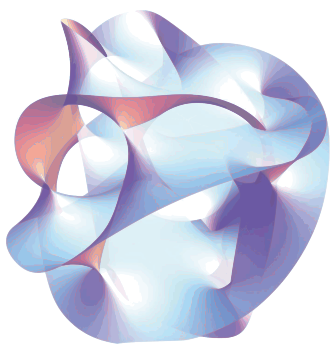
“Consistent, relativistic string theories had already been written down in two, ten or twenty-six dimensions (the last being relevant only to bosonic strings) in the 1970s. A closed string is a loop which replaces a spacetime point. Its quantum oscillations correspond to particles of higher spins and higher masses, which may be arranged in a linear trajectory in a spin-versus-mass ... (Regge) plot. If the slope parameter of this trajectory — the only parameter in the theory — is adjusted to equal the Newtonian constant, one can show, quite miraculously, that in the zeroth order of the closed bosonic string there emerges from the string theory Einstein's gravity in its fullness! (The higher orders give modifications to Einstein's theory, with corrections which have a range of length = 10–33 cm.)”

Unsourced — Primary work/page citation not yet verified in the QuotesCosmos archive. Per our Unnamed Sources & Verification Policy, quotes without confirmed primary editions are explicitly marked Unsourced while under editorial review.
Abdus Salam on Taj Mahal
“It is good to recall that three centuries ago, around the year 1660, two of the greatest monuments of modern history were erected, one in the West and one in the East; St. Paul's Cathedral in London and the Taj Mahal in Agra. Between them, the two symbolize, perhaps better than words can describe, the comparative level of architectural technology, the comparative level of craftsmanship and the comparative level of affluence and sophistication the two cultures had attained at that epoch of history. But about the same time there was also created—and this time only in the West—a third monument, a monument still greater in its eventual import for humanity. This was Newton's Principia, published in 1687. Newton's work had no counterpart in the India of the Mughals. I would like to describe the fate of the technology which built the Taj Mahal when it came into contact with the culture and technology symbolized by the Principia of Newton.”

Unsourced — Primary work/page citation not yet verified in the QuotesCosmos archive. Per our Unnamed Sources & Verification Policy, quotes without confirmed primary editions are explicitly marked Unsourced while under editorial review.
Quotes About Abdus Salam
Gain deeper perspective through quotes about Abdus Salam from others.
Massimo Introvigne on Abdus Salam
“Pakistan might have put Salam’s face on a stamp but would not grant him his freedom of religion or [civil] rights, not even in death.”

Unsourced — Primary work/page citation not yet verified in the QuotesCosmos archive. Per our Unnamed Sources & Verification Policy, quotes without confirmed primary editions are explicitly marked Unsourced while under editorial review.
About Abdus Salam
Prof. Dr. Abdus Salam (29 January 1926 – 21 November 1996) was a Pakistani theoretical physicist. He shared the 1979 Nobel Prize in Physics with Sheldon Glashow and Steven Weinberg for his contribution to the electroweak unification theory. He was the first Pakistani and the first scientist from an Islamic country to receive a Nobel Prize and the second from an Islamic country to receive any Nobel Prize, after Anwar Sadat of Egypt.