Link Copied!
A. V. Dicey Quotes (1835-1922)
Author


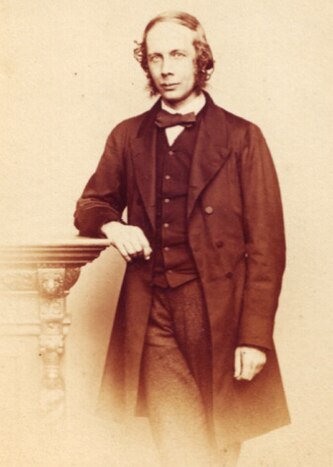
About A. V. Dicey
Albert Venn Dicey (February 4, 1835 – April 7, 1922) was a British jurist and constitutional theorist who wrote An Introduction to the Study of the Law of the Constitution (1885). The principles it expounds are considered part of the uncodified British constitution.
Best A. V. Dicey Quotes
Shortest
Earliest
Explore our curated collection of the most famous and impactful A. V. Dicey quotes.
“Our constitution, in short, is a judge-made constitution, and it bears on its face all the features, good and bad, of judge-made law.”

“When a body of twenty or two thousand or two hundred thousand men bind themselves together to act in a particular way for some common purpose, they create a body which, by no fiction of law but from the very nature of things, differs from the individuals of whom it is constituted.”

“Foreign observers of English manners, such for example as Voltaire, De Lolme, Tocqueville, or Gneist, have been far more struck than have Englishmen themselves with the fact that England is a country governed, as is scarcely any other part of Europe, under the rule of law.”
“All that necessarily results from an analysis of our institutions, and a comparison of them with the institutions of foreign countries, is, that the English constitution is still marked, far more deeply than is generally supposed, by peculiar features, and that these peculiar characteristics may be summed up in the combination of Parliamentary Sovereignty with the Rule of Law.”
“The principle of Parliamentary sovereignty means neither more nor less than this, namely, that Parliament thus defined has, under the English constitution, the right to make or unmake any law whatever; and, further, that no person or body is recognised by the law of England as having a right to override or set aside the legislation of Parliament.”

“The rule of law, as described in this treatise, remains to this day a distinctive characteristic of the English constitution. In England no man can be made to suffer punishment or to pay damages for any conduct not definitely forbidden by law; every man's legal rights or liabilities are almost invariably determined by the ordinary Courts of the realm, and each man's individual rights are far less the result of our constitution than the basis on which that constitution is founded.”

“The fact that the most arbitrary powers of the English executive must always be exercised under Act of Parliament places the government, even when armed with the widest authority, under the supervision, so to speak, of the Courts. Powers, however extraordinary, which are conferred or sanctioned by statute, are never really unlimited, for they are confined by the words of the Act itself, and, what is more, by the interpretation put upon the statute by the judges. Parliament is supreme legislator, but from the moment Parliament has uttered its will as lawgiver, that will becomes subject to the interpretation put upon it by the judges of the land.”
“Acts therefore which would not be justifiable in protection of a person's own property, may often be justified as the necessary means, either of stopping the commission of a crime, or of arresting a felon. Burglars rob A’s house, they are escaping over his garden wall, carrying off A’s jewels with them. A is in no peril of his life, but he pursues the gang, calls upon them to surrender, and having no other means of preventing their escape, knocks down one of them, X, who dies of the blow; A, it would seem, if Foster's authority may be trusted, not only is innocent of guilt, but has also discharged a public duty.”

“A story told of that eminent man and very learned judge, Mr. Justice Willes, and related by an ear-witness, is to the following effect:—Mr. Justice Willes was asked: "If I look into my drawing-room, and see a burglar packing up the clock, and he cannot see me, what ought I to do?" Willes replied, as nearly as may be: "My advice to you, which I give as a man, as a lawyer, and as an English judge, is as follows: In the supposed circumstance this is what you have a right to do, and I am by no means sure that it is not your duty to do it. Take a double-barrelled gun, carefully load both barrels, and then, without attracting the burglar's attention, aim steadily at his heart and shoot him dead."”
“Modern Englishmen may at first feel some surprise that the "rule of law" (in the sense in which we are now using the term) should be considered as in any way a peculiarity of English institutions, since, at the present day, it may seem to be not so much the property of any one nation as a trait common to every civilised and orderly state. Yet, even if we confine our observation to the existing condition of Europe, we shall soon be convinced that the "rule of law" even in this narrow sense is peculiar to England, or to those countries which, like the United States of America, have inherited English traditions. In almost every continental community the executive exercises far wider discretionary authority in the matter of arrest, of temporary imprisonment, of expulsion from its territory, and the like, than is either legally claimed or in fact exerted by the government in England; and a study of European politics now and again reminds English readers that wherever there is discretion there is room for arbitrariness, and that in a republic no less than under a monarchy discretionary authority on the part of the government must mean insecurity for legal freedom on the part of its subjects.”

A. V. Dicey Quotes by Topic
Find exactly what you are looking for by browsing this categorized list of A. V. Dicey quotes by topic.
A. V. Dicey on Parliament of the United Kingdom
“The principle of Parliamentary sovereignty means neither more nor less than this, namely, that Parliament thus defined has, under the English constitution, the right to make or unmake any law whatever; and, further, that no person or body is recognised by the law of England as having a right to override or set aside the legislation of Parliament.”

What A. V. Dicey Said About Others
Discover personal opinions A. V. Dicey shared regarding contemporaries.
A. V. Dicey on Jeremy Bentham 2 quotes
“Individualism as regards legislation is popularly, and not without reason, connected with the name and the principles of Bentham. The name of one man, it is true, can never adequately summarise a whole school of thought, but from 1825 onwards the teaching of Bentham exercised so potent an influence that to him is fairly ascribed that thorough-going though gradual amendment of the law of England which was one of the main results of the Reform Act.”

A. V. Dicey on Henry James Sumner Maine
“It is no mere accident that Maine, who in his Ancient Law undermined the authority of analytical jurisprudence, aimed in his Popular Government a blow at the foundations of Benthamite faith in democracy.”
Quotes About A. V. Dicey
Gain deeper perspective through quotes about A. V. Dicey from others.
William Martin Geldart on A. V. Dicey
“[Dicey's The Law of Domicil] not only reduced to order one of the most intricate and technical branches of law...but exerted a potent influence on its development.”
William Searle Holdsworth on A. V. Dicey
“Dicey will hold, in the history of the legal literature of the nineteenth century, a place not unlike that which Blackstone holds in the legal literature of the eighteenth century; for both have written books which became classics whilst they were still alive... Dicey's book [Law of the Constitution] is a classic, because he added to his knowledge of English law a knowledge both of the constitutional law of other states, and a knowledge of English history.”
R. S. Rait on A. V. Dicey 3 quotes
“His Introduction to the Study of the Law of the Constitution, originally published in 1885, was at once recognized to be no mere technical discussion but a literary contribution to the analysis and interpretation of the fundamental ideas which underlie the political thought and life of the nation.”
About A. V. Dicey
Albert Venn Dicey (February 4, 1835 – April 7, 1922) was a British jurist and constitutional theorist who wrote An Introduction to the Study of the Law of the Constitution (1885). The principles it expounds are considered part of the uncodified British constitution.