Link Copied!
Aṣa Quotes (1982-)
Writer, Singer, Artist


About Aṣa
Aṣa Bukola Elemide (born 17 September 1982) is a Nigerian-French singer, songwriter, and recording artist.
Best Aṣa Quotes
Shortest
Earliest
Explore our curated collection of the most famous and impactful Aṣa quotes.
“https://guardian.ng/opinion/asa-nigerias-singing-hawk/”
“Tomorrow is your opportunity to fail or be successful if you please”

“We will not put an end to extreme poverty if we do not give priority to education especially, girls' education”

““Universal quality education is one of the best antidotes to poverty” https://www.owogram.com/asa-quotes/”
““I know I can’t change the past, but as the river keeps flowing, I’ll keep on moving on.” https://www.owogram.com/asa-quotes/”

““When you just can’t see the future, when you just can’t see the light, you always got to put on a fight.”https://www.owogram.com/asa-quotes/”

““We don’t have to go to 360 degrees, all we have to go is 180. We don’t have to climb the highest mountains, all you’re looking for is within you”https://www.owogram.com/asa-quotes/”
“I think the price is having people who don't really know where you're going, where you want to go where you're coming from, make decisions, and sometimes these decisions can be very bad for you. But it's the price that I have to pay to get my music out and to be here today. And it's normal because everybody will go through it.”
“I think artistes are humans as well. Even though they possess special gifts. They're also humans that go through what you go through every day. They have aches and they fall ill. We hear them because they're famous. A lot of unknown people, regular people who all we don't know, we don't celebrate them, they are. I think this life is an illusion. This life we need light.”
“We'll never forget this year. But I think every day of my life has always been a lock-down. I'm usually almost in isolation all the time. So this time it wasn't very hard for me. It was like I've lived this every day of my life. I actually enjoyed and got to see what actual silence means; where I didn't have boats on the water and we could see fishes jumping out. And the birds were out, the sky was blue. You didn't hear the sound of cars. It was surreal.”

Aṣa Quotes by Topic
Find exactly what you are looking for by browsing this categorized list of Aṣa quotes by topic.
Aṣa on The Second Apocalypse
Aṣa on Fatawa 'Alamgiri
Aṣa on Worship
“That holy, humble, meek, modest, retiring Form, sometimes called the Spirit of Prayer, has been dragged from the closet, and so rudely handled by some of her professed friends, that she has not only lost all her wonted loveliness, but is now stalking the street, in some places, stark mad.”

Aṣa on Tughlaq dynasty
“Tomb of Ghiyãsu’d-Dîn Tughlaq: Similarly, Sayyid Ahmad notices this tomb in some detail but does not describe its Hindu features.395 Khaleeq Anjum, however, says in his introduction that “corridors inside this tomb have been constructed in the style of Hindu architecture, and the pillars as well as the beams in the corridors are fully of Hindu fashion.” He repeats the same comments in his notes at the end.””

Aṣa on Citizenship (Amendment) Act, 2019
“I asked the ruling government in the Parliament whether they had the numbers or data to prove that there was pervasive persecution of Hindus, Buddhists, Jains, Parsis, Sikhs, and Christians. Amit Shah said ‘lakhon-crorodon’ (lakhs and crores) – which is a very tall and unverified claim and not even remotely substantiated. I asked him for the exact number, broken down nation-wise between the three Islamic nations, and there was no answer given.”
Aṣa on Lodi dynasty
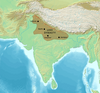
“The wealth and sensual beauty which had intoxicated them became their enemies. To the messengers (of Death) the command was given to strip, them of their honour and carry them off. If it seems good to Thee Thou givest glory, and if it pleases Thee Thou givest punishment. Had they paused to think in time, then would they have received the punishment? But the rulers paid no heed, passing their time instead in revelry, and now that Babur’s authority has been established the princes starve.'”
Aṣa on Enterprise architecture
“[T]his article presents the results of a survey in which Swedish CIOs have prioritized their most important concerns. The three most pertinent concerns are to decrease the cost related to the business organization, improve the quality of the interplay between the IT organization and the business organization, and provide new computer-aided support to the business organization. The survey also shows that CIOs in large companies have a more business-oriented focus than those in small companies... [and that] the foci of Enterprise Architecture frameworks should be aligned with the concerns of the CIO.”

Aṣa on Cultural Revolution
“The Cultural Revolution shows that the scope of the possible is determined by the presence or absence of pluralization. Yet we have to reckon with the historical reality that dismissal took a devastating form alongside an exceptional process of pluralization. How can we define our relation to this historical experience, that is, the experience of saturation and exhaustion of the party-state, which cannot simply be revived? Furthermore, how do we orient ourselves to the present, framed by the seeming impossibility of pluralization? Above all, is it possible to invent new ways of doing politics? In the absence of an answer, we are left only with the grim necessity of finding ways to refuse the logic of the governmental sensibility, the alternative being at best the foreclosure of any possibility of pluralization, or at worst the revival of ever more morbid forms of dismissal. Thus the search for a new historical mode of politics that can refuse dismissal is pressing. Because we will probably be defeated, now more than ever.”

Aṣa on Sultan Ghari
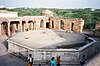
“Tomb of Sultãn Ghãrî: Sayyid Ahmad Khãn notices this tomb and describes it as exquisite. He says that it was built in AH 626 corresponding to AD 1228 when the corpse of Sultãn Nãsiru’d-Dîn Mahmûd, the eldest son of Sultãn Shamsu’d-Dîn Iltutmish, who was Governor of Laknauti and who died while his father was still alive, was brought to Delhi and buried.391 But the editor, Khaleeq Anjum, comments in his introduction that “the dome of the mosque which is of marble has been re-used and has probably been obtained from some temple”, and that the domes on the four pavilions outside “are in Hindu style in their interior.”392 He provides greater details in his notes at the end of Sayyid Ahmad’s work. He writes: “…This is the first Muslim tomb in North India, if we overlook some others. And it is the third historical Muslim monument in India after Quwwat al-Islãm Masjid and ADhãî Din Kã JhoñpRã… Stones from Hindu temples have been used in this tomb also, as in the Quwwat al-Islãm Masjid.” “…In the middle of the corridor on the west there is a marble dome. A look at the dome leads to the conclusion that it has been brought from some temple. The pillars that have been raised in the western corridor are of marble and have been made in Greek style. It is clear that they belong to some other building…””
Aṣa on Sack of Somnath
“When the Sultan Yaminu-d Daula Mahmud bin Subuktigin went to wage religious war against India, he made great efforts to capture and destroy Somnat, in the hope that the Hindus would then become Muhammadans. He arrived there in the middle of Zi-l k'ada, 416 A.H. (December, 1025 A.D.). The Indians made a desperate resistance. They would go weeping and crying for help into the temple, and then issue forth to battle and fight till all were killed. The number of the slain exceeded 50,000. The king looked upon the idol with wonder, and gave orders for the seizing of the spoil, and the appropriation of the treasures. There were many idols of gold and silver and vessels set with jewels, all of which had been sent there by the greatest personages in India. The value of the things found in the temples of the idols [p. 135] exceeded twenty thousand thousand dinars. When the king asked his companions what they had to say about the marvel of the idol, and of its staying in the air without proper support, several maintained that it was upheld by some hidden support. The king directed a person to go and feel all around and above and below it with a spear, which he did, but met with no obstacle. One of the attendants then stated his opinion that the canopy was made of loadstone, and the idol of iron, and that the ingenious builder had skilfully contrived that the magnet should not exercise a greater force on anyone side-- hence the idol was suspended in the middle. Some coincided, others differed. Permission was obtained from the Sultan to remove some stones from the top of the canopy to settle the point. When two stones were removed from the summit the idol swerved on one side, when more were taken away it inclined still further, until at last it rested on the ground.”

What Aṣa Said About Others
Discover personal opinions Aṣa shared regarding contemporaries.
Aṣa on Lorraine Hansberry 2 quotes
“Children see things very well sometimes — and idealists even better.”

Aṣa on Syed Ahmed Khan 2 quotes
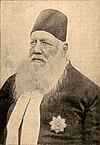
“Tomb of Ghiyãsu’d-Dîn Tughlaq: Similarly, Sayyid Ahmad notices this tomb in some detail but does not describe its Hindu features.395 Khaleeq Anjum, however, says in his introduction that “corridors inside this tomb have been constructed in the style of Hindu architecture, and the pillars as well as the beams in the corridors are fully of Hindu fashion.” He repeats the same comments in his notes at the end.””
Aṣa on Constantine II of Greece
“Sadly, he's mean as well as stupid, and takes advantage of our generosity.”

Aṣa on Alice Nkom
“Do not worry for me. I believe I will be arrested in the coming days, but I will not lose sleep over this or, especially, abandon what we have begun together.”

Aṣa on Atsujin
“The poet's name... is pronounced in two other ways : Watsujin and Atsujin although the true pronunciation of... is etsu. It is not known how the poet pronounced his name.”
Aṣa on Ayub Bachchu
“The fact that people from all walk of life were affected by the departure of Ayub Bachchu is testament to his greatness as an artist. I was fortunate enough to have personally known him since his starting days. He was an immensely passionate person.”

Aṣa on Ghiyath al-Din Tughluq
“Tomb of Ghiyãsu’d-Dîn Tughlaq: Similarly, Sayyid Ahmad notices this tomb in some detail but does not describe its Hindu features.395 Khaleeq Anjum, however, says in his introduction that “corridors inside this tomb have been constructed in the style of Hindu architecture, and the pillars as well as the beams in the corridors are fully of Hindu fashion.” He repeats the same comments in his notes at the end.””

Aṣa on Iltutmish
“Tomb of Sultãn Ghãrî: Sayyid Ahmad Khãn notices this tomb and describes it as exquisite. He says that it was built in AH 626 corresponding to AD 1228 when the corpse of Sultãn Nãsiru’d-Dîn Mahmûd, the eldest son of Sultãn Shamsu’d-Dîn Iltutmish, who was Governor of Laknauti and who died while his father was still alive, was brought to Delhi and buried.391 But the editor, Khaleeq Anjum, comments in his introduction that “the dome of the mosque which is of marble has been re-used and has probably been obtained from some temple”, and that the domes on the four pavilions outside “are in Hindu style in their interior.”392 He provides greater details in his notes at the end of Sayyid Ahmad’s work. He writes: “…This is the first Muslim tomb in North India, if we overlook some others. And it is the third historical Muslim monument in India after Quwwat al-Islãm Masjid and ADhãî Din Kã JhoñpRã… Stones from Hindu temples have been used in this tomb also, as in the Quwwat al-Islãm Masjid.” “…In the middle of the corridor on the west there is a marble dome. A look at the dome leads to the conclusion that it has been brought from some temple. The pillars that have been raised in the western corridor are of marble and have been made in Greek style. It is clear that they belong to some other building…””

Aṣa on Zakariya al-Qazwini
“When the Sultan Yaminu-d Daula Mahmud bin Subuktigin went to wage religious war against India, he made great efforts to capture and destroy Somnat, in the hope that the Hindus would then become Muhammadans. He arrived there in the middle of Zi-l k'ada, 416 A.H. (December, 1025 A.D.). The Indians made a desperate resistance. They would go weeping and crying for help into the temple, and then issue forth to battle and fight till all were killed. The number of the slain exceeded 50,000. The king looked upon the idol with wonder, and gave orders for the seizing of the spoil, and the appropriation of the treasures. There were many idols of gold and silver and vessels set with jewels, all of which had been sent there by the greatest personages in India. The value of the things found in the temples of the idols [p. 135] exceeded twenty thousand thousand dinars. When the king asked his companions what they had to say about the marvel of the idol, and of its staying in the air without proper support, several maintained that it was upheld by some hidden support. The king directed a person to go and feel all around and above and below it with a spear, which he did, but met with no obstacle. One of the attendants then stated his opinion that the canopy was made of loadstone, and the idol of iron, and that the ingenious builder had skilfully contrived that the magnet should not exercise a greater force on anyone side-- hence the idol was suspended in the middle. Some coincided, others differed. Permission was obtained from the Sultan to remove some stones from the top of the canopy to settle the point. When two stones were removed from the summit the idol swerved on one side, when more were taken away it inclined still further, until at last it rested on the ground.”
About Aṣa
Aṣa Bukola Elemide (born 17 September 1982) is a Nigerian-French singer, songwriter, and recording artist.