Link Copied!
Zen proverbs Quotes (0-)
Best Zen proverbs Quotes
Shortest
Earliest
Explore our curated collection of the most famous and impactful Zen proverbs quotes.


“The Layman was sitting in his thatched cottage one day studying the sūtras. "Difficult, difficult," he said; "like trying to scatter ten measures of sesame seed all over a tree." "Easy, easy," Mrs. Pang said; "like touching your feet to the ground when you get out of bed." "Neither difficult nor easy," Ling Zhao said; "on the hundred grass tips, the great Masters' meaning."”
“A Zen master named Gisan asked a young student to bring him a pail of water to cool his bath.
The student brought the water and, after cooling the bath, threw on to the ground the little that was left over.
"You dunce!" the master scolded him. "Why didn't you give the rest of the water to the plants? What right have you to waste even a drop of water in this temple?
The young student attained Zen in that instant. He changed his name to Tekisui, which means a drop of water.”

“Coming empty-handed, going empty-handed, that is human.
When you are born, where do you come from?
When you die, where do you go?
Life is like a floating cloud which appears.
Death is like a floating cloud which disappears.
The floating cloud itself originally does not exist.
Life and death, coming and going, are also like that.
But there is one thing which always remains clear.
It is pure and clear, not depending on life and death.
Then what is the one pure and clear thing?”
“A soldier named Nobushige came to Hakuin, and asked: "Is there really a paradise and a hell?"
"Who are you?" inquired Hakuin.
"I am a samurai," the warrior replied.
"You, a soldier!" exclaimed Hakuin. "What kind of ruler would have you as his guard? Your face looks like that of a beggar."
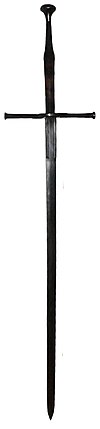
Nobushige became so angry that he began to draw his sword, but Hakuin continued: "So you have a sword! Your weapon is probably much too dull to cut off my head."
As Nobushige drew his sword Hakuin remarked: "Here open the gates of hell!"
At these words the samurai, perceiving the master's discipline, sheathed his sword and bowed.
"Here open the gates of paradise," said Hakuin.”
Quotes About Zen proverbs
Gain deeper perspective through quotes about Zen proverbs from others.
Eckhart Tolle on Zen proverbs
“The Buddha is said to have given a "silent sermon" once during which he held up a flower and gazed at it. After a while, one of those present, a monk called Mahakasyapa, began to smile. He is said to have been the only one who had understood the sermon. According to legend, that smile (that is to say, realization) was handed down by twenty-eight successive masters and much later became the origin of Zen.”
