Link Copied!
Woodrow Wilson Quotes (1856-1924)
President








-100px.png)


-100px.png)






























About Woodrow Wilson
Thomas Woodrow Wilson (28 December 1856 – 3 February 1924) was the 28th president of the United States of America (1913–1921) and the 45th governor of New Jersey (1911–1913). He was the second Democrat to serve two consecutive terms in the White House, after Andrew Jackson, and was the first President from the South to be elected since the American Civil War
Best Woodrow Wilson Quotes
Shortest
Earliest
Explore our curated collection of the most famous and impactful Woodrow Wilson quotes.
“We have stood apart, studiously neutral.”

“The seed of revolution is repression.”

“Gossips are only sociologists upon a mean and petty scale.”
“Uncompromising thought is the luxury of the closeted recluse.”
“It is getting to be harder to run a constitution than to frame one.”

“Friendship is the only cement that will ever hold the world together.”

“Prosperity … is necessarily the first theme of a political campaign.”


“5. A free, open-minded, and absolutely impartial adjustment of all colonial claims.”
“The way to stop financial joy-riding is to arrest the chauffeur, not the automobile.”
“The highest and best form of efficiency is the spontaneous cooperation of a free people.”

“Loyalty means nothing unless it has at its heart the absolute principle of self-sacrifice.”
“If you think too much about being re-elected, it is very difficult to be worth re-electing.”
“Well, nothing was ever done so systematically as nothing is being done now.”
“Conservatism is the policy of making no changes and consulting your grandmother when in doubt.”

“No man that does not see visions will ever realize any high hope or undertake any high enterprise.”
“[W]e are not bound to adhere to the doctrine held by the signers of the Declaration of Independence.”

“2. Absolute freedom of navigation upon the seas, outside territorial waters, alike in peace and in war.”


“This war, in its inception was a commercial and industrial war. It was not a political war.”
“Congress in session is Congress on public exhibition, whilst Congress in its committee-rooms is Congress at work.”
“The sum of the whole matter is this, that our civilization cannot survive materially unless it be redeemed spiritually.”

“No man can sit down and withhold his hands from the warfare against wrong and get peace from his acquiescence.”


“RADICAL—one who goes too far.
CONSERVATIVE—one who does not go far enough.
REACTIONARY—one who does not go at all.”
CONSERVATIVE—one who does not go far enough.
REACTIONARY—one who does not go at all.”
“So, our honest politicians and our honorable corporation heads owe it to their reputations to bring their activities out into the open.”

“The world must be made safe for democracy. Its peace must be planted upon the tested foundations of political liberty.”

“You deal in the raw material of opinion, and, if my convictions have any validity, opinion ultimately governs the world.”

“America lives in the heart of every man everywhere who wishes to find a region where he will be free to work out his destiny as he chooses.”

“Power consists in one's capacity to link his will with the purpose of others, to lead by reason and a gift of cooperation.”
“The principles on which to base a science of administration for America, must be principles which have democratic policy very much at heart.”

“The only thing that has ever distinguished America among the nations is that she has shown that all men are entitled to the benefits of the law.”
“I have long enjoyed the friendship and companionship of Republicans, because I am by instinct a teacher and I would like to teach them something.”

“At every crisis in one's life, it is absolute salvation to have some sympathetic friend to whom you can think aloud without restraint or misgiving.”
“There is a price which is too great to pay for peace, and that price can be put in one word. One cannot pay the price of self-respect.”

“I yield to no one precedence in love for the South. But because I love the South, I rejoice in the failure of the Confederacy.”

“A little group of willful men, representing no opinion but their own, have rendered the great Government of the United States helpless and contemptible.”

“Politics I conceive to be nothing more than the science of the ordered progress of society along the lines of greatest usefulness and convenience to itself.”

“I have read it with the deepest appreciation of Mr. Herron's singular insight into all the elements of a complicated situation and into my own motives and purposes.”
“Mr. House is my second personality. He is my independent self. His thoughts and mine are one. If I were in his place I would do just as he suggested.”

“Negro rule under unscrupulous adventurers had been finally put an end to in the South, and the natural, inevitable ascendancy of the whites, the responsible class, established.”
“Government is not a machine, but a living thing. It falls, not under the theory of the universe, but under the theory of organic life. It is accountable to Darwin, not to Newton.”

“[
“Of course, like every other man of intelligence and education I do believe in organic evolution. It surprises me that at this late date such questions should be raised.”

“The flag is the embodiment, not of sentiment, but of history. It represents the experiences made by men and women, the experiences of those who do and live under that flag.”

“Generally young men are regarded as radicals. This is a popular misconception. The most conservative persons I ever met are college undergraduates. The radicals are the men past middle life.”
“I can predict with absolute certainty that within another generation there will be another world war if the nations of the world do not concert the method by which to prevent it.”

“The government, which was designed for the people, has got into the hands of the bosses and their employers, the special interests. An invisible empire has been set up above the forms of democracy.”
“Administration is the most obvious part of government; it is government in action; it is the executive, the operative, the most visible side of government, and is of course as old as government itself.”
“The white men of the South were aroused by the mere instinct of self-preservation to rid themselves, by fair means or foul, of the intolerable burden of governments sustained by the votes of ignorant negroes.”
“No doubt a lot of nonsense has been talked about the inalienable rights of the individual, and a great deal that was mere vague sentiment and pleasing speculation has been put forward as fundamental principle.”
“It will take one hundred years to eradicate this prejudice, and we must deal with it as practical men. Segregation is not humiliating, but a benefit, and ought to be so regarded by you gentlemen.”
“14. A general association of nations must be formed under specific covenants for the purpose of affording mutual guarantees of political independence and territorial integrity to great and small states alike.”
“What is at at stake now is the peace of the world. What we are striving for is a new international order based upon broad and universal principles of right and justice, — no mere peace of shreds and patches.”

“Business underlies everything in our national life, including our spiritual life. Witness the fact that in the Lord's Prayer, the first petition is for daily bread. No one can worship God or love his neighbor on an empty stomach.”

“You know that it was Jefferson who said that the best government is that which does as little governing as possible…. But that time is passed. America is not now and cannot in the future be a place for unrestricted individual enterprise.”
“In fundamental theory socialism and democracy are almost if not quite one and the same. They both rest at bottom upon the absolute right of the community to determine its own destiny and that of its members. Men as communities are supreme over men as individuals.”

“You are not here merely to prepare to make a living. You are here to enable the world to live more amply, with greater vision, and with a finer spirit of hope and achievement. You are here to enrich the world, and you impoverish yourself if you forget this errand.”
“Liberty has never come from the government. Liberty has always come from the subjects of the government. The history of liberty is a history of resistance. The history of liberty is a history of the limitation of governmental power, not the increase of it.”

“There is a very great thrill to be had from the memories of the American Revolution, but the American Revolution was a beginning, not a consummation, and the duty laid upon us by that beginning is the duty of bringing the things then begun to a noble triumph of completion.”
“There can be no equality or opportunity, the first essential of justice in the body politic, if men and women and children be not shielded in their lives, their very vitality, from the consequences of great industrial and social processes which they can not alter, control, or singly cope with.”
“All that progressives ask or desire is permission — in an era when "development," "evolution," is the scientific word — to interpret the Constitution according to the Darwinian principle; all they ask is recognition of the fact that a nation is a living thing and not a machine.”
“The purpose of a university should be to make a son as unlike his father as possible. By the time a man has grown old enough to have a son in college he has specialized. The university should generalize the treatment of its undergraduates, should struggle to put them in touch with every force of life.”
“The object of education is not merely to draw out the powers of the individual mind: it is rather its right object to draw all minds to a proper adjustment to the physical and social world in which they are to have their life and their development: to enlighten, strengthen and make fit.”
“Most men are individuals no longer so far as their business, its activities, or its moralities are concerned. They are not units but fractions; with their individuality and independence of choice in matters of business they have lost all their individual choice within the field of morals.”

“If there are men in this country big enough to own the government of the United States, they are going to own it; what we have to determine now is whether we are big enough, whether we are men enough, whether we are free enough, to take possession again of the government which is our own.”
“Some men who are not real men love other things about themselves, but the real man believes that his honor is dearer than his life; and a nation is merely all of us put together, and the nation's honor is dearer than the nation's comfort and the nation's peace and the nation's life itself.”

“Adventurers swarmed out of the North, as much the enemies of one race as of the other, to cozen, beguile and use the negroes. The white men were aroused by a mere instinct of self-preservation — until at last there sprung into existence a great Kuklux Klan, a veritable empire of the South, to protect the Southern country.”

“The white men of the South were aroused by the mere instinct of self-preservation to rid themselves, by fair means or foul, of the intolerable burden of governments sustained by the votes of ignorant negroes and conducted in the interest of adventurers.””
“The great malady of public life is cowardice. Most men are not untrue, but they are afraid. Most of the errors of public life, if my observation is to be trusted, come not because men are morally bad, but because they are afraid of somebody. God knows why they should be: it is generally shadows they are afraid of.”
“I am inclined to follow the course suggested by a friend of mine who says that he has always followed the rule never to murder a man who is committing suicide, and clearly this misdirected gentleman is committing suicide slowly but surely.
• Variant: Never attempt to murder a man who is committing suicide.”
• Variant: Never attempt to murder a man who is committing suicide.”
“America is the place where you can not kill your Government by killing the men who conduct it. The only way you can kill government in America is by making the men and women of America forget how to govern, and nobody can do that. They sometimes find the team a little difficult to drive, but they sooner or later whip it into harness.”
“The great voice of America does not come from the seats of learning, but in a murmur from the hills and the woods and the farms and the factories and the mills, rolling on and gaining volume until it comes to us the voice from the homes of the common men. Do these murmurs come into the corridors of the university? I have not heard them.”

“We are constantly thinking of the great war … which which we think to-day as a war which saved the Union, and it did indeed save the Union, but it was a war that did a great deal more than that. It created in this country what had never existed before — a national consciousness. It was not the salvation of the Union, it was the rebirth of the Union.”
“The Senate of the United States has been both extravagantly praised and unreasonably disparaged, according to the predisposition and temper of its various critics... The truth is, in this case as in so many others, something quite commonplace and practical. The Senate is just what the mode of its election and the conditions of public life in this country make it.”
“The English race, consequently, has long and successfully studied the art of curbing executive power to the constant neglect of the art of perfecting executive methods. It has exercised itself much more in controlling than in energizing government, It has been more concerned to render government just and moderate than to make it facile, well-ordered,and effective.”
“In most parts of our country men work, not for themselves, not as partners in the old way in which they used to work, but generally as employees,—in a higher or lower grade,—of great corporations. There was a time when corporations played a very minor part in our business affairs, but now they play the chief part, and most men are the servants of corporations.”

“It has never been natural, it has seldom been possible, in this country for learning to seek a place apart and hold aloof from affairs. It is only when society is old, long settled to its ways, confident in habit, and without self-questioning upon any vital point of conduct, that study can affect seclusion and despise the passing interests of the day.”

“Every country-side wished to have its own Ku Klux, founded in secrecy and mystery like the mother ‘Den’ at Pulaski, until at last there had sprung into existence a great Ku Klux Klan, an ‘Invisible Empire of the South,’ bound together in loose organization to protect the southern country from some of the ugliness hazards of a time of revolution.”
“Do you never stop to reflect just what it is that America stands for? If she stands for one thing more than another, it is for the sovereignty of self-governing peoples, and her example, her assistance, her encouragement, has thrilled two continents in this Western World with all the fine impulses which have built up human liberty on both sides of the water.”
“We are not put into this world to sit still and know; we are put into it to act.
It is true that in order to learn men must for a little while withdraw from action, must seek some quiet place of remove from the bustle of affairs, where their thoughts may run clear and tranquil, and the heats of business be for the time put off; but that cloistered refuge is no place to dream in.”
It is true that in order to learn men must for a little while withdraw from action, must seek some quiet place of remove from the bustle of affairs, where their thoughts may run clear and tranquil, and the heats of business be for the time put off; but that cloistered refuge is no place to dream in.”
“It must be a peace without victory... Victory would mean peace forced upon the loser, a victor's terms imposed upon the vanquished. It would be accepted in humiliation, under duress, at an intolerable sacrifice, and would leave a sting, a resentment, a bitter memory upon which terms of peace would rest, not permanently, but only as upon quicksand. Only a peace between equals can last.”
“Like a lusty child, government with us has expanded in nature and grown great in stature, but has also become awkward in movement... English and American political history has been a history, not of administrative development, but of legislative oversight-not of progress in governmental organization, but of advance in law-making and political criticism... We go on criticising when we ought to be creating.”

“I can imagine no greater disservice to the country than to establish a system of censorship that would deny to the people of a free republic like our own their indisputable right to criticise their own public officials. While exercising the great powers of the office I hold, I would regret in a crisis like the one through which we are now passing to lose the benefit of patriotic and intelligent criticism.”
“We grow great by dreams. All big men are dreamers. They see things in the soft haze of a spring day or in the red fire of a long winter's evening. Some of us let these great dreams die, but others nourish and protect them; nurse them through bad days till they bring them to the sunshine and light which comes always to those who sincerely hope that their dreams will come true.”
“This war had its roots in the disregard of the rights of small nations and of nationalities which lacked the union and the force to make good their claim to determine their own allegiances and their own forms of political life. Covenants must now be entered into which will render such things impossible for the future; and those covenants must be backed by the united force of all the nations that love justice and are willing to maintain it at any cost.”
“No country can afford to have its prosperity originated by a small controlling class. The treasury of America lies in those ambitions, those energies, that cannot be restricted to a special favored class. It depends upon the inventions of unknown men, upon the originations of unknown men, upon the ambitions of unknown men. Every country is renewed out of the ranks of the unknown, not out of the ranks of those already famous and powerful and in control.”
“Since trade ignores national boundaries and the manufacturer insists on having the world as a market, the flag of his nation must follow him, and the doors of the nations which are closed must be battered down. Concessions obtained by financiers must be safeguarded by ministers of state, even if the sovereignty of unwilling nations be outraged in the process. Colonies must be obtained or planted, in order that no useful corner of the world may be overlooked or left unused.”
“I have spoken thus only that the whole world may know the true spirit of America — that men everywhere may know that our passion for justice and for self-government is no mere passion of words but a passion which, once set in action, must be satisfied. The power of the United States is a menace to no nation or people. It will never be used in aggression or for the aggrandisement of any selfish interest of our own. It springs out of freedom and is for the service of freedom.”

“Perhaps it was providential that I was stricken down when I was. Had I kept my health I should have carried the League. Events have shown that the world was not ready for it. It would have been a failure. Countries like France and Italy are unsympathetic with such an organisation. Time and sinister happenings may eventually convince them that some such scheme is required. It may not be my scheme. It may be some other. I see now, however, that my plan was premature. The world was not ripe for it.”

“We want the spirit of America to be efficient; we want American character to be efficient; we want American character to display itself in what I may, perhaps, be allowed to call spiritual efficiency—clear, disinterested thinking and fearless action along the right lines of thought. America is not anything if it consists of each of us. It is something only if it consists of all of us; and it can consist of all of us only as our spirits are banded together in a common enterprise.”
“I always remember that America was established not to create wealth—though any nation must create wealth which is going to make an economic foundation for its life—but to realize a vision, to realize an ideal. America has put itself under bonds to the earth to discover and maintain liberty now among men, and if she cannot see liberty now with the clear, unerring vision she had at the outset, she has lost her title, she has lost every claim to the leadership and respect of the nations of the world.”
“Segregation is not humiliating but a benefit, and ought to be so regarded by you gentlemen. If your organization goes out and tells the colored people of the country that it is a humiliation, they will so regard it, but if you do not tell them so, and regard it rather as a benefit, they will regard it the same. The only harm that will come will be if you cause them to think it is a humiliation... If this organization is ever to have another hearing before me it must have another spokesman. Your manner offends me...”
“The question upon which the whole future peace and policy of the world depends is this: Is the present war a struggle for a just and secure peace, or only for a new balance of power? If it be only a struggle for a new balance of power, who will guarantee, who can guarantee, the stable equilibrium of the new arrangement? Only a tranquil Europe can be a stable Europe. There must be, not a balance of power, but a community of power; not organized rivalries, but an organized common peace.”

“There are two beings who assess character instantly by looking into the eyes,—dogs and children. If a dog not naturally possessed of the devil will not come to you after he has looked you in the face, you ought to go home and examine your conscience; and if a little child, from any other reason than mere timidity, looks you in the face, and then draws back and will not come to your knee, go home and look deeper yet into your conscience.
• Variant: If a dog will not come to you after he has looked you in the face, you ought to go home and examine your conscience.”
• Variant: If a dog will not come to you after he has looked you in the face, you ought to go home and examine your conscience.”

“The Southern legislatures which Mr. Johnson authorized set up saw the need for action no less than Congress did. It was a menace to society itself that the negroes should thus of a sudden be set free and left without tutelage or restraint. Some stayed very quietly by their old masters and gave no trouble, but most yielded, as was to have been expected, to the novel impulses and excitement of freedom and made their way to the camps and cities, where the blue-coated soldiers were, and the agents of the Freedman’s Bureau.”
“A great industrial nation is controlled by its system of credit. Our system of credit is privately concentrated. The growth of the nation, therefore, and all our activities are in the hands of a few men who, even if their action be honest and intended for the public interest, are necessarily concentrated upon the great undertakings in which their own money is involved and who necessarily, by very reason of their own limitations, chill and check and destroy genuine economic freedom. This is the greatest question of all, and to this statesmen must address themselves with an earnest determination to serve the long future and the true liberties of men.”
“We are at the parting of the ways. We have, not one or two or three, but many, established and formidable monopolies in the United States. We have, not one or two, but many, fields of endeavor into which it is difficult, if not impossible, for the independent man to enter. We have restricted credit, we have restricted opportunity, we have controlled development, and we have come to be one of the worst ruled, one of the most completely controlled and dominated, governments in the civilized world — no longer a government by free opinion, no longer a government by conviction and the vote of the majority, but a government by the opinion and the duress of small groups of dominant men.”
“The working people of America, — if they must be distinguished from the minority that constitutes the rest of it, — are, of course, the backbone of the Nation. No law that safeguards their lives, that improves the physical and moral conditions under which they live, that makes their hours of labor rational and tolerable, that gives them freedom to act in their own interest, and that protects them where they cannot project themselves, can properly be regarded as class legislation or as anything but as a measure taken in the interest of the whole people, whose partnership in right action we are trying to establish and make real and practical. It is in this spirit that we shall act if we are genuine spokesmen of the whole country.”

“Our whole strength will be put into this war of emancipation, — emancipation from the threat and attempted mastery of selfish groups of autocratic rulers, — whatever the difficulties and present partial delays. We are indomitable in our power of independent action and can in no circumstances consent to live in a world governed by intrigue and force. We believe that our own desire for a new international order under which reason and justice and the common interests of mankind shall prevail is the desire of enlightened men everywhere. Without that new order the world will be without peace and human life will lack tolerable conditions of existence and development. Having set our hand to the task of achieving it, we shall not turn back.”

“Nothing is easier than to falsify the past. Lifeless instruction will do it. If you rob it of vitality, stiffen it with pedantry, sophisticate it with argument, chill it with unsympathetic comment, you render it as dead as any academic exercise. The safest way in all ordinary seasons is to let it speak for itself: resort to its records, listen to its poets and to its masters in the humbler art of prose. Your real and proper object, after all, is not to expound, but to realize it, consort with it, and make your spirit kin with it, so that you may never shake the sense of obligation off. In short, I believe that the catholic study of the world's literature as a record of spirit is the right preparation for leadership in the world's affairs, if you undertake it like a man and not like a pedant.”
“I have not written a book since the campaign. I did not write this book at all. It is the result of the editorial literary skill of Mr. William Bayard Hale, who has put together here in their right sequences the more suggestive portions of my campaign speeches.
And yet it is not a book of campaign speeches. It is a discussion of a number of very vital subjects in the free form of extemporaneously spoken words. I have left the sentences in the form in which they were stenographically reported. I have not tried to alter the easy-going and often colloquial phraseology in which they were uttered from the platform, in the hope that they would seem the more fresh and spontaneous because of their very lack of pruning and recasting.”
And yet it is not a book of campaign speeches. It is a discussion of a number of very vital subjects in the free form of extemporaneously spoken words. I have left the sentences in the form in which they were stenographically reported. I have not tried to alter the easy-going and often colloquial phraseology in which they were uttered from the platform, in the hope that they would seem the more fresh and spontaneous because of their very lack of pruning and recasting.”
“Adventurers swarmed out of the North to cozen, beguile, and use them. These men were ‘carpet baggers’… They gained the confidence of the negroes, obtained for themselves the most lucrative offices, and lived upon the public treasury, public contracts, and their easy control of affairs… For the Negroes there was nothing but occasional allotments of abandon or forfeited land, the pay of petty offices, a per diem allowances as members of the conventions and the state legislatures which their new masters made business for, or the wages of servants in the various offices of administration. Their ignorance and credulity made them easy dupes.”
“My dear Swope, Your letter of yesterday interests me very deeply, I need hardly say, and furnishes much material for constructive thinking, but my present judgment is that this is not the time for formulation. If we were dealing with only one class, a statement could be made which I think would guide and stimulate rather than disturb, but just so certainly as such a statement was attempted at this time, there would spring up a grand controversy in which the selfish and exclusive interests of the country would speak loudest because through the largest number of the journals and magazines. I am afraid that, while we could easily hold our own in such a debate, this is not the wise time to start a debate which would distract attention from the matters immediately in hand and pressing for the right solution. Don’t you think there is something in that? Cordially and sincerely yours, Woodrow Wilson.”

“Industry we have got to humanize, — not through the trusts, — but through the direct action of law guaranteeing protection against dangers and compensation for injuries, guaranteeing sanitary conditions, proper hours, the right to organize, and all the other things which the conscience of the country demands as the workingman's right. We have got to cheer and inspirit our people with the sure prospects of social justice; and due reward, with the vision of the open gates of opportunity for all. We have got to set the energy and the initiative of this great people absolutely free, so that the future of America will be greater than the past, so that the pride of America will grow with achievement, so that America will know as she advances from generation to generation that each brood of her sons is greater and more enlightened than that which preceded it, know that she is fulfilling the promise that she has made to mankind.”
“We are all agreed that there can be no peace obtained by any kind of bargain or compromise with the governments of the Central Empires, because we have dealt with them already and have seen them deal with other governments that were parties to this struggle, at Brest Litovsk and Bucharest. They have convinced us that they are without honour and do not intend justice. They observe no covenants, accept no principle but force and their own interest. We cannot “come to terms” with them. They have made it impossible. The German people must by this time be fully aware that we cannot accept the word of those who forced this war upon us. We do not think the same thoughts or speak the same language of agreement.”
“The peace of the world depends upon the just settlement of each of the several problems to which I adverted in my recent address to the Congress. I, of course, do not mean that the peace of the world depends upon the acceptance of any particular set of suggestions as to the way in which those problems are to be dealt with. I mean only that those problems each and all affect the whole world; that unless they are dealt with in a spirit of unselfish and unbiased justice, with a view to the wishes, the natural connections, the racial aspirations, the security, and the peace of mind of the peoples involved, no permanent peace will have been attained. They cannot be discussed separately or in corners. None of them constitutes a private or separate interest from which the opinion of the world may be shut out. Whatever affects the peace affects mankind, and nothing settled by military force, if settled wrong, is settled at all. It will presently have to be reopened.”
“It is a fearful thing to lead this great peaceful people into war, into the most terrible and disastrous of all wars, civilization itself seeming to be in the balance. But the right is more precious than peace, and we shall fight for the things which we have always carried nearest our hearts — for democracy, for the right of those who submit to authority to have a voice in their own governments, for the rights and liberties of small nations, for a universal dominion of right by such a concert of free peoples as shall bring peace and safety to all nations and make the world itself at last free. To such a task we can dedicate our lives and our fortunes, everything that we are and everything that we have, with the pride of those who know that the day has come when America is privileged to spend her blood and her might for the principles that gave her birth and happiness and the peace which she has treasured. God helping her, she can do no other.”
“There shall be no annexations, no contributions, no punitive damage. Peoples are not to be handed about from one sovereignty to another by an international conference or an understanding between rivals and antagonists. National aspirations must be respected; peoples may now be dominated and governed only by their own consent. "Self-determination" is not a mere phrase. It is an imperative principle of actions which statesmen will henceforth ignore at their peril. We cannot have general peace for the asking, or by the mere arrangements of a peace conference. It cannot be pieced together out of individual understandings between powerful states. All the parties to this war must join in the settlement of every issue anywhere involved in it; because what we are seeking is a peace that we can all unite to guarantee and maintain and every item of it must be submitted to the common judgment whether it be right and fair, an act of justice, rather than a bargain between sovereigns.”
“Let me say again that I am not impugning the motives of the men in Wall Street. They may think that that is the best way to create prosperity for the country. When you have got the market in your hand, does honesty oblige you to turn the palm upside down and empty it? If you have got the market in your hand and believe that you understand the interest of the country better than anybody else, is it patriotic to let it go? I can imagine them using this argument to themselves.
The dominating danger in this land is not the existence of great individual combinations, — that is dangerous enough in all conscience, — but the combination of the combinations, — of the railways, the manufacturing enterprises, the great mining projects, the great enterprises for the development of the natural water-powers of the country, threaded together in the personnel of a series of boards of directors into a "community of interest" more formidable than any conceivable single combination that dare appear in the open.”
The dominating danger in this land is not the existence of great individual combinations, — that is dangerous enough in all conscience, — but the combination of the combinations, — of the railways, the manufacturing enterprises, the great mining projects, the great enterprises for the development of the natural water-powers of the country, threaded together in the personnel of a series of boards of directors into a "community of interest" more formidable than any conceivable single combination that dare appear in the open.”

“Sometimes people call me an idealist. Well, that is the way I know I am an American. America, my fellow citizens — I do not say it in disparagement of any other great people—America is the only idealistic Nation in the world. When I speak practical judgments about business affairs, I can only guess whether I am speaking the voice of America or not, but when I speak the ideal purposes of history I know that I am speaking the voice of America, because I have saturated myself since I was a boy in the records of that spirit, and everywhere in them there is this authentic tone of the love of justice and the service of humanity. If by any mysterious influence of error America should not take the leading part in this new enterprise of concerted power, the world would experience one of those reversals of sentiment, one of those penetrating chills of reaction, which would lead to a universal cynicism, for if America goes back upon mankind, mankind has no other place to turn. It is the hope of nations all over the world that America will do this great thing.”
“Since I entered politics, I have chiefly had men's views confided to me privately. Some of the biggest men in the United States, in the field of commerce and manufacture, are afraid of somebody, are afraid of something. They know that there is a power somewhere so organized, so subtle, so watchful, so interlocked, so complete, so pervasive, that they had better not speak above their breath when they speak in condemnation of it.
They know that America is not a place of which it can be said, as it used to be, that a man may choose his own calling and pursue it just as far as his abilities enable him to pursue it; because to-day, if he enters certain fields, there are organizations which will use means against him that will prevent his building up a business which they do not want to have built up; organizations that will see to it that the ground is cut from under him and the markets shut against him. For if he begins to sell to certain retail dealers, to any retail dealers, the monopoly will refuse to sell to those dealers, and those dealers, afraid, will not buy the new man's wares.”
They know that America is not a place of which it can be said, as it used to be, that a man may choose his own calling and pursue it just as far as his abilities enable him to pursue it; because to-day, if he enters certain fields, there are organizations which will use means against him that will prevent his building up a business which they do not want to have built up; organizations that will see to it that the ground is cut from under him and the markets shut against him. For if he begins to sell to certain retail dealers, to any retail dealers, the monopoly will refuse to sell to those dealers, and those dealers, afraid, will not buy the new man's wares.”
“American industry is not free, as once it was free; American enterprise is not free; the man with only a little capital is finding it harder to get into the field, more and more impossible to compete with the big fellow. Why? Because the laws of this country do not prevent the strong from crushing the weak. That is the reason, and because the strong have crushed the weak the strong dominate the industry and the economic life of this country. No man can deny that the lines of endeavor have more and more narrowed and stiffened; no man who knows anything about the development of industry in this country can have failed to observe that the larger kinds of credit are more and more difficult to obtain, unless you obtain them upon the terms of uniting your efforts with those who already control the industries of the country; and nobody can fail to observe that any man who tries to set himself up in competition with any process of manufacture which has been taken under the control of large combinations of capital will presently find himself either squeezed out or obliged to sell and allow himself to be absorbed.”
“After all, the test of whether it is possible for either government to go any further in this comparison of views is simple and obvious. The principles to be applied are these: First, that each part of the final settlement must be based upon the essential justice of that particular case and upon such adjustments as are most likely to bring a peace that will be permanent; second, that peoples and provinces are not to be bartered about from sovereignty to sovereignty as if they were mere chattels and pawns in a game, even the great game, now forever discredited, of the balance of power; but that third, every territorial settlement involved in this war must be made in the interest and for the benefit of the populations concerned, and not as a part of any mere adjustment or compromise of claims amongst rival states; and fourth, that all well defined national aspirations shall be accorded the utmost satisfaction that can be accorded them without introducing new or perpetuating old elements of discord and antagonism that would be likely in time to breaks the peace of Europe and consequently of the world. A general peace erected upon such foundations can be discussed. Until such a peace can be secured we have no choice but to go on.”
“If every nation is going to be our rival, if every nation is going to dislike and distrust us, and that will be the case, because having trusted us beyond measure the reaction will occur beyond measure (as it stands now they trust us they look to us, they long that we shall undertake anything for their assistance rather than that any other nation should undertake it)— if we say, "No, we are in this world to live by ourselves, and get what we can out of it by any selfish processes," then the reaction will change the whole heart and attitude of the world toward this great, free, justice-loving people, and after you have changed the attitude of the world, what have you produced? Peace? Why, my fellow citizens, is there any man here or any woman, let me say is there any child here, who does not know that the seed of war in the modern world is industrial and commercial rivalry? The real reason that the war that we have just finished took place was that Germany was afraid her commercial rivals were going to get the better of her, and' the reason why some nations went into the war against Germany was that they thought Germany would get the commercial advantage of them. The seed of the jealousy, the seed of the deep-seated hatred was hot, successful commercial and industrial rivalry.”
“Those who know you, know what a passion you have always felt for the many as against the few. Your life has been marked by real devotion to the cause of the people. Would it not be wise now to make a reaffirmation of this faith; to visualize for those who see in your [you] their friend and leader those conditions of life that the new order is to create? In such an exposition there could be included such points as: Living wage; hours of labor; representation of labor in the direct[or]ate of the undertaking in which it is engaged; profit-sharing; pension system; old age; health and employment insurance; national labor exchanges; housing; welfare conditions; the right to change employment without sacrifice of pension interest (with which goes the connotation of reward for continuous and efficient service); plans for the transitional period of demobilization; greater ease of land purchases; elasticity in loaning operations; readjustments of taxation; the development of a deeper national and community interest. This is but a rough outline of the points that might be encompassed in such an address as I have in mind. Some of them, perhaps, are visionary and impractical, but I am including them because even if they are not susceptible of immediate achievement they belong, properly, in such a vision of the future as you, best of all, could paint. You have done it for the world. Why not draw in the details for America?”
“There are those in this country who threaten direct action to force their will, upon a majority. Russia today, with its blood and terror, is a painful object lesson of the power of minorities. It makes little difference what minority it is; whether capital or labor, or any other class; no sort of privilege will ever be permitted to dominate this country. We are a partnership or nothing that is worth while. We are a democracy, where the majority are the masters, or all the hopes and purposes of the men who founded this government have been defeated and forgotten. In America there is but one way by which great reforms can be accomplished and the relief sought by classes obtained, and that is through the orderly processes of representative government. Those who would propose any other method of reform are enemies of this country. America will not be daunted by threats nor lose her composure or calmness in these distressing times. We can afford, in the midst of this day of passion and unrest, to be self - contained and sure. The instrument of all reform in America is the ballot. The road to economic and social reform in America is the straight road of justice to all classes and conditions of men. Men have but to follow this road to realize the full fruition of their objects and purposes. Let those beware who would take the shorter road of disorder and revolution. The right road is the road of justice and orderly process.”
“However it has come about, it is more important still that the control of credit also has become dangerously centralized. It is the mere truth to say that the financial resources of the country are not at the command of those who do not submit to the direction and domination of small groups of capitalists who wish to keep the economic development of the country under their own eye and guidance. The great monopoly in this country is the monopoly of big credits. So long as that exists, our old variety and freedom and individual energy of development are out of the question. A great industrial nation is controlled by its system of credit. Our system of credit is privately concentrated. The growth of the nation, therefore, and all our activities are in the hands of a few men who, even if their action be honest and intended for the public interest, are necessarily concentrated upon the great undertakings in which their own money is involved and who necessarily, by very reason of their own limitations, chill and check and destroy genuine economic freedom. This is the greatest question of all, and to this statesmen must address themselves with an earnest determination to serve the long future and the true liberties of men. This money trust, or, as it should be more properly called, this credit trust, of which Congress has begun an investigation, is no myth; it is no imaginary thing. It is not an ordinary trust like another. It doesn’t do business every day. It does business only when there is occasion to do business. You can sometimes do something large when it isn’t watching, but when it is watching, you can’t do much. And I have seen men squeezed by it; I have seen men who, as they themselves expressed it, were put “out of business by Wall Street,” because Wall Street found them inconvenient and didn’t want their competition.”
“Opinion shifted uneasily, the while, the nation through. The unexpected scope and magnitude of the war, its slow and sullen movement, its anxious strain of varying fortune, its manifest upheaval of the vary foundations of government, turned men's hopes and fears now this way now that, threw their judgements all abroad, brought panic gusts of disquietude and dismay which lasted a long season through before any steady winds of purpose found their breath and their second quarter. For eighteen months Mr. Lincoln had waited upon opinion, with a patience which had deeply irritated all who wished radical action taken. He knew the hazards of time as well as any man; feared that at almost any moment news might come of the recognition of the southern Confederacy by the old governments abroad; knew how important success was to hold opinion at home no less than to check interference from without; was keenly conscious how the failures of the Army of the Potomac offset and neutralized the successes of the federal arms in the West; and realized to the full how awkward it was, whether for the government of opinion at home or over sea, to have no policy more handsome than conquest and subjugation. It was necessary to put the South at a moral disadvantage by transforming the contest from a war waged against States fighting for their independence to a war against States fighting for the maintenance and extension of slavery, by making some open move for emancipation as the real motive of the struggle. Once make the war a struggle against slavery, and the world, it might be hoped, might see it as a moral war, not a political; and the sympathy of nations would begin to run for the North, not the South.”
“Do not think of this treaty of peace as merely a settlement with Germany. It is that. It is a very severe settlement with Germany, but there is not anything in it that she did not earn. Indeed, she earned more than she can ever be able to pay for, and the punishment exacted of her is not a punishment greater than she can bear, and it is absolutely necessary in order that no other nation may ever plot such a thing against humanity and civilization. But the treaty is so much more than that. It is not merely a settlement with Germany; it is a readjustment of those great injustices which underlie the whole structure of European and Asiatic society. This is only the first of several treaties. They are all constructed upon the same plan. The Austrian treaty follows the same lines. The treaty with Hungary follows the same lines. The treaty with Bulgaria follows the same lines. The treaty with Turkey, when it is formulated, will follow the same lines. What are those lines? They are based upon the purpose to see that every government dealt with in this great settlement is put in the hands of the people and taken out of the hands of coteries and of sovereigns who had no right to rule over the people. It is a people's treaty, that accomplishes by a great sweep of practical justice the liberation of men who never could have liberated themselves, and the power of the most powerful nations has been devoted not to their aggrandizement but to the liberation of people whom they could have put under their control if they had chosen to do so. Not one foot of territory is demanded by the conquerors, not one single item of submission to their authority is demanded by them. The men who sat around that table in Paris knew that the time had come when the people were no longer going to consent to live under masters, but were going to live the lives that they chose themselves, to live under such governments as they chose themselves to erect. That is the fundamental principle of this great settlement.
And we did not stop with that. We added a great international charter for the rights of labor. Reject this treaty, impair it, and this is the consequence to the laboring men of the world, that there is no international tribunal which can bring the moral judgments of the world to bear upon the great labor questions of the day. What we need to do with regard to the labor questions of the day, my fellow countrymen, is to lift them into the light, is to lift them out of the haze and distraction of passion, of hostility, not into the calm spaces where men look at things without passion. The more men you get into a great discussion the more you exclude passion. Just so soon as the calm judgment of the world is directed upon the question of justice to labor, labor is going to have a forum such as it never was supplied with before, and men everywhere are going to see that the problem of labor is nothing more nor less than the problem of the elevation of humanity. We must see that all the questions which have disturbed the world, all the questions which have eaten into the confidence of men toward their governments, all the questions which have disturbed the processes of industry, shall be brought out where men of all points of view, men of all attitudes of mind, men of all kinds of experience, may contribute their part to the settlement of the great questions which we must settle and can not ignore.”
And we did not stop with that. We added a great international charter for the rights of labor. Reject this treaty, impair it, and this is the consequence to the laboring men of the world, that there is no international tribunal which can bring the moral judgments of the world to bear upon the great labor questions of the day. What we need to do with regard to the labor questions of the day, my fellow countrymen, is to lift them into the light, is to lift them out of the haze and distraction of passion, of hostility, not into the calm spaces where men look at things without passion. The more men you get into a great discussion the more you exclude passion. Just so soon as the calm judgment of the world is directed upon the question of justice to labor, labor is going to have a forum such as it never was supplied with before, and men everywhere are going to see that the problem of labor is nothing more nor less than the problem of the elevation of humanity. We must see that all the questions which have disturbed the world, all the questions which have eaten into the confidence of men toward their governments, all the questions which have disturbed the processes of industry, shall be brought out where men of all points of view, men of all attitudes of mind, men of all kinds of experience, may contribute their part to the settlement of the great questions which we must settle and can not ignore.”

Woodrow Wilson Quotes by Topic
Find exactly what you are looking for by browsing this categorized list of Woodrow Wilson quotes by topic.
Woodrow Wilson on Peace 8 quotes
View all 8 quotes on Peace →Woodrow Wilson on Liberty 5 quotes
View all 5 quotes on Liberty →Woodrow Wilson on Neutrality 4 quotes
“We have stood apart, studiously neutral.”
Woodrow Wilson on United States 4 quotes
“Some Americans need hyphens in their names, because only part of them has come over; but when the whole man has come over, heart and thought and all, the hyphen drops of its own weight out of his name.”

Woodrow Wilson on War 3 quotes
View all 3 quotes on War →What Woodrow Wilson Said About Others
Discover personal opinions Woodrow Wilson shared regarding contemporaries.
Woodrow Wilson on Edmund Burke 3 quotes
“"We cannot, I fear," he says proudly of the colonies, "we cannot falsify the pedigree of this fierce people, and persuade them that they are not sprung from a nation in whose veins the blood of freedom circulates. The language in which they would hear you tell them this tale would detect the imposition; your speech would betray you. An Englishman is the unfittest person on earth to argue another Englishman into slavery." Does not your blood stir at these passages? And is it not because, besides loving what is nobly written, you feel that every word strikes towards the heart of the things that have made your blood what it has proved to be in the history of our race?”

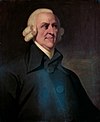
Woodrow Wilson on Adam Smith 2 quotes
“He was a great thinker,—and that was much; but he also made men recognize him as a great thinker, because he was a great master of style,—which was more.”
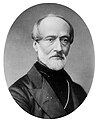
Woodrow Wilson on Giuseppe Mazzini 2 quotes
“I am very much moved, sir, to be in the presence of this monument. On the other side of the water we have studied the life of Mazzini with almost as much pride as if we shared in the glory of his history, and I am very glad to acknowledge that his spirit has been handed down to us of a later generation on both sides of the water. It is delightful to me to feel that I am taking some small part in accomplishing the realization of the ideals to which his life and thought were devoted. It is with a spirit of veneration, sir, and with a spirit I hope of emulation, that I stand in the presence of this monument and bring my greetings and the greetings of America with our homage to the great Mazzini.”
Woodrow Wilson on Billy Hughes
“A pestiferous varmint.”

Quotes About Woodrow Wilson
Gain deeper perspective through quotes about Woodrow Wilson from others.
Bruce Bartlett on Woodrow Wilson
“McCarthy was a Republican. The Democrats, however, have skeletons in their own closet and it's worth remembering them, too. For example, Democrat Woodrow Wilson's Attorney General, A. Mitchell Palmer, who was just as rabid an anti-Communist as McCarthy, did far more to repress free speech and political freedom than McCarthy ever attempted.”
THE PAPERS OF WOODROW WILSON ARTHUR S. LINK on Woodrow Wilson 2 quotes
“Raymond Fosdick came to my room and awakened me last night to tell me the following story and ask me what he should do about it: When he reached the 23rd street ferry on his way to the boat at 6 A.M. December 4, he noticed hundreds of young men and women and old men and women hurrying off the ferry boat and away into the darkness. He asked his tax driver who they were and was told that they were sweat shop workers. He happened to meet one of them buying a morning paper and asked the man how long he worked a day. The man replied: “Fourteen hours. But do you see that boat (pointing across the river towards the George Washington) there’s a man aboard her that is going to Europe to change all that.” I advised Fosdick to tell the story to the President and to advise him that he must see to it that a bill of industrial human rights was written into the treaty of peace – a bill providing for world wide maximum hours of labor (at least in civilized countries) minimum wages, unemployment insurance, etc. Fosdick did this today. The President replied that it frightened him to think how much the common people of the world expect of him. That he did not consider it possible to take up any such matters at the peace conference. That he hoped the international labor conference on which he looked with much favo[r] would press for these matters.”
Alan Bullock on Woodrow Wilson
“The war sharpened Liberal dissatisfaction with the traditional methods of conducting foreign policy. ... They found in President Wilson a man after their own hearts. His views and theirs coincided at many points: a just peace without annexations or indemnities; the map of Europe redrawn on the principle of self-determination; "open covenants openly arrived at", arbitration and the rule of law; disarmament and the replacing of exclusive alliances by a League of Nations; above all, a devotion to the ideal of the brotherhood of man.”
Winston Churchill on Woodrow Wilson
“The League of Nations had no sooner been created than it received an almost mortal blow. The United States abandoned President Wilson’s offspring. The President himself, ready to do battle for his ideals, suffered a paralytic stroke just as he was setting forth on his campaign, and lingered henceforward a futile wreck for a great part of two long and vital years, at the end of which his party and his policy were swept away by the Republican Presidential victory of 1920. Across the Atlantic on the morrow of the Republican success isolationist conceptions prevailed. Europe must be left to stew in its own juice, and must pay its lawful debts. At the same time tariffs were raised to prevent the entry of the goods by which alone these debts could be discharged. At the Washington Conference of 1921, far-reaching proposals for naval disarmament were made by the United States, and the British and American Governments proceeded to sink their battleships and break up their military establishments with gusto. It was argued in odd logic that it would be immoral to disarm the vanquished unless the victors also stripped themselves of their weapons. The finger of Anglo-American reprobation was presently to be pointed at France, deprived alike of the Rhine frontier and of her treaty guarantee, for maintaining, even on a greatly reduced scale, a French Army based upon universal service.”

Michael Collins on Woodrow Wilson
“The European War, which began in 1914, is now generally recognized to have been a war between two rival empires, an old one and a new, the new becoming such a successful rival of the old, commercially and militarily, that the world-stage was, or was thought to be, not large enough for both. Germany spoke frankly of her need for expansion, and for new fields of enterprise for her surplus population. England, who likes to fight under a high-sounding title, got her opportunity in the invasion of Belgium. She was entering the war 'in defense of the freedom of small nationalities'. America at first looked on, but she accepted the motive in good faith, and she ultimately joined in as the champion of the weak against the strong. She concentrated attention upon the principle of self-determination and the reign of law based upon the consent of the governed. "Shall", asked President Wilson, "the military power of any small nation, or group of nations, be suffered to determine the fortunes of peoples over whom they have no right to rule except the right of force?" But the most flagrant instance of violation of this principle did not seem to strike the imagination of President Wilson, and he led the American nation- peopled so largely by Irish men and women who had fled from British oppression- into the battle and to the side of the nation that for hundreds of years had determined the fortunes of the Irish people against their wish, and had ruled them, and was still ruling them, by no other right than the right of force.”







Misattributed Quotes
Quotes mistakenly credited to Woodrow Wilson
“I am a most unhappy man. I have unwittingly ruined my country. A great industrial nation is controlled by its system of credit. Our system of credit is concentrated. The growth of the nation, therefore, and all our activities are in the hands of a few men. We have come to be one of the worst ruled, one of the most completely controlled and dominated governments in the civilized world: no longer a government by free opinion, no longer a government by conviction and the vote of the majority, but a government by the opinion and duress of a small group of dominant men.”
“I sat next to the Duchess at tea.
It was just as I feared it would be:
Her rumblings abdominal
Were truly phenomenal,
And everyone thought it was me!”
It was just as I feared it would be:
Her rumblings abdominal
Were truly phenomenal,
And everyone thought it was me!”
About Woodrow Wilson
Thomas Woodrow Wilson (28 December 1856 – 3 February 1924) was the 28th president of the United States of America (1913–1921) and the 45th governor of New Jersey (1911–1913). He was the second Democrat to serve two consecutive terms in the White House, after Andrew Jackson, and was the first President from the South to be elected since the American Civil War