Link Copied!
Wolfgang Amadeus Mozart Quotes (1756-1791)
Musician, Composer

About Wolfgang Amadeus Mozart
Wolfgang Amadeus Mozart (27 January 1756 – 5 December 1791) was an Austrian composer and musician.
Best Wolfgang Amadeus Mozart Quotes
Shortest
Earliest
Explore our curated collection of the most famous and impactful Wolfgang Amadeus Mozart quotes.
“My fatherland has always the first claim on me.”

In a letter to his father, Leopold, Mozart relays with apparent satisfaction the news of Voltaire's death, revealing his strong religious beliefs and dislike of the Enlightenment thinker.
“I must give you a piece of intelligence that you perhaps already know — namely, that the ungodly arch-villain Voltaire has died miserably like a dog — just like a brute. That is his reward!”

Leopold Mozart, frustrated with his daughter Nannerl's lack of musical discipline, criticizes her inability to grasp the crucial concept of tempo due to ingrained bad habits.
English Translation: "She will never acquire the most necessary, most difficult, and the main thing in music, namely the tempo, because from her youth she has completely accustomed herself to not playing in time."
Original (German): ""Sie wird das nothwendigste und härteste und die hauptsache in der Musique niemahlen bekommen, nämlich das tempo, weil sie sich vom jugend auf völlig befliessen hat, nicht auf den tact zu spiellen.""
“"Sie wird das nothwendigste und härteste und die hauptsache in der Musique niemahlen bekommen, nämlich das tempo, weil sie sich vom jugend auf völlig befliessen hat, nicht auf den tact zu spiellen."”
Original (German): ""Sie wird das nothwendigste und härteste und die hauptsache in der Musique niemahlen bekommen, nämlich das tempo, weil sie sich vom jugend auf völlig befliessen hat, nicht auf den tact zu spiellen.""
“A fellow of mediocre talent will remain a mediocrity, whether he travels or not; but one of superior talent (which without impiety I cannot deny that I possess) will go to seed if he always remains in the same place.”
Writing from Paris, a frustrated Mozart assures his father and sister of his well-being, subtly asserting his independent spirit despite constraints placed upon him in the Parisian court.
“The most stimulating and encouraging thought is that you, dearest father, and my dear sister, are well, that I am an honest German, and that if I am not always permitted to talk I can think what I please; but that is all.”
“The golden mean, the truth, is no longer recognized or valued. To win applause one must write stuff so simple that a coachman might sing it, or so incomprehensible that it pleases simply because no sensible man can comprehend it.”
Heinrich Heine, feeling ostracized and unappreciated by Germany, expressed his willingness to enrich rival nations with his talent, highlighting the nation's self-inflicted loss.
English Translation: ""If Germany, my beloved fatherland, of which I am (as you know) proud, will not receive me, then in God's name France or England must once again become richer by one more skilled German - and that to the shame of the German nation.""
Original (German): ""Will mich Deutschland, mein geliebtes Vaterland, worauf ich (wie Sie wissen) stolz bin, nicht aufnehmen, so muß in Gottes Namen Frankreich oder England wieder um einen geschickten Deutschen mehr reich werden,- und das zur Schande der deutschen Nation.""
“"Will mich Deutschland, mein geliebtes Vaterland, worauf ich (wie Sie wissen) stolz bin, nicht aufnehmen, so muß in Gottes Namen Frankreich oder England wieder um einen geschickten Deutschen mehr reich werden,- und das zur Schande der deutschen Nation."”
Original (German): ""Will mich Deutschland, mein geliebtes Vaterland, worauf ich (wie Sie wissen) stolz bin, nicht aufnehmen, so muß in Gottes Namen Frankreich oder England wieder um einen geschickten Deutschen mehr reich werden,- und das zur Schande der deutschen Nation.""
Facing rigorous rehearsals for *Don Giovanni* in Prague, Mozart humbly asserts the tireless dedication behind his seemingly effortless musical genius.
“It is a mistake to think that the practice of my art has become easy to me. I assure you, dear friend, no one has given so much care to the study of composition as I. There is scarcely a famous master in music whose works I have not frequently and diligently studied.”
From his autobiography, Michael Kelly shares a sentiment stressing the primacy of melody in music, favoring intuitive artistry over complex counterpoint and learnedness.
“Melody is the essence of music. I compare a good melodist to a fine racer, and counterpointists to hack post-horses; therefore be advised, let well alone and remember the old Italian proverb: Chi sa più, meno sa—Who knows most, knows least.”
Reportedly uttered on his deathbed to his sister-in-law, this poignant plea reveals Mozart's fear of leaving his wife, Constanze, alone and facing death itself.
“Stay with me to-night; you must see me die. I have long had the taste of death on my tongue, I smell death, and who will stand by my Constanze, if you do not stay?
• Variant: The taste of death is on my tongue, I feel something that is not from this world (Der Geschmack des Todes ist auf meiner Zunge, ich fühle etwas, das nicht von dieser Welt ist).”

Writing to his father, Leopold, in 1778, Mozart expresses deep apprehension about traveling with irreligious companions, fearing incompatibility and distrust.
“I know myself, and I have such a sense of religion that I shall never do anything which I would not do before the whole world; but I am alarmed at the very thoughts of being in the society of people, during my journey, whose mode of thinking is so entirely different from mine (and from that of all good people). But of course they must do as they please. I have no heart to travel with them, nor could I enjoy one pleasant hour, nor know what to talk about; for, in short, I have no great confidence in them. Friends who have no religion cannot be long our friends.”

“As death, when we come to consider it closely, is the true goal of our existence, I have formed during the last few years such close relationships with this best and truest friend of mankind that death's image is not only no longer terrifying to me, but is indeed very soothing and consoling, and I thank my God for graciously granting me the opportunity...of learning that death is the key which unlocks the door to our true happiness. I never lie down at night without reflecting that —- young as I am — I may not live to see another day. Yet no one of all my acquaintances could say that in company I am morose or disgruntled.”
Wolfgang Amadeus Mozart Quotes by Topic
Find exactly what you are looking for by browsing this categorized list of Wolfgang Amadeus Mozart quotes by topic.
Wolfgang Amadeus Mozart on Meal 2 quotes
“When I am traveling in a carriage, or walking after a good meal, or during the night when I cannot sleep; it is on such occasions that ideas flow best and most abundantly.”
Wolfgang Amadeus Mozart on Travel

What Wolfgang Amadeus Mozart Said About Others
Discover personal opinions Wolfgang Amadeus Mozart shared regarding contemporaries.
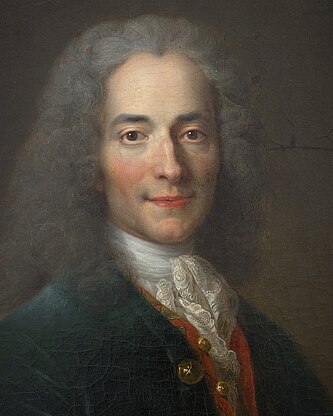
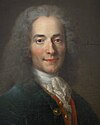
Wolfgang Amadeus Mozart on Voltaire
In a letter to his father, Leopold, Mozart expresses his visceral disdain for Voltaire, rejoicing in what he perceives as the atheist philosopher's deserved, wretched demise.
“I must give you a piece of intelligence that you perhaps already know—namely, that the ungodly arch-villain Voltaire has died miserably like a dog—just like a brute. That is his reward!”
Quotes About Wolfgang Amadeus Mozart
Gain deeper perspective through quotes about Wolfgang Amadeus Mozart from others.
As quoted on Wolfgang Amadeus Mozart
Attributed to an unnamed source, this passage praises Mozart's music for its balanced portrayal of both light and darkness, reflecting a sense of moderation and harmonious order.
“Mozart's music is free of all exaggeration, of all sharp breaks and contradictions. The sun shines but does not blind, does not burn or consume. Heaven arches over the earth, but it does not weigh it down, it does not crush or devour it. Hence earth remains earth, with no need to maintain itself in a titanic revolt against heaven. Granted, darkness, chaos, death and hell do appear, but not for a moment are they allowed to prevail. Knowing all, Mozart creates music from a mysterious center, and so knows the limits to the right and the left, above and below. He maintains moderation.”
February on Wolfgang Amadeus Mozart

Source on Wolfgang Amadeus Mozart 3 quotes
“21 piano sonatas, 27 piano concertos, 41 symphonies, 18 masses, 13 operas, 9 oratorios and cantata, 2 ballets, 40 plus concertos for various instruments, string quartets, trios and quintets, violin and piano duets piano quartets, and the songs. This astounding output includes hardly one work less than a masterpiece.”
Paula Gunn Allen Interview on Wolfgang Amadeus Mozart
“Mozart, particularly, I loved. I was determined to write poetry that had as a structure what classical music, particularly Mozart, has as a structure.”
Karl Ditters von Dittersdorf on Wolfgang Amadeus Mozart
“Mozart is undoubtedly one of the greatest of original geniuses, and I have never known any other composer to possess such an amazing wealth of ideas. I wish he were not so spendthrift with them. He does not give the listener time to catch his breath, for no sooner is one inclined to reflect upon a beautiful inspiration than another appears, even more splendid, which drives away the first, and this continues on and on, so that in the end one is unable to retain any of these beauties in the memory.”


Misattributed Quotes
Quotes mistakenly credited to Wolfgang Amadeus Mozart
“When I am, as it were, completely myself, entirely alone, and of good cheer — say traveling in a carriage, or walking after a good meal, or during the night when I cannot sleep — it is on such occasions that my ideas flow best, and most abundantly. Whence and how they come, I know not, nor can I force them.”
About Wolfgang Amadeus Mozart
Wolfgang Amadeus Mozart (27 January 1756 – 5 December 1791) was an Austrian composer and musician.