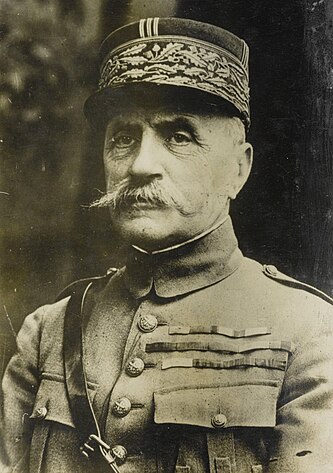
On Armistice Day, the German armies had marched homeward in good order. "They fought well," said Marshal Foch, Generalissimo of the Allies, with the laurels bright upon his brow, speaking in soldierly mood: "let them keep their weapons." But he demanded that the French frontier should henceforth be the Rhine. Germany might be disarmed; her military system shivered in fragments; her fortresses dismantled: Germany might be impoverished; she might be loaded with measureless indemnities; she might become a prey to internal feuds: but all this would pass in ten years or in twenty. The indestructible might "of all the German tribes" would rise once more and the unquenched fires of warrior Prussia glow and burn again. But the Rhine, the broad, deep, swift-flowing Rhine, once held and fortified by the French Army, would be a barrier and a shield behind which France could dwell and breathe for generations. Very different were the sentiments and views of the English-speaking world, without whose aid France must have succumbed. The territorial provisions of the Treaty of Versailles left Germany practically intact. She still remained the largest homogeneous racial block in Europe. When Marshal Foch heard of the signing of the Peace Treaty of Versailles he observed with singular accuracy: "This is not Peace. It is an Armistice for twenty years."
What It Means
This is a placeholder explanation generated by the low-overhead model. It interprets "On Armistice Day, the German armies had marched homeward in good order. "They fought well," said Marshal Foch, Generalissimo of the Allies, with the laurels bright upon his brow, speaking in soldierly mood: "let them keep their weapons." But he demanded that the French frontier should henceforth be the Rhine. Germany might be disarmed; her military system shivered in fragments; her fortresses dismantled: Germany might be impoverished; she might be loaded with measureless indemnities; she might become a prey to internal feuds: but all this would pass in ten years or in twenty. The indestructible might "of all the German tribes" would rise once more and the unquenched fires of warrior Prussia glow and burn again. But the Rhine, the broad, deep, swift-flowing Rhine, once held and fortified by the French Army, would be a barrier and a shield behind which France could dwell and breathe for generations. Very different were the sentiments and views of the English-speaking world, without whose aid France must have succumbed. The territorial provisions of the Treaty of Versailles left Germany practically intact. She still remained the largest homogeneous racial block in Europe. When Marshal Foch heard of the signing of the Peace Treaty of Versailles he observed with singular accuracy: "This is not Peace. It is an Armistice for twenty years."" in the context of "Winston Churchill, The Second World War, Volume One: The Gathering Storm [1948], pgs. 6-7 (1950), pp. 23-24" to mean that wisdom is timeless.
Tags

About Winston Churchill