Link Copied!
William Faulkner Quotes (1897-1962)
Writer, Novelist









About William Faulkner
William Cuthbert Faulkner (September 25, 1897 – July 6, 1962) was an American novelist and short story writer whose works feature his native state of Mississippi. He was regarded as one of the most influential writers of the twentieth century and was awarded the 1949 Nobel Prize for Literature.
Best William Faulkner Quotes
Shortest
Earliest
Explore our curated collection of the most famous and impactful William Faulkner quotes.



“"Civilization," mused Bill once, "started with distillation."”

“... girls, women, are not interested in romance but only facts.”

“... life is not so much motion as an inventless repetition of motion.”




“My own experience has been that the tools I need for my trade are paper, tobacco, food, and a little whisky.”

“... maybe the only thing worse than having to give gratitude constantly all the time, is having to accept it.'''”
“You said how on that instant when Ikkemotubbe realised that he could sell the land to Grandfather, it ceased forever to have been his.”
“... women are not interested in truth or romance but only in facts whether they are true or not, just so they fit all the other facts.”
“A man is the sum of his misfortunes. One day you'd think misfortune would get tired, but then time is your misfortune.”
“Women do have an affinity for evil, for believing that no woman is to be trusted, but that some men are too innocent to protect themselves.”
“All of us failed to match our dreams of perfection. So I rate us on the basis of our splendid failure to do the impossible.”
“... ingenuity was apparently given man in order that he may supply himself in crisis with shapes and sounds with which to guard himself from truth.”
“Darl is our brother, our brother Darl. Our brother Darl in a cage in Jackson where, his grimed hands lying lightly in the quiet interstices, looking out he foams.”
“I am beginning to see the first sign of my increasing age: I dont like to know that my orders have been disobeyed, even when I knew when I gave them that they would be.”

“The two great men in my time were Mann and Joyce. You should approach Joyce's Ulysses as the illiterate Baptist preacher approaches the Old Testament: with faith.”

“... so vast, so limitless in capacity is man's imagination to disperse and burn away the rubble-dross of fact and probability, leaving only truth and dream.”
“Then Ben wailed again, hopeless and prolonged. It was nothing. Just sound. It might have been all time and injustice and sorrow become vocal for an instant by a conjunction of planets.”

“If I were reincarnated, I'd want to come back a buzzard. Nothing hates him or envies him or wants him or needs him. He is never bothered or in danger, and he can eat anything.”
“... leaving as next by seniority Stuart that gallant man born apparently already horsed and sabred and already knowing all there was to know about war except the slogging and brutal stupidity of it...”

“He recognised its voice. It was the young hound which even a year ago had had no judgment and which, by the lights of the other hounds anyway, still had none. Maybe that’s what courage is, he thought.”

“She accepted that—not reconciled: accepted-- as though there is a breathing-point in outrage where you can accept it almost with gratitude since you can say to yourself, Thank God that is all; at least I know it all.”
“Art is not concerned with environment either; it doesn't care where it is ... the best job that was ever offered to me was to become a landlord in a brothel. In my opinion it's the perfect milieu for an artist to work in.”

“Because women are marvellous. They stroll perfectly bland and serene through a fact that the men have been bloodying their heads against for years; whereupon you find that the fact not only wasn't important, it wasn't really there.”

“... women aren't interested in the romance of dreams; they are interested in the reality of facts, they don't care what facts, let alone whether they are true or not if they just dovetail with all the other facts without leaving a saw-tooth edge.”
“"You don't know very much about women, do you?" she said. "Women aren't interested in poets' dreams. They are interested in facts. It doesn't even matter whether the facts are true or not, as long as they match the other facts without leaving a rough seam."”

“At least wasn't nobody, no outsider, there to hear it so maybe even before next January he was able to believe hadn't none of it even been said, like miracle: what aint believed aint seen. Miracle, pure miracle anyhow, how little a man needs to outlast jest [just] about anything.”
“Maybe I was completely wrong that morning when I said how women are only interested in facts because maybe men are just interested in facts too and the only difference is, women dont care whether they are facts or not just so they fit, and men dont care whether they fit or not just so they are facts.”
“... innocence is innocent not because it rejects but because it accepts; is innocent not because it is impervious and invulnerable to everything, but because it is capable of accepting anything and still remaining innocent; innocent because it foreknows all and therefore doesn't have to fear or be afraid.”
“The poets are wrong of course. ... But then poets are almost always wrong about facts. That's because they are not really interested in facts: only in truth: which is why the truth they speak is so true that even those who hate poets by simple natural instinct are exalted and terrified by it.”

“... when she became not then half of memory became not and if I become not then all of remembering will cease to be.—Yes, he thought, between grief and nothing I will take grief.
• Common variation: "Given the choice between the experience of pain and nothing, I would choose pain."”
• Common variation: "Given the choice between the experience of pain and nothing, I would choose pain."”
“"Now I want you to tell me just one thing more. Why do you hate the South?"
"I dont hate it," Quentin said, quickly, at once, immediately; "I dont hate it," he said. I dont hate it he thought, panting in the cold air, the iron New England dark: I dont. I dont! I dont hate it! I dont hate it!”
"I dont hate it," Quentin said, quickly, at once, immediately; "I dont hate it," he said. I dont hate it he thought, panting in the cold air, the iron New England dark: I dont. I dont! I dont hate it! I dont hate it!”
“... the ledgers in which McCaslin recorded the slow outward trickle of food and supplies and equipment which returned each fall as cotton made and ginned and sold (two threads frail as truth and impalpable as equators yet cable-strong to bind for life them who made the cotton to the land their sweat fell on), ...”

“The doctor didn't even take out his stethoscope nor even touch him. “He’s all right,” the doctor said.
“He didn’t even catch cold. He just quit.”
“Quit?” McCaslin said.
“Yes. Old people do that sometimes. Then they get a good night’s sleep or maybe it’s just a drink of whisky, and they change their minds.””
“He didn’t even catch cold. He just quit.”
“Quit?” McCaslin said.
“Yes. Old people do that sometimes. Then they get a good night’s sleep or maybe it’s just a drink of whisky, and they change their minds.””
“Man must have light. He must live in the fierce full constant glare of light, where all shadow will be defined and sharp and unique and personal: the shadow of his own singular rectitude or baseness. All human evils have to come out of obscurity and darkness, where there is nothing to dog man constantly with the shape of his own deformity.”

“... I decline to accept the end of man. It is easy enough to say that man is immortal because he will endure: that when the last ding-dong of doom has clanged and faded from the last worthless rock hanging tideless in the last red and dying evening, that even then there will still be one more sound: that of his puny inexhaustible voice, still talking.”

“I can remember how when I was young I believed death to be a phenomenon of the body; now I know it to be merely a function of the mind — and that of the minds who suffer the bereavement. The nihilists say it is the end; the fundamentalists, the beginning; when in reality it is no more than a single tenant or family moving out of a tenement or a town.”

“We never thought, sitting in my office on those afternoons, discussing Voltaire and Ingersoll, that we would ever be brought to this, did we?You, the atheist whom the mere sight of a church spire on the sky could enrage; and I who have never been able to divorce myself from reason enough even to accept your pleasant and labor-saving theory of nihilism.”

“'''Time is a fluid condition which has no existence except in the momentary avatars of individual people. There is no such thing as was — only is.''''' If was'' existed, there would be no grief or sorrow. I like to think of the world I created as being a kind of keystone in the universe; that, small as that keystone is, if it were ever taken away the universe itself would collapse.”

“... a fellow is more afraid of the trouble he might have than he ever is of the trouble he’s already got. He’ll cling to trouble he’s used to before he’ll risk a change. Yes. A man will talk about how he’d like to escape from living folks. But it’s the dead folks that do him the damage. It’s the dead ones that lay quiet in one place and don’t try to hold him, that he can’t escape from.’”
“Always dream and shoot higher than you know you can do. Don't bother just to be better than your contemporaries or predecessors. Try to be better than yourself. An artist is a creature driven by demons. He don't know why they choose him and he's usually too busy to wonder why. He is completely amoral in that he will rob, borrow, beg, or steal from anybody and everybody to get the work done.”
“It is my ambition to be, as a private individual, abolished and voided from history, leaving it markless, no refuse save the printed books; I wish I had enough sense to see ahead thirty years ago, and like some of the Elizabethans, not signed them. It is my aim, and every effort bent, that the sum and history of my life, which in the same sentence is my obit and epitaph too, shall be them both: He made the books and he died.”

“Some folks wouldn't even speak when they passed me on the street. Then MGM came to town to film Intruder in the Dust, and that made some difference because I'd brought money into Oxford [Mississippi]. But it wasn't until the Nobel Prize that they really thawed out. They couldn't understand my books, but they could understand thirty thousand dollars.”

“Our tragedy today is a general and universal physical fear so long sustained by now that we can even bear it. There are no longer problems of the spirit. There is only the question: When will I be blown up? Because of this, the young man or woman writing today has forgotten the problems of the human heart in conflict with itself which alone can make good writing because only that is worth writing about, worth the agony and the sweat....”
“Let the writer take up surgery or bricklaying if he is interested in technique. There is no mechanical way to get the writing done, no shortcut. The young writer would be a fool to follow a theory. Teach yourself by your own mistakes; people learn only by error. The good artist believes that nobody is good enough to give him advice. He has supreme vanity. No matter how much he admires the old writer, he wants to beat him.”
“... Stevens himself hating horses even more than dogs, rating the horse an unassailable first in loathing since though both were parasites, the dog at least had the grace to be a sycophant too; it at least fawned on you and so kept you healthily ashamed of the human race. But the real reason was, though neither the horse nor the dog ever forgot anything, the dog at least forgave you; and his, Stevens's, thought was that what the world needed was more forgiving.”
“You see, if I could believe that I shall see and touch him again, I shall not have lost him. And if I have not lost him, I shall never have had a son. Because I am I through bereavement and because of it. I do not know what I was nor what I shall be. But because of death, I know that I am. And that is all the immortality of which intellect is capable and flesh should desire. Anything else is for peasants, clods, who could never have loved a son well enough to have lost him.”
“Life is motion, and motion is concerned with what makes man move — which is ambition, power, pleasure. What time a man can devote to morality, he must take by force from the motion of which he is a part. He is compelled to make choices between good and evil sooner or later, because moral conscience demands that from him in order that he can live with himself tomorrow. His moral conscience is the curse he had to accept from the gods in order to gain from them the right to dream.”
“People between twenty and forty are not sympathetic. The child has the capacity to do but it can't know. It only knows when it is no longer able to do — after forty. Between twenty and forty the will of the child to do gets stronger, more dangerous, but it has not begun to learn to know yet. Since his capacity to do is forced into channels of evil through environment and pressures, man is strong before he is moral. The world's anguish is caused by people between twenty and forty.”
“... but one mistake; that alertness for measuring and weighing event against eventuality, circumstance against human nature, his own fallible judgement and mortal clay against not only human but natural forces, choosing and discarding, compromising with his dream and his ambition like you must with the horse which you take across country, over timber, which you control only through your ability to keep the animal from realising that actually you cannot, that actually it is the stronger.”

““Dont you see?” he cried. “Dont you see? This whole land, the whole South, is cursed, and all of us who derive from it, whom it ever suckled, white and black both, lie under the curse? Granted that my people brought the curse onto the land: maybe for that reason their descendants alone can—not resist it, not combat it—maybe just endure and outlast it until the curse is lifted. Then your peoples’ turn will come because we have forfeited ours. But not now. Not yet. Dont you see?””
“You write a story to tell about people, man in his constant struggle with his own heart, with the hearts of others, or with his environment. It's man in the ageless, eternal struggles which we inherit and we go through as though they'd never happened before, shown for a moment in a dramatic instant of the furious motion of being alive, that's all any story is. You catch this fluidity which is human life and you focus a light on it and you stop it long enough for people to be able to see it."”

“The writer's only responsibility is to his art. He will be completely ruthless if he is a good one. He has a dream. It anguishes him so much that he can't get rid of it. He has no peace until then. Everything goes by the board: honor, pride, decency, security, happiness, all, to get the book written. If a writer has to rob his mother, he will not hesitate; the “Ode on a Grecian Urn” is worth any number of old ladies.”

“... even in the folly of youth we know that nothing lasts, but ... even in that folly we are afraid that maybe Nothing will last, that maybe Nothing will last forever, and anything is better than Nothing.... So now, as another poet sings, That Fancy passed me by And nothing will remain; which, praise the gods, is a damned lie since, praise, O gods! Nothing cannot remain anywhere since nothing is vacuum and vacuum is paradox and unbearable and we will have nothing of it even if we would, the damned-fool poet's Nothing.”
“So let me say it: That nevertheless and notwithstanding old Carothers did own it. Bought it, got it, no matter; kept it, held it, no matter; bequeathed it: else why do you stand here relinquishing and repudiating? Held it, kept it for fifty years until you could repudiate it, while He—this Arbiter, this Architect, this Umpire—condoned—or did He? Looked down and saw—or did He? Or at least did nothing: saw, and could not, or did not see; saw, and would not, or perhaps He would not see—perverse, impotent, or blind: which?”

“The aim of every artist is to arrest motion, which is life, by artificial means and hold it fixed so that a hundred years later, when a stranger looks at it, it moves again since it is life. Since man is mortal, the only immortality possible for him is to leave something behind him that is immortal since it will always move. This is the artist's way of scribbling "Kilroy was here" on the wall of the final and irrevocable oblivion through which he must someday pass.”

“They pulled two seats together so Darl could sit by the window. One of them sat beside him, the other sat on the seat facing him, riding backward. One of them had to ride backward because state's money has a face to each backside and a backside to each face, and they are riding on the state's money which is incest. A nickel has a woman on one side and a buffalo on the other; two faces and no back. I don't know what that is. Darl had a little spy-glass he got in France at the war. In it it had a woman and a pig with two backs and no face. I know what that is.”
“He was only ten. It seemed to him that he could see them, the two of them, shadowy in the limbo from which time emerged and became time: the old bear absolved of mortality and himself who shared a little of it. Because he recognised now what he had smelled in the huddled dogs and tasted in his own saliva, recognised fear as a boy, a youth recognises the existence of love and passion and experience which is his heritage but not yet his patrimony, from entering by chance the presence of perhaps even merely the bedroom of a woman who has loved and been loved by many men.”
“Or maybe married men dont even need reasons, being as they already got wives. Or maybe it's women that dont need reasons, for the simple reason that they never heard of a reason and wouldn't recognise it face to face, since they dont function from reasons but from necessities that couldn't nobody help nohow and that dont nobody but a fool man want to help in the second place, because he dont know no better; it aint women, it's men that takes ignorance seriously, getting into a skeer [scare] over something for no more reason than that they dont happen to know what it is.”
“When grown people speak of the innocence of children, they dont really know what they mean. Pressed, they will go a step further and say, Well, ignorance then. The child is neither. There is no crime which a boy of eleven had not envisaged long ago. His only innocence is, he may not be old enough to desire the fruits of it, which is not innocence but appetite; his ignorance is, he does not know how to commit it, which is not ignorance but size. But Boon didn't know this. He must seduce me. And he had so little time: only from the time the train left until dark.”

“If I had not existed, someone else would have written me, Hemingway, Dostoevsky, all of us. Proof of that is that there are about three candidates for the authorship of Shakespeare's plays. But what is important is Hamlet and A Midsummer Night's Dream, not who wrote them, but that somebody did. The artist is of no importance. Only what he creates is important, since there is nothing new to be said. Shakespeare, Balzac, Homer have all written about the same things, and if they had lived one thousand or two thousand years longer, the publishers wouldn't have needed anyone since.”
“There were many things I could do for two or three days and earn enough money to live on for the rest of the month. By temperament I'm a vagabond and a tramp. I don't want money badly enough to work for it. In my opinion it's a shame that there is so much work in the world. One of the saddest things is that the only thing that a man can do for eight hours a day, day after day, is work. You can't eat eight hours a day nor drink for eight hours a day nor make love for eight hours — all you can do for eight hours is work. Which is the reason why man makes himself and everybody else so miserable and unhappy.”
“I refuse to accept this. I believe that man will not merely endure: he will prevail. He is immortal, not because he alone among creatures has an inexhaustible voice, but because he has a soul, a spirit capable of compassion and sacrifice and endurance. The poet's, the writer's, duty is to write about these things. It is his privilege to help man endure by lifting his heart, by reminding him of the courage and honor and hope and pride and compassion and pity and sacrifice which have been the glory of his past. The poet's voice need not merely be the record of man, it can be one of the props, the pillars to help him endure and prevail.”
“If we Americans are to survive it will have to be because we choose and elect and defend to be first of all Americans; to present to the world one homogeneous and unbroken front, whether of white Americans or black ones or purple or blue or green. Maybe the purpose of this sorry and tragic error committed in my native Mississippi by two white adults on an afflicted Negro child is to prove to us whether or not we deserve to survive. Because if we in America have reached that point in our desperate culture when we must murder children, no matter for what reason or what color, we don't deserve to survive, and probably won't.”
“... in the commissary as it should have been, not the heart perhaps but certainly the solar-plexus of the repudiated and relinquished: the square, galleried, wooden building squatting like a portent above the fields whose laborers it still held in thrall ‘65 or no and placarded over with advertisements for snuff and cures for chills and salves and potions manufactured and sold by white men to bleach the pigment and straighten the hair of negroes that they might resemble the very race which for two hundred years had held them in bondage and from which for another hundred years not even a bloody civil war would have set them completely free.”
“He [the writer] must learn them again. He must teach himself that the basest of all things is to be afraid: and, teaching himself that, forget it forever, leaving no room in his workshop for anything but the old verities and truths of the heart, the universal truths lacking which any story is ephemeral and doomed — love and honor and pity and pride and compassion and sacrifice. Until he does so, he labors under a curse. He writes not of love but of lust, of defeats in which nobody loses anything of value, of victories without hope and, worst of all, without pity or compassion. His griefs grieve on no universal bones, leaving no scars. He writes not of the heart but of the glands.”

“Never be afraid to raise your voice for honesty and truth and compassion, against injustice and lying and greed. If you, not just you in this room tonight, but in all the thousands of other rooms like this one about the world today and tomorrow and next week, will do this ... as individuals, men and women, you will change the earth; in one generation all the Napoleons and Hitlers and Caesars and Mussolinis and Stalins and all the other tyrants who want power and aggrandizement, and the simple politicians and time-servers who themselves are merely baffled or ignorant or afraid, who have used, or are using, or hope to use, man’s fear and greed for man’s enslavement, will have vanished from the face of it.”
“Mr. Khrushchev says that Communism, the police state, will bury the free ones. He is a smart gentleman, he knows that this is nonsense since freedom, man's dim concept of and belief in the human spirit is the cause of all his troubles in his own country. But if he means that Communism will bury capitalism, he is correct. That funeral will occur about ten minutes after the police bury gambling. Because simple man, the human race, will bury both of them. That will be when we have expended the last grain, dram, and iota of our natural resources. But man himself will not be in that grave. The last sound on the worthless earth will be two human beings trying to launch a homemade spaceship and already quarreling about where they are going next.”
“When the shadow of the sash appeared in the curtains it was between seven and eight oclock and then I was in time again, hearing the watch. It was Grandfather's and when Father gave it to me he said "I give you the mausoleum of all hope and desire; it’s rather excrutiatingly apt that you will use it to gain the reducto absurdum of all human experience which can fit your individual needs no better than it fitted his or his father’s. I give it to you not that you may remember time, but that you might forget it now and then for a moment and not spend all your breath trying to conquer it. Because no battle is ever won he said. They are not even fought. The field only reveals to man his own folly and despair, and victory is an illusion of philosophers and fools."”
“Frenchman's Bend was a section of rich river-bottom country lying twenty miles southeast of Jefferson. Hill-cradled and remote, definite yet without boundaries, straddling into two counties and owning allegiance to neither, it had been the original grant and site of a tremendous pre-Civil War plantation, the ruins of which—the gutted shell of an enormous house with its fallen stables and slave quarters and overgrown gardens and brick terraces and promenades—were still known as the Old Frenchman's place, although the original boundaries now existed only on old faded records in the Chancery Clerk's office in the county courthouse in Jefferson, and even some of the once-fertile fields had long since reverted to the cane-and-cypress jungle from which their first master had hewed them.”
“This Delta, he thought: This Delta. This land which man has deswamped and denuded and derivered in two generations so that white men can own plantations and commute every night to Memphis and black men own plantations and ride in jim crow cars to Chicago to live in millionaires’ mansions on Lakeshore Drive, where white men rent farms and live like niggers and niggers crop on shares and live like animals, where cotton is planted and grows man-tall in the very cracks of the sidewalks, and usury and mortgage and bankruptcy and measureless wealth, Chinese and African and Aryan and Jew, all breed and spawn together until no man has time to say which is which nor cares.... No wonder the ruined woods I used to know don’t cry for retribution! he thought: The people who have destroyed it will accomplish its revenge.”
“No one is without Christianity, if we agree on what we mean by that word. It is every individual's individual code of behavior by means of which he makes himself a better human being than his nature wants to be, if he followed his nature only. Whatever its symbol — cross or crescent or whatever — that symbol is man's reminder of his duty inside the human race. Its various allegories are the charts against which he measures himself and learns to know what he is. It cannot teach a man to be good as the textbook teaches him mathematics. It shows him how to discover himself, evolve for himself a moral codes and standard within his capacities and aspirations, by giving him a matchless example of suffering and sacrifice and the promise of hope.'''”

“She wanted to tell me. Maybe she even tried. But she couldn't. It wasn't because I was only twelve. It was because I was her child, created by her and Father because they wanted to be in bed together and nothing else would do, nobody else would do. You see? ... Because to the child, he was not created by his mother's and his father's passion or capacity for it. He couldn't have been because he was there first, he came first, before the passion; he created the passion, not only it but the man and the woman who served it; his father is not his father but his son-in-law, his mother not his mother but his daughter-in-law if he is a girl. ... and if a boy or a girl really is his father's and her mother's father-in-law or mother-in-law, which would make the girl her brother's mother no matter how much younger she was, then a girl with just one brother and him a twin at that, would maybe be his wife and mother too.”
“The two Indians crossed the plantation toward the slave quarters. ... "Man was not made to sweat." "That's so. See what it has done to their flesh." "Yes. Black. It has a bitter taste, too." "You have eaten of it?" "Once." ... Doom began to acquire more slaves and to cultivate some of his land, as the white people did. But he never had enough for them to do. In utter idleness the majority of them led lives transplanted whole out of African jungles ... there was a hierarchy of cousins and uncles who ruled the clan and who finally gathered in squatting conclave over the Negro question, squatting profoundly ... "We cannot eat them," one said. "Why not?" "There are too many of them." "That's true," a third said. "Once we started, we should have to eat them all. And that much flesh diet is not good for man." ... "It means work," the third said. "Let the Negroes do it," the first said. ... "Yao. Let the Negroes do it. They appear to like sweating."”
“It's all now you see. Yesterday won't be over until tomorrow and tomorrow began ten thousand years ago. For every Southern boy fourteen years old, not once but whenever he wants it, there is the instant when it's still not yet two o'clock on that July afternoon in 1863, the brigades are in position behind the rail fence, the guns are laid and ready in the woods and the furled flags are already loosened to break out and Pickett himself with his long oiled ringlets and his hat in one hand probably and his sword in the other looking up the hill waiting for Longstreet to give the word and it's all in the balance, it hasn't happened yet, it hasn't even begun yet, it not only hasn't begun yet but there is still time for it not to begin against that position and those circumstances which made more men than Garnett and Kemper and Armistead and Wilcox look grave yet it's going to begin, we all know that, we have come too far with too much at stake and that moment doesn't need even a fourteen-year-old boy to think This time. Maybe this time with all this much to lose and all this much to gain: Pennsylvania, Maryland, the world, the golden dome of Washington itself to crown with desperate and unbelievable victory the desperate gamble, the cast made two years ago; or to anyone who ever sailed a skiff under a quilt sail, the moment in 1492 when somebody thought This is it: the absolute edge of no return, to turn back now and make home or sail irrevocably on and either find land or plunge over the world's roaring rim.”
William Faulkner Quotes by Topic
Find exactly what you are looking for by browsing this categorized list of William Faulkner quotes by topic.
William Faulkner on Time 3 quotes
“Clocks slay time. Time is dead as long as it is being clicked off by little wheels; only when the clock stops does time come to life.”

William Faulkner on Acceptance 2 quotes
“We never thought, sitting in my office on those afternoons, discussing Voltaire and Ingersoll, that we would ever be brought to this, did we? You, the atheist whom the mere sight of a church spire on the sky could enrage; and I who have never been able to divorce myself from reason enough even to accept your pleasant and labor-saving theory of nihilism.”

William Faulkner on Nuclear war
What William Faulkner Said About Others
Discover personal opinions William Faulkner shared regarding contemporaries.
William Faulkner on Miguel de Cervantes
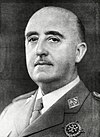
William Faulkner on Francisco Franco
“I most sincerely wish to go on record as being unalterably opposed to Franco and fascism, to all violations of the legal government and outrages against the people of Republican Spain.”
William Faulkner on Ernest Hemingway
“[Hemingway] has no courage, has never crawled out on a limb. He has never been known to use a word that might cause the reader to check with a dictionary to see if it is properly used.”

William Faulkner on Girls
“"Fiddlesticks," Mother said. "Anything he will learn about sixteen-year-old girls from you will probably be a good deal more innocent than what he will learn some day from sixteen-year-old girls."”

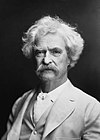
William Faulkner on Mark Twain
“[A] hack writer who would not have been considered fourth rate in Europe, who tricked out a few of the old proven 'sure fire' literary skeletons with sufficient local color to intrigue the superficial and the lazy.”
Quotes About William Faulkner
Gain deeper perspective through quotes about William Faulkner from others.
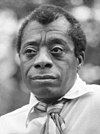
James Baldwin on William Faulkner 2 quotes
“Faulkner in Dry September — or Light in August, or even in The Sound and the Fury — can really get at (as you put it, "to the bone") the truth of what the black-white relationship is in the South, and how what a dark force it is in the Southern personality. At the same time, Faulkner, as a man, as a citizen of Mississippi, is committed to what in Mississippi seems to be their past. It is one thing for Faulkner to deal with the Negro in his imagination, where he can control him; and quite another thing to deal with him in life, where he can't control him. In life, obviously the Negro, the uncontrollable Negro, simply is determined to overthrow everything in which Faulkner imagines himself to believe. It is one thing to demand justice in literature, and another thing to face the price that one has got to pay for it in life.”
Judith Ortiz Cofer on William Faulkner
“What's the difference between regional being the Southwest and regional being the South if the story is brilliant enough to be universal? Does it matter that Faulkner's universe was little? When he finished Absalom, Absalom, it wasn't about Mississippi; it was about the cosmos. So if a book like that is written by a Puerto Rican or a Native American, why should it continue to be taught as ethnic literature?”

James Gould Cozzens on William Faulkner
“Faulkner falsified life for dramatic effect. It's sentimentality disguised by the corncob.”
Clifton Fadiman on William Faulkner
“Apparently the entire population of Jefferson, Mississippi consists of rhetoricians who would blanch at the sight of a simple declarative sentence ... Seriously, I do not know what to say of this book except that it seems to point to the final blowup of what was once a remarkable, if minor, talent.”


About William Faulkner
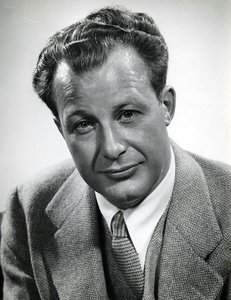
William Cuthbert Faulkner (September 25, 1897 – July 6, 1962) was an American novelist and short story writer whose works feature his native state of Mississippi. He was regarded as one of the most influential writers of the twentieth century and was awarded the 1949 Nobel Prize for Literature.