Link Copied!
W. Arthur Lewis Quotes (1915-1991)

About W. Arthur Lewis
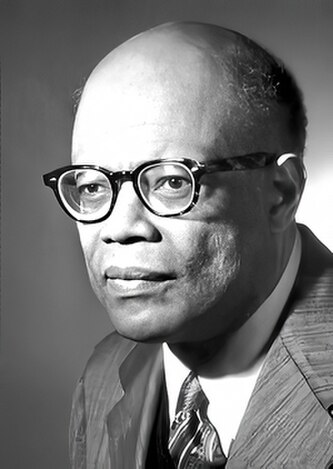
Sir William Arthur Lewis (23 January 1915 – 15 June 1991) was a Saint Lucian economist well known for his contributions in the field of economic development. In 1979 he and Theodore Schultz won the Nobel Memorial Prize in Economics.
Best W. Arthur Lewis Quotes
Shortest
Earliest
Explore our curated collection of the most famous and impactful W. Arthur Lewis quotes.
“I had no idea in 1933 what economics was, but I did well in the subject from the start, and when I graduated in 1937 with first class honours LSE gave me a scholarship to do a PhD in industrial economics.”
“I make the point to remind you, if reminder be necessary, that the study of economic growth is still in its infancy. Countries rise up and fall, and we are not in a position to predict which ones will do best or worst over the next twenty years. This is equally true of developed and developing countries. Economics is good at explaining what has happened over the past twenty years, but when we turn to predicting the future it tends to be an essay in ideology.”

“There are still people who discuss industrialization as... an alternative to agricultural improvement... this approach is without meaning in the West Indian Islands. There is no choice... between industry and agriculture. The islands need as large agriculture as possible... It is not ... that agriculture cannot continue to develop if industry is developed … the opposite is true: agriculture cannot... yield a reasonable standard of living unless new jobs are created off the land”

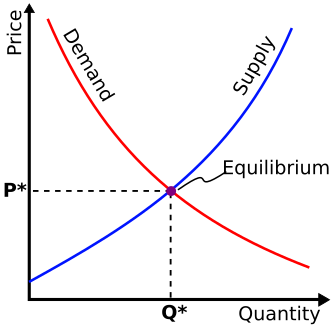
“A number of developing countries had been developing for a long time: Ceylon, for example, for a hundred years. Why was the standard of living of the masses still so low? One could understand this for much-exploited South Africa, but how for fairly enlightened Ceylon? The answer to both questions came by breaking an intellectual constraint. In all the general equilibrium models taught to me the elasticity of supply of labor was zero, so any increase in investment increases the demand for labor and raises wages. Instead, make the elasticity of supply of labor infinite, and my problems are solved. In this model growth raises profits because all of the benefits of advancing technology accrue to employers and to a small class of well-paid workers that emerges in an urban sea of a low-wage proletariat. In the commodities market an unlimited supply of tropical produce also gives the benefit of advancing technology to the industrial buyers, by the process already described.”
“Looking backward over my life, it has been a queer mixture. I have lived through a period of transition and therefore know what it is like at both ends, even though the transition is not yet completed. I have been subjected to all the usual disabilities—refusal of accommodations, denial of jobs for which I had been recommended, generalized discourtesy, and the rest of it. All the same, some doors that were supposed to be closed opened as I approached them. I have got used to being the first black to do this or that, which gets to be more difficult as the transition opens up new opportunities. Having to be a role model is a bit of a strain, but I try to remember that others are coming after me, and that whether the door will be shut in their faces as they approach will depend to some small extent on how I conduct myself. As I said at the beginning, I had never intended to be an economist. My mother taught us to make the best of what we have, and that is what I have tried to do.”
“My interest in overhead costs was the structure of prices in situations where average cost per unit exceeds marginal cost. The Pareto rule was that price should equal marginal cost, but to apply this rule would bankrupt the firm. In practice, such situations oscillate between bankruptcy and monopoly, as in the airline industry today. The general inclination of economists in those cases was to enforce marginal pricing and subsidize firms to the extent of the differences between marginal and average cost. This was hardly practical, as an industry-wide policy. Neither could it be justified, as many taxpayers would be forced to pay for services that they did not use. If one started from the premise that those who use the service should pay for it, the problem reduced to how to spread the fixed costs among the users. Here I started from the railway principle of “charging what the traffic will bear” and linked up with the new price discrimination theory, as elaborated by Joan Robinson.
Another aspect of overhead costs was the time dimension. Demand was not steady, but fluctuated. If the output could not be stored, there would be times of idle capacity, regular or irregular; how was the cost of this to be shared? I demonstrated that the correct approach to this problem was to treat the fixed investment as a producer in joint cost of different outputs at different times, each paying what it could bear, and subject to the sum of payments not exceeding total cost.”
Another aspect of overhead costs was the time dimension. Demand was not steady, but fluctuated. If the output could not be stored, there would be times of idle capacity, regular or irregular; how was the cost of this to be shared? I demonstrated that the correct approach to this problem was to treat the fixed investment as a producer in joint cost of different outputs at different times, each paying what it could bear, and subject to the sum of payments not exceeding total cost.”

W. Arthur Lewis Quotes by Topic
Find exactly what you are looking for by browsing this categorized list of W. Arthur Lewis quotes by topic.
W. Arthur Lewis on Economics
“I make the point to remind you, if reminder be necessary, that the study of economic growth is still in its infancy. Countries rise up and fall, and we are not in a position to predict which ones will do best or worst over the next twenty years. This is equally true of developed and developing countries. Economics is good at explaining what has happened over the past twenty years, but when we turn to predicting the future it tends to be an essay in ideology.”
W. Arthur Lewis on Industrialization
“There are still people who discuss industrialization as... an alternative to agricultural improvement... this approach is without meaning in the West Indian Islands. There is no choice... between industry and agriculture. The islands need as large agriculture as possible... It is not ... that agriculture cannot continue to develop if industry is developed … the opposite is true: agriculture cannot... yield a reasonable standard of living unless new jobs are created off the land”
W. Arthur Lewis on Great Depression
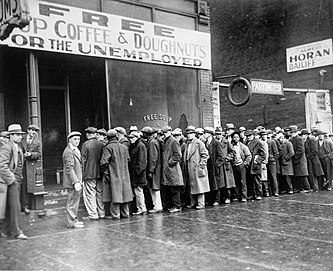
“My approach was to accept that industrial recessions had occurred from time to time over the preceding century with intervals of four to ten years, and that the problem was not why there was a recession in 1929, but why, having started, it had become so deep. What distinguished the outbreak of this particular sequence? One cannot give an account of the Great Depression in two paragraphs, but one can list the decisive elements. These are seven. 1. In the U.S. economy prosperity coincided with a railway-construction-immigration-housing cycle. Congress having restricted immigration from 1924, the construction boom of the second half of the 1920s was weak, and the abnormal weakness of the first half of the thirties weakened the whole economy. 2. Both domestic and international agricultural prices had been falling since the mid-1920s, capacity having grown faster than demand. Rural consumption was low, and in the United States an abnormal number of rural banks failed. 3. Monetary and fiscal authorities believed that the best way to revive production was to reduce the flow of income and acted accordingly. This action presumably worsened the depression. 4. The industrial slump was as bad in Germany as in the United States. The weakness of the one compounded the weakness of the other. 5. Capitalists everywhere lost confidence and reduced their investment flows. This spiraled. Less investment meant less production, less income, more excess capacity, less investment, and so on. 6. The New York Stock Exchange, which had talked itself into overconfidence in the late twenties, now talked itself down and reflected all the unpleasantness occurring elsewhere. 7. One country after another left the gold standard, imposed exchange controls, and raised tariff levels. International trade fell by 30 percent in volume.”

Quotes About W. Arthur Lewis
Gain deeper perspective through quotes about W. Arthur Lewis from others.
Robert L. Tignor. on W. Arthur Lewis
“Quickly gaining the attention of the leadership of colonized territories, he helped develop blueprints for the changing relationship between the former colonies and their former rulers. He made significant contributions to Ghana's quest for economic growth and the West Indies' desire to create a first-class institution of higher learning serving all of the Anglophone territories in the Caribbean.”
About W. Arthur Lewis
Sir William Arthur Lewis (23 January 1915 – 15 June 1991) was a Saint Lucian economist well known for his contributions in the field of economic development. In 1979 he and Theodore Schultz won the Nobel Memorial Prize in Economics.