Link Copied!
Umar Quotes (0-)






About Umar
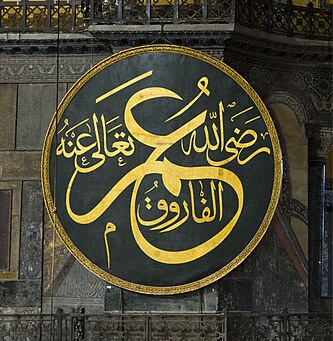
Umar, also spelled Omar (Arabic: عمر بن الخطاب, ʻUmar ibn al-Khaṭṭāb, "Umar, Son of Al-Khattab"; c. 584 CE - 3 November 644 CE), was one of the most powerful and influential Muslim caliphs in history. He was a senior companion of the Islamic prophet Muhammad. He succeeded Abu Bakr (632–634) as the second caliph of the Rashidun Caliphate on 23 August 634. He was an expert Muslim jurist known for his pious and just nature, which earned him the epithet Al-Farooq ("the one who distinguishes (between right and wrong)").
Best Umar Quotes
Shortest
Earliest
Explore our curated collection of the most famous and impactful Umar quotes.

“Remember, I have not appointed you as commanders and tyrants over the people. I have sent you as leaders instead, so that the people may follow your example. Give the Muslims their rights and do not beat them lest they become abused. Do not praise them unduly, lest they fall into the error of conceit. Do not keep your doors shut in their faces, lest the more powerful of them eat up the weaker ones. And do not behave as if you were superior to them, for that is tyranny over them.”
“I advise you to fear Allah alone, with no partner of associate. I advise you to treat the first Muhâjireen well and acknowledge their seniority. I advise you to treat the Ansār well, and show approval of those among them who do well, and forgive those among them who make mistakes. I advise you to treat the people of the outlying regions well, for they are a shield against the enemy and conduits of fay; do not take anything from them except that which is surplus to their needs. I advise you to treat the people of the desert well, for they are the original Arabs and the protectors of Islam. Take from the surplus of their wealth and give it to their poor. I advise you to treat ahl adh-dhīmmah well, to defend them against their enemies and not burden them with more than they can bear if they fulfill their duties towards the believers or pay the Jizyāh with willing submission, and feel themselves subdued. I advise you to fear Allah and fear His wrath, lest you do anything wrong. I advise you to fear Allah with regard to the people, but do not fear the people with regard to Allah. I advise you to treat the people justly, and to devote yourself to looking after them and protecting them against their enemies. Do not show any favour to the rich over the poor. That will be better for your spiritual well being and will help to reduce your burden of sin, and it will be better for your Hereafter, until you meet the One Who knows what is in your heart. I instruct you to be strict with regard to the commands of Allah, His sacred limits and disobedience with all people, both relatives and others. Do not show any mercy to anyone until you have settled the score with him according to his offence. Treat all people as equal, and do not worry about who is as fault or fear the blame of the blamers. Beware of showing favouritism among the believers with regard to the fay that Allah has put you in charge of, lest that lead to injustice. Keep away from that. You are in a position between this world and the Hereafter. If you conduct your affairs justly in this world and refrain from indulgence, that will earn you faith and divine pleasure. I advise you not to let yourself or anyone else do wrong to ahl al-dhimmah. I advise you sincerely to seek thereby the Countenance of Allah and the Hereafter. I have chosen advice for you that I would offer to myself or my son. If you do as I have advised you and follow my instructions, you will have gained a great deal. If you don not accept it or pay attention to it, and do not handle your affairs in the way that pleases Allah, that will be a shortcoming on your part and you will have failed to be sincere, because whims and desires are the same and the cause of sin is Iblīs, who calls man to everything that will lead to his doom. He misguided the generations who came before you and led them to Hell, what a terrible abode. What a bad deal it is for a man to take the enemy of Allah as his friend, who calls him to disobey Allah. Adhere to the truth, strive hard to reach it and admonish yourself. I urge you by Allah to show mercy to the Muslims, honour their elderly, show compassion to their young ones and respect the knowledgeable ones among them. Do not harm them or humiliate them, and do not keep the fay for yourself lest you anger them. Do not deprive them of their stipends when they become due, thus making them poor. Do not keep them away on campaigns for so long that they end up having no children. Do not allow wealth to circulate only among the rich. Do not close your door to the people or allow the strong to oppress the weak. This is my advice to you, as Allah is my witness, and I greet you with peace.”

Umar Quotes by Topic
Find exactly what you are looking for by browsing this categorized list of Umar quotes by topic.
Umar on Harsh 2 quotes
“For those who practise tyranny and deprive others of their rights, I will be harsh and stern, but for those who follow the law, I will be most soft and tender.”
Umar on Sharia
Umar on Nigeria
“Is it with respect to the reference point of American elections? Or is it with respect to the 1999 elections or is it in respect to the 1983 elections in Nigeria or to the 2003 elections? So when people make statements, or even organizations, or even the U.S. State Department, they should qualify such statements and we know the reference point from which they are making their statement against. Once you know the reference point, then it will actually make sense.”

What Umar Said About Others
Discover personal opinions Umar shared regarding contemporaries.
Umar on Khalid ibn al-Walid 2 quotes
“You have done; And no man has done as you have done. But it is not people who do; It is Allah who does”

Umar on Umaro Sissoco Embaló 2 quotes
“It wasn't just a coup. It was an attempt to kill the president, the prime minister and the entire cabinet.”
Umar on Umar Khalid 2 quotes
“To substantiate claims that a larger conspiracy to cause communal riots was hatched by Umar Khalid, SSP Amit Prasad read out a statement of a witness who had confirmed that Umar Khalid during a meeting had said: “Sarkar musalmano ke khilaaf hai, bhashan se kaam nahi chalega, khoon bahana padega,” translated as (The government is against the Muslims, only talking is not enough, we will have to shed blood).”
Quotes About Umar
Gain deeper perspective through quotes about Umar from others.
ʿĀʾishah bint Abī Bakr, Mother of the Believers, quoted in Maḥd aṣ-Ṣawāb, Vol. 3, p. 853 on Umar 2 quotes
“Whoever saw Ibn al-Khattāb (Umar) would realize that he was created to support Islam. by Allah, he was intelligent and wise, and of a unique nature.”
Abu Ubaidah ibn al-Jarrah on Umar
Dan Jones on Umar
“Umar had become the second of the ‘Rightly Guided’ (Rashidun) caliphs in 634, when Abu Bakr died. Around fifty-three years old, he was famous for his physical strength, stubbornness, and literacy. Although he did not lead Muslim armies in person, he was an outstandingly competent commander-in-chief, able to dictate military strategy hundreds of miles from Medina, trusting his generals to find the most effective means to achieve the wider goals of the expanding Islamic state. As caliph he carefully curated his public image: on entering Jerusalem to take possession of the city from the patriarch Sophronius, he appeared in ragged clothes, dirty from his long journey, so that his humble appearance would contrast pointedly with the churchman’s finery.”
Gustave Le Bon on Umar
“The conduct of the Commander of the Believers, ‘Umar ibn al-Khattâb, in Jerusalem (Bayt al-Maqdis) proves how kindly the Arab conquerors dealt with the conquered peoples, the opposite of what was done by the Crusaders in Jerusalem many centuries later. ‘Umar entered the city in the company of only a small number of Muslims and asked Patriarch Safronius to accompany him in his tour to the holy sites. He granted safety to its people and gave them a pledge of respect for their churches and property and prohibited Muslims to perform their rites in their synagogues.”

Edward Gibbon on Umar
“Yet the abstinence and humility of Omar were not inferior to the virtues of Abubeker: his food consisted of barley bread or dates; his drink was water; he preached in a gown that was torn or tattered in twelve places; and the Persian satrap, who paid his homage to the conqueror, found him asleep among the beggars on the steps of the mosch of Medina.”

About Umar
Umar, also spelled Omar (Arabic: عمر بن الخطاب, ʻUmar ibn al-Khaṭṭāb, "Umar, Son of Al-Khattab"; c. 584 CE - 3 November 644 CE), was one of the most powerful and influential Muslim caliphs in history. He was a senior companion of the Islamic prophet Muhammad. He succeeded Abu Bakr (632–634) as the second caliph of the Rashidun Caliphate on 23 August 634. He was an expert Muslim jurist known for his pious and just nature, which earned him the epithet Al-Farooq ("the one who distinguishes (between right and wrong)").