Link Copied!
Toni Cade Bambara Quotes (1939-1995)
Author, Activist, King


About Toni Cade Bambara
Toni Cade Bambara, born Miltona Mirkin Cade (March 25, 1939 – December 9, 1995) was an African-American author, documentary film-maker, social activist and college professor.
Best Toni Cade Bambara Quotes
Shortest
Earliest
Explore our curated collection of the most famous and impactful Toni Cade Bambara quotes.
“Then the silence. A whole generation silent”
“Take away the miseries and you take away some folks’ reason for living. Their conversation piece anyway.”


“Certain kinds of poisons, for example-rage, bitterness, revenge-don't need to be in the atmosphere, not to mention in my mouth.”
““Keep the focus on the action not the institution; don’t confuse the vehicle with the objective; all cocoons are temporary and disappear””
“She would not break her discipline to comfort herself in a shallow way. Would no more break discipline with her Self than she would her covenant with God.”
“When I look back on the body of book reviews I've produced in the past fifteen years, for all their socioideolitero brilliant somethinorother, the underlying standard always seemed to be-Does this author here genuinely love his/her community?”
“The greatest challenge in writing, then, in the earlier stages was to strike a balance between candor, honesty, integrity, and truth-terms that are fairly synonomous for crossword puzzlers and thesaurus ramblers but hard to equate as living actions.”
“I'm attempting to blueprint for myself the merger of these two camps: the political and the spiritual. The possibilities of healing that split are exciting. The implications of actually yoking those energies and of fusing that power quite take my breath away.”
“Since the breakthrough achieved in the sixties by the Neo-Black Arts Movement, the possibilities are stunning. Characters that have been waiting in the wings for generations, characters that did not fit into the roster of stereotypes, can now be brought down center stage.”
“I read everybody I can get to, and I appreciate the way "American literature" is being redefined now that the Black community is dialoguing without defensive postures, now that the Puerto Rican writers are coming through loud and clear, and the Chicano and Chicana writers, and Native American and Asian-American.”
“I'm interested in usable truths. Which means rising above my training, thinking better than I've been taught, developing a listening habit, making the self available to intelligence, engaging in demystification, and seeking out teachers at every turn. In many respects the writings are notebooks I'm submitting to those teachers for examination.”
“I don't, for example, conjure up characters for the express purpose of despising them, of breaking their humps in public. I used to be astounded at Henry James et al., so nice nasty about it too, soooo refined. Gothic is of no interest to me. I try not to lend energy to building grotesqueries, depicting morbid relationships, dramatizing perversity.”
“The short story is a piece of work. The novel is a way of life. When I replay the tapes on file in my head, tapes of speeches I've given at writing conferences over the years, I invariably hear myself saying "A writer, like any other cultural worker, like any other member of the community, ought to try to put her/his skills in the service of the community."”

“So used to being unwhole and unwell, one forgot what it was to walk upright and see clearly, breathe easily, think better than was taught, be better than one was programmed to believe—so concentration was necessary to help a neighbor experience the best of herself or himself. For people sometimes believed that it was safer to live with complaints, was necessary to cooperate with grief, was all right to become an accomplice in self-ambush.”
“If I'm not laughing while I work, I conclude that I am not communicating nourishment, since laughter is the most sure-fire healant I know. I don't know all my readers, but I know well for whom I write. And I want for them no less than I want for myself-wholesomeness. It all sounds so la-di-da and tra-la-la. I can afford to be sunny. I'm but one voice in the chorus. The literature(s) of our time are a collective effort, dependent on so many views, on so many people's productions.”
“Winter 1979. We are now in the fourth year of the last quarter of the twentieth century. And the questions that face the millions of us on the earth are-in whose name will the twenty-first century be claimed? Can the planet be rescued from the psychopaths? Where are the evolved, poised-for-light adepts who will assume the task of administering power in a human interest, of redefining power as being not the privilege or class right to define, deform, and dominate but as the human responsibility to define, transform, and develop?”

“There have been a lot of things in ... the Black experience for which there are no terms, certainly not in English at this moment. There are a lot of aspects of consciousness for which there is no vocabulary, no structure in the English language which would allow people to validate that experience through language. I'm trying to find a way to do that....I'm trying to break open and get at the bones, deal with symbols as though they were atoms. I'm trying to find out not only how a word gains meaning, but how a word gains power."”

“Grandma Dorothy, in an effort to encourage our minds to leap, would tell us, "Of course we know how to walk on the water, of course we know how to fly; fear of sinking, though, sometimes keeps us from the first crucial move, then too, the terrible educations you liable to get is designed to make you destruct the journey entire. So send your minds on home to the motherland and just tell the tale, you little honeys." And my mama-not one to traffic in metaphors usually, being a very scientific woman-would add, "Yeah, speak your speak, 'cause every silence you maintain is liable to become first a lump in your throat, then a lump in your lymphatic system."”
“Muhammad Ali, in his autobiography, I Am the Greatest, defines a champion as one who takes the telling blow on the chin and hits the canvas hard, can't possibly rally, arms shot, energy spent, the very weight of the body too heavy a burden for the legs to raise, can't possibly get up. So you do. And you keep getting up. The Awakening by Kate Chopin is not my classic. Their Eyes Were Watching God by Zora Neale Hurston is. Sylvia Plath and the other obligatory writers on women's studies list-the writers who hawk despair, insanity, alienation, suicide, all in the name of protesting woman's oppression, are not my mentors. I was rasied on stories of Harriet Tubman, Ida B. Wells, Paul Robeson, and my grandmother, Annie, whom folks in Atlanta still remember as an early Rosa Parks.”
What Toni Cade Bambara Said About Others
Discover personal opinions Toni Cade Bambara shared regarding contemporaries.
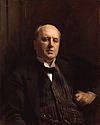
Toni Cade Bambara on Henry James
“I don't, for example, conjure up characters for the express purpose of despising them, of breaking their humps in public. I used to be astounded at Henry James et al., so nice nasty about it too, soooo refined. Gothic is of no interest to me. I try not to lend energy to building grotesqueries, depicting morbid relationships, dramatizing perversity.”
Quotes About Toni Cade Bambara
Gain deeper perspective through quotes about Toni Cade Bambara from others.
Lorna Goodison on Toni Cade Bambara
“I think Toni Cade Bambara is an amazing writer. I love Bambara’s work because there is a certain fineness of feeling in her voice. She has a loving sympathetic imagination as well as a great deal of negative capability. There are also currents of redemptive love and joy that run through her work. And she makes me laugh, really, really laugh.”
Paula Gunn Allen on Toni Cade Bambara
“Native American literature should be important to Americans not as a curio, an artifact of the American past that has little pertinence to an American present or future, but rather as a major tradition that informs American writers ranging from Cotton Mather and Nathaniel Hawthorne through Walt Whitman, William Carlos Williams, and William Faulkner to Adrienne Rich, Toni Cade Bambara, and Judy Grahn.”

Mary Annaïse Heglar on Toni Cade Bambara
“As the writer Toni Cade Bambara once put it, the role of the artist is to "make revolution irresistible." Make no mistake about it: overthrowing the fossil-fuel industry is nothing short of a revolution, a rebirth.”
Louis Massiah on Toni Cade Bambara
“She made revolution irresistible”
Cherríe Moraga on Toni Cade Bambara 4 quotes
“In a uniquely distinct way, Audre Lorde's and Toni Cade Bambara's presence in Bridge also impacted Bridge's success. Audre and Toni were exemplary sister-writers, emblematic of that great surge of Black feminist writing spilling into our hands in 1970s and 80s. As "sisters of the yam"... they stood up in unwavering solidarity with the rest of us "sisters of the rice, sisters of the corn, sisters of the plantain" and that mattered. It helped put Bridge, coedited by two "unknown" Chicana writers, on the political-literary map. All in all, it was a brave moment in feminist history.”

Toni Morrison on Toni Cade Bambara
“I don't know if she knew the heart cling of her fiction. Its pedagogy, its use, she knew very well, but I have often wondered if she knew how brilliant at it she was. There was no division in her mind between optimism and ruthless vigilance; between aesthetic obligation and the aesthetics of obligation. There was no doubt whatsoever that the work she did had work to do. She always knew what her work was for. Any hint that art was over there and politics was over here would break her up into tears of laughter, or elicit a look so withering it made silence the only intelligent response. More often she met the art/politics fake debate with a slight wave-away of the fingers on her beautiful hand, like the dismissal of a mindless, desperate fly who had maybe two little hours of life left...Of course she knew...Perhaps my wondering whether or not she realized how original, how rare her writing is is prompted by the fact that I knew it was not her only love. She had another one. Stronger. As the Essays and Conversations portion of this collection testifies, (especially after the completion of her magnum opus about the child murders in Atlanta) she came to prefer film: writing scripts, making film, critiquing, teaching, analyzing it and enabling others to do the same. The Bombing of Osage Avenue and W. E. B. Du Bois: A Biography in Four Voices contain sterling examples of her uncompromising gifts and her determination to help rescue a genre from its powerful social irrelevancy. In fiction, in essays, in conversation one hears the purposeful quiet of this ever vocal woman; feels the tenderness in this tough Harlem/Brooklyn girl; joins the playfulness of this profoundly serious writer. When turns of events wearied the gallant and depleted the strong, Toni Cade Bambara, her prodigious talent firmly in hand, stayed the distance.”

Marge Piercy "An Appreciation of Joanna Russ" on Toni Cade Bambara
“I read writers like Toni Cade Bambera and Toni Morrison because they write fiction that is not boring or alienating to me but moving”
Adrienne Rich on Toni Cade Bambara
“I look everywhere for signs of that fusion I have glimpsed in the women's movement, and most recently in Nicaragua. I turn to Toni Cade Bambara's The Salt Eaters or Ama Ata Aidoo's Our Sister Killjoy or James Baldwin's Just above My Head...This kind of art-like the art of so many others uncanonized in the dominant culture-is not produced as a commodity, but as part of a long conversation with the elders and with the future. Such artists draw on a tradition in which political struggle and spiritual continuity are meshed. Nothing need be lost, no beauty sacrificed. The heart does not turn to a stone.”

Sheree Thomas on Toni Cade Bambara
“the purpose of a writer, as Toni Cade Bambara said, "is to make revolution irresistible"”
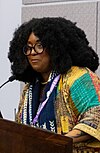
About Toni Cade Bambara
Toni Cade Bambara, born Miltona Mirkin Cade (March 25, 1939 – December 9, 1995) was an African-American author, documentary film-maker, social activist and college professor.