Link Copied!
Thomas Young (scientist) Quotes (1773-1829)
Scientist
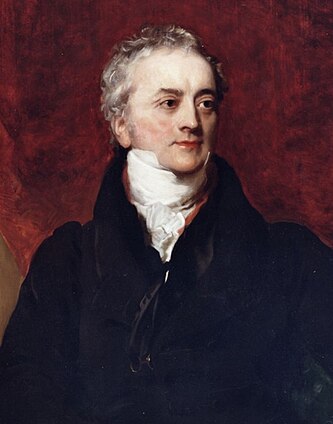
About Thomas Young (scientist)
Thomas Young (13 June 1773 – 10 May 1829) was an English genius and polymath, admired by, among others, William Herschel and Albert Einstein. He is famous for having partly deciphered Egyptian hieroglyphs (specifically the Rosetta Stone) before Jean-Francois Champollion eventually expanded on his work.
Best Thomas Young (scientist) Quotes
Shortest
Earliest
Explore our curated collection of the most famous and impactful Thomas Young (scientist) quotes.
“When I was a boy, I thought myself a man. Now that I am a man, I find myself a boy.”

Unsourced — Primary work/page citation not yet verified in the QuotesCosmos archive. Per our Unnamed Sources & Verification Policy, quotes without confirmed primary editions are explicitly marked Unsourced while under editorial review.
“The historical part of the work can scarcely be called new, but several of the circumstances, which are related, have escaped the notice of former writers on the history of the sciences.”
Unsourced — Primary work/page citation not yet verified in the QuotesCosmos archive. Per our Unnamed Sources & Verification Policy, quotes without confirmed primary editions are explicitly marked Unsourced while under editorial review.
“With respect to the mathematical part of optics, the curvature of the images, formed by lenses and mirrors, has been correctly investigated, and the inaccuracy of some former estimations has been demonstrated.”
Unsourced — Primary work/page citation not yet verified in the QuotesCosmos archive. Per our Unnamed Sources & Verification Policy, quotes without confirmed primary editions are explicitly marked Unsourced while under editorial review.
“The theory of the tides has been reduced into an extremely simple form, which appears to agree better with all the phenomena, than the more intricate calculations which they have commonly been supposed to require.”
Unsourced — Primary work/page citation not yet verified in the QuotesCosmos archive. Per our Unnamed Sources & Verification Policy, quotes without confirmed primary editions are explicitly marked Unsourced while under editorial review.
“A permanent alteration of form limits the strength of materials with regard to practical purposes, almost as much as fracture; since, in general, the force which is capable of producing this effect is sufficient, with a small addition, to increase it till fracture takes place.”
Unsourced — Primary work/page citation not yet verified in the QuotesCosmos archive. Per our Unnamed Sources & Verification Policy, quotes without confirmed primary editions are explicitly marked Unsourced while under editorial review.
“The well known elevation of the pitch of wind instruments, in the course of playing, sometimes amounting to half a note, is not, as is commonly supposed, owing to any expansion of the instrument, for this should produce a contrary effect, but to the increased warmth of the air in the tube.”
Unsourced — Primary work/page citation not yet verified in the QuotesCosmos archive. Per our Unnamed Sources & Verification Policy, quotes without confirmed primary editions are explicitly marked Unsourced while under editorial review.
“The fundamental doctrines of motion have [herein]... been more immediately referred to axioms simply mathematical than has hitherto been usual; and the application of these doctrines to practical purposes has [herein]... been facilitated.”
Unsourced — Primary work/page citation not yet verified in the QuotesCosmos archive. Per our Unnamed Sources & Verification Policy, quotes without confirmed primary editions are explicitly marked Unsourced while under editorial review.
“It may hereafter be considered how far the excellent experiments of Count Rumford, which tend very greatly to weaken the evidence of the modern doctrine of heat, may be more or less favourable to one or the other system of light and colours.”

Unsourced — Primary work/page citation not yet verified in the QuotesCosmos archive. Per our Unnamed Sources & Verification Policy, quotes without confirmed primary editions are explicitly marked Unsourced while under editorial review.
“I have... begun to collect materials for a work... relating to every department of medical knowledge: ...it will be comparatively more concise than these lectures, in proportion to what has been said and written respecting physic, but, I hope, much more complete, with regard to all that is known with certainty, and can be applied with utility.”
Unsourced — Primary work/page citation not yet verified in the QuotesCosmos archive. Per our Unnamed Sources & Verification Policy, quotes without confirmed primary editions are explicitly marked Unsourced while under editorial review.
“The passive strength of materials of all kinds has been very fully investigated, and many new conclusions have been formed respecting it, which are of immediate importance to the architect and to the engineer, and which appear to contradict the results of some very elaborate calculations.”
Unsourced — Primary work/page citation not yet verified in the QuotesCosmos archive. Per our Unnamed Sources & Verification Policy, quotes without confirmed primary editions are explicitly marked Unsourced while under editorial review.
“With respect to the cohesion and capillary action of liquids, I have had the good fortune to anticipate Mr. Laplace in his late researches, and I have endeavoured to show, that my assumptions are more universally applicable to the facts, than those which that justly celebrated mathematician has employed.”
Unsourced — Primary work/page citation not yet verified in the QuotesCosmos archive. Per our Unnamed Sources & Verification Policy, quotes without confirmed primary editions are explicitly marked Unsourced while under editorial review.
“I have resolved to confine my studies and my pen to medical subjects only. For the talents which God has not given me, I am not responsible, but those which I possess, I have hitherto cultivated and employed as diligently as my opportunities have allowed me to do ; and I shall continue to apply them with assiduity, and in tranquillity, to that profession which has constantly been the ultimate object of all my labours.”
Unsourced — Primary work/page citation not yet verified in the QuotesCosmos archive. Per our Unnamed Sources & Verification Policy, quotes without confirmed primary editions are explicitly marked Unsourced while under editorial review.
“I have... attempted to throw some new light on the general properties of matter in other forms: and on the doctrine of heat, which is materially concerned in them; and to deduce some useful conclusions from a comparison of various experiments on the elasticity of steam, on evaporation, and on the indications of hygrometers.”

Unsourced — Primary work/page citation not yet verified in the QuotesCosmos archive. Per our Unnamed Sources & Verification Policy, quotes without confirmed primary editions are explicitly marked Unsourced while under editorial review.
“[T]he lectures... may be expected to remain tolerably commensurate to the state of the sciences for a much longer period; since, in investigations so intimately connected with mathematical principles, the essential improvements will always bear a very small proportion to the number of innovations. ...the references, which it contains, are... sufficient to lead those, who may consult the passages quoted, to the works of every author of eminence that has treated of the respective subjects.”
Unsourced — Primary work/page citation not yet verified in the QuotesCosmos archive. Per our Unnamed Sources & Verification Policy, quotes without confirmed primary editions are explicitly marked Unsourced while under editorial review.
“In the hydraulic and optical part, may be enumerated an over flowing lamp; a simplification of the rules for finding the velocity of running water; remarks on the application of force to hydraulic machines; a mode of letting out air from water pipes; an analysis of the human voice; and some arrangements for solar microscopes, and for other optical instruments of a similar nature.”

Unsourced — Primary work/page citation not yet verified in the QuotesCosmos archive. Per our Unnamed Sources & Verification Policy, quotes without confirmed primary editions are explicitly marked Unsourced while under editorial review.
“The arrangement of the whole work is probably different... from any other... the extent of the subjects... rendered it necessary to preserve a... methodical and uniform system; and it is presumed, that this arrangement will be... of some value, especially in a work calculated to serve as a key, by means of which, access may be obtained to all the widely scattered treasures of science; and which will enable those... desirous of extending their researches in any particular department, to obtain expeditiously all the information that books can afford them.”
Unsourced — Primary work/page citation not yet verified in the QuotesCosmos archive. Per our Unnamed Sources & Verification Policy, quotes without confirmed primary editions are explicitly marked Unsourced while under editorial review.
“have enumerated, in a compendious and systematical form, the principal facts which have been discovered with respect to galvanic electricity; and I have fortunately been able to profit by Mr. Davy's most important experiments, which have lately been communicated to the Royal Society, and which have already given to this branch of science a much greater perfection, and a far greater extent, than it before possessed.”
Unsourced — Primary work/page citation not yet verified in the QuotesCosmos archive. Per our Unnamed Sources & Verification Policy, quotes without confirmed primary editions are explicitly marked Unsourced while under editorial review.
“Physic is one of those departments, in which there is frequent necessity for the exercise of an incommunicable faculty of judgment, and a sagacity, which may be called transcendental, as extending beyond the simple combination of all that can be taught by precept. Nor is there any other mode of cultivating these powers, than by pursuing a much more extensive range of elementary study, than appears, to a common and superficial observer, to be in any way connected with the immediate objects of the profession.”
Unsourced — Primary work/page citation not yet verified in the QuotesCosmos archive. Per our Unnamed Sources & Verification Policy, quotes without confirmed primary editions are explicitly marked Unsourced while under editorial review.
“In the astronomical and physical division of the work, will be found a general rule for determining the correction on account of aberration; a comparison of observations on the figure of the earth; a table of the order of electrical excitation; a chart of the variation of the compass, and of the trade winds; formulae for finding the heat of summer and winter; remarks on the theory of the winds; and a comparative table of all the mechanical properties of a variety of natural bodies.”
Unsourced — Primary work/page citation not yet verified in the QuotesCosmos archive. Per our Unnamed Sources & Verification Policy, quotes without confirmed primary editions are explicitly marked Unsourced while under editorial review.
“There is no study more difficult than that of physic: it exceeds, as a science, the comprehension of the human mind: and those who blunder onwards, without attempting to understand what they see, are often very nearly on a level with those, who depend too much on imperfect generalisations, applied to facts, which can scarcely be subjected to any well marked analogy. Hence it may happen, that talents and labour may become useless for want of a proper direction... To assist in furnishing the student with a sufficient direction... is the principal object of this work.”
Unsourced — Primary work/page citation not yet verified in the QuotesCosmos archive. Per our Unnamed Sources & Verification Policy, quotes without confirmed primary editions are explicitly marked Unsourced while under editorial review.
“It is surprising that so great a mathematician as Dr. Smith could have entertained for a moment, an idea that the vibrations constituting different sounds should be able to cross each other in all directions, without affecting the same individual particles of air by their joint forces: undoubtedly they cross, without disturbing each other's progress; but this can be no otherwise effected than by each particle's partaking of both motions. If this assertion stood in need of any proof, it might be amply furnished by the phenomena of beats, and of the grave harmonics observed...”
Unsourced — Primary work/page citation not yet verified in the QuotesCosmos archive. Per our Unnamed Sources & Verification Policy, quotes without confirmed primary editions are explicitly marked Unsourced while under editorial review.
“I met with an accident about five weeks ago in London, which has prevented my walking ever since, and I think I broke one of the metatarsal bones; this has been a favourable circumstance, for it has increased my literary application in a considerable degree. I have been studying, not the theory of the winds, but of the air, and I have made observations on harmonics which I believe are new. Several circumstances unknown to the English mathematicians which I thought I had first discovered, I since find to have been discovered and demonstrated by the foreign mathematicians; in fact, Britain is very much behind its neighbours in many branches of the mathematics: were I to apply deeply to them, I would become a disciple of the French and German school; but the field is too wide and too barren for me.”

Unsourced — Primary work/page citation not yet verified in the QuotesCosmos archive. Per our Unnamed Sources & Verification Policy, quotes without confirmed primary editions are explicitly marked Unsourced while under editorial review.
“The theory of waves has been much simplified, and somewhat extended, and their motions have been illustrated by experiments... A similar method of reasoning has been applied to the circulation of the blood, to the propagation of sound, either in fluids or in solids, and to the vibrations of musical chords; the general principle of a velocity, corresponding to half the height of a certain modulus, being shown to be applicable to all these cases: and a connexion has been established between the sound to be obtained from a given solid, and its strength in resisting a flexure of any kind; or, in the case of ice and water, between the sound in a solid and the compressibility in a fluid state. The doctrine of sound and of sounding bodies in general has also received some new illustrations, and the theory of music and of musical intervals has been particularly discussed.”
Unsourced — Primary work/page citation not yet verified in the QuotesCosmos archive. Per our Unnamed Sources & Verification Policy, quotes without confirmed primary editions are explicitly marked Unsourced while under editorial review.
“In the department of physical optics, the phenomena of halos and parhelia have been explained, upon principles not entirely new, but long forgotten: the functions of the eye have been minutely examined, and the mode of its accommodation to the perception of objects at different distances ascertained: the various phenomena of coloured light have been copiously described, and accurately represented by coloured plates; and some new cases of the production of colours have been pointed out, and have been referred to the general law of double lights, by which a great variety of the experiments of former opticians have also been explained; and this law has been applied to the establishment of a theory of the nature of light, which satisfactorily removes almost every difficulty that has hitherto attended the subject.”
Unsourced — Primary work/page citation not yet verified in the QuotesCosmos archive. Per our Unnamed Sources & Verification Policy, quotes without confirmed primary editions are explicitly marked Unsourced while under editorial review.
“Besides these improvements,... there are others,... which may... be interesting to those... engaged in those departments... Among these may be ranked, in the division of mechanics, properly so called, a simple demonstration of the law of the force by which a body revolves in an ellipsis; another of the properties of cycloidal pendulums; an examination of the mechanism of animal motions; a comparison of the measures and weights of different countries; and a convenient estimate of the effect of human labour: with respect to architecture, a simple method of drawing the outline of a column: an investigation of the best forms for arches; a determination of the curve which affords the greatest space for turning; considerations on the structure of the joints employed in carpentry, and on the firmness of wedges; and an easy mode of forming a kirb roof: for the purposes of machinery of different kinds, an arrangement of bars for obtaining rectilinear motion; an inquiry into the most eligible proportions of wheels and pinions; remarks on the friction of wheel work, and of balances; a mode of finding the form of a tooth for impelling a pallet without friction; a chronometer for measuring minute portions of time; a clock escapement; a calculation of the effect of temperature on steel springs; an easy determination of the best line of draught for a carriage; an investigation of the resistance to be overcome by a wheel or roller; and an estimation of the ultimate pressure produced by a blow.”

Unsourced — Primary work/page citation not yet verified in the QuotesCosmos archive. Per our Unnamed Sources & Verification Policy, quotes without confirmed primary editions are explicitly marked Unsourced while under editorial review.
“This statement appears to us to be conclusive with respect to the insufficiency of the undulatory theory, in its present state, for explaining all the phenomena of light. But we are not therefore by any means persuaded of the perfect sufficiency of the projectile system: and all the satisfaction that we have derived from an attentive consideration of the accumulated evidence, which has been brought forward, within the last ten years, on both sides of the question, is that of being convinced that much more evidence is still wanting before it can be positively decided. In the progress of scientific investigation, we must frequently travel by rugged paths, and through valleys as well as over mountains. Doubt must necessarily succeed often to apparent certainty, and must again give place to a certainty of a higher order; such is the imperfection of our faculties, that the descent from conviction to hesitation is not uncommonly as salutary, as the more agreeable elevation from uncertainty to demonstration. An example of such alternations may easily be adduced from the history of chemistry. How universally had phlogiston once expelled the aërial acid of Hooke and Mayow. How much more completely had phlogiston given way to oxygen! And how much have some of our best chemists been lately inclined to restore the same phlogiston to its lost honours! although now again they are beginning to apprehend that they have already done too much in its favour. In the mean time, the true science of chemistry, as the most positive dogmatist will not hesitate to allow, has been very rapidly advancing towards ultimate perfection.”

Unsourced — Primary work/page citation not yet verified in the QuotesCosmos archive. Per our Unnamed Sources & Verification Policy, quotes without confirmed primary editions are explicitly marked Unsourced while under editorial review.
Quotes About Thomas Young (scientist)
Gain deeper perspective through quotes about Thomas Young (scientist) from others.
Robert Chambers on Thomas Young (scientist)
“I may here refer to a curious mathematical calculation by Dr. Thomas Young, to the effect, that if three words coincide in two different languages, it is ten to one they must be derived in both cases from some parent language, or introduced in some other manner. "Six words would give more," he says, "than seventeen hundred to one, and eight near 100,000, so that in these cases the evidence would be little short of absolute certainty."”
Unsourced — Primary work/page citation not yet verified in the QuotesCosmos archive. Per our Unnamed Sources & Verification Policy, quotes without confirmed primary editions are explicitly marked Unsourced while under editorial review.
Albert Einstein on Thomas Young (scientist)
“Reflexion, refraction, the formation of images by lenses. the mode of operation of the eye, the spectral composition and recomposition of the different kinds of light the invention of the reflecting telescope, the first foundations of colour theory, the elementary theory of the rainbow pass us by in procession, and finally come his of the colours of thin films as the origin of the next great theoretical advance, which had to await, over a hundred years, the coming of Thomas Young.”

Unsourced — Primary work/page citation not yet verified in the QuotesCosmos archive. Per our Unnamed Sources & Verification Policy, quotes without confirmed primary editions are explicitly marked Unsourced while under editorial review.
John Herschel on Thomas Young (scientist)
“To complete the theory of reflexion and refraction on the undulatory hypothesis, it will be necessary to show what becomes of those oblique portions of the secondary waves, diverging in all directions from every point of the reflecting or refracting surfaces... which do not conspire to form the principal wave. But to understand this, we must enter on the doctrine of the interference of the rays of light,—a doctrine we owe almost entirely to the ingenuity of Dr. Young, though some of its features may be pretty distinctly traced in the writings of Hooke, (the most ingenious man, perhaps, of his age,) and though Newton himself occasionally indulged in speculations bearing a certain relation to it. But the unpursued speculations of Newton, and the appercus of Hooke, however distinct, must not be put in competition, and, indeed, ought scarcely to be mentioned with the elegant, simple, and comprehensive theory of Young,—a theory which, if not founded in nature, is certainly one of the happiest fictions that the genius of man has yet invented to group together natural phenomena, as well as the most fortunate in the support it has unexpectedly received from whole classes of new phenomena, which at their first discovery seemed in irreconcileable opposition to it. It is, in fact, in all its applications and details one succession of felicities insomuch that we may almost be induced to say, if it be not true, it deserves to be so. The limits of this Essay, we fear, will hardly allow us to do it justice.”

Unsourced — Primary work/page citation not yet verified in the QuotesCosmos archive. Per our Unnamed Sources & Verification Policy, quotes without confirmed primary editions are explicitly marked Unsourced while under editorial review.
Philip Kelland on Thomas Young (scientist)
“Whether we regard the depth of Dr. Young's learning, the extent of his research, the accuracy of his statements, or the beauty and originality of his theoretical views, in whatever way we contemplate these Lectures, our admiration is equally excited. They embody a complete system of Mechanical Philosophy drawn from original sources, and illustrated by a hand capable of reducing them to the most perfect subjection. Unlike other popular writers, who... either take the sciences at second hand, or content themselves simply with... adopting the hypotheses of more distinguished philosophers, Dr. Young travelled over the whole literature of science, and whilst we are astonished at the rich store of materials which he has collected, we find nothing more prominent than the impress of his own acute and powerful mind.”
Unsourced — Primary work/page citation not yet verified in the QuotesCosmos archive. Per our Unnamed Sources & Verification Policy, quotes without confirmed primary editions are explicitly marked Unsourced while under editorial review.
John Theodore Merz on Thomas Young (scientist) 2 quotes
“Thomas Young... attained equal eminence by his discoveries in connection with the undulatory theory of light, in which he was the first to assert the principle of interference, and that of transverse vibrations, and by his discovery of the key to the system of hieroglyphics. ...The remarkable fact that Young, of whom Helmholtz says that he came a generation too soon, remained scientifically unrecognised and popularly almost unknown to his countrymen, has been explained by his unfortunate manner of expression and the peculiar channels through which his labours were announced to the world. His frequently unintelligible style, his obscure and inelegant mathematics, the habitual incognito which he preserved, his modesty in replying to attacks, and his general want of method in enunciating his ideas, contrast very markedly with the writings of some of his rivals, especially in France...”
Unsourced — Primary work/page citation not yet verified in the QuotesCosmos archive. Per our Unnamed Sources & Verification Policy, quotes without confirmed primary editions are explicitly marked Unsourced while under editorial review.

About Thomas Young (scientist)
Thomas Young (13 June 1773 – 10 May 1829) was an English genius and polymath, admired by, among others, William Herschel and Albert Einstein. He is famous for having partly deciphered Egyptian hieroglyphs (specifically the Rosetta Stone) before Jean-Francois Champollion eventually expanded on his work.