Thomas Paine on Jesus
← Back to Thomas Paine Profile
“As to the Christian system of faith, it appears to me as a species of atheism; a sort of religious denial of God. It professes to believe in a man rather than in God. It is a compound made up chiefly of man-ism with but little deism, and is as near to atheism as twilight is to darkness. It introduces between man and his Maker an opaque body, which it calls a redeemer[.]”
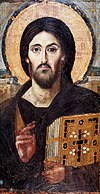
“The most extraordinary of all the things called miracles, related in the New Testament, is that of the devil flying away with Jesus Christ, and carrying him to the top of a high mountain; and to the top of the highest pinnacle of the temple, and showing him and promising to him all the kingdoms of the world. How happened it that he did not discover America? or is it only with kingdoms that his sooty highness has any interest.”
“If I owe a person money, and cannot pay him, and he threatens to put me in prison, another person can take the debt upon himself, and pay it for me. But if I have committed a crime, every circumstance of the case is changed. Moral justice cannot take the innocent for the guilty even if the innocent would offer itself. To suppose justice to do this, is to destroy the principle of its existence, which is the thing itself. It is then no longer justice. It is indiscriminate revenge.”
“Having thus made an insurrection and a battle in heaven, in which none of the combatants could be either killed or wounded — put Satan into the pit — let him out again — given him a triumph over the whole creation — damned all mankind by the eating of an apple, these Christian mythologists bring the two ends of their fable together. They represent this virtuous and amiable man, Jesus Christ, to be at once both God and man, and also the Son of God, celestially begotten, on purpose to be sacrificed, because they say that Eve in her longing had eaten an apple.”
“Every national church or religion has established itself by pretending some special mission from God, communicated to certain individuals. The Jews have their Moses; the Christians their Jesus Christ, their apostles and saints; and the Turks their Mahomet; as if the way to God was not open to every man alike. Each of those churches shows certain books, which they call revelation, or the Word of God. The Jews say that their Word of God was given by God to Moses face to face; the Christians say, that their Word of God came by divine inspiration; and the Turks say, that their Word of God (the Koran) was brought by an angel from heaven. Each of those churches accuses the other of unbelief; and, for my own part, I disbelieve them all.”
“Matthew says, that the angel that was sitting upon the stone on the outside of the sepulchre told the two Marys that Christ was risen, and that the women went away quickly. Mark says, that the women, upon seeing the stone rolled away, and wondering at it, went into the sepulchre, and that it was the angel that was sitting within on the right side, that told them so. Luke says, it was the two angels that were standing up; and John says, it was Jesus Christ himself that told it to Mary Magdalene; and that she did not go into the sepulchre, but only stooped down and looked in. Now, if the writers of these four books had gone into a court of justice to prove an alibi, (for it is of the nature of an alibi that is here attempted to be proved, namely, the absence of a dead body by supernatural means,) and had they given their evidence in the same contradictory manner as it is here given, they would have been in danger of having their ears cropt for perjury, and would have justly deserved it. Yet this is the evidence, and these are the books, that have been imposed upon the world as being given by divine inspiration, and as the unchangeable word of God.”
“Here then is the whole story, foolish as it is, of this child and this virgin; and it is upon the barefaced perversion of this story that the book of Matthew, and the impudence and sordid interest of priests in later times, have founded a theory, which they call the gospel; and have applied this story to signify the person they call Jesus Christ; begotten, they say, by a ghost, whom they call holy, on the body of a woman, engaged in marriage, and afterwards married, whom they call a virgin, seven hundred years after this foolish story was told; a theory which, speaking for myself, I hesitate not to believe, and to say, is as fabulous and as false as God is true. … It is not then the existence or the non-existence, of the persons that I trouble myself about; it is the fable of Jesus Christ, as told in the New Testament, and the wild and visionary doctrine raised thereon, against which I contend. The story, taking it as it is told, is blasphemously obscene. It gives an account of a young woman engaged to be married, and while under this engagement, she is, to speak plain language, debauched by a ghost, under the impious pretence, (Luke i. 35,) that "the Holy Ghost shall come upon thee, and the power of the Highest shall overshadow thee." Notwithstanding which, Joseph afterwards marries her, cohabits with her as his wife, and in his turn rivals the ghost. This is putting the story into intelligible language, and when told in this manner, there is not a priest but must be ashamed to own it”