Link Copied!
Theobald Wolfe Tone Quotes (1763-1798)
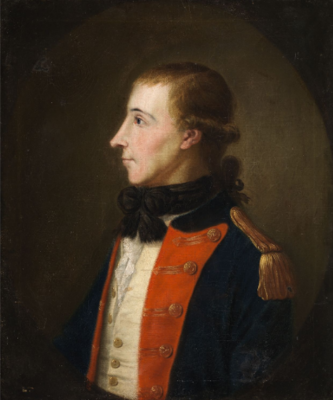

About Theobald Wolfe Tone
Theobald Wolfe Tone (June 20, 1763 – November 19, 1798), commonly known as Wolfe Tone, was a leading figure in the United Irishmen Irish independence movement and is regarded as the father of Irish republicans.
Best Theobald Wolfe Tone Quotes
Shortest
Earliest
Explore our curated collection of the most famous and impactful Theobald Wolfe Tone quotes.
“I for one will never be accessory to subjecting my country to the control of France merely to get rid of England.”

“[I]t is our principle that if a nation wills a bad government it ought to have that government. We have no power, and we have no right, to force men to be free.”

“America...has neither king, nobility nor clergy established by law and it is notwithstanding, I am satisfied, at this hour, the most flourishing and the best governed spot on the face of this earth.”
“The fortune of war has thrown me into the hands of Government, and I am utterly ignorant of what fate may attend me, but in the worst event I hope I shall bear it like a man, and that my death will not disgrace my life.”

“On him who is not convinced by the arguments of Payne, the absurdity of hereditary monarchs and hereditary legislatures where no man would admit of hereditary cob[b]lers who wished to have his shoes well mended, I despair of making any impression.”
“[T]he Irish patriots who had suffered so much in their [France's] cause, and who by the number of men they employed, and the quantity of money they had cost England, had served as a powerful diversion in favor of the Republic, without putting her to the expense of one shilling.”

“I see the Orange boys are playing the Devil in Ireland. I have no doubt it is the work of the Government. Please God, if I get safe into that country, I will settle those gentlemen, and their instigators also, more especially.”
“It is a fact undeniable though carefully concealed in England, that two thirds of the British navy are manned by Irishmen; a circumstance which if it stood alone should be sufficient to determine the French Government to wrest, if possible, so powerful a weapon from the hands of her implacable adversary.”
“England has not had such an escape since the Spanish Armada, and that expedition, like ours, was defeated by the weather; the elements fight against us, and courage is here of no avail. Well, let me think no more about it; it is lost, and let it go. I am now a Frenchman and must regulate my future plans accordingly.”
“I dread everything for him [Lord Edward Fitzgerald], and my only consolation is in speculations of revenge. If the blood of this brave young man be shed by the hands of his enemies, it is no ordinary vengeance that will content the people whenever the day of retribution arrives. I cannot express the rage I feel at my own helplessness at this moment, but what can I do! Let me if possible think no more; it sets me half mad.”

“To subvert the tyranny of our execrable government, to break the connection with England, the never-failing source of all our political evils, and to assert the independence of my country, these were my objectives. To unite the whole people of Ireland, to abolish the memory of past dissensions, and to substitute the common name of Irishman, in place of the denominations of Protestant, Catholic and Dissenter, these were my means.”

“[T]hey and the Catholics had but one common interest and one common enemy; that the depression and slavery of Ireland was produced and perpetuated by the divisions existing between them; and that consequently to assert the independence of their country, and their own individual liberties it was necessary to forget all former feuds, to consolidate the entire strength of the whole nation, and form for the first time but one people.”
“Alarming as the state of Ireland really and truly is to the English government, I have no doubt on my mind that it is their present policy to exaggerate the danger as much as possible in order to terrify the Irish gentry out of their wits, and, under cover of this universal panic, to crush the spirit of the people and reduce the country to a state of slavery more deplorable than that of any former period of our unfortunate history.”

“I much fear the French government will have reason sorely to repent their extravagant caution with regard to infringing the liberty of the press; it is less dangerous for a government to be feared, or even hated, than despised, and I do not see how a government which suffers itself day after day without remission to be insulted in the most outrageous manner with the most perfect impunity can avoid in the long run falling into disrepute and contempt.”
“[ Charles de La Croix] ...asked me did I know one Simon, a priest. I answered...that I had a strong objection to letting priests into the business at all; that I had the very worst opinion of them, and that in Ireland especially they were very bigotted and very ignorant, slaves to Rome and of course enemies to the French Revolution.”
“From my tenderest youth I have considered the union of Ireland with Great-Britain as the scourge of the Irish nation. And that the people of this country can have neither happiness nor freedom whilst that connection endures. Every day's experience, and every fact that arose, convinced me of this truth; and I resolved, if I could, to separate the two countries. But as I knew Ireland could not of herself, throw off the yoke, I sought for help wherever I could find it.”

“An event has taken place of a magnitude scarce, if it all, inferior in importance to that of the French revolution. The Pope is dethroned and in exile. The circumstances attending this great event are such as to satisfy my mind that there is a special providence guiding the affairs of Europe at this moment, and turning everything to the great end of the emancipation of mankind from the yoke of religious and political superstition.”
“I do not look upon the French Revolution as a question subject to the ordinary calculation of politics; it is a thing which is to be; and, as all human experience has verified that the new doctrine ever finally subverts the old, as the Mosaic law subverted idolatry, as Christianity subverted the Jewish dispensation, as the Reformation subverted popery, so, I am firmly convinced, the doctrine of republicanism will finally subvert that of monarchy and establish a system of just and rational liberty on the ruins of the thrones of the despots of Europe.”
“The aristocracy of Ireland, which exists only by our slavery and is maintained in its pomp and splendor by the sale of our lives, liberties and properties, will tumble in the dust; the people will be no longer mocked with a vain appearance of a parliament over which they have neither influence nor control. Instead of a king representing himself, a house of lords representing themselves, we shall have a wise and honest legislature chosen by the people, whom they will indeed represent and whose interest even for their own sakes they will most strenuously support.”

“I see in the papers this day the address of General Buonaparte to the army embarked at Toulon, and from one or two expressions contained in it, it seems possible his destination may be for India... [I]f there be no likelihood of an immediate attack on England, I take liberty, thro' you, to make an offer to the Government of my services in India... My first object, undoubtedly, is to assist in the emancipation of my own country; if that cannot be attained my next is to assist in the humiliation of her tyrant, and in whatever quarter of the globe the English government exists, there is our enemy.”
“I am of opinion—and if ever I have the opportunity I will endeavour to reduce that opinion to practice—that the government of a republic, properly organized and freely and frequently chosen by the people, should be a strong government. It is the interest and the security of the people themselves, and the truest and best support of their liberty, that the government which they have chosen should not be insulted with impunity; it is the people themselves who are degraded and insulted in the persons of their government. I would therefore have strong and severe laws against libels and calomny.”
“We the undersigned do agree & resolve to form an association under the appellation of United Irishmen for the purpose of collecting and diffusing political knowledge and life on the principles of gen[eral?] liberality, philanthropy, confidence & the equal rights of man and we hereby pledge ourselves to our country & to each other that we shall collectively & individually use all due means to give this association dignity & vigor & that will continue members of it as long as it appears to use to be directed to national unity.”
Theobald Wolfe Tone Quotes by Topic
Find exactly what you are looking for by browsing this categorized list of Theobald Wolfe Tone quotes by topic.
Theobald Wolfe Tone on United States
“America...has neither king, nobility nor clergy established by law and it is notwithstanding, I am satisfied, at this hour, the most flourishing and the best governed spot on the face of this earth.”

What Theobald Wolfe Tone Said About Others
Discover personal opinions Theobald Wolfe Tone shared regarding contemporaries.
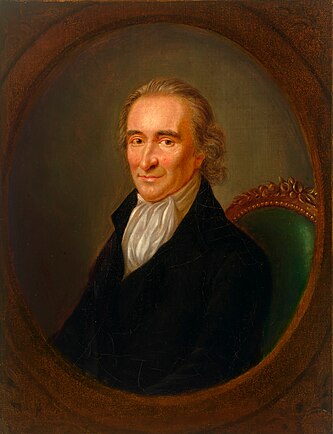
Theobald Wolfe Tone on Thomas Paine
“I have been lately introduced to the famous Thomas Paine, and like him very well. He is vain beyond all belief, but he has reason to be vain, and for my part I forgive him. He has done wonders for the cause of liberty, both in America and Europe, and I believe him to be conscientiously an honest man. He converses extremely well; and I find him wittier in discourse than in his writings, where his humour is clumsy enough.”

Quotes About Theobald Wolfe Tone
Gain deeper perspective through quotes about Theobald Wolfe Tone from others.
George Holdcroft on Theobald Wolfe Tone
“Mr Tone is a low, thin, smart man about twenty-six years old, of an animated intelligent countenance, and seems to possess very good abilities. He appeared to have very little reserve, answered every question asked him readily, yet whenever such questions were asked as at all involved his party in Ireland his answers were distorted by uncommon shrewdness, screening his party and aiming at an appearance of plausible sincerity.”
Grace Joy on Theobald Wolfe Tone
“The trial of the unfortunate Mr Tone came on today... He was dressed as a French officer in a superb and beautiful suit of regimentals and behaved in the most firm and dignified manner. He read his defence which was at once inflammatory and eloquent. He came, he said, to raise three millions of his countrymen to the rank of men! In enterprises of this kind, he continued, success is everything. Washington succeeded! Kosciusko failed! Perfectly aware of the fate that awaited him, he had only one request to make, that as a French officer he might be shot.”
William Edward Hartpole Lecky on Theobald Wolfe Tone
“It would be a manifest exaggeration to call him a great man, but he had many of the qualities of mind and character by which, under favourable conditions, greatness has been achieved, and he rises far above the dreary level of commonplace which Irish conspiracy in general presents. The tawdry and exaggerated rhetoric; the petty vanities and jealousies; the weak sentimentalism; the utter incapacity for proportioning means to ends, and for grasping the stern realities of things, which so commonly disfigure the lives and conduct even of the more honest members of his class, were wholly alien to his nature. His judgment of men and things was keen, lucid, and masculine, and he was alike prompt in decision and brave in action... His journals clearly show how time, and experience, and larger scenes of action, had matured and strengthened both his intellect and character. The old levity had passed away. The constant fits of drunkenness that disfigured his early life no longer occur. The spirit of a mere adventurer had become much less apparent. A strong and serious devotion to an unselfish cause, had unquestionably grown up within him, and if he had become very unscrupulous about the means of attaining his end, he at least was prepared to sacrifice to it, not only his life, but also all personal vanity, pretensions, and ambition.”

John Moore on Theobald Wolfe Tone
“[B]y some writings which are said to be his, he appears to be a man of considerable talent. He was tried by a court martial...where I understand he conducted himself with great firmness. He had prepared a speech, part of which he was permitted to deliver, the rest being conceived inflammatory. By that part which he delivered he discovered a superiority of mind which must give to him a degree of sympathy beyond what is given to ordinary criminals.”
Patrick Pearse on Theobald Wolfe Tone 2 quotes
“We have come to the holiest place in Ireland; holier to us even than the place where Patrick sleeps in Down. Patrick brought us life, but this man died for us. And though many before him and some since have died in testimony of the truth of Ireland's claim to nationhood, Wolfe Tone was the greatest of all that have made that testimony, the greatest of all that have died for Ireland whether in old time or in new. He was the greatest of Irish Nationalists. I believe he was the greatest of Irish men.”

About Theobald Wolfe Tone
Theobald Wolfe Tone (June 20, 1763 – November 19, 1798), commonly known as Wolfe Tone, was a leading figure in the United Irishmen Irish independence movement and is regarded as the father of Irish republicans.