Link Copied!
Stephanie Zacharek Quotes (1963-)
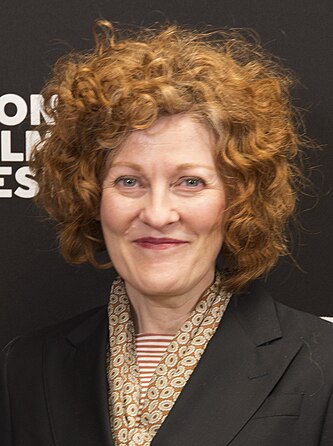

About Stephanie Zacharek
Stephanie Zacharek (born 13. August 1963) is an American film and music critic. She is the film critic at Time magazine, based in New York City. From 2013 to 2015 she was the principal film critic for The Village Voice.
Best Stephanie Zacharek Quotes
Shortest
Earliest
Explore our curated collection of the most famous and impactful Stephanie Zacharek quotes.

“Batman Begins leaks existential phoniness from the first frame.”

“It's mournful and troubling in a way that goes beyond ordinary movie manipulation. It burns clean.”
“This film Phantom takes everything that's wrong with Broadway and puts it on the big screen in a gaudy splat.”
“The bigger question to ask about 300 is why, for a supposedly rousing tale of heroism, it's so curiously unaffecting.”
“Monster is a compassionate picture without any obvious agenda. And it's effective precisely because it's not a polemic.”
“It would be destined for the trash heap of Shakespeare adaptations, if not for its female lead, and its heart, 17-year-old Claire Danes.”

“It's impossible to tell what's going on at any given moment in Tomb of the Dragon Emperor; it's even harder to care about being able to tell.”
“While 9 Songs is sexually explicit in the basic sense, its directness is what's most fascinating, and ultimately most moving, about it.”

“Women's desire is a mysterious, feral thing, and if you think you've got it figured out because you've looked at a few Georgia O'Keeffe paintings, you're not even close.”
“[I]t pretends to examine how self-absorbed we are as a culture, only to be consumed by its own self-absorption. It's also badly constructed, humorless and emotionally sadistic.”
“We've moved away from being a culture of people who think about movies to one made up of people who believe that spouting a list of preferences is the same as registering an opinion.”

“[Director James] Cameron manhandles the real story, scavenging it for his own puny narrative purposes. It's a film made with boorish confidence and zero sensitivity, big and dumb and hulking.”
“I can't remember ever feeling so glad that a movie was finally over. [Director George] Lucas may have held my imagination hostage for two hours, but reclaiming it afterward wasn't hard at all.”

“Who would have thought that [director] Cameron Crowe had a movie as bad as Vanilla Sky in him? It's a punishing picture, a betrayal of everything that Crowe has proved he knows how to do right.”
“The scariest thing in it may be the way the clock radio has a way of turning itself on, loudly, of its own accord. The song is always the Carpenters' "We've Only Just Begun." Now that's horror.”
“This is a sturdy little cop thriller, and even when it stretches the bounds of plausibility, you go with it, partly because you believe -- almost against your better judgment -- in what the characters are doing.”
“Everything about Pee-Wee's Big Adventure, from its toy-box colors to its superb, hyper-animated Danny Elfman score to the butch-waxed hairdo and wooden-puppet walk of its star and mastermind is pure pleasure.”

“It's possible [director Jody] Hill has a style, of sorts. But he doesn't work from the heart, or from the gut, as a good comedy director generally needs to. He operates from one guiding question: "How disturbing can we make this shit?"”
“There are epic impulses everywhere you look in There Will Be Blood; what's missing is character development, focused storytelling and, most significantly (apart from that terrific opening sequence), any sense of raw, intuitive drama.”

“It's time to start recognizing that not all escapist entertainment is created equal. And that some of it isn't even entertainment. Miss March is, to use the vernacular of the escapist moviegoer, the biggest pile of crap I've seen in ages.”

“The most interesting character here is an animal, a sturdy-looking white and black bulldog, who appears throughout the movie, angel style, to speak the truth -- silently. In this load of mind-bendy bushwa, he's the only thing worth watching, or listening to.”
“Oldboy makes us feel a part of something bigger than ourselves. It's a grand, gritty, indelible experience, the sort of picture that mimics great literature in the way it envelops you in a well-told story while also evoking subtle but strong gradations of emotion.”

“Extravagant in movie terms but stingy in emotional ones, it embodies all of [director Steven] Spielberg's bad impulses and almost none of his good ones: It's a grand display of how well he knows how to work us over, and yet the desperation with which he tries to get to us is repulsive.”
“This isn't a picture filled with wonder and a sense of fun; it's so jaded and crass that I almost wonder if it's a highly unscientific experiment designed to gauge how little audiences will settle for these days. Manic and multicolored, Speed Racer is an excess of nothingness.”
“Children of Men is a solemn, haunting picture, but it's also a thrilling one, partly because of the sheer bravado with which it's made. It left me feeling more fortified than drained. [Director Alfonso] Cuarón, the most openhearted of directors, prefers to give rather than take away.”
“Despite the bare butts and crude sex jokes -- or because of them -- this Adam Sandler vehicle addresses some of the biggest political problems of our time. ... At the very least, it's got to be the first picture to use smelly-feet jokes as a means of parsing the Israeli-Palestinian conflict. But more than that, it's a mainstream movie that dares to make jokes about the kinds of complex political realities that most of us don't dare bring up at dinner parties.”
“[Director Christopher] Nolan ... gives us enough multilayered subplots to at least fool us into thinking this is a work of intellectual and moral complexity. But as a piece of visual storytelling, from shot to shot, The Dark Knight is a mess. Characters disappear from one locale and show up inexplicably in another, thanks to the magic of editing. At one point, we learn two characters have been abducted, but Nolan doesn't bother to show us who did it or how. (Later, he explains the "who did it" with dialogue -- the lazy way.) At the end, a major character is left hanging, literally, as we are figuratively. If this is genius, give me hackery.”
Stephanie Zacharek Quotes by Topic
Find exactly what you are looking for by browsing this categorized list of Stephanie Zacharek quotes by topic.
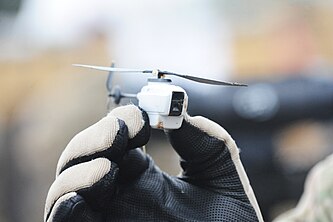
Stephanie Zacharek on Drones 3 quotes
“The aerial perspective—of sheep or anything—is liberating precisely because it’s destabilizing, Biro says. “Drone vision allows us to see that there are multiple ways of seeing ourselves and seeing the rest of the world. We step out of ourselves to some extent. That’s its positive potential.””

Stephanie Zacharek on Batman Begins
“But neither Nolan nor, unfortunately, the usually superb Christian Bale seems to recognize that darkness takes on many shades and colors: "Batman Begins" is a dull monotone of heavily theatrical, and yet wholly unmoving, angst. Nolan obviously didn't want his picture to be too cartoony, and that's a good impulse. But "Batman Begins" needs much more energy and kinetic flow -- less dolor and more dolomite. Bale can't seem to find an anchor for the character of Bruce Wayne; at times he's mildly affecting, but he can't locate that elusive hairline at which a character's self-absorption becomes engaging for an audience. His Wayne is so deep inside himself we can barely bring ourselves to care about him. (Bale made me long for Michael Keaton's first appearance, in particular, as Batman -- a performance that seemed breezily neurotic on the surface but actually cut to the heart of existential dread.) There's another problem with "Batman Begins": Batman's stuff has no soul. His mask, with its alert, pointed ears, does manage to give Bale a somber grace from some angles. But Bale (unlike Keaton) has trouble connecting from beneath it -- it wears him instead of the other way around. In a movie whose production design is both massively ambitious and uninspired, the Batmobile is one of the biggest bummers of all: It's like a squat bug covered with clumsy square scales, a dismally unromantic vehicle that looks wholly unsuited for parallel-parking practice, let alone flying through the streets of Gotham. And as hard as Nolan tried to make something other than a typical comic-book movie (although anyone who keeps an eye on comic-book movies realize there's no such thing), the script, by David S. Goyer, works at cross-purposes. As the movie grinds dully toward the finish line, Neeson announces, with drawing-room enunciation, "Now if you'll excuse me, I have a city to destroy." And Tom Wilkinson, who seems to have wandered in from another movie with his cigar-chomping performance as a mob boss, actually says at one point, "Don't burden yourself with the secrets of scary people." In the midst of all this, Gary Oldman gives a finely tuned performance as not-yet-commissioner James Gordon: We see intelligence and honor in his blinking, nearsighted eyes and his twitchy mustache. In a movie that aspires to emotional complexity and comes up empty -- even the action sequences are cluttered and confusingly shot -- he hits the notes right. Playing a character and not a psychological case study, he's one of the few actors here who's unburdened by the secrets of scary people.”

About Stephanie Zacharek
Stephanie Zacharek (born 13. August 1963) is an American film and music critic. She is the film critic at Time magazine, based in New York City. From 2013 to 2015 she was the principal film critic for The Village Voice.