Link Copied!
Sri Aurobindo Quotes (1872-1950)
Philosopher, Poet, King
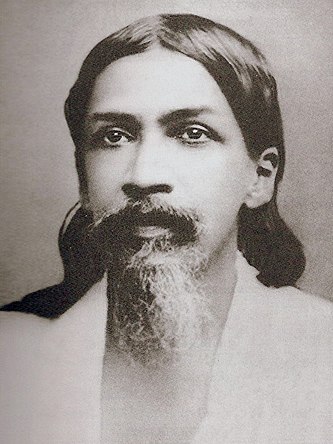






































About Sri Aurobindo
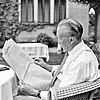
Sri Aurobindo born Aravinda Akroyd Ghose (15 August 1872 – 5 December 1950) was an Indian nationalist, scholar, poet, mystic, philosopher, yogi and guru, who developed concepts of human progress and spiritual evolution. With the help of his spiritual collaborator, Mirra Alfassa, he founded the Sri Aurobindo Ashram.
Best Sri Aurobindo Quotes
Shortest
Earliest
Explore our curated collection of the most famous and impactful Sri Aurobindo quotes.



“Very usually, altruism is only the sublimest form of selfishness.”

“Live within; be not shaken by outward happenings.”
“Rather hang thyself than belong to the horde of successful imitators.”

“In God's providence there is no evil, but only good or its preparation.”




“Transform enjoying into an even and objectless ecstasy; let all thyself be bliss. This is thy goal.”

“To commit adultery with God is the perfect experience for which the world was created.”

“Suffer yourself to be tempted within so that you may exhaust in the struggle your downward propensities.”
“Open thy eyes and see what the world really is and what God; have done with vain and pleasant imaginations.”

Sri Aurobindo Quotes by Topic
Find exactly what you are looking for by browsing this categorized list of Sri Aurobindo quotes by topic.
Sri Aurobindo on Lila (Hinduism) 5 quotes
“The slow self-manifesting birth of God in Matter is the purpose of the terrestrial Lila.”

Sri Aurobindo on Puranas 5 quotes
“The Puranas are authoritative scriptures of the Hindu dharma. Like the “Sruti” (the audible word), the “Smriti” (the divine word remembered) is an authoritative scripture though not of the same order.”

Sri Aurobindo on Indo-Aryan migrations 5 quotes
“The hypothesis, invented to fill the gap, that these ideas were borrowed by barbarous Aryan invaders from the civilised Dravidians, is a conjecture supported only by other conjectures. It is indeed coming to be doubted whether the whole story of an Aryan invasion through the Punjab is not a myth of the philologists.”

Sri Aurobindo on Purpose 4 quotes
“The great rule of life is to have no schemes but one unalterable purpose.”

Sri Aurobindo on Education in India 4 quotes
“[Is the system in England different from that introduced in India?] Yes, [in India] they want only clerks and the education is intended for nothing else.”

Sri Aurobindo on India 4 quotes
“The 'nation idea' India never had. By that I mean the political idea of the nation. It is a modern growth. But we had in India the cultural and spiritual idea of the nation.”

Sri Aurobindo on Rigveda 4 quotes
“We have in the Rig-veda,—the true and only Veda in the estimation of European scholars,—a body of sacrificial hymns couched in a very ancient language which presents a number of almost insoluble difficulties. ... The scholar in dealing with his text is obliged to substitute for interpretation a process almost of fabrication. We feel that he is not so much revealing the sense as hammering and forging rebellious material into some sort of shape and consistency.”
Sri Aurobindo on Religion 3 quotes
“How much hatred and stupidity men succeed in packing up decorously and labelling “Religion”?”

Sri Aurobindo on Hinduism and politics 3 quotes
“Politics is the work of the Kshatriya and it is the virtues of the Kshatriya we must develop if we are to be morally fit for freedom.”

Sri Aurobindo on Indian National Congress 3 quotes
“I say, of the Congress, then, this... that its aims are mistaken, that the spirit in which it proceeds towards their accomplishment is not a spirit of sincerity and whole-heartedness, and that the methods it has chosen are not the right methods, and the leaders in whom it trusts, not the right sort of men to be leaders;... in brief, that we are at present the blind led, if not by the blind, at any rate by the one-eyed.”

Sri Aurobindo on Hindu–Islamic relations 3 quotes
“You can live amicably with a religion whose principle is toleration. But how is it possible to live peacefully with a religion whose principle is 'I will not tolerate you? How are you going to have unity with these people? Certainly, Hindu-Muslim unity cannot be arrived at on the basis that the Muslims will go on converting Hindus while the Hindus shall not convert any Mahomedan. You can't build unity on such a basis. Perhaps the only way of making the Mahomedans harmless is to make them lose their fanatic faith in their religion....”

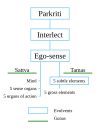
Sri Aurobindo on Prakriti 2 quotes
“The concept of Prakriti and Maya fail to explain the Bliss aspect of the Divine.”
What Sri Aurobindo Said About Others
Discover personal opinions Sri Aurobindo shared regarding contemporaries.
Sri Aurobindo on Gandhi 4 quotes
“When Gandhi's movement was started, I said that this movement would lead either to a fiasco or to a great confusion. And I see no reason to change my opinion. Only I would like to add that it has led to both.”

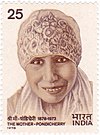
Sri Aurobindo on Mirra Alfassa 3 quotes
“… a means by which the sadhak might receive something from the Mother by an interchange in the material consciousness.”
Sri Aurobindo on Shakti 2 quotes
“You aim at a result and your efforts subserve one that is different or contrary. It is Shakti that has gone forth and entered into the people.”

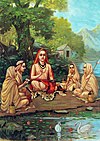
Sri Aurobindo on Adi Shankara 2 quotes
“I find that Shankara had grasped much of Vedantic truth, but that much was dark to him. I am bound to admit what he realised; I am not bound to exclude what he failed to realise.”
Sri Aurobindo on Sāyaṇa 2 quotes
“Nevertheless, if Sayana’s work has been a key turned with double lock on the inner sense of the Veda, it is yet indispensable for opening the antechambers of Vedic learning. All the vast labour of European erudition has not been able to replace its utility. At every step we are obliged to differ from it, but at every step we are obliged to use it. It is a necessary springing-board, or a stair that we have to use for entrance, though we must leave it behind if we wish to pass forwards into the penetralia.”

Sri Aurobindo on Sardar Vallabhbhai Patel
Sri Aurobindo on Adam
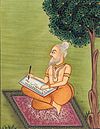
Sri Aurobindo on Valmiki
“Valmiki, Vyasa and Kalidasa are the Indian equivalents of Homer, Dante and Shakespeare. The story of Rama, the ideal son and ruler, Sita, the ideal wife, Bharata and Lakshmana, the ideal brothers and Hanuman, the ideal devotee, has been so beautifully stated in the epic poem of Ramayana that even in the remotest village of India, even the most illiterate man, woman or child is familiar with the characters and situations in the story. The credit for this goes to the poetic and dramatic genius of Valmiki.”
Sri Aurobindo on Swami Vivekananda
“Vivekananda was a soul of puissance if ever there was one, a very lion among men, but the definite work he has left behind is quite incommensurate with our impression of his creative might and energy. We perceive his influence still working gigantically, we know not well how, we know not well where, in something that is not yet formed, something leonine, grand, intuitive, upheaving that has entered the soul of India and we say, "Behold, Vivekananda still lives in the soul of his Mother and in the souls of her children."”

Sri Aurobindo on Russians
“The Russians are a queer mixture of strength and weakness. They have got a passion in their intellect, say, a passionate intellect. They have a distracted and restless emotional being, but there is something behind it which is very fine and psychic, though their soul is not very healthy. And therefore I am not right in saying that Gandhi is a Russian Christian, because he is so very dry. He has got the intellectual passion and a great moral will-force, but he is more dry than the Russians. The gospel of suffering that he is preaching has its root in Russia as nowhere else in Europe... other Christian nations don't believe in it. At the most they have it in the mind, but the Russians have got it in their very blood. They commit a mistake in preaching the gospel of suffering, but we also commit in India a mistake in preaching the idea of vairagya [disgust with the world].”

Sri Aurobindo on Bal Gangadhar Tilak
“The Congress movement was for a long time purely occidental in its mind, character, and methods, confined to the English-educated few, founded on the political rights and interests of the people read in the light of English history and European ideals, but with no roots either in the past of the country or in the inner spirit of the nation. ... To bring in the mass of the people, to find the greatness of the future on the greatness of the past, to infuse Indian politics with Indian religious fervor and spirituality are the indispensable conditions for a great and powerful political awakening in India. Others, writers, thinkers, spiritual leaders, had seen this truth. Mr. Tilak was the first to bring it into the actual field of practical politics. ... There are always two classes of political mind: one is preoccupied with details for their own sake, revels in the petty points of the moment and puts away into the background the great principles and the great necessities, the other sees rather these first and always and details only with them. The one type moves in a routine circle that may or may not have an issue; it cannot see the forest for the trees and it is only by an accident that it stumbles, if at all, on the way out. The other type takes a mountain-top view of the goal and all the directions and keeps that in its mental compass through all the deflections, retardations and tortuosities which the character of the intervening country may compel it to accept; but these it abridges as much as possible. The former class arrogates the name of a statesman in their day; it is to the latter that posterity concedes it and sees in them the true leaders of great movements. Mr. Tilak, like all men of pre-eminent political genius, belongs to this second and greater order of mind.”

Quotes About Sri Aurobindo
Gain deeper perspective through quotes about Sri Aurobindo from others.
Sir Edward Baker on Sri Aurobindo
“There is certainly nothing in Arabinda Ghose's past record which would justify exceptional tenderness to him. On the contrary, though he escaped conviction on the actual charge of conspiracy in the Alipore case, yet it is beyond doubt that his influence has been pernicious in the extreme. He is not a mere blind and unreasoning tool, but an active generator of revolutionary sentiment. He is imbued with a semi-religious fanaticism which is a powerful factor in attracting adherents to his cause: and I attribute the spread of seditious doctrines to him personally in a greater degree than to any other single individual in Bengal, or possibly in India.”
Speech by C.R. Das in defence of Aurobindo Ghosh in the Maincktala Bomb Case. The judgement was issued in 1909. Quoted by Dr. Nitish Sengupta in his “History of the Bengali-speaking People.” on Sri Aurobindo
“I appeal to you, therefore, that a man like this stands not only before the bar of this court, but stands before the bar of the high court of History… Long after this controversy is hushed in silence, long after this turmoil and this agitation ceases, long after he is dead and gone, he will be looked upon as the poet of patriotism, as the prophet of nationalism and the lover of humanity. Long after he is dead and gone his words will be echoed and re-echoed not only in India but across distant seas and lands.”
Mahatma Gandhi on Sri Aurobindo

Sita Ram Goel on Sri Aurobindo
“He shot like a meteor across the political sky, and soon retired into a self-chosen seclusion in search of new visions and victories. But the trail he blazed in the realm of India’s spirituality and culture yet holds the promise of a still more dazzling dawn.Sri Aurobindo confirmed and completed the ideological work undertaken by his predecessors - Maharshi Dayananda, Bankim Chandra and Swami Vivekananda. The National Vision now became a vision which had fully awakened to Sanãtana Dharma in all its dimensions. It was the ancient Vedic Vision at its highest and best. Sri Aurobindo’s insights into India’s inheritance - spiritual, philosophical, cultural, artistic, social, and political - went very far in restoring our people’s legitimate pride in their great past. He was very soon hailed as the Prophet of Indian Nationalism.”

Rabindranath Tagore on Sri Aurobindo
“I felt the utterance of the ancient Hindu Rishis spoke from him of that equanimity which gives the human Soul its freedom of entrance into the All. I said to him, "You have the word and we are waiting to accept it from you. India will speak through your voice to the world, Hearken to me … O Aurobindo, accept the salutations from Rabindranath."”

Review of on Sri Aurobindo
“Of all modern Indian writers Aurobindo — successively poet, critic, scholar, thinker, nationalist, humanist — is the most significant and perhaps the most interesting … In fact, he is a new type of thinker, one who combines in his vision the alacrity of the West with the illumination of the East. To study his writings is to enlarge the boundaries of one's knowledge … He is blessed with a keen intuition. He knows that a man may be right and not wise. He treats each word of his as though it were a drop of elixir. In all this he is unique — at least in modern India. … a yogi who writes as though he were standing among the stars, with the constellations for his companions.”
About Sri Aurobindo
Sri Aurobindo born Aravinda Akroyd Ghose (15 August 1872 – 5 December 1950) was an Indian nationalist, scholar, poet, mystic, philosopher, yogi and guru, who developed concepts of human progress and spiritual evolution. With the help of his spiritual collaborator, Mirra Alfassa, he founded the Sri Aurobindo Ashram.