Link Copied!
Simone Weil Quotes (1909-1943)
Philosopher, Mathematician















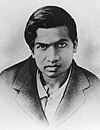
































About Simone Weil
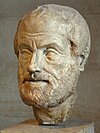
Simone Adolphine Weil (3 February 1909 – 24 August 1943) was a French social and religious philosopher, and Christian mystic. Politically active, during the Spanish Civil War she joined the Anarchist military unit known as the Durruti Column, and took part in the French Resistance during World War II. She was the sister of mathematician André Weil, with whom she shared an interest in ancient Greek and Indian thought.
Best Simone Weil Quotes
Shortest
Earliest
Explore our curated collection of the most famous and impactful Simone Weil quotes.
“Conformity is an imitation of grace.”
“Love is not consolation, it is light.”

“It is not religion but revolution which is the opium of the people.”

“Attention is the rarest and purest form of generosity.”

“There are two atheisms of which one is a purification of the notion of God.”
“I also am other than what I imagine myself to be. To know this is forgiveness.”
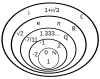
“"Science affirms that ..." Science is voiceless; it is the scientists who talk.”

“The simultaneous existence of opposite virtues in the soul — like pincers to catch hold of God.”
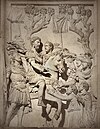
“Alexander is to a peasant proprietor what Don Juan is to a happily married husband.”

“The eulogies of my intelligence are positively intended to evade the question "Is what she says true?"”


“Art is the symbol of the two noblest human efforts: to construct and to refrain from destruction.”

“The most important part of education — to teach the meaning of to know (in the scientific sense).”

“L’action est l’aiguille indicatrice de la balance. Il ne faut pas toucher à l’aiguille, mais aux poids.”
“Stars and blossoming fruit-trees: utter permanence and extreme fragility give an equal sense of eternity.”

“An imaginary perfection is automatically at the same level as I who imagine it — neither higher nor lower.”
Simone Weil Quotes by Topic
Find exactly what you are looking for by browsing this categorized list of Simone Weil quotes by topic.
Simone Weil on Christian atheism 7 quotes
“There are two atheisms of which one is a purification of the notion of God.”

Simone Weil on Atheism 6 quotes
“There are two atheisms of which one is a purification of the notion of God.”

Simone Weil on Intelligence 5 quotes
“The eulogies of my intelligence are positively intended to evade the question “Is what she says true?””
Simone Weil on God 4 quotes
“There are two atheisms of which one is a purification of the notion of God.”

Simone Weil on Respect 4 quotes
“Only he who has measured the dominion of force, and knows how not to respect it, is capable of love and justice.”
Simone Weil on Acceptance 4 quotes
“Liberty is the power of choice within the latitude left between the direct constraint of natural forces and the authority accepted as legitimate. The latitude should be sufficiently wide for liberty to be more than a fiction, but it should include only what is innocent and should never be wide enough to permit certain kinds of crime.”
Simone Weil on Idolatry 3 quotes
“The Hebrews took for their idol, not something made of metal or wood, but a race, a nation, something just as earthly. Their religion is essentially inseparable from such idolatry, because of the notion of the "chosen people."”
Simone Weil on Consolation 2 quotes
“Love is not consolation, it is light.”
Simone Weil on Essence 2 quotes
View all 2 quotes on Essence →Simone Weil on Property 2 quotes
“Alexander is to a peasant proprietor what Don Juan is to a happily married husband.”

Simone Weil on Symbols 2 quotes
“Art is the symbol of the two noblest human efforts: to construct and to refrain from destruction.”

What Simone Weil Said About Others
Discover personal opinions Simone Weil shared regarding contemporaries.
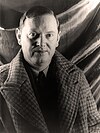
Simone Weil on Evelyn Waugh
“Art is the symbol of the two noblest human efforts: to construct and to refrain from destruction.”
Simone Weil on René Descartes
“The first thing that we know about ourselves is our imperfection. This is what Descartes meant when he said: 'I know God before I know myself.' The only mark of God in us is that we feel that we are not God.”

Simone Weil on Karl Marx
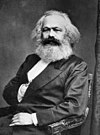
“Marxism is undoubtedly a religion, in the lowest sense of the word. Like every inferior form of religious life, it has been continuously used, to borrow the apt phrase of Marx himself, as an opiate for the people.”
Simone Weil on Joseph Stalin
“The prospects of revolution seem therefore quite restriced. For can a revolution avoid war? It is, however, on this feeble chance that we must stake everything or abandon all hope. An advanced country will not encounter, in the case of revolution, the difficulties which in backward Russia served as a base for the barbarous regime of Stalin. But a war of any scope will give rise to others as formidable.”

Quotes About Simone Weil
Gain deeper perspective through quotes about Simone Weil from others.
Unnamed on Simone Weil
J. Edgar Bauer on Simone Weil 3 quotes
“In her relatively short life, Simone Weil … created a body of work whose intellectual scope and acuity are remindful of religious thinkers such as Blaise Pascal or Søren Kierkegaard. Since no book by Simone Weil appeared in her lifetime and only a few of her writings were intended for publication, a noteworthy reception of her ideas took place only when selections of her notes, diaries and fragments began to be published posthumously after World War II.”
Simone Weil, I maintain this now, is the only great spirit of our times and I hope that those who realize this have enough modesty to not try to appropriate her overwhelming witnessing. on Simone Weil
“Simone Weil, je le sais encore maintenant, est le seul grand esprit de notre temps et je souhaite que ceux qui le reconnaissent en reçoivent assez de modestie pour ne pas essayer d’annexer ce témoignage bouleversant. Pour moi, je serais comblé si l’on pouvait dire qu’à ma place, et avec les faibles moyens don’t je dispose, j’ai servi à faire connaitre et à répandre son oeuvre dont on n’a pas encore mesuré tout le retentissement.”
Robert Coles on Simone Weil
“In the last years of her life she worried that all beliefs, even religious ones, risk idolatry. Her insistence upon "a convention ratified by God" is another example of the thoroughly personal knowledge of God that she sought, and one gathers, believed herself to have attained. She seemed persuaded that under the auspices of the Church such personal knowledge simply does not come about; on the contrary, parishioners turn idolatrous and mistake a ritual, a habit, and alas, a social custom (to go to church on Sunday, say) for such a convention.”
Joseph K. Cosgrove on Simone Weil 2 quotes
“Weil’s critique of modern science consists of two parts, the first directed at classical (Newtonian) science, the latter at contemporary science, especially twentieth-century relativity and quantum mechanics. In each, Weil detects a species of thoughtlessness or failure of that prayerful attention that marks all genuine study and intellectual accomplishment.”
T. S. Eliot on Simone Weil 3 quotes
“The reader of her work finds himself confronted by a difficult, violent and complex personality; and the assistance of those who have the advantage of long discussions or correspondence with her, especially those who are under the peculiar conditions of the last five years her life, will be a permanent value in the future. … After reading Waiting on God and the present volume I saw that I must try to understand the personality of the author and that the reading and re-reading of all her work was necessary for this slow process of understanding. In trying to understand her, we must not be distracted … by considering how far, and at what points we agree or disagree. We must simply expose ourselves to the personality of a woman of genius, of a kind of genius akin to that of the saints. … I cannot conceive of anybody's agreeing with all of her views, or of not disagreeing violently with some of them. But agreement and rejection are secondary: what matters is to make contact with a great soul. Simone Weil was one who might have become a saint. Like some who have achieved this state, she had greater obstacles to overcome, as well as greater strength for overcoming them, then the rest of us. A potential saint can be a very difficult person. I suspect that Simone Weil could be at times insupportable. One is struck, here and there, by contrast between an almost superhuman humility and what appears to be an almost outrageous arrogance.”

Flannery O'Connor on Simone Weil 2 quotes
“Her life is almost a perfect blending of the Comic and the Terrible, which two things may be opposite sides of the same coin. In my own experience, everything funny I have ever written is more terrible than it is funny, or only funny because it is terrible, or only terrible because it is funny. Well Simone Weil's is the most comical life I have ever read about, and the most truly tragic and terrible.”
Elena Poniatowska on Simone Weil
“I have read everything by Simone Weil, who was an extraordinary woman gifted with immense empathy. But I think she might have profited from some better advice. She was not physically strong and yet, in order to directly experience the struggle of working people, she undertook factory work that was too much for her. And she also fought in the Spanish Civil War and, being somewhat clumsy, stepped into a pail of boiling oil, was severely burned, and went to Portugal to recuperate. Later, she would eat only the minimal portion of food she believed was available to people in occupied France—a few potatoes perhaps. She had been diagnosed with tuberculosis, and this may well have contributed to her death. (Then, as you see her, she is more of an inspiration than a model.) EP: Yes, an inspiration. She could not have been a model for me because I am neither a genius nor a mystic and, like Leonora, I had children I loved and for whom I was responsible, so that even if I had discovered a vocation of this sort in myself, I could not have lived such an extreme life.”

About Simone Weil
Simone Adolphine Weil (3 February 1909 – 24 August 1943) was a French social and religious philosopher, and Christian mystic. Politically active, during the Spanish Civil War she joined the Anarchist military unit known as the Durruti Column, and took part in the French Resistance during World War II. She was the sister of mathematician André Weil, with whom she shared an interest in ancient Greek and Indian thought.