Robert Service on Thomas More
← Back to Robert Service Profile
“More and Campanella advocated through indoctrination of their people. This was reversion to the attitude of the Greek philosopher Plato who, in the fourth century BC, called for philosopher-kings to introduce a reign of universal virtue. Neither More nor Campanella prospered in temporal affairs. Having faithfully served his master Henry VIII, More refused to accept the termination of the Pope’s supremacy over the English Church. He died on the executioner’s block in 1535”
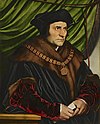
“Christ’s message was spiritual in nature and omitted to indicate the institutional means to achieve its ultimate aim. Certain thinkers in later centuries suggested that state power could be used to bring about equal access to food, shelter and reward. Two influential works were Thomas More’s Utopia in 1516 and Tomaso Campanella’s City of the Sun in 1601. More could not imagine that the common man, still less the common woman, might independently attain the perfection of society without order from above.”