Robert Service on Cultural Revolution
← Back to Robert Service Profile
“The state reverted to capital punishment in the Cultural Revolution. Red Guards sometimes put victims on trial in the street after leading them in chains through the city. In extreme cases a defendant would be forced to confess before kneeling down and receiving a bullet in the back of the head. It was widespread practice for the families of the deceased to be sent a bill for the price of the bullet. Perhaps a million people died by execution or by their own hand. These gruesome rituals had a purpose. They were designed to make the maximum number of people complicit in the butchery and compliant with the policies of the authorities. Mao had no intention of doing things on the sly as Stalin had usually done. He wanted a society of active participants in the terror. According to one estimate, up to a million of the victims of the Red Guards were thrown into the prisons, the laogai or the reform-by-labour centres; but the true number may have been much higher. Moreover, the families of victims were discriminated against. Even people who were neither killed nor arrested could suffer in various ways. Some were dispatched for re-education by means of menial labour. Others were simply demoted. Psychological trauma was a pervasive phenomenon across the country.”
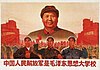
“The communist order which he had established was about to come under attack with his full approval and at his connivance. But he himself was to remain sacrosanct – and the memory of the retaliation after the Hundred Flowers Campaign left no one in any doubt that it would be dangerous to offer the mildest criticism of him. The purpose was to shake up institutions and attitudes throughout the country. Mao and his underlings wanted a complete break with the recent and distant past. Long experience had taught them that Chinese popular beliefs were very tenacious. China’s culture and its impregnation with Confucian philosophy had lasted many centuries, and Maoists were determined to dig it out of the minds of their contemporaries. Poetry, history books and works of art from the Imperial dynasties were to be destroyed. Just as important to Mao was his campaign to sever the enduring allegiances of people to their extended family, their networks of social deference and their village mentality. The informal linkages between patron and client were also to be smashed. While expressing a willingness for Red Guards to act on their own initiative, the ruling group around Mao were pushing activity in this planned direction. Students were encouraged to denounce their bosses, professors and even parents. Like every communist leadership elsewhere, Mao and his close supporters had discovered that their instant success in establishing a regime was not matched by a rapid transformation in attitudes. They had not been able to make institutions work entirely to instructions. The party had been infiltrated with careerists, and many older communist officials were failing to display the desired cooperation. Mao wanted to replace – or at least to examine the activity of – postholders at every level. This involved action at the top as Liu Shaoqi and Deng Xiaoping were pushed aside and Lin Biao gained preference. The ‘masses’ were to take hold of their own revolution.”