Link Copied!
Robert Blatchford Quotes (1851-1943)
Author, King
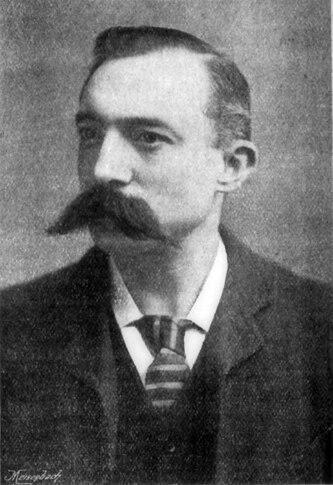


About Robert Blatchford
Robert Blatchford (March 17 1851 – December 17 1943) was a socialist campaigner, journalist and author in the United Kingdom. He was a prominent atheist and opponent of eugenics.
Best Robert Blatchford Quotes
Shortest
Earliest
Explore our curated collection of the most famous and impactful Robert Blatchford quotes.
“I will venture to claim that I have been an honest writer and a loyal Englishman. England has many worthier sons; but few who more dearly love her.”
“To say that we could not work without capital is as true as to say that we could not mow without a scythe. To say that we could not work without a capitalist is as false as to say that we could not mow a meadow unless all the scythes belonged to one man. Nay, it is as false as to say that we could not mow unless all the scythes belonged to one man and he took a third of the harvest as payment for the loan of them.”
“I have never been converted from Socialism. But careful observation of the facts of for the last twelve years or so has convinced me that Socialism will not work, and a study of Mr. Ford's methods has provided what seems to me as good a substitute as we may hope in this imperfect world. Socialism as I knew it in past years was an excellent, almost a perfect, theory... But I have had to take towards Socialism the same regretful attitude which so many earnest Christians have had to adopt towards Christianity. The golden rule will not work in international politics, because the nations are not good enough to live up to it. Real Socialism strongly resembles real Christianity. It is a counsel of perfection and cannot be adopted and adhered to by our imperfect humanity. There is nothing the matter with Socialism, but the people are neither wise enough nor good enough to make it a success. Socialism implies the self-abnegation of the individual for the good of the community.”

“Having explained what my mother was like and what her child was like, it will not be difficult to understand that as a grown-up man, with a wife and children of my own, the thought of a hungry or unhappy child or ill-used woman infuriated me. I saw and felt what was going on all around me, and I searched and prayed for a remedy. And while I was searching someone sent me a pamphlet on Socialism and I jumped at it. It answered my questions. It was what I sought. It meant human brotherhood and co-operation. It meant the collective action of the Army. It meant esprit de corps, a larger, deeper, nobler esprit de corps. I snatched Socialism to my bosom. I went out into the highways and the by-ways and raved about it. I became notorious. I was no longer respectable. One of my friends told another of my friends that I was an ensanguined crackpot. Ah, well. I am older now, and wiser—perhaps. But it was a great adventure. After all, I was only acting up to the precepts of the Litany, and I don't regret it.”
“Now, remembering Germany's gospel of force and frightfulness, her plea that necessity knows no law, her carefully organized war and peace machines, her enormous and costly system of espionage and intrigue, her immense armaments, her avowed intention to conquer the world, her record of treacherous diplomacy, her hatred of Russia and Britain and France, her steady persistence on the Bagdad Railway, her secret alliances with Turkey and Bulgaria, her building of her Fleet, her expansion of her own and the Austrian army, her expenditure on Zeppelins and poison gas and flame throwers, her secret siege artillery, her pushing of strategic railways to the Belgian border, her fortification of Flushing, and her purchases of gold; and remembering her three sudden attacks on Denmark, and Austria, and France; and remembering her contempt for "scraps of paper," and her contempt for the law of nations; and remembering her savagery and lawlessness on land and sea; and remembering the Kaiser's speeches and the thousands of books and articles abusing Britain and France; and remembering all that Germany hungered for and hoped to gain; and remembering that Russia, and France and Britain coveted nothing, had threatened nobody, and were unready and unwilling for war, what conclusion can we come to as to which nation is to blame for the agony and ruin which have come upon Europe since the end of July, 1914?
Who caused the war? Who threatened war, who preached war, who stood to gain by war, who had been for forty years preparing for war? Germany.”
Who caused the war? Who threatened war, who preached war, who stood to gain by war, who had been for forty years preparing for war? Germany.”

“I have always been a Tory Democrat... You remember that from the first the Clarion crowd and the Hardie crowd were out of harmony. It was a repetition of the old hostility between the Roundheads and Cavaliers. The Labour Leader people were Puritans; narrow, bigotted, puffed up with sour cant. They were nonconformist, self-righteous ascetics, out for the class war and the dictation by the proletariat. We loved the humour and colour of the old English tradition... I loathe the "top-hatted, frock-coated magnolia-scented" snobocracy as much as you do; but I cannot away with the Keir Hardies and Arthur Hendersons and Ramsay MacDonalds and Bernard Shaws and Maxtons. Not long ago you told me in a letter of some trade union delegates who were smoking cigars and drinking whisky at the House of Commons at the expense of their unions. You liked them not. Nor do I like the Trade Union bigots who have cheated J. H. Thomas of his pension... I am glad the Labour Party is defeated because I believe they would have disrupted the British Empire. I dreaded their childish cosmopolitanism; their foolish faith that we could abolish crime by reducing the police force. All the other nations are out for their own ends. American enthusiasm for Naval Disarmament is not dictated by a love of peace. It is an expression of naval rivalry. All the nations hated our naval supremacy. Do the Americans love us? Do the French love us? Is France, America, Italy, devoted to an unselfish and human peace? Can we dispel the bellicose sentiments of Russia and China and Japan by sending an old pantaloon to talk platitudes at Geneva, or by disbanding the Horse Guards and scrapping a few submarines? ... The England of my affection and devotion is not a country nor a people: it is a tradition, the finest tradition the world has ever produced. The Labour Party do not subscribe to that tradition; do not know it; could not feel it. And if that tradition is to survive, the policy of scuttle and surrender must be abandoned. You agree with all this I feel sure. You always upheld the Pax Britannica.”
What Robert Blatchford Said About Others
Discover personal opinions Robert Blatchford shared regarding contemporaries.
Robert Blatchford on David Lloyd George
“I regarded the Rt. Hon. Gentleman at that time [1910] as an unscrupulous political charlatan and I have not at any time since seen cause to alter my opinion.”

Robert Blatchford on Henry Temple, 3rd Viscount Palmerston
“In 1864, when Austria and Prussia attacked Denmark, Britain remained neutral. This was due to Queen Victoria, who overruled Lord Palmerston, although that sharp-sighted statesman pointed out that Prussia wanted Kiel as a naval base. Thus we gave Germany her Kiel Canal.”
Robert Blatchford on Thomas Carlyle
“One book especially, given to me by a sergeant of ours, had a strong influence on me. This was Carlyle's Heroes and Hero Worship. I read that over and over and then bought a cheap copy of Sartor Resartus. I remember one evening, after reading the famous meditation on the sleeping city, I threw the book across the room. I felt I should never be able to write like that.”

Quotes About Robert Blatchford
Gain deeper perspective through quotes about Robert Blatchford from others.
G. K. Chesterton on Robert Blatchford
“Very few intellectual swords have left such a mark on our time, have cut so deep or remained so clean... His case for Socialism, as far as it goes, is so clear and simple that anyone would understand it, when it was put properly; his genius was that he could put it properly ... his triumphs were triumphs of strong style, native pathos, and picturesque metaphor; his very lucidity was a generous sympathy with simple minds... For the rest, he has triumphed by being honest and by not being afraid.”

Walter Citrine on Robert Blatchford
“I started on Britain for the British by Robert Blatchford, of whom I had heard only faintly up to that time... From its title I expected Britain for the British to be directed against foreigners in one way or another but to my surprise I found it a cogent and reasoned argument for Socialism. It was written with a clearness and bite which were unusual.”
Eugene V. Debs on Robert Blatchford
“In giving to the world "Merrie England," Robert Blatchford has rendered a service of inestimable value to humanity. It has been read, and is being read and will continue to be read by millions. No book has done so much to convert the masses to Socialism.”
Haldane MacFall on Robert Blatchford
“Blatchford's chief charm as a writer is that he wins into our affections... Blatchford in all he writes is impelled always by a great human kindness and love of man... Incapable of a dishonesty, intellectual or moral, loving the people with a great love, he never hesitates to whip its follies or to point out its weaknesses. Blatchford cannot be bought...the sad part of his splendid achievement for the good of man, the part of it that touches well-nigh the hem of the tragic, is that his broad humanity should have had to take up the sword—that this fervent lover of freedom and singer of the glory of peace should have had to put on the armour of the crusader and call civilization to battle.”
George Bernard Shaw on Robert Blatchford
“There are few men who can write as Nunquam does, with conscience and strong feeling; and yet without malice. Above all, he has that power of getting at other people's point of view which enables him, when he is not writing persuasives to Socialism, to follow the trade of Shakespeare and Dickens.”


About Robert Blatchford
Robert Blatchford (March 17 1851 – December 17 1943) was a socialist campaigner, journalist and author in the United Kingdom. He was a prominent atheist and opponent of eugenics.