Link Copied!
Richard Strauss Quotes (1864-1949)
Artist, Composer

About Richard Strauss
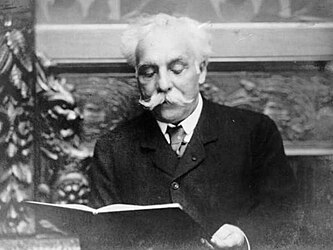
Richard Strauss (June 11, 1864 – September 8, 1949) was a German (Bavarian) composer of classical music and conductor. His music has always been popular: both in the concert hall and on recordings. He is perhaps best known nowadays for his Operas, of which Salome, Elektra, Der Rosenkavalier, Ariadne auf Naxos are the most frequently performed. He was also a composer of symphonic works such as Thus Spake Zarathustra and A Hero's Life. He wrote many songs for solo voice with piano or orchestra, including Four Last Songs, Tomorrow! and Rest, my soul!. He was awarded Honorary Doctorates at the Universities of Heidelberg (1903) and Oxford (1913) and awarded the French Ordre national de la Légion d'honneur Croix de Chevalier (1907) and Officier (1913). He conducted throughout his adult life, and made many recordings of his own compositions from 1918 to 1947. His last public concert was on 19 October 1947 at the Royal Albert Hall in London, where he conducted the Philharmonia orchestra in a program of his works. His music has inspired many composers, including Béla Bartók, Edward Elgar, Benjamin Britten and also Hollywood composers such as Max Steiner and John Williams. His best known music is the opening to Thus Spake Zarathustra, which became one of best known pieces of film music when Stanley Kubrick used it in his film 2001: A Space Odyssey.
Best Richard Strauss Quotes
Shortest
Earliest
Explore our curated collection of the most famous and impactful Richard Strauss quotes.
“Long live the politico-satrical-parodistic opera!”

“It is better to conduct with the ear instead of with the arm: the rest follows automatically.”
“Conducting is, after all, a difficult business – one has to be seventy years of age to realise this fully!”

“It is clear to me that the German nation will achieve new creative energy only by liberating itself from Christianity”

“As for the Rosenkavalier waltzes...how could I have done those without a thought of the laughing genius of Vienna?”
“Declarations about war and politics are not fitting for an artist, who must give his attention to his creations and his works.”

“In my opinion, Gustav Mahler's work is one of the most important and interesting products in the history of modern creative arts.”
“I know what I want, and I know what I meant when I wrote this. After all, I may not be a first-rate composer, but I am a first-class second-rate composer.”
“Strauss told me about his new ballet, which he wrote in the summer. It’s called ‘Schlagobers’ (whipped cream) and he said, jokingly: ‘Oh yes, when one gets old one has ideas like that.’”
“I hope, most revered Maestro, that these metronome markings, in my opinion wholly unneeded by you, are specific enough. Where they do not fit with your conception, I implore you urgently just to ignore them.”
“Of all god-gifted dispensers of joy, Johann Strauss is to me the most endearing. I willingly admit to having sometimes conducted the Perpetuum Mobile with far more pleasure than many a four movement symphony.”
“The melodic idea which suddenly falls upon me out of the blue appears in the imagination immediately, unconsciously, uninfluenced by reason. It is the greatest gift of the divinity and cannot be compared with anything else.”
“The left hand has nothing to do with conducting. Its proper place is the waistcoat pocket from which it should only emerge to restrain or make some minor gesture for which in any case a scarcely perceptible glance should suffice.”
What Richard Strauss Said About Others
Discover personal opinions Richard Strauss shared regarding contemporaries.
Quotes About Richard Strauss
Gain deeper perspective through quotes about Richard Strauss from others.
Arnold Schoenberg on Richard Strauss 2 quotes
“I was never revolutionary. The only revolutionary in our time was Strauss!”

Source on Richard Strauss 15 quotes
“I would like to admit all Strauss operas to whichever purgatory punishes triumphant banality. Their musical substance is cheap and poor; it cannot interest a musician today.”
Alma Mahler on Richard Strauss
“Richard Strauss is a brilliant pig - I can find no other word for it. The whole thing is larded with illogical, unnecessary and hideous discord.”
Ernest Newman on Richard Strauss
“No other composer equals Strauss in his power of writing long stretches of music that interests us in and for itself, at the same time that every line and colour in it seems to express some new trait of the individual who is being sketched.”
Gustav Mahler. The first quote on Richard Strauss
“I labour on with countless rehearsals. He makes do with just a few, and it always sounds right.”
Letter of Gustav Mahler on Richard Strauss 2 quotes
“I simply must tell you of the thrilling impression the work (Salome) made on me when I read through it recently. Every note is spot on! Your vocation is to be dramatist. Through your music you have made me understand for the first time what Wilde's work is about”
Romain Roland on Richard Strauss
“While conducting an orchestra he breaks into a frantic dance which follows the slightest details of his quivering music like clear water into which a stone has just fallen.”
Romain Rolland on Richard Strauss

Rollo Myers on Richard Strauss
“He is one of those musicians about whom it is difficult to write impartially or objectively, as his music is likely to arouse antipathy or admiration according to the temperamental outlook of the individual critic.”
Claude Debussy on Richard Strauss
“Richard Strauss has neither a foolish wild curly mane, nor the movements of a madman. He is tall and in his free, resolute attitude he looks like one of those great explorers who, with a smile on their faces, cross the territory of savage peoples. Doesn't one need something of this attitude in order to be able to shake the well-mannered public?”
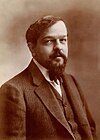
About Richard Strauss
Richard Strauss (June 11, 1864 – September 8, 1949) was a German (Bavarian) composer of classical music and conductor. His music has always been popular: both in the concert hall and on recordings. He is perhaps best known nowadays for his Operas, of which Salome, Elektra, Der Rosenkavalier, Ariadne auf Naxos are the most frequently performed. He was also a composer of symphonic works such as Thus Spake Zarathustra and A Hero's Life. He wrote many songs for solo voice with piano or orchestra, including Four Last Songs, Tomorrow! and Rest, my soul!. He was awarded Honorary Doctorates at the Universities of Heidelberg (1903) and Oxford (1913) and awarded the French Ordre national de la Légion d'honneur Croix de Chevalier (1907) and Officier (1913). He conducted throughout his adult life, and made many recordings of his own compositions from 1918 to 1947. His last public concert was on 19 October 1947 at the Royal Albert Hall in London, where he conducted the Philharmonia orchestra in a program of his works. His music has inspired many composers, including Béla Bartók, Edward Elgar, Benjamin Britten and also Hollywood composers such as Max Steiner and John Williams. His best known music is the opening to Thus Spake Zarathustra, which became one of best known pieces of film music when Stanley Kubrick used it in his film 2001: A Space Odyssey.