Link Copied!
Richard Dedekind Quotes (1831-1916)
Mathematician

About Richard Dedekind
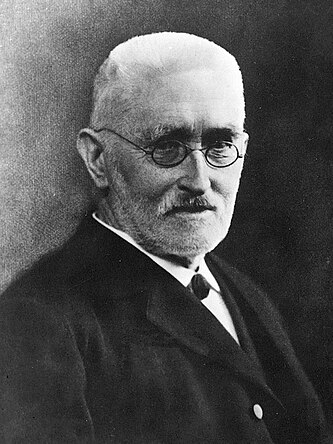
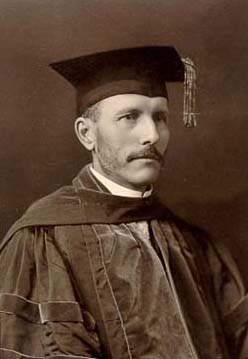
Julius Wilhelm Richard Dedekind (6 October 1831 – 12 February 1916) was a German mathematician who made important contributions to abstract algebra (particularly ring theory), algebraic number theory and the definition of the real numbers.
Best Richard Dedekind Quotes
Shortest
Earliest
Explore our curated collection of the most famous and impactful Richard Dedekind quotes.
“If a, c are two different numbers, there are infinitely many different numbers lying between a, c.”

“What advantage will be gained by even a purely abstract definition of real numbers of a higher type, I am as yet unable to see, conceiving as I do of the domain of real numbers as complete in itself.”

“The way in which the irrational numbers are usually introduced is based directly upon the conception of extensive magnitudes—which itself is nowhere carefully defined—and explains number as the result of measuring such a magnitude by another of the same kind. Instead of this I demand that arithmetic shall be developed out of itself.”
“Just as negative and fractional rational numbers are formed by a new creation, and as the laws of operating with these numbers must and can be reduced to the laws of operating with positive integers, so we must endeavor completely to define irrational numbers by means of the rational numbers alone. The question only remains how to do this.”
“That such comparisons with non-arithmetic notions have furnished the immediate occasion for the extension of the number-concept may, in a general way, be granted (though this was certainly not the case in the introduction of complex numbers); but this surely is no sufficient ground for introducing these foreign notions into arithmetic, the science of numbers.”
“The system R forms a well-arranged domain of one dimension extending to infinity on two opposite sides. What is meant by this is sufficiently indicated by my use of expressions borrowed from geometric ideas; but just for this reason it will be necessary to bring out clearly the corresponding purely arithmetic properties in order to avoid even the appearance as if arithmetic were in need of ideas foreign to it.”
“The above comparison of the domain R of rational numbers with a straight line has led to the recognition of the existence of gaps, of a certain incompleteness or discontinuity of the former, while we ascribe to the straight line completeness, absence of gaps, or continuity. In what then does this continuity consist? Everything must depend on the answer to this question, and only through it shall we obtain a scientific basis for the investigation of all continuous domains.”
“I regard the whole of arithmetic as a necessary, or at least natural, consequence of the simplest arithmetic act, that of counting, and counting itself as nothing else than the successive creation of the infinite series of positive integers in which each individual is defined by the one immediately preceding; the simplest act is the passing from an already-formed individual to the consecutive new one to be formed. The chain of these numbers forms in itself an exceedingly useful instrument for the human mind; it presents an inexhaustible wealth of remarkable laws obtained by the introduction of the four fundamental operations of arithmetic.”
“In the preceding section attention was called to the fact that every point p of the straight line produces a separation of the same into two portions such that every point of one portion lies to the left of every point of the other. I find the essence of continuity in the converse, i.e., in the following principle:
"If all points of the straight line fall into two classes such that every point of the first class lies to the left of every point of the second class, then there exists one and only one point which produces this division of all points into two classes, this severing of the straight line into two portions."
...every one will at once grant the truth of this statement; the majority of my readers will be very much disappointed in learning that by this commonplace remark the secret of continuity is to be revealed.”
“If a is any definite number, then all numbers of the system R fall into two classes, A1 and A2, each of which contains infinitely many individuals; the first class A1 comprises all numbers a1 that are < a, the second class A2 comprises all numbers a2 that are > a; the number a itself may be assigned at pleasure to the first or second class, being respectively the greatest number of the first class or the least of the second. In every case the separation of the system R into the two classes A1, A2 is such that every number of the first class A1 is less than every number of the second class A2.”
“The statement is so frequently made that the differential calculus deals with continuous magnitude, and yet an explanation of this continuity is nowhere given; even the most rigorous expositions of the differential calculus do not base their proofs upon continuity but, with more or less consciousness of the fact, they either appeal to geometric notions or those suggested by geometry, or depend upon theorems which are never established in a purely arithmetic manner. Among these, for example, belongs the above mentioned theorem, and a more careful investigation convinced me that this theorem, or any one equivalent to it, can be regarded in some way as a sufficient basis for infinitesimal analysis. It then only remained to discover its true origin in the elements of arithmetic and thus at the same time to secure a real definition of the essence of continuity. I succeeded Nov. 24, 1858.”
“Addition is the combination of any arbitrary repetitions of the above-mentioned simplest act into a single act; from it in a similar way arises multiplication. While the performance of these two operations is always possible, that of the inverse operations, subtraction and division, proves to be limited. Whatever the immediate occasion may have been, whatever comparisons or analogies with experience, or intuition, may have led thereto; it is certainly true that just this limitation in performing the indirect operations has in each case been the real motive for a new creative act; thus negative and fractional numbers have been created by the human mind; and in the system of all rational numbers there has been gained an instrument of infinitely greater perfection. This system, which I shall denote by R, possesses first of all a completeness and self-containedness which I have designated... as characteristic of a body of numbers [Zahlkőrper] and which consists in this, that the four fundamental operations are always performable with any two individuals in R, i.e., the result is always an individual of R, the single case of division by the number zero being excepted.”
“As professor in the Polytechnic School [autumn of 1858] in Zurich I found myself for the first time obliged to lecture upon the elements of the differential calculus and felt, more keenly than ever before, the lack of a really scientific foundation for arithmetic. In discussing the notion of the approach of a variable magnitude to a fixed limiting value, and especially in proving the theorem that every magnitude which grows continually, but not beyond all limits, must certainly approach a limiting value, I had recourse to geometric evidences. Even now such resort to geometric intuition in a first presentation of the differential calculus, I regard as exceedingly useful, from the didactic standpoint, and indeed indispensable, if one does not wish to lose too much time. But that this form of introduction into the differential calculus can make no claim to being scientific, no one will deny. For myself this feeling of dissatisfaction was so overpowering that I made the fixed resolve to keep meditating on the question till I should find a purely arithmetic and perfectly rigorous foundation for the principles of infinitesimal analysis.”

Richard Dedekind Quotes by Topic
Find exactly what you are looking for by browsing this categorized list of Richard Dedekind quotes by topic.
Richard Dedekind on Number
“In speaking of arithmetic (algebra, analysis) as a part of logic I mean to imply that I consider the number concept entirely independent of the notions or intuitions of space and time, that I consider it an immediate result from the laws of thought. My answer to the problems propounded in... this paper is... briefly this: numbers are free creations of the human mind; they serve as a means of apprehending more easily and more sharply the difference of things. It is only through the purely logical process of building up the science of numbers and by thus acquiring the continuous number-domain that we are prepared accurately to investigate our notions of space and time by bringing them into relation with this number domain created in our mind.”
Quotes About Richard Dedekind
Gain deeper perspective through quotes about Richard Dedekind from others.
Eric Temple Bell on Richard Dedekind
“Although the real theory might have been less useful than the complex in obtaining properties of special functions, its significance for the development of mathematics as a whole has been incomparably greater. It was in the real variable that the necessity for a rigorous theory of the number system of analysis was first recognized. ...the reconstruction of the real number system by Weierstrass in the 1860's and by Dedekind and Cantor in the 1870's led in the last three decades of the nineteenth century, to a profound reconsideration of the nature of all mathematical reasoning. This in turn initiated some of the most searching examinations of all deductive reasoning since the days or Aristotle. Thus the theory of the functions of a real variable since the 1870's has increasingly acquired more than merely a local interest: its problems, solved and unsolved, are significant in fields far distant from technical mathematics.”
Carl B. Boyer on Richard Dedekind
“In discussing the notion of the approach of a variable magnitude to a fixed limiting value, [Dedekind] had recourse, as had Cauchy before him, to the evidence of the geometry of continuous magnitude. ...Dedekind's approach was somewhat different from that of Weierstrass, Méray, Heine, and Cantor in that, instead of considering in what manner the irrationals are to be defined so as to avoid the vicious circle of Cauchy, he asked himself... what is the nature of continuity? ...The philosophy and mathematics of Leibniz had led him to agree with Galileo that continuity was a property concerning conjunctive aggregation, rather than a unity or coincidence of parts. Leibniz had regarded a set as forming a continuum if between any two elements there was always another element of the set. ...Ernst Mach likewise regarded this property of denseness of an assemblage as constituting its continuity, but... rational numbers... possess the property of denseness and yet do not constitute a continuum. Dedekind...found the essence of... continuity, not by a vague hang-togetherness, but in the nature of the division of the line by a point. ...in any division of the points into two classes such that every point of the one is to the left of every point of the other, there is one and only one point which produces this division. This is not true of the ordered system of rational numbers.”
Florian Cajori on Richard Dedekind
“The modern theory of functions of one real variable was first worked out by H. Hankel, Dedekind, G. Cantor, Dini, and Heine, and then carried further, principally, by Weierstrass, Schwarz, Du Bois-Reymond, Thomae, and Darboux. Hankel established the principle of the condensation of singularities; Dedekind and Cantor gave definitions for irrational numbers...”
Tobias Dantzig on Richard Dedekind
“The tacit assumption on which analytic geometry operated was that it was possible to represent the points on a line... by means of numbers. This assumption is... equivalent to the assertion that a perfect correspondence can be established... The great success of analytic geometry... gave this assumption an irresistible pragmatic force. It was essential to include this principle... But how? Under such circumstances mathematics proceeds by fiat. It bridges the chasm between intuition and reason by a convenient postulate. ...The very vagueness of all intuition renders such a substitution... highly acceptable. ... On the one hand there was the logically consistent concept of a real number and its aggregate, the arithmetic continuum; on the other hand, the vague notions of the point and its aggregate, the linear continuum. All that was necessary was to declare the identity of the two... to assert that: It is possible to assign to any point on a line a unique real number, and, conversely, any real number can be represented in a unique manner by a point on a line. This is the famous Dedekind-Cantor axiom.”
Morris Kline on Richard Dedekind
“Dedekind's language in introducing irrational numbers leaves a little to be desired. He introduces the irrational α as corresponding to the cut and defined by the cut. But he is not too clear of where α comes from. He should say that... α is no more than the cut. ...Heinrich Weber told Dedekind this, and in a letter of 1888 Dedekind replied that... α is not the cut itself but something distinct, which corresponds to the cut and brings about the cut. Likewise, while the rational numbers generate cuts, they are not the same as the cuts. He says we have the mental power to create such concepts.”
About Richard Dedekind
Julius Wilhelm Richard Dedekind (6 October 1831 – 12 February 1916) was a German mathematician who made important contributions to abstract algebra (particularly ring theory), algebraic number theory and the definition of the real numbers.