Link Copied!
Rachel Carson Quotes (1907-1964)
Writer




-100px.jpg)






















About Rachel Carson
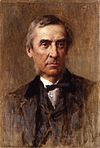
Rachel Louise Carson (27 May 1907 – 14 April 1964) was an American marine biologist, writer, and conservationist whose influential book Silent Spring (1962) and other writings are credited with advancing the global environmental movement. The impact of Carson's works are still felt today as our awareness of environmental contaminants continues to grow.
Best Rachel Carson Quotes
Shortest
Earliest
Explore our curated collection of the most famous and impactful Rachel Carson quotes.
“In our own lifetime we are witnessing a startling alteration of climate.”
“To me, Dr. Albert Schweitzer is the one truly great individuals our modern times have produced.”
“A preoccupation with the wonder and beauty of the earth has strongly influenced the course of my life.”
“I believe that only in that atmosphere of intellectual freedom can we solve the problems before us now.”

“What we are today represents an adjustment achieved over the millions and hundreds of millions of years.”
“Man's attitude toward nature is today critically important, simply because of his new-found power to destroy it.”

“As you listen to the present controversy about pesticides, I recommend that you ask yourself-Who speaks? And Why?”

“In our modern world nothing may be taken for granted-not even the spring songs that herald the return of the birds.”
“Measured against the vast backdrop of geologic time, the whole era of man seems but a moment-but how portentous a moment!”
“Future generations are unlikely to condone our lack of prudent concern for the integrity of the natural world that supports all life.”

“This is an era of specialists, each of whom sees his own problem and is unaware of or intolerant of the larger frame into which it fits.”

“Activities in the nonhuman world also reflect the warming of the Arctic-the changed habits and migrations of many fishes, birds, land mammals, and whales.”
“The most alarming of all man's assaults upon the environment is the contamination of air, earth, rivers, and sea with dangerous and even lethal materials.”
“There are other disturbing factors ... One is the growing interrelations between professional organizations and industry, and between science and industry.”

“The fifteen years that I spent in fishery and wildlife conservation work with the *Government have taken me into certain places where few other women have been.”

“We know how to split the atom, and how to use its energy in peace and war, and so we proceed with preparations to do so, as if acting under some blind compulsion;”
“here the tailoring-the screening of basic truth is done, not to suit a party line-but to accommodate to the short-term gain-to serve the gods of profit and production.”

“It is a sobering fact...that the method of massive chemical control has had only limited success, and also threatens to worsen the very conditions it is intended to curb.”
“Given time-time not in years but in millennia-life adjusts, and a balance has been reached. For time is the essential ingredient; but in the modern world there is no time.”
“I criticize the present methods because they are based on a rather low level of scientific thinking. We are capable of much greater sophistication in our solution of the problem.”
“The battle for a sane policy for controlling unwanted species will be a long and difficult one. The publication of Silent Spring was neither the beginning nor the end of that struggle.”
“Have we fallen into a mesmerized state that makes us accept as inevitable that which is inferior or detrimental, as though having lost the will or the vision to demand that which is good?”
“Above all, we must not be deceived by the enormous stream of propaganda that is issuing from the pesticide manufacturers and from industry-related-although ostensibly independent organizations.”
“Can anyone believe it is possible to lay down such a barrage of poisons on the surface of the earth without making it unfit for all life? They should not be called "insecticides," but "biocides."”
“What does it mean when we see a committee set up to make a supposedly impartial review of a situation, and then discover that the committee is affiliated with the very industry whose profits are at stake?”
“Over increasingly large areas of the United States, spring now comes unheralded by the return of the birds, and the early mornings are strangely silent where once they were filled with the beauty of bird song.”
“Our streams are fouled with an incredible assortment of wastes-domestic, chemical, radioactive, so that our planet, though dominated by seas that envelop three-fourths of its surface, is rapidly becoming a thirsty world.”
“Fishes and plankton, whales and squids, birds and sea turtles, all are linked by unbreakable ties to certain kinds of water—to warm water or cold water, to clear or turbid water, to water rich in phosphates or in silicates.”

“The figure is staggering and its implications are not easily grasped-500 new chemicals to which the bodies of men and animals are required somehow to adapt each year, chemicals totally outside the limits of biologic experience.”
“The aim of science is to discover and illuminate truth. And that, I take it, is the aim of literature, whether biography or history or fiction. It seems to me, then, that there can be no separate literature of science.”

“Now at last, as it has become apparent that the heedless and unrestrained use of chemicals is a greater menace to ourselves than to the targets, the river which is the science of biotic control flows again, fed by new streams of thought.”
“If a child is to keep alive his inborn sense of wonder without any such gift from the fairies, he needs the companionship of at least one adult who can share it, rediscovering with him the joy, excitement and mystery of the world we live in.”

“We have acquired technical skills on a scale undreamed of even a generation ago. We can do dramatic things and we can do them quickly; by the time damaging side effects are apparent it is often too late, or impossible, to reverse our actions.”

“It is a curious situation that the sea, from which life first arose, should now be threatened by the activities of one form of that life. But the sea, though changed in a sinister way, will continue to exist; the threat is rather to life itself.”
“Any concept of biology is not only sterile and profitless, it is distorted and untrue, if it puts its primary focus on unnatural conditions rather than on those vast forces not of man's making that shape and channel the nature and direction of life.”
“This is an age that has produced floods of how-to-do-it books, and it is also an age of how-to-do-it science. It is, in other words, the age of technology, in which if we know how to do something, we do it without pausing to inquire whether we should.”

“There is one quality that characterizes all of us who deal with the sciences of the earth and its life-we are never bored. We can't be. There is always something new to be investigated. Every mystery solved brings us to the threshold of a greater one...”
“After describing in detail the adverse reactions to Silent Spring of the farm bureaus in two Pennsylvania counties, the reporter continued: "No one in either county farm office who was talked to today had read the book, but all disapproved of it heartily."”

“The most hopeful sign is an awakening of strong public interest and concern. People are beginning to ask questions and to insist upon proper answers instead of meekly acquiescing in whatever spraying programs are proposed. This in itself is a wholesome thing.”
“We have been troubled about the world, and had almost lost faith in man; it helps to think about the long history of the earth, and of how life came to be. And when we think in terms of millions of years, we are not so impatient that our own problems be solved tomorrow.”
“Poets often have a perception that gives their words the validity of science. So the English poet Francis Thompson said nearly a century ago, ‘Thou canst not stir a flower/Without troubling of a star.’ But the poet's insight has not become part of general knowledge.”

“All I am certain of is this: that it is quite necessary for me to know that there is someone who is deeply devoted to me as a person, and who also has the capacity and the depth of understanding to share, vicariously, the sometimes crushing burden of creative effort. (1954)”

“And so it is--we always think our problems are peculiar to us, and then finally discover how many others have gone through exactly the same thing. And much as I suffer during the writing itself, I begin to think it is easy for me compared with the agonies she relates! (1955)”
“All of these things raise the question of the communication of scientific knowledge to the public. Is industry becoming a screen through which facts must be filtered, so that the hard, uncomfortable truths are kept back and only the harmless morsels allowed to filter through?”

“There is symbolic as well as actual beauty in the migration of birds, in the ebb and flow of the tides; in the folded bud ready for the spring. There is something infinitely healing in these repeated refrains of nature-the assurance that dawn comes after night, and spring after winter.”
“The truth is that disposal has proceeded far more rapidly than our knowledge justifies. To dispose first and investigate later is an invitation to disaster, for once radioactive elements have been deposited at sea they are irretrievable. The mistakes that are made now are made for all time.”
“So nature does indeed need protection from man; but man, too, needs protection from his own acts, for he is part of the living world. His war against nature is inevitably a war against himself. His heedless and destructive acts enter into the vast cycles of the earth, and in time return to him.”
“To the bird watcher, the suburbanite who derives joy from birds in his garden, the hunter, the fisherman or the explorer of wild regions, anything that destroys the wildlife of an area for even a single year has deprived him of pleasure to which he has a legitimate right. This is a valid point of view.”
“I take courage, however, in the fact that the conservation effort has a broader base than ever before. There is more organized effort; there are many more individuals who are conscious of conservation problems and who are striving, in their own communities or on the national scene, to solve these problems.”
“we live in a time when change comes rapidly-a time when much of that change is, at least for long periods, irrevocable. This is what makes our own task so urgent. It is not often that a generation is challenged, as we today are challenged. For what we fail to do-what we let go by default, can perhaps never be done.”

“The pleasures, the values of contact with the natural world, are not reserved for the scientists. They are available to anyone who will place himself under the influence of a lonely mountain top-or the sea-or the stillness of a forest; or who will stop to think about so small a thing as the mystery of a growing seed.”

“But I am not certain that in spite of all our modern learning and sophistication, we have actually progressed far beyond the self-oriented philosophy of the Victorians. I fear that these ideas still lurk about, showing themselves boldly and openly at times, at oth-ers skulking about in the shadows of the subconscious.”

“We still talk in terms of "conquest"-whether it be of the insect world or of the mysterious world of space. We still have not become mature enough to see ourselves as a very tiny part of a vast and incredible universe, a universe that is distinguished above all else by a mysterious and wonderful unity that we flout at our peril.”

“Only a few centuries have passed since those pre-Columbian days, yet today our whole earth has become only another shore from which we look out across the dark ocean of space, uncertain what we shall find when we sail out among the stars, but like the Norsemen and the Polynesians of old, lured by the very challenge of the unknown.”
“The most alarming of all man's assaults upon the environment is the contamination of air, earth, rivers, and sea with dangerous and even lethal materials. This pollution is for the most part irrecoverable; the chain of evil it initiates not only in the world that must support life but in living tissues is for the most part irreversible.”
“F or the globe as a whole, the ocean is the great regulator, the great stabilizer of temperatures. It has been described as 'a savings bank for solar energy, receiving deposits in seasons of excessive insolation and paying them back in seasons of want. Without the ocean, our world would be visited by unthinkably harsh extremes of temperature.”
“If, having endured much, we have at last asserted our "right to know," and if, knowing, we have concluded that we are being asked to take senseless and frightening risks, then we should no longer accept the counsel of those who tell us that we must fill our world with poisonous chemicals; we should look about and see what other course is open to us.”
“What happens, then, when the public interest is pitted against large commercial interests? Those organizations wishing to plead for protection of the public interest do so under the peril of losing the tax-exempt status so necessary to their existence. The industry wishing to pursue its course without legal restraint is now actually subsidized in its efforts.”

“Through your interest in plant life, your fostering of beauty, your alignment with constructive conservation causes, you promote that onward flow of life that is the essence of our world. This is a time when forces of a very different nature too often prevail-forces careless of life or deliberately destructive of it and of the essential web of living relationships.”
“We see scientific societies acknowledging as "sustaining associates" a dozen or more giants of a related industry. When the scientific organization speaks, whose voice do we hear-that of science? or of the sustaining industry? It might be a less serious situation if this voice were always clearly identified, but the public assumes it is hearing the voice of science.”

“Much of the necessary knowledge is now available but we do not use it. We train ecologists in our universities and even employ them in our governmental agencies but we seldom take their advice. We allow the chemical death rain to fall as though there were no alternative, whereas in fact there are many, and our ingenuity could soon discover many more if given opportunity.”

“There is something deeply impressive about the night sea as one experiences it from a small vessel far from land. When I stood on the afterdeck on those dark nights, on a tiny man-made island of wood and steel, dimly seeing the great shapes of waves that rolled about us, I think I was conscious as never before that ours is a water world, dominated by the immensity of the sea....”

“I would like to say that in Silent Spring I have never asked the reader to take my word. I have given him a very clear indication of my sources. I make it possible for him-indeed I invite him-to go beyond what I report and get the full picture. This is the reason for the 55 pages of references. You cannot do this if you are trying to conceal or distort or to present half truths.”
“In the western world our thinking has for many centuries been dominated by the Jewish-Christian concept of man's relation to nature, in which man is regarded as the master of all the earth's inhabitants. Out of this there easily grew the thought that everything on earth-animate or inanimate, animal, vegetable, or mineral-and indeed the earth itself-had been created expressly for man.”

“The real wealth of the Nation lies in the resources of the earth — soil, water, forests, minerals, and wildlife. To utilize them for present needs while insuring their preservation for future generations requires a delicately balanced and continuing program, based on the most extensive research. Their administration is not properly, and cannot be, a matter of politics.”
“The winds, the sea, and the moving tides are what they are. If there is wonder and beauty and majesty in them, science will discover these qualities. If they are not there, science cannot create them. If there is poetry in my book about the sea, it is not because I deliberately put it there, but because no one could write truthfully about the sea and leave out the poetry.”
“Instead of always trying to impose our will on Nature we should sometimes be quiet and listen to what she has to tell us. If we did so I am sure we would gain a new perspective on our own feverish lives. We might even see the folly and the madness of a world in which half of mankind is busily preparing to destroy the other half and to reduce our whole planet to radioactive ashes in the doing.”
“I am not afraid of being thought a sentimentalist when I stand here tonight and tell you that I believe natural beauty has a necessary place in the spiritual development of any individual or any society. I believe that whenever we destroy beauty, or whenever we substitute something man-made and artificial for a natural feature of the earth, we have retarded some part of man's spiritual growth.”
“To many of us, this sudden silencing of the song of birds, this obliteration of the color and beauty and interest of bird life, is sufficient cause for sharp regret. To those who have never known such rewarding enjoyment of nature, there should yet remain a nagging and insistent question: If this "rain of death" has produced so disastrous an effect on birds, what of other lives, including our own?”
“Man has long talked somewhat arrogantly about the conquest of nature; now he has the power to achieve his boast. It is our misfortune-it may well be our final tragedy-that this power has not been tempered with wisdom, but has been marked by irresponsibility; that there is all too little awareness that man is part of nature, and that the price of conquest may well be the destruction of man himself.”
“Tradition is important in the Government, but fortunately I had conspirators who were willing to help me shatter precedent. But among my male colleagues who had to sign the papers, the thought of one woman on a ship with some fifty men was unthinkable. After much soul searching, it was decided that maybe two women would be all right, so I arranged with a friend, who was also a writer, to go with me.”
“Writing is a lonely occupation at best. Of course there are stimulating and even happy associations with friends and colleagues, but during the actual work of creation the writer cuts himself off from all others and confronts his subject alone. He moves into a realm where he has never been before — perhaps where no one has ever been. It is a lonely place, even a little frightening.”
“I like to define biology as the history of the earth and all its life — past, present, and future. To understand biology is to understand that all life is linked to the earth from which it came; it is to understand that the stream of life, flowing out of the dim past into the uncertain future, is in reality a unified force, though composed of an infinite number and variety of separate lives.”
“For we all are united in a common cause. It is a proud cause, which we may serve secure in the knowledge that the earth will be better for our efforts. It is a cause that has no end: there is no point at which we shall say, "Our work is finished." We build on the achievements of those who have gone before us; let us, in turn, build strong foundations for those who will take up the work when we must lay it down.”
“Those who dwell, as scientists or laymen, among the beauties and mysteries of the earth are never alone or weary of life. Whatever the vexations or concerns of their personal lives, their thoughts can find paths that lead to inner contentment and to renewed excitement in living. Those who contemplate the beauty of the earth find reserves of strength that will endure as long as life lasts.”
“A penetrating observer of social problems has pointed out recently that whereas wealthy families once were the chief benefactors of the universities, now industry has taken over this role. Support of education is something no one quarrels with-but this need not blind us to the fact that research supported by pesticide manufacturers is not likely to be directed at discovering facts indicating unfavorable effects of pesticides.”
“I should also like to see legislation, possibly at the state level, restricting the sale and use of pesticides at least to those capable of understanding the hazards and of following directions. To me it is shocking that these chemicals can be bought and applied by illiterate and even by mentally deficient persons. We place much more stringent restrictions on the sale of drugs which at least are not sprayed from powerful machines!”
“Over the decades and the centuries, the scenes and the actors change. Yet the central theme remains-the greed and the shortsightedness of the few who would deprive the many of their rightful heritage. It is a theme supported by the false assurances that whatever is financially profitable is good for the nation and for mankind. These assurances were offered in the days of the timber barons and the land grabbers; they are heard today.”
“I shall have to express a very deep conviction: that until we have courage to recognize cruelty for what it is—whether its victim is human or animal—we cannot expect things to be much better in the world. There can be no double standard. We cannot have peace among men whose hearts find delight in killing any living creature. By every act that glorifies or even tolerates such moronic delight in killing, we set back the progress of humanity.”

“we are engaged in a grim experiment never before attempted. We are subjecting whole populations to exposure to chemicals which animal experiments have proved to be extremely poisonous and in many cases cumulative in their effect. These exposures now begin at or before birth and-unless we change our methods-will continue through the lifetime of those now living. No one knows what the result will be, because we have no previous experience to guide us.”
“The contamination of the environment with harmful substances is one of the major problems of modern life. The world of air and water and soil supports not only the hundreds of thousands of species of animals and plants, it supports man himself. In the past we have often chosen to ignore this fact. Now we are receiving sharp reminders that our heedless and destructive acts enter into the vast cycles of the earth and in time return to bring hazard to ourselves.”
“We stand now where two roads diverge. But unlike the roads in Robert Frost's familiar poem, they are not equally fair. The road we have long been traveling is deceptively easy, a smooth superhighway on which we progress with great speed, but at its end lies disaster. The other fork of the road-the one "less traveled by"-offers our last, our only chance to reach a destination that assures the preservation of our earth. The choice, after all, is ours to make.”
“The "control of nature" is a phrase conceived in arrogance, born of the Neanderthal age of biology and philosophy, when it was supposed that nature exists for the convenience of man. The concepts and practices of applied entomology for the most part date from that Stone Age of science. It is our alarming misfortune that so primitive a science has armed itself with the most modern and terrible weapons, and that in turning them against the insects it has also turned them against the earth.”
“Another cause of concern is the increasing size and number of industry grants to the universities. On first thought, much support of education seems desirable, but on reflection we see that this does not make for unbiased research-it does not promote a truly scientific spirit. To an increasing extent, the man who commands the largest expense account-and who brings the largest grants to his university becomes an untouchable, with whom even the University president and trustees do not argue.”
“A rainy day is the perfect time for a walk in the woods. I always thought so myself; the Maine woods never seem so fresh and alive as in wet weather. Then all the needles on the evergreens wear a sheath of silver; ferns seem to have grown to almost tropical lushness and every leaf has its edging of crystal drops. Strangely colored fungi — mustard-yellow and apricot and scarlet — are pushing out of the leaf mold and all the lichens and the mosses have come alive with green and silver freshness.”

“We have looked first at man with his vanities and greed and his problems of a day or a year; and then only, and from this biased point of view, we have looked outward at the earth he has inhabited so briefly and at the universe in which our earth is so minute a part. Yet these are the great realities, and against them we see our human problems in a different perspective. Perhaps if we reversed the telescope and looked at man down these long vistas, we should find less time and inclination to plan for our own destruction.”
“I believe it is important for women to realize that the world of today threatens to destroy much of that beauty that has immense power to bring us a healing release from tension. Women have a greater intuitive understanding of such things. They want for their children not only physical health but mental and spiritual health as well. I bring these things to your attention tonight because I think your awareness of them will help, whether you are practicing journalists, or teachers, or librarians, or housewives and mothers.”

“We see the destructive trend on a national scale in proposals to invade the national parks with commercial schemes such as the building of power dams. The parks were placed in trust for all the people, to preserve for them just such recreational and spiritual values as I have mentioned. Is it the right of this, our generation, in its selfish materialism, to destroy these things because we are blinded by the dollar sign? Beauty-and all the values the derive from beauty-are not measured and evaluated in terms of the dollar.”

“The history of life on earth has been a history of interaction between living things and their surroundings. To a large extent, the physical form and the habits of the earth's vegetation and its animal life have been molded by the environment. Considering the whole span of earthly time, the opposite effect, in which life actually modifies its surroundings, has been relatively slight. Only within the moment of time represented by the present century has one species-man-acquired significant power to alter the nature of his world.”
“Mankind has gone very far into an artificial world of his own creation. He has sought to insulate himself, with steel and concrete, from the realities of earth and water. Perhaps he is intoxicated with his own power, as he goes farther and farther into experiments for the destruction of himself and his world. For this unhappy trend there is no single remedy-no panacea. But I believe that the more clearly we can focus our attention on the wonders and realities of the universe about us, the less taste we shall have for destruction.”

“But the stream of time moves forward and mankind moves with it. Your generation must come to terms with the environment. Your generation must face realities instead of taking refuge in ignorance and evasion of truth. Yours is a grave and a sobering responsibility, but it is also a shining opportunity. You go out into a world where mankind is challenged, as it has never been challenged before, to prove its maturity and its mastery-not of nature, but of itself. Therein lies our hope and our destiny. "In today already walks tomorrow."”
“The sharpest peaks of the Ridge are the cluster of islets known as the Rocks of St. Paul, near the equator. The entire cluster of half a dozen islets is not more than a quarter of a mile across, and their rocky slopes drop off at so sheer an angle that water more than half a mile deep lies only a few feet off shore.”
“The problem I dealt with in Silent Spring is not an isolated one. The excessive and ill-advised use of chemical pesticides is merely one part of a sorry whole-the reckless pollution of our living world with harmful and dangerous substances. Until very recently, the average citizen assumed that "someone" was looking after these matters and that some little understood but confidently relied upon safeguards stood like shields between his person and any harm. Now he has experienced, from several different directions, a rather rude shattering of these beliefs.”
“Only within the 20th Century has biological thought been focused on ecology, or the relation of the living creature to its environment. Awareness of ecological relationships is — or should be — the basis of modern conservation programs, for it is useless to attempt to preserve a living species unless the kind of land or water it requires is also preserved. So delicately interwoven are the relationships that when we disturb one thread of the community fabric we alter it all — perhaps almost imperceptibly, perhaps so drastically that destruction follows.”

“It is an era dominated by industry, in which the right to make a dollar at whatever cost is seldom challenged. When the public protests, confronted with some obvious evidence of damaging results of pesticide applications, it is fed little tranquilizing pills of half truth. We urgently need an end to these false assurances, to the sugar coating of unpalatable facts. It is the public that is being asked to assume the risks that the insect controllers calculate. The public must decide whether it wishes to continue on the present road, and it can do so only when in full possession of the facts.”
“If we have been slow to develop the general concepts of ecology and conservation, we have been even more tardy in recognizing the facts of the ecology and conservation of man himself. We may hope that this will be the next major phase in the development of biology. Here and there awareness is growing that man, far from being the overlord of all creation, is himself part of nature, subject to the same cosmic forces that control all other life. Man's future welfare and probably even his survival depend upon his learning to live in harmony, rather than in combat, with these forces.”
“These sprays, dusts, and aerosols are now applied almost universally to farms, gardens, forests, and homes — nonselective chemicals that have the power to kill every insect, the "good" and the "bad," to still the song of birds and the leaping of fish in the streams, to coat the leaves with a deadly film, and to linger on in soil — all this though the intended target may be only a few weeds or insects. Can anyone believe it is possible to lay down such a barrage of poisons on the surface of the earth without making it unfit for all life? They should not be called "insecticides," but "biocides."”
“the distinguishing feature of man's activities is that they have almost always been undertaken from the narrow viewpoint of short-range gain, without considering either their impact on the earth or their long-range effect upon ourselves. They have been distinguished, also, by a curious unwillingness to be guided by the knowledge that is available in certain areas of science. I mean especially the knowledge of biologists, of ecologists, of geneticists, all of whom have special areas of competence that should allow them to predict the effect of our actions on living creatures, including, of course, man himself.”

“Who could have foretold that this being, who walked upright and no longer lived in trees, who lurked in caves, hiding in fear from the great beasts who shared his world-who could have guessed that he would one day have in his hands the power to change the very nature of the earth-the of life and death over so many of its creatures? Who could have foretold that the brain that was developing behind those heavy brow ridges would allow him to accomplish things no other creature had achieved-but would not at the same time endow him with wisdom so to control his activities that he would not bring destruction upon himself?”
“I clearly remember that in the days before Hiroshima I used to wonder whether nature-nature in the broadest context of the word-actually needed protection from man. Surely the sea was inviolate and forever beyond man's power to change it. Surely the vast cycles by which water is drawn up into the clouds to return again to the earth could never be touched. And just as surely the vast tides of life-the migrating birds-would continue to ebb and flow over the continents, marking the passage of the seasons. But I was wrong. Even these things, that seemed to belong to the eternal verities, are not only threatened but have already felt the destroying hand of man.”
“It is not my contention that chemical insecticides must never be used. I do contend that we have put poisonous and biologically potent chemicals indiscriminately into the hands of persons largely or wholly ignorant of their potential for harm. We have subjected enormous numbers of people to contact with these poisons, without their consent and often without their knowledge. If the Bill of Rights contains no guarantee that a citizen shall be secure against lethal poisons distributed either by private individuals or by public officials, it is surely only because our forefathers, despite their considerable wisdom and foresight, could conceive of no such problem.”
“It is ironic to think that man might determine his own future by something so seemingly trivial as the choice of an insect spray. All this has been risked-for what? Future historians may well be amazed by our distorted sense of proportion. How could intelligent beings seek to control a few unwanted species by a method that contaminated the entire environment and brought the threat of disease and death even to their own kind? Yet this is precisely what we have done. We have done it, moreover, for reasons that collapse the moment we examine them. We are told that the enormous and expanding use of pesticides is necessary to maintain farm production. Yet is our real problem not one of overproduction?”

“A child's world is fresh and new and beautiful, full of wonder and excitement. It is our misfortune that for most of us that clear-eyed vision, that true instinct for what is beautiful and awe-inspiring, is dimmed and even lost before we reach adulthood. If I had influence with the good fairy who is supposed to preside over the christening of all children I should ask that her gift to each child in the world be a sense of wonder so indestructible that it would last throughout life, as an unfailing antidote against the boredom and disenchantments of later years, the sterile preoccupation with things that are artificial, the alienation from the sources of our strength.”

“As I look back through history I find a parallel. I ask you to recall the uproar that followed Charles Darwin's announcement of his theories of evolution. The concept of man's origin from pre-existing forms was hotly and emotionally denied, and the denials came not only from the lay public but from Darwin's peers in science. Only after many years did the concepts set forth in The Origin of Species become firmly established. Today, it would be hard to find any person of education who would deny the facts of evolution. Yet so many of us deny the obvious corollary: that man is affected by the same environmental influences that control the lives of all the many thousands of other species to which he is related by evolutionary ties.”
“For each of us, as for the robin in Michigan or the Salmon in the Miramichi, this is a problem of ecology, of interrelationships, of interdependence. We poison the caddis flies in a stream and the salmon runs dwindle and die. We poison the gnats in a lake and the poison travels from link to link of the food chain and soon the birds of the lake margins become its victims. We spray our elms and the following springs are silent of robin song, not because we sprayed the robins directly but because the poison traveled, step by step, through the now familiar elm leaf-earthworm-robin cycle. These are matters of record, observable, part of the visible world around us. They reflect the web of life — or death — that scientists know as ecology.”

“I sincerely believe that for the child, and for the parent seeking to guide him, it is not half so important to know as to feel. If facts are the seeds that later produce knowledge and wisdom, then the emotions and the impressions of the senses are the fertile soil in which the seeds must grow. The years of early childhood are the time to prepare the soil. Once the emotions have been aroused — a sense of the beautiful, the excitement of the new and the unknown, a feeling of sympathy, pity, admiration or love — then we wish for knowledge about the subject of our emotional response. Once found, it has lasting meaning. It is more important to pave the way for the child to want to know than to put him on a diet of facts he is not ready to assimilate.”
“Mankind has gone very far into an artificial world of his own creation. He has sought to insulate himself, in his cities of steel and concrete, from the realities of earth and water and the growing seed. Intoxicated with a sense of his own power, he seems to be going farther and farther into more experiments for the destruction of himself and his world.
There is certainly no single remedy for this condition and I am offering no panacea. But it seems reasonable to believe — and I do believe — that the more clearly we can focus our attention on the wonders and realities of the universe about us the less taste we shall have for the destruction of our race. Wonder and humility are wholesome emotions, and they do not exist side by side with a lust for destruction.”
There is certainly no single remedy for this condition and I am offering no panacea. But it seems reasonable to believe — and I do believe — that the more clearly we can focus our attention on the wonders and realities of the universe about us the less taste we shall have for the destruction of our race. Wonder and humility are wholesome emotions, and they do not exist side by side with a lust for destruction.”
“The 1950's have comprised an exciting decade in the science of the sea. During this period a manned vehicle has descended to the deepest hole in the ocean floor. During the 'fifties, also, the crossing of the entire Arctic basin was accomplished by submarines traveling under the ice. Many new features of the unseen floor of the sea have been described, including new mountain ranges that now appear to be linked with others to form the longest and mightiest mountains of the earth-a continuous chain encircling the globe. Deep, hidden rivers in the sea, subsurface currents with the volume of a thousand Mississippis, have been found. During the International Geophysical Year, 60 ships from 40 nations, as well as hundreds of stations on islands and seacoasts, co-operated in an enormously fruitful study of the sea.”
“If the crisis that now confronts us is even more urgent than those of the early years of the century-and I believe it is this is because of wholly new factors peculiar to our own time. These are, first of all, the phenomenal growth of the human population, threatening to over-run its own environment in a way that can bring only deep concern to thoughtful students of population problems. The second factor is a corollary of the first: that as people and their demands increase, there is a smaller share of the earth's resources for each of us to use and enjoy. There is less clean water, less uncontaminated air; there are fewer forests, fewer unspoiled wilderness areas. The third reason is the introduction of new and dangerous contaminants into soil, water, air, and the bodies of plants and animals as our new technology spreads its poisons and its discarded wastes over the land.”
“Through all these new, imaginative, and creative approaches to the problem of sharing our earth with other creatures there runs a constant theme, the awareness that we are dealing with life-with living populations and all their pressures and counter-pressures, their surges and recessions. Only by taking account of such life forces and by cautiously seeking to guide them into channels favorable to ourselves can we hope to achieve a reasonable accommodation between the insect hordes and ourselves. The current vogue for poisons has failed utterly to take into account these most fundamental considerations. As crude a weapon as the cave man's club, the chemical barrage has been hurled against the fabric of life-a fabric on the one hand delicate and destructible, on the other miraculously tough and resilient, and capable of striking back in unexpected ways. These extraordinary capacities of life have been ignored by the practitioners of chemical control who have brought to their task no "high-minded orientation," no humility before the vast forces with which they tamper.”
“A child's world is fresh and new and beautiful, full of wonder and excitement. It is our misfortune that for most of us that clear-eyed vision, that true instinct for what is beautiful and awe inspiring, is dimmed and even lost before we reach adulthood. If I had influence with the good fairy who is supposed to preside over the christening of all children I should ask that her gift to each child in the world be a sense of wonder so indestructible that it would last throughout life, as an unfailing antidote against the boredom and disenchantments of later years, the sterile preoccupation with things that are artificial, the alienation from the sources of our strength. If a child is to keep alive his inborn sense of wonder without any such gift from the fairies, he needs the companionship of at least one adult who can share it, rediscovering with him the joy, excitement and mystery of the world we live in. Once found, it has lasting meaning. It is more important to pave the way for the child to want to know than to put him on a diet of facts he is not ready to assimilate.”
“Although man's record as a steward of the natural resources of the earth has been a discouraging one, there has long been a certain comfort in the belief that the sea, at least, was inviolate, beyond man's ability to change and to despoil. But this belief, unfortunately, has proved to be naive. In unlocking the secrets of the atom, modern man has found himself confronted with a frightening problem-what to do with the most dangerous materials that have ever existed in all the earth's history, the by-products of atomic fission. The stark problem that faces him is whether he can dispose of these lethal substances without rendering the earth uninhabitable. No account of the sea today is complete unless it takes note of this ominous problem. By its very vastness and its seeming remoteness, the sea has invited the attention of those who have the problem of disposal, and with very little discussion and almost no public notice, at least until the late 'fifties, the sea has been selected as a "natural" burying place for the contaminated rubbish and other "low-level wastes" of the Atomic Age.”
Rachel Carson Quotes by Topic
Find exactly what you are looking for by browsing this categorized list of Rachel Carson quotes by topic.
Rachel Carson on Human 3 quotes
View all 3 quotes on Human →Rachel Carson on Life 3 quotes
View all 3 quotes on Life →Rachel Carson on Wonder 3 quotes
“In these troubled times it is a wholesome and necessary thing for us to turn again to the earth and in the contemplation of her beauties to know the sense of wonder and humility.”
Rachel Carson on Beauty 3 quotes
“Is it the right of this, our generation, in its selfish materialism, to destroy these things because we are blinded by the dollar sign? Beauty—and all the values the derive from beauty-are not measured and evaluated in terms of the dollar.”

Rachel Carson on Oceans 2 quotes
“Day by day and season by season, the ocean dominates the world's climate.”

What Rachel Carson Said About Others
Discover personal opinions Rachel Carson shared regarding contemporaries.
Rachel Carson on Algernon Charles Swinburne
Rachel Carson on John Masefield
Rachel Carson on Aristotle
“Some 2,000 years ago Aristotle declared that eels were generated spontaneously from mud.”
Rachel Carson on Albert Schweitzer
“To me, Dr. Schweitzer is the one truly great individuals our modern times have produced.”
Rachel Carson on Emily Dickinson
“There is another thing about my childhood that is interesting now, in the light of later happenings. I might have said, with Emily Dickinson: "I never saw a moor,/I never saw the sea;/Yet know I how the heather looks,/And what a wave must be." For I never saw the ocean until I went from college to the marine laboratories at Woods Hole, on Cape Cod. Yet as a child I was fascinated by the thought of it. I dreamed about it and wondered what it would look like.”

Quotes About Rachel Carson
Gain deeper perspective through quotes about Rachel Carson from others.
Margaret Atwood on Rachel Carson
“She knew how to explain science to ordinary readers in a way that they could understand; she knew also that if you don't love a thing you won't save it, and her love for the natural world shines through everything she wrote.”

Sylvia Earle on Rachel Carson
“I certainly was unaware that the ocean globally was on the verge of cataclysmic decline, that the pristine seas I had known as a child were in danger of becoming Paradise Lost. I was not alone in not knowing. Rachel Carson, famous for her 1962 classic Silent Spring, 11 years earlier wrote in The Sea Around Us: "Eventually man...found his way back to the sea.... And yet he has returned to his mother sea only on her own terms. He cannot control or change the ocean as, in his brief tenancy of earth, he has subdued and plundered the continents."”

Dina Gilio-Whitaker As Long as Grass Grows on Rachel Carson
“There is a long-standing debate within the environmental movement about its historical origins. Some point to the 1962 publication of Rachel Carson's seminal book Silent Spring and accounts of the first Earth Day in 1970. Depending on the author, either of these two events is hailed as the beginning of the modern environmental movement. With her groundbreaking book, Rachel Carson alerted postwar America about the unintended consequences of the chemical industry on the natural world-and inevitably humans-leading to the banning of DDT in the US.”
Dave Goulson on Rachel Carson
“what is driving these declines? In 1962, three years before I was born, Rachel Carson warned us in her book Silent Spring that we were doing terrible damage to our planet. She would weep to see how much worse it has become. Insect-rich wildlife habitats such as hay meadows, marshes, heathland and tropical rainforests have been bulldozed, burned or ploughed to destruction on a vast scale. Soils have been degraded and rivers choked with silt and polluted with industrial and agricultural chemicals or drained dry from over-use. The problems with pesticides and fertilizers that Carson highlighted have become far more acute, with an estimated 3 million tonnes of pesticides now going into the global environment every year. In the US, the weight of pesticides applied has increased by 150 per cent since Silent Spring was published, while at the same time new pesticides have been introduced that are much more toxic to insects than any that existed in Carson's day. For example, the neonicotinoid insecticide imidacloprid is now the most widely used insecticide in the world, despite an EU-wide ban since 2018 brought on because of the harm it does to bees. Imidacloprid is about 7,000 times more toxic to bees than the insecticide DDT which was widely used in the 1960s and '70s. On top of all these pressures, wild insects now must cope with climate change, a phenomenon unrecognized in Carson's time.”

Eliza Griswold on Rachel Carson
“She was born in 1907 in the boom of the Industrial Age about 18 miles up the Allegheny River from Pittsburgh, in the town of Springdale. From her bedroom window, she could see smoke billow from the stacks of the American Glue Factory, which slaughtered horses. The factory, the junkyard of its time, was located less than a mile away, down the gently sloping riverbank from the Carsons' four-room log cabin. Passers-by could watch old horses file up a covered wooden ramp to their death.”



About Rachel Carson
Rachel Louise Carson (27 May 1907 – 14 April 1964) was an American marine biologist, writer, and conservationist whose influential book Silent Spring (1962) and other writings are credited with advancing the global environmental movement. The impact of Carson's works are still felt today as our awareness of environmental contaminants continues to grow.