Link Copied!
R. Edward Freeman Quotes (1951-)
Philosopher
About R. Edward Freeman
Robert Edward Freeman (born December 18, 1951) is an American philosopher and professor of business administration at the University of Virginia Darden School of Business, particularly known for his work on stakeholder theory (1984) and on business works.
Best R. Edward Freeman Quotes
Shortest
Earliest
Explore our curated collection of the most famous and impactful R. Edward Freeman quotes.
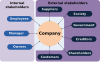
“A stakeholder in an organization is (by definition) any group or individual who can affect or is affected by the achievement of the organization's objectives.”
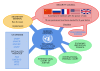
“"Stakeholder Management" as a concept, refers to the necessity for an organization to manage the relationships with its specific stakeholder groups in an action-oriented way.”
“Historically, moves to new ways of moral decision making depend on and occur in pockets of people of good will, who can explore with each other novel ways of relating without threatening or being threatened.”
“Lack of specificity around stakeholder identity remains a serious obstacle to the further development of stakeholder theory and its adoption in actual practice by business managers. Nowhere is this shortcoming more evident than in stakeholder theory's treatment of the constituency known as 'community.”
“Somewhere in the past. organizations were quite simple, and 'doing business' consisted of buying raw material from suppliers, converting into products, and selling it to customers... For the most part owner-entrepreneurs founded such simple business and worked along with members of their families. The family-dominated business still accounts for a large portion of the business start today.”

“We are in need of new concepts... which reorient our way of looking at the world to encompass present and future changes. I believe [in] the predominant framework for modern corporation... the corporation is viewed as a resource-conversion entity, taking raw material and converting tme into products, with dollars measuring the transaction. Returns are provided to owners in the form of dividends or capital appreciation in the marketplace.”
“The stakeholder concept was originally defined as "those groups without whose support the organization would cease to exist." The list of stakeholders originally included shareowners, employees, customers, suppliers, lenders and society. Stemming from the work of Igor Ansoff and Robert Stewart (in the planning department at Lockheed) and, later Marion Doscher and Stewart at SRI, the original approach served an important information function in the SRI corporate planning.”
“A number of factors coalesced to make larger and larger firms more economical. The development of new production processes, such as assembly line, means that jobs could be specialized and more work could be accomplished. New technologies and sources of power became readily available. Demographic factors began to favor concentration of production in urban areas. These and other social and political forces require larger amounts of capital, well beyond the scope of most individual owner-manager-employee.”

“While there have been many criticisms of the research in corporate social responsibility, perhaps the most troubling issue is the very nature of 'corporate social responsibility' as if the concept were needed to augment the study of business policy. Corporate social responsibility was often looked at as an “add on” to “business as usual” and the phrase often heard from executives is “corporate social responsibility is fine, if you can afford it.
We need to understand the complex interconnections between economic and social forces. Isolating "social issues" as separate from the economic impact which they have, and conversely isolating economic issues as if they had no social effect, misses the mark both managerially and intellectually. Actions aimed at one side will not address the concerns of the other. Processes, techniques and theories that do not consider all of these forces will fail to describe and predict the business world as it really is.”
We need to understand the complex interconnections between economic and social forces. Isolating "social issues" as separate from the economic impact which they have, and conversely isolating economic issues as if they had no social effect, misses the mark both managerially and intellectually. Actions aimed at one side will not address the concerns of the other. Processes, techniques and theories that do not consider all of these forces will fail to describe and predict the business world as it really is.”

R. Edward Freeman Quotes by Topic
Find exactly what you are looking for by browsing this categorized list of R. Edward Freeman quotes by topic.
R. Edward Freeman on Stakeholder theory 2 quotes
“Lack of specificity around stakeholder identity remains a serious obstacle to the further development of stakeholder theory and its adoption in actual practice by business managers. Nowhere is this shortcoming more evident than in stakeholder theory's treatment of the constituency known as 'community.”
R. Edward Freeman on Manager
“Lack of specificity around stakeholder identity remains a serious obstacle to the further development of stakeholder theory and its adoption in actual practice by business managers. Nowhere is this shortcoming more evident than in stakeholder theory's treatment of the constituency known as 'community.”

R. Edward Freeman on Business
“Somewhere in the past. organizations were quite simple, and 'doing business' consisted of buying raw material from suppliers, converting into products, and selling it to customers... For the most part owner-entrepreneurs founded such simple business and worked along with members of their families. The family-dominated business still accounts for a large portion of the business start today.”
R. Edward Freeman on Customer
“Somewhere in the past. organizations were quite simple, and 'doing business' consisted of buying raw material from suppliers, converting into products, and selling it to customers... For the most part owner-entrepreneurs founded such simple business and worked along with members of their families. The family-dominated business still accounts for a large portion of the business start today.”

R. Edward Freeman on Approach
“The stakeholder concept was originally defined as "those groups without whose support the organization would cease to exist." The list of stakeholders originally included shareowners, employees, customers, suppliers, lenders and society. Stemming from the work of Igor Ansoff and Robert Stewart (in the planning department at Lockheed) and, later Marion Doscher and Stewart at SRI, the original approach served an important information function in the SRI corporate planning.”

What R. Edward Freeman Said About Others
Discover personal opinions R. Edward Freeman shared regarding contemporaries.
R. Edward Freeman on Igor Ansoff
“The stakeholder concept was originally defined as "those groups without whose support the organization would cease to exist." The list of stakeholders originally included shareowners, employees, customers, suppliers, lenders and society. Stemming from the work of Igor Ansoff and Robert Stewart (in the planning department at Lockheed) and, later Marion Doscher and Stewart at SRI, the original approach served an important information function in the SRI corporate planning.”
Quotes About R. Edward Freeman
Gain deeper perspective through quotes about R. Edward Freeman from others.
Honorary Doctorate for Professor R. Edward Freeman on R. Edward Freeman
“Freeman is the acknowledged father of the stakeholder approach. His Strategic Management: a Stakeholder Approach (1984) introduced the concept of stakeholders, all of those individuals or groups other than shareholders (or owners) who have a stake in the particular decision or action of companies. The book proved to be a landmark in the development of stakeholder theory, a theory of management and business ethics that emphasises morality and ethicality in managing organisations. This theory was a departure from the dominant Anglo-Saxon approach that grants priority to shareholders and independence of management. Nowadays, the stakeholder approach is mentioned in virtually every publication on corporate governance and corporate social responsibility. By interacting with their stakeholders and societal context, organisations are able to establish their (social) responsibility system, enforced in part through laws and regulations but also increasingly voluntarily through company codes and business principles. The stakeholder theory is applied within various scientific disciplines ranging from business to law, from politics to health.”
About R. Edward Freeman
Robert Edward Freeman (born December 18, 1951) is an American philosopher and professor of business administration at the University of Virginia Darden School of Business, particularly known for his work on stakeholder theory (1984) and on business works.