Link Copied!
Paul Karl Feyerabend Quotes (1924-1994)
Philosopher, Leader

About Paul Karl Feyerabend
Paul Feyerabend (January 13, 1924 – February 11, 1994) was a philosopher of science, professor of philosophy at the University of California, Berkeley, who became famous for his purportedly anarchistic view of science, his bitingly critical prose on the prevailing scientific philosophies, and his rejection of the existence of universal methodological rules.
Best Paul Karl Feyerabend Quotes
Shortest
Earliest
Explore our curated collection of the most famous and impactful Paul Karl Feyerabend quotes.
“pg 39.”
“In a war a totalitarian state has a free hand.”

“One knows quite well that harmony can be a harmony of appearances”

“Ultimate Reality, if such an entity can be postulated, is ineffable.”
“Mathematical Reasoning is not only exact; it has its own criteria of reality”

“Rationalism... is a secularized form of the belief in the power of the word of God.”
“Humane science must be adapted to the requirements of a balanced and rewarding life.”

“Arguments hardly affect the faithful- their beliefs have an entirely different foundation.”

“The validity of usefulness, adequacy of popular standards can be tested only by research that violates them.”
“Facts are constituted by older ideologies, and a clash between facts and theories may be proof of progress.”


“A Universal Good should reflect the reality of the individual benefits that are collected under its name, not the other way around.”
“I do not see why I should be polite to tyrants, who slobber of humanitarianism and think only of their own petty interests.”

“Not only are facts and theories in constant disharmony, they are never as neatly separated as everyone makes them out to be.”
“Early Chinese thinkers had taken variety at face value. They had favored diversification and collected anomalies instead of trying to explain them away.”
“Science is an essentially anarchic enterprise: theoretical anarchism is more humanitarian and more likely to encourage progress than its law-and-order alternatives.”
“First-world science is one science among many; by claiming to be more it ceases to be an instrument of research and turns into a (political) pressure group.”

“The separation of state and church must be complemented by the separation of state and science, that most recent, most aggressive, and most dogmatic religious institution.”

“Traditions are neither good nor bad, they simply are... Rationality is not an arbiter of traditions, it is itself a tradition or an aspect of a tradition.”
“Experience arises together with theoretical assumptions not before them, and an experience without theory is just as incomprehensible as is (allegedly) a theory without experience.”

“One can show the following: given any rule, however "fundamental" or "necessary" for science, there are always circumstances when it is advisable not only to ignore the rule, but to adopt its opposite.”
Paul Karl Feyerabend Quotes by Topic
Find exactly what you are looking for by browsing this categorized list of Paul Karl Feyerabend quotes by topic.
Paul Karl Feyerabend on Fact 4 quotes
“Facts are constituted by older ideologies, and a clash between facts and theories may be proof of progress.”

Paul Karl Feyerabend on Empiricism 2 quotes
“Naive falsificationism takes it for granted that the laws of nature are manifest an not hidden beneath disturbances of considerable magnitude. Empiricism takes it for granted that sense experience is a better mirror of the world than pure thought. Praise of argument takes it for granted that the artifices of Reason give better results than the unchecked play of our emotions. Such assumptions may be perfectly plausible and even true. Still, one should occasionally put them to a test. Putting them to a test means that we stop using the methodology associated with them, start doing science in a different way and see what happens.”

Paul Karl Feyerabend on Sacrosanct
“Science is not sacrosanct. The mere fact that it exists, is admired, has results is not sufficient for making it a measure of excellence.”

Paul Karl Feyerabend on Discourse
“Those who violate the rules of a language do not enter new territory; they leave the domain of meaningful discourse. Even facts in these circumstances dissolve, because they are shaped by the language and subjected to its limitations.”

Paul Karl Feyerabend on Judgment
“Scientific "facts" are taught at a very early age and in the very same manner in which religious "facts" were taught only a century ago... In society at large the judgment of the scientist is received with the same reverence as the judgement of bishops and cardinals was accepted not too long ago.”

Paul Karl Feyerabend on Demythologization
“The move towards "demythologization," for example, is largely motivated by the wish to avoid any clash between Christianity and scientific ideas. If such a clash occurs, then science is certainly right and Christianity wrong. Pursue this investigation further and you will see that science has now become as oppressive as the ideologies it had once to fight.”
Paul Karl Feyerabend on Invention
“A scientist, an artist, a citizen is not like a child who needs papa methodology and mama rationality to give him security and direction, he can take care of himself, for he is the inventor not only of laws, theories, pictures, plays, forms of music, ways of dealing with his fellow man, institutions, but also entire world view, he is the inventor of entire forms of like.”
Paul Karl Feyerabend on Methodology
“A scientist, an artist, a citizen is not like a child who needs papa methodology and mama rationality to give him security and direction, he can take care of himself, for he is the inventor not only of laws, theories, pictures, plays, forms of music, ways of dealing with his fellow man, institutions, but also entire world view, he is the inventor of entire forms of like.”

Paul Karl Feyerabend on World view
“A scientist, an artist, a citizen is not like a child who needs papa methodology and mama rationality to give him security and direction, he can take care of himself, for he is the inventor not only of laws, theories, pictures, plays, forms of music, ways of dealing with his fellow man, institutions, but also entire world view, he is the inventor of entire forms of like.”

Paul Karl Feyerabend on Businessperson
“Language became a colorless and as indistinct as the business suit which is now worm by everyone, by the scholar, by the businessman, by the professional killer. Being accustomed to a dry and dreary norm and sees in it an obvious sign of arrogance and aggression; viewing authority with almost religious awe he gets into a frenzy when he sees someone pluck the beard of his favorite prophet.”

Paul Karl Feyerabend on Unification in science and mathematics
“We have to realize that a unified theory of the physical world simply does not exist. We have theories that work in restricted regions, we have purely formal attempts to condense them into a single formula, we have lots of unfounded claims (such as the claim that all of chemistry can be reduced to physics), phenomena that do not fit into the accepted framework are suppressed; in physics, which many scientists regard as the one really basic science, we have now at least three different points of view (relativity, dealing with the very large, quantum theory for an intermediate domain and various particle models for the very small) without a promise of conceptual (and not only formal) unification; perceptions are outside of the material universe (the mind-body problem is still unsolved) - from the very beginning the salesman of a universal truth cheated people into admissions instead of clearly arguing for their philosophy. And let us not forget that it was they and not the representatives of the traditions they attacked who introduced argument as the one and only universal arbiter. They praised argument - they constantly violated its principles.”
Quotes About Paul Karl Feyerabend
Gain deeper perspective through quotes about Paul Karl Feyerabend from others.
Philip J. Davis on Paul Karl Feyerabend
“Reading Feyerabend is like taking a cold shower. One steps in and is froze; one exits stimulated, invigorated, and agreeing with more of what he says than one is inclined to admit publicly.”
John Horgan on Paul Karl Feyerabend 2 quotes
“Feyerabend's Dadaesque rhetoric concealed a deadly serious point: the human compulsion to find absolute truths, however noble, too often culminates in tyranny. Feyerabend attacked science not because he truly believed that it had no more claim to truth than did astrology. Quite the contrary. Feyerabend attacked science because he recognized—and he was horrified by—its power, its potential to stamp out the diversity of human thought and culture. He objected to scientific certainty for moral and political, rather than for epistemological, reasons.”

Ernst Mayr on Paul Karl Feyerabend
“The working biologist does not ask whether he should follow the prescriptions of this or that school of philosophy. When one studies the history of various theories in science, one sympathizes with Feyerabend (1975), who claimed, "Anything goes." Indeed this attitude seems to be what guides the biologist in most of his theorizing. He does what François Jacob (1977) — with respect to natural selection — has called ‘tinkering.’ He uses whatever method will get him at the moment most conveniently to the solution of his problem.”
Massimo Pigliucci on Paul Karl Feyerabend 2 quotes
“Paul Feyerabend was one of the most influential philosophers of science of the twentieth century—unfortunately, I might add. While he was not a postmodernist (he reportedly did believe in an objective reality), his writings have given plenty of ammunition to post-modernists and even the few creationists who know who he was.”

T. Theocharis on Paul Karl Feyerabend
“It is true that Popper and Feyerabend differ in many respects. But it is unfair to single out Feyerabend as worse than the others. For he too sets out to do what he sincerely believes is best for society. This he does by declaring "Anything goes", a position that follows inescapably from the (popperian) premise that all observations are theory-laden. This premise is the most basic of all errors, and the writings of those who commit it are bound to be a hopeless muddle. If Popper, Kuhn and their followers do not like being called relativists, negativists and irrationalists, then they ought to repudiate this worst of all antitheses.”
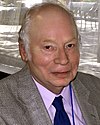
Steven Weinberg on Paul Karl Feyerabend
“It is only fair to admit my limitations and biases in making this judgment. After a few years’ infatuation with philosophy as an undergraduate I became disenchanted. The insights of the philosophers I studied seemed murky and inconsequential compared with the dazzling successes of physics and mathematics. From time to time since then I have tried to read current work on the philosophy of science. Some of it I found to be written in a jargon so impenetrable that I can only think that it aimed at impressing those who confound obscurity with profundity. Some of it was good reading and even witty, like the writings of Wittgenstein and Paul Feyerabend. But only rarely did it seem to me to have anything to do with the work of science as I knew it. According to Feyerabend, the notion of scientific explanation developed by some philosophers of science is so narrow that it is impossible to speak of one theory being explained by another, a view that would leave my generation of particle physicists with nothing to do.”
About Paul Karl Feyerabend
Paul Feyerabend (January 13, 1924 – February 11, 1994) was a philosopher of science, professor of philosophy at the University of California, Berkeley, who became famous for his purportedly anarchistic view of science, his bitingly critical prose on the prevailing scientific philosophies, and his rejection of the existence of universal methodological rules.