Link Copied!
Pablo Picasso Quotes (1881-1973)
Artist, King


About Pablo Picasso
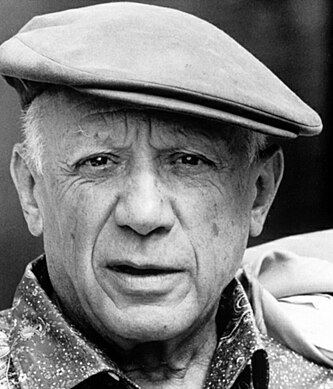
Pablo Ruiz Picasso (25 October 1881 – 8 April 1973) was a Spanish artist who lived and worked in Paris for many years. Around 1906–1908 together with Georges Braque Picasso initiated cubism, based on a strong inspiration of Paul Cézanne's work.
Best Pablo Picasso Quotes
Shortest
Earliest
Explore our curated collection of the most famous and impactful Pablo Picasso quotes.


“La inspiración existe, pero tiene que encontrarte trabajando.”
“When Matisse died, he left me his Odalisques 'as a legacy', he proclaimed.”
“For a long time I limited myself to one colour — as a form of discipline.”
“Accidents, try to change them - it's impossible. The accidental reveals man.”


“Nothing can be accomplished without solitude; I have made a kind of solitude for myself.”
“I do not see why so much importance should be attached to the idea of 'research' in painting.”

“Les gloires, les trompettes, les palmes... et les bas-reliefs,... tout cela fait un monument.”
“"You mustn't alway believe what I say", he once told me. "Questions tempt you to tell lies, particularly when there is no answer."”

“Abstract art is only painting. What about drama?
There is no abstract art. You always start with something. Afterward you can remove all traces of reality.”
There is no abstract art. You always start with something. Afterward you can remove all traces of reality.”
“To contradict. To show one eye full face and one in profile. Nature does many things the way I do, but she hides them! My painting is a series of non-sequiturs. ...”
“People want to find a 'meaning' in everything and everyone. That's the disease of our age, an age that is anything but practical but believes itself to be more practical than any other age.”
“It isn't up to the painter to define the symbols. Otherwise it would be better if he wrote them out in so many words! The public who look at the picture must interpret the symbols as they understand them.”

“Variation does not mean evolution. If an artist varies his mode of expression this only means that he has changed his manner of thinking, and in changing, it might be for the better or it might be for the worse.”
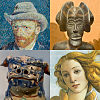
“Their forms had no more influence on me than they did on Matisse. Or Derain. But for them, the masks were sculptures like all others. When Matisse showed me his first African head, he spoke to me of Egyptian art.”
“I would like to manage to prevent people from ever seeing how a picture of mine has been done. What can it possibly matter? What I want is that the only thing emanating from my pictures should be emotion. [Boisgeloup, winter 1934].”
“It is my misfortune - and probably my delight - to use things as my passions tell me. What a miserable fate for a painter who adores blondes to have to stop himself putting them into a picture because they don't go with the basket of fruit!”
“Academic training in beauty is a sham. We have been deceived... The beauties of the Parthenon, Venuses, Nymphs, Narcissuses are so many lies. Art is not the application of a canon of beauty but what the instinct and the brain can conceive beyond any canon.”
“Almost every evening [in their common early-Cubist years, in Paris], either I went to Braque's studio or Braque came to mine. Each of us had to see what the other had done during the day. We criticized each other's paintings. A canvas wasn't less both of us fear p. 311”
“And from the point of view of art there are no concrete or abstract forms, but only forms which are more or less convincing lies. That those lies are necessary to our mental selves is beyond any doubt, as it is through them that we form our aesthetic point of view of life. (Paris 1923)”
“In the old days pictures went forward toward completion by stages. Every day brought something new. A picture used to be a sum of additions. In my case a picture is a sum of destructions. I do a picture — then I destroy it. In the end though, nothing is lost: the red I took away from one place turns up somewhere else”
“Matisse makes a drawing, then he makes a copy of it. He recopies it five times, ten times, always clarifying the line. He's convinced that the last, the most stripped down, is the best, the purest, the definitive one; and in fact, most of the time, it was the first. In drawing, nothing is better than the first attempt.”

“The artist is a receptacle for emotions derived from anywhere: from the sky, from the earth, from a piece of paper, from a passing figure, from a spider’s web. This is a spider's web. This is why one must not make a distinction between things. For them there are no aristocratic quarterings. One must take things where one finds them.”
“...this bull is a bull and this horse is a horse... If you give a meaning to certain things in my paintings it may be very true, but it is not my idea to give this meaning. What ideas and conclusions you have got I obtained too, but instinctively, unconsciously. I make the painting for the painting. I paint the objects for what they are.”
“Neither is there figurative and non-figurative art. All things appear to us in the shape of forms. Even in metaphysics ideas are expressed by forms, well then think how absurd it would be to think of painting without the imagery of forms. A figure, an object, a circle, are forms; they affects us more or less intensely. [Boisgeloup, winter 1934].”

“We all know that Art is not truth. Art is a lie that makes us realize truth, at least the truth that is given us to understand. The artist must know the manner whereby to convince others of the truthfulness of his lies. If he only shows in his work that he has searched, and re-searched, for the way to put over lies, he would never accomplish anything.”

“The idea of research has often made painting go astray, and made the artist lose himself in mental lucubrations. Perhaps this has been the principal fault of modern art. The spirit of research has poisoned those who have not fully understood all the positive and conclusive elements in modern art and has made them attempt to paint the invisible and, therefore, the unpaintable.”
“When we did Cubist paintings [Picasso and Georges Braque, in their early Cubist period in Paris], our intention was not to produce Cubist paintings but to express what was within us. No one laid down a course of action for us, and our friends the poets [a.o. Appolinaire and Cendral] followed our endeavor attentively but they never dictated it to us. [Boisgeloup, winter 1934].”
“Among the several sins that I have been accused of committing, none is more false than the one that I have, as the principal objective in my work, the spirit of research. When I paint my object is to show what I have found and not what I am looking for. In art intentions are not sufficient and, as we say in Spanish, love must be proved by facts and not by reasons... [Paris 1923].”
“It would be very curious to record by means of photographs, not the stage of the picture, but its metamorphoses. Perhaps one would perceive the path taken by the mind in order to put its dreams into a concrete form. But what is really very curious is to observe that fundamentally the picture does not change, that despite appearances the initial vision remains almost intact (Boisgeloup, winter 1934).”
“It is not what the artist does that counts. But what he is. Cézanne would never have interested me if he had lived and thought like Jaques-Emile Blanche, even if the apple he had painted had been ten times more beautiful. What interests us is the anxiety of Cézanne, the teaching of Cézanne, the anguish of Van Gogh, in short the inner drama of the man. The rest is false. [Boisgeloup, winter 1934].”
“Mathematics, trigonometry, chemistry, psychoanalysis, music, and what not have been related to cubism to give it an easier interpretation. All this has been pure literature, not to say nonsense, which brought bad results, blinding people with theories. Cubism has kept itself within the limits and limitations of painting, never pretending to go beyond it.”
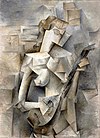
“Many think that Cubism is an art of transition, an experiment which is to bring ulterior results. Those who think that way have not understood it. Cubism is not either a seed or a foetus, but an art dealing primarily with forms, and when a form is realized it is there to live its own life. A mineral substance, having geometric formation, is not made so for transitory purposes, it is to remain what it is and will always have its own form.”
“How can you expect a beholder to experience my picture as I experienced it? A picture comes to me a long time beforehand; who knows how long a time beforehand, I sensed, saw, and painted it and yet the next day even I do not understand what I have done. How can anyone penetrate my dreams, my instincts, my desires, my thought, which have taken a long time to fashion themselves and come to the surface, above all to grasp what I put there, perhaps involuntary.”
“I do not believe I have used radically different elements in the different manners I have used in my paintings. If the subjects I have wanted to express have suggested different ways of expression, I have never hesitated to adopt them. I have never made trials nor experiments. Whenever I had something to say I have said it in the manner in which I have felt it ought to be said. Different motives inevitably require different methods of expression. (Paris 1923)”

“When I hear people speak of the evolution of an artist, it seems to me that they are considering him standing between two mirrors that face each other and reproduce his image an infinite number of times, and that they contemplate the successive images of one mirror as his past, and the images of the other mirror as his future, while his real image is taken as his present. They do not consider that they all are the same images in different planes... [Paris 1923].”

“They speak of naturalism in opposition to modern painting. I would like to know if anyone has ever seen a natural work of art. Nature and art, being two different things, cannot be the same thing. Through art we express our conception of what nature is not. Velasquez left us his idea of the people of his epoch. Undoubtedly they were different from what he painted them, but we cannot conceive a Philip IV in any other way than the one Velasquez painted... [Paris 1923].”
“Cubism is no different from any other school of painting. The same principles and the same elements are common to all. The fact that for a long time cubism has not been understood and that even today there are people who cannot see anything in it, means nothing. I do not read English, and an English book is a blank to me. This does not mean that the English language does not exist, and why should I blame anyone but myself if I cannot understand what I know nothing about?”
“I also often hear the word 'evolution'. Repeatedly I am asked to explain how my painting evolved. To me there is no past or future in my art. If a work of art cannot live always in the present it must not be considered at all. The art of the Greeks, of the Egyptians, of the great painters who lived in other times, is not an art of the past; perhaps it is more alive today than it ever was. Art does not evolve by itself, the ideas of people change and with them their mode of expression. (Paris 1923)”
“When Matisse dies, Chagall will be the only painter left who understands what color really is. I'm not crazy about those cocks and asses and flying violinists and all the folklore, but his canvasses are really painted, not just thrown together. Some of the last thing's he's done in Vence [where Matisse painted his late frescos in the chapel] convince me that there's never been anybody since Renoir who has the feeling for light that Chagall has. [Picasso is reacting to Chagall's daughter Ida, 1952]”
“I can hardly understand the importance given to the word research in connection with modern painting. In my opinion to search means nothing in painting. To find is the thing. Nobody is interested in following a man who, with his eyes fixed on the ground, spends his life looking for the purse that fortune should put in his path. The one who finds something no matter what it might be, even if his intention were not to search for it, at least arouses our curiosity, if not our admiration.”
“You don't need to show them to me [the notes of the complete interview which Christian Zervos], editor of 'Cahiers d'Art' showed Picasso after their conversations at Boisgeloup: Picasso's country place then]. The essential thing in our period of weak morale is to create enthusiasm. How many people have actually read Homer? All the same the whole world talks of him. In this way the Homeric legend is created. A legend in this sense provokes a valuable stimulus. Enthusiasm is what we need most, we and the younger generation. [Boisgeloup, 1935]”
“Do you think it interests me that this painting represents two figures? These two figures existed, they exist no more. The sight of them gave me an initial emotion, little by little their real presence grew indistinct they became a fiction for me, then they disappeared, or rather, were turned into problems of all kinds. For me they are no longer two figures but shapes and colours, don’t misunderstand me, shapes and colours, though, that sum up the idea of the two figures and preserve the vibration of their existence. [Boisgeloup, winter 1934]”
“But there is one very odd thing - to notice that basically a picture doesn't change, that the first 'vision' remains almost intact, in spite of appearances. I often ponder on a light and a dark when I have put them into a painting; I try hard to break them up by interpolating a color that will create a different effect. When the work is photographed, I note that what I put in to correct my first vision has disappeared, and that, after all, the photographic image corresponds with my first vision before the transformation I insisted on. [Boisgeloup, winter 1934]”
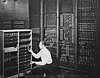
“[Speaking of computers] But they are useless. They can only give you answers.
• Common later variant: "Computers are useless. They can only give you answers." This variant seems to have arisen in the 1980s, the earliest known appearance in a book is Herman Feshbach, "Reflections on the Microprocessor Revolution: A Physicist's Viewpoint", in Man and Technology (1983), ed. Bruce M. Adkins, where the attribution is described as "rumoured".https://books.google.com/books?id=9EohAQAAIAAJ&q=Picasso”
• Common later variant: "Computers are useless. They can only give you answers." This variant seems to have arisen in the 1980s, the earliest known appearance in a book is Herman Feshbach, "Reflections on the Microprocessor Revolution: A Physicist's Viewpoint", in Man and Technology (1983), ed. Bruce M. Adkins, where the attribution is described as "rumoured".https://books.google.com/books?id=9EohAQAAIAAJ&q=Picasso”
“The painter goes through states of fullness and evacuation. That is the whole secret of art. I go for a walk in the forest of Fontainebleau. I get 'green' indigestion. I must get rid of this sensation into a picture. Green rules it. A painter paints to unload himself of feelings and visions. People seize on painting to cover up their nakedness. They get what they can wherever they can. In the end I don't believe they get anything at all. They've simply cut a coat to the measure of their own ignorance. They make everything, from God to a picture, in their own image. That is why the picture-hook is the ruination of a painting. [Boisgeloup, winter 1934].”
“Everyone wants to understand painting. Why don't they try to understand the song of the birds? Why do they love a night, a flower, everything which surrounds man, without attempting to understand them? Whereas where painting is concerned, they want to understand. Let them understand above all that the artist works from necessity; that he, too, is a minute element of the world to whom one should ascribe no more importance than so many things in nature which charm us but which we do not explain to ourselves. Those who attempt to explain a picture are on the wrong track most of the time. Gertrude Stein, overjoyed, told me some time ago that she had finally understood what my picture represented: three musicians. It was a still life!! [Boisgeloup, winter 1934].”
“When I went to Trocadéro it was disgusting. ...The smell. I was all alone. I wanted to get away. But... I stayed. ...I understood something very important... was happening to me... The masks... were magical things. ...The Negroes' sculptures were intercessors... Against everything; against unknown threatening spirits. I kept looking at the fetishes. I understood: I too am against everything. I too think everything is unknown, is the enemy! Everything! ...I understood ...the purpose ...all the fetishes were ...weapons. To help people stop being dominated by spirits, to become independent. Tools. If we give form to the spirits, we become independent of them. The spirits, the unconscious... emotion, it's the same thing. I understood why I was a painter. All alone in that awful museum, with the masks, the redskin dolls, the dusty mannequins. Les Demoiselles d'Avignon must have come to me that day, but not at all because of the forms: but because it was my first canvas of exorcism—yes, absolutely!”
Pablo Picasso Quotes by Topic
Find exactly what you are looking for by browsing this categorized list of Pablo Picasso quotes by topic.
Pablo Picasso on Art 2 quotes
“For a long time I limited myself to one color — as a form of discipline.”
Pablo Picasso on Taste (sociology)
“Taste is the enemy of creativeness.”
-100px.jpg)
Pablo Picasso on Abstract art
Pablo Picasso on Image
“In the old days pictures went forward toward completion by stages. Every day brought something new. A picture used to be a sum of additions. In my case a picture is a sum of destructions. I do a picture — then I destroy it. In the end though, nothing is lost: the red I took away from one place turns up somewhere else.”
Pablo Picasso on Truth
“We all know that Art is not truth. Art is a lie that makes us realize truth, at least the truth that is given us to understand. The artist must know the manner whereby to convince others of the truthfulness of his lies. If he only shows in his work that he has searched, and re-searched, for the way to put over lies, he would never accomplish anything.”
What Pablo Picasso Said About Others
Discover personal opinions Pablo Picasso shared regarding contemporaries.
Pablo Picasso on Henri Matisse 3 quotes
“When Matisse died, he left me his Odalisques 'as a legacy', he proclaimed.”

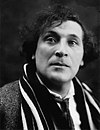
Pablo Picasso on Marc Chagall 2 quotes
“I don't know where he [Marc Chagall] gets those images; he must have an angel in his head.”
Pablo Picasso on Albert Camus
Pablo Picasso on Women
Pablo Picasso on Paul Cézanne
“It is not what the artist does that counts. But what he is. Cézanne would never have interested me if he had lived and thought like Jaques-Emile Blanche, even if the apple he had painted had been ten times more beautiful. What interests us is the anxiety of Cézanne, the teaching of Cézanne, the anguish of Van Gogh, in short the inner drama of the man. The rest is false. [Boisgeloup, winter 1934].”

Quotes About Pablo Picasso
Gain deeper perspective through quotes about Pablo Picasso from others.
Chinua Achebe on Pablo Picasso
“we are not gladiators. But there is something we are committed to of fundamental importance, something everybody should be committed to. We are committed to the process of changing our position in the world. This is what our literature is about. There is a certain position assigned to me in the world, assigned to him (James Baldwin) in the world, and we are saying we are not satisfied with that position. This is important to me-to everybody. I think you see it is important to me. You may not see that it is important to you but it is. We want to create the new man. Mankind tries all kinds of ways, all kinds of solutions; some of them leading that far and no farther and it is wise that we try something else. We have followed your way and it seems there is a little problem at this point. And so we are offering a new aesthetic. There is nothing wrong with that...Picasso did that. In 1904 he saw that Western art had run out of breath so he went to the Congo-the dispised Congo-and brought out a new art. Don't mind what he was saying before he died: that much is entirely his business. But he borrowed something which saved his art. And we are telling you what we think will save your art. We think we are right, but even if we are wrong it doesn't matter. It couldn't be worse than it is now.”

Conversations with James Baldwin on Pablo Picasso
“I don't try to be prophetic, as I don't sit down to write literature. It is simply this: a writer has to take all the risks of putting down what he sees. No one can tell him about that. No one can control that reality. It reminds me of something Pablo Picasso was supposed to have said to Gertrude Stein while he was painting her portrait. Gertrude said, "I don't look like that." And Picasso replied. "You will." And he was right.”
William Baziotes on Pablo Picasso
“Well, I looked at Picasso (at the Picasso exhibition in New York, Museum of Modern Art in 1939) until I could smell his armpits and the cigarette smoke on his breast. Finally, in front of one picture – a bone figure on a beach – I got it. I saw that the figure was not his real subject. The plasticity wasn't either – although the plasticity was great. No. Picasso had uncovered a feverishness in himself and is painting it – a feverishness of death and beauty.”

Source on Pablo Picasso 6 quotes
“At that time I was very friendly with Picasso. Our temperaments were very different, but we had the same idea. Later on it became clear, Picasso is Spanish and I am French; as everyone knows that mean a lot of differences, but during those days the differences did not count... .We were living in Montmarte, we used to meet every day, we used to talk... In those years Picasso and I said things to each other that nobody will ever say again, that nobody could say any more... .It was rather like a pair of climbers roped together.”
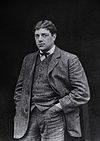
Georges Braque on Pablo Picasso
“The hard-and-fast rules of perspective which it succeeded in imposing on art were a ghastly mistake which it has taken four centuries to redress; Cezanne and after him Picasso and myself can take a lot of credit for this.. ..scientific perspective forces the objects in a picture to disappear away form the beholder instead of bringing them within his reach as painting should.”




Disputed Quotes
Quotes attributed to Pablo Picasso that are questionable.
Misattributed Quotes
Quotes mistakenly credited to Pablo Picasso
About Pablo Picasso
Pablo Ruiz Picasso (25 October 1881 – 8 April 1973) was a Spanish artist who lived and worked in Paris for many years. Around 1906–1908 together with Georges Braque Picasso initiated cubism, based on a strong inspiration of Paul Cézanne's work.