Octavio Paz Quotes (1914-1998)


Writer, Poet

About Octavio Paz

Octavio Paz Lozano (31 March 1914 – 19 April 1998) was a poet, writer, diplomat, and winner of the 1990 Nobel Prize in Literature, the first Mexican writer to become a Nobel Laureate.

Best Octavio Paz Quotes

Shortest
Earliest

Explore our curated collection of the most famous and impactful Octavio Paz quotes.

“To fight evil is to fight ourselves.”
Octavio Paz
“To read a poem is to hear it with our eyes; to hear it is to see it with our ears.”
“Merece lo que sueñas.
• Variant translation: Deserve what you dream.”
Octavio Paz
“    We are condemned
to kill time:
   so we die
little by little.”

“"Art" is an invention of aesthetics, which in turn is an invention of philosophers…what we call art is a game.”
Octavio Paz
“And to fill all these white pages that are left for me with the same monotonous question: at what hour do the hours end?”
Octavio Paz
“Man does not speak because he thinks; he thinks because he speaks. Or rather, speaking is no different than thinking: to speak is to think.”
Octavio Paz
“There can be no society without poetry, but society can never be realized as poetry, it is never poetic. Sometimes the two terms seek to break apart. They cannot.”
Octavio Paz
“Modern man likes to pretend that his thinking is wide-awake. But this wide-awake thinking has led us into the mazes of a nightmare in which the torture chambers are endlessly repeated in the mirrors of reason.”
Octavio Paz
“Death is a mirror which reflects the vain gesticulations of the living. The whole motley confusion of acts, occasions, regrets and hopes which is the life of each one of us finds in death, not meaning or explanation, but an end.”
Octavio Paz
“Images, memories, fragmentary shapes and forms — all those sensations, visions, half-thoughts that appear and disappear in the wink of an eye, as one sets forth to meet…. The path also disappears as I think of it, as I say it.”
“If we are a metaphor of the universe, the human couple is the metaphor par excellence, the point of intersection of all forces and the seed of all forms. The couple is time recaptured, the return to the time before time.”
“The first deaths will barely swell the daily count, and no one in the statistics bureau will notice that extra zero. But after a while everyone will begin to look at each other and ask: what's happening? Because for months doors and windows are going to rattle, furniture and trees will creak.”
Octavio Paz
“I am a man: little do I last
and the night is enormous.
But I look up:
the stars write.
Unknowing I understand:
I too am written,
and at this very moment
someone spells me out.”
“The Hindu genius is a love for abstraction and, at the same time, a passion for the concrete image. At times It is rich, at others prolix. It has created the most lucid and the most instinctive art. It is abstract and realistic, sexual and intellectual, pedantic and sublime. It lives between extremes, it embraces the extremes, rooted in the earth and drawn to an invisible beyond.”
Octavio Paz
“It is not proper to project our feelings onto things or to attribute our own sensations and passions to them. Can it also be improper to see in them a guide, a way of life? To learn the art of remaining motionless amid the agitation of the whirlwind, to learn to remain still and to be as transparent as this fixed light amid the frantic branches — this may be a program for life.”
Octavio Paz
“The word "death" is not pronounced in New York, in Paris, in London, because it burns the lips. The Mexican, in contrast, is familiar with death, jokes about it, caresses it, sleeps with it, celebrates it; it is one of his favorite toys and his most steadfast love. True, there is perhaps as much fear in his attitude as in that of others, but at least death is not hidden away; he looks at it it face to face, with impatience, disdain or irony.”
Octavio Paz
“Ought I to say that the form of change is fixity, or more precisely, that change is an endless search for fixity? A nostalgia for inertia: indolence and its frozen paradises. Wisdom lies neither in fixity nor in change, but in the dialectic between the two. A constant coming and going: wisdom lies in the momentary. It is transition. But the moment I say transition, the spell is broken. Transition is not wisdom, but a simple going toward… Transition vanishes: only thus is it transition.”
Octavio Paz
“Only now have I understood that there was a secret relationship between what I have called my expulsion from the present and the writing of poetry. Poetry is in love with the instant and seeks to relive it in the poem, thus separating it from sequential time and turning it into a fixed present. But at that time I wrote without wondering why I was doing it. I was searching for the gateway to the present: I wanted to belong to my time and to my century. A little later this obsession became a fixed idea: I wanted to be a modern poet. My search for modernity had begun.”
Octavio Paz
“Fixity is always momentary. It is an equilibrium, at once precarious and perfect, that lasts the space of an instant: a flickering of the light, the appearance of a cloud, or a slight change in temperature is enough to break the repose-pact and unleash the series of metamorphoses. Each metamorphosis, in turn, is another moment of fixity succeeded by another change and another unexpected equilibrium. No one is alone, and each change here brings about another change there. No one is alone and nothing is solid: change is comprised of fixities that are momentary accords.”
Octavio Paz
“I remember my loves, my conversation, my friendships. I remember it all, see it all, see them all. With melancholy, but without nostalgia. And above all, without hope. I know that it is immortal, and that, if we are anything, we are the hope of something. For me, expectation has spent itself. I quit the nevertheless, the even, the in spite of everything, the moratoriums, the excuses and forgiving. I know the mechanism of the trap of morality and the drowsiness of certain words. I have lost faith in all those constructions of stone, ideas, ciphers. I quit. I no longer defend this broken tower. And, in silence, I await the event.”
Octavio Paz
“Between going and staying the day wavers,
in love with its own transparency.
The circular afternoon is now a bay
where the world in stillness rocks.
All is visible and all elusive,
all is near and can't be touched.
Paper, book, pencil, glass,
rest in the shade of their names.
Time throbbing in my temples repeats
the same unchanging syllable of blood.
The light turns the indifferent wall
into a ghostly theater of reflections.
I find myself in the middle of an eye,
watching myself in its blank stare.
The moment scatters. Motionless,
I stay and go: I am a pause.
”
“

I travel through your waist as through a river,
I voyage your body as through a grove going,
as by a footpath going up a mountain
and suddenly coming upon a steep ravine
I go the straitened way of your keen thoughts
break through to daylight upon your white forehead
and there my spirit flings itself down, is shattered
now I collect my fragments one by one
and go on, bodiless, searching, in the dark….

you take on the likeness of a tree, a cloud,
you are all birds and now you are a star,
now you resemble the sharp edge of a sword
and now the executioner's bowl of blood,
the encroaching ivy that over grows and then
roots out the soul and divides it from itself,

”
“Solitude—the feeling and knowledge that one is alone, alienated from the world and oneself—is not an exclusively Mexican characteristic. All men, at some moment in their lives, feel themselves to be alone. And they are. To live is to be separated from what we were in order to approach what we are going to be in the mysterious future. Solitude is the profoundest fact of the human condition. Man is the only being who knows he is alone, and the only one who seeks out another. His nature—if that word can be used in reference to man, who has "invented" himself by saying "No" to nature—consists in his longing to realize himself in another. Man is nostalgia and a search for communion. Therefore, when he is aware of himself he is aware of his lack of another, that is, of his solitude.”
“Repetitions, you wander about lost amid repetitions, you are merely a repetition among other repetitions. An artist of repetitions, a past master of disfigurations, a maestro of demolitions. The trees repeat other trees, the sands other sands, the jungle of letters is repetition, the stretch of dunes is repetition, the plethora is emptiness, emptiness is a plethora, I repeat repetitions, lost in the thicket of signs, wandering about in the trackless sand, stains on the wall beneath this sun of Galta, stains on this afternoon in Cambridge, a thicket and a stretch of dunes, stains on my forehead that assembles and disassembles vague landscapes. You are (I am) is a repetition among other repetitions. You are is I am; I am is you are: you are is I. Demolitions: I stretch out full length atop my triturations, I inhabit my demolitions.”
Octavio Paz

Octavio Paz Quotes by Topic

Find exactly what you are looking for by browsing this categorized list of Octavio Paz quotes by topic.

Octavio Paz on Metamorphosis 2 quotes
“It may seem paradoxical to say that we have been expelled from the present, but it is a feeling we have all had at some moment. Some of us experienced it first as a condemnation, later transformed into consciousness and action. The search for the present is neither the pursuit of an earthly paradise nor that of a timeless eternity: it is the search for a real reality.”
Octavio Paz
View all 2 quotes on Metamorphosis →

Octavio Paz on Oranges

“If you are the basket of oranges I am the knife of the sun.”
Octavio Paz

Octavio Paz on Loneliness

“Solitude is the profoundest fact of the human condition. Man is the only being who knows he is alone.”
Octavio Paz

Octavio Paz on Bamboo

“...before the sun has become completely hidden — it is now fleeing amid the tall bamboo trees like an animal pursued by shadows — I shall succeed in reducing this grove of trees to a catalogue.”
Octavio Paz

Octavio Paz on Rhetoric

“The relations between rhetoric and ethics are disturbing: the ease with which language can be twisted is worrisome, and the fact that our minds accept these perverse games so docilely is no less cause for concern.”
Octavio Paz

Octavio Paz on Solitude

“Solitude—the feeling and knowledge that one is alone, alienated from the world and oneself—is not an exclusively Mexican characteristic. All men, at some moment in their lives, find themselves to be alone. And they are. To live is to be separated from what we were in order to approach what we are going to be in the mysterious future. Solitude is the profoundest fact of the human condition. Man is the only being who knows he is alone, and the only one who seeks out another. His nature—if that word can be used in reference to man, who has "invented" himself by saying "No" to nature—consists in his longing to realize himself in another. Man is nostalgia and a search for communion. Therefore, when he is aware of himself he is aware of his lack of another, that is, of his solitude.”
Octavio Paz

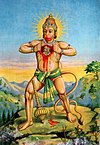
Octavio Paz on Hanuman

“The Great Monkey closes his eyes, scratches himself again and muses: before the sun has become completely hidden — it is now fleeing amid the tall bamboo trees like an animal pursued by shadows — I shall succeed in reducing this grove of trees to a catalogue. A page of tangled plant calligraphy. A thicket of signs: how to read it, how to clear a path through this denseness? Hanumān smiles with pleasure at the analogy that has just occurred to him: calligraphy and vegetation, a grove of trees and writing, reading and a path. Following a path: reading a stretch of ground, deciphering a fragment of world. Reading considered as a path toward... The path as a reading: an interpretation of the natural world? He closes his eyes once more and sees himself, in another age, writing (on a piece of paper or on a rock, with a pen or with a chisel?) the act in the Mahanātaka describing his visit to the grove of the palace of Rāvana. He compares its rhetoric to a page of indecipherable calligraphy and thinks: the difference between human writing and divine consists in the fact that the number of signs of the former is limited, whereas that of the latter is infinite; hence the universe is a meaningless text, one which even the gods find illegible. The critique of the universe (and that of the gods) is called grammar... Disturbed by this strange thought, Hanumān leaps down from the wall, remains for a moment in a squatting position, then stands erect, scrutinizes the four points of the compass, and resolutely makes his way into the thicket.”
Octavio Paz

What Octavio Paz Said About Others

Discover personal opinions Octavio Paz shared regarding contemporaries.

Octavio Paz on Hui Shi
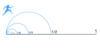
“My phrase is a moment, the moment of fixity in the monologue of Zeno the Eleatic and Huí Shih (“I leave today for Yüeh and I arrive yesterday”). In this monologue one of the terms finally devours the other: either motionlessness is merely a state of movement (as in my phrase), or else movement is only an illusion of motionlessness (as among the Hindus).”
Octavio Paz

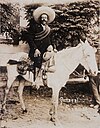
Octavio Paz on Pancho Villa

“The brutality and uncouthness of many of the revolutionary leaders has not prevented them from becoming popular myths. Villa still gallops through the north, in songs and ballads; Zapata dies at every popular fair. … It is the Revolution, the magical word, the word that is going to change everything, that is going to bring us immense delight and a quick death.”
Octavio Paz

Quotes About Octavio Paz

Gain deeper perspective through quotes about Octavio Paz from others.

Marjorie Agosín Introduction on Octavio Paz

“In his acceptance speech for the Nobel Prize for Literature, Octavio Paz said, "Soon I discovered the defense of poetry, disregarded in our century, became inseparable from the defense of liberty." Paz also said that "throughout history and under the most diverse circumstances, poets have participated in politics. I do not refer to poetry as a form of art to be used by the State. No. I refer to the free participation of the poets in the matters of his/her city." Paz's words ring true for the vibrant mosaic of voices this anthology exemplifies.”

Isabel Allende on Octavio Paz

“I belong to the first generation of Latin American writers brought up reading other Latin American writers. Before my time the work of Latin American writers was not well distributed, even on our continent. In Chile it was very hard to read other writers from Latin America. My greatest influences have been all the great writers of the Latin American Boom in literature: García Márquez, Vargas Llosa, Cortázar, Borges, Paz, Rulfo, Amado, etc.”
Octavio Paz

Elena Poniatowska responding on Octavio Paz

“I admire Octavio Paz very much... but I don't but I don't agree with one of his theses about Mexican history. He maintains that the Plaza of the Three Cultures is a place of sacrifices, and that because we have Aztec ancestors we are condemned cyclically to slaughter a great number of people. This thesis is highly debatable... It's not possible to say that because we carry within us the potential for human sacrifice, we retain across the years the need to kill.”

Adrienne Rich on Octavio Paz

“Whatever her or his social identity, the writer is, by the nature of the act of writing, someone who strives for communication and connection, someone who searches, through language, to keep alive the conversation with what Octavio Paz has called "the lost community." Even if what's written feels like a note thrust into a bottle to be thrown into the sea.”
Octavio Paz

About Octavio Paz

Octavio Paz Lozano (31 March 1914 – 19 April 1998) was a poet, writer, diplomat, and winner of the 1990 Nobel Prize in Literature, the first Mexican writer to become a Nobel Laureate.